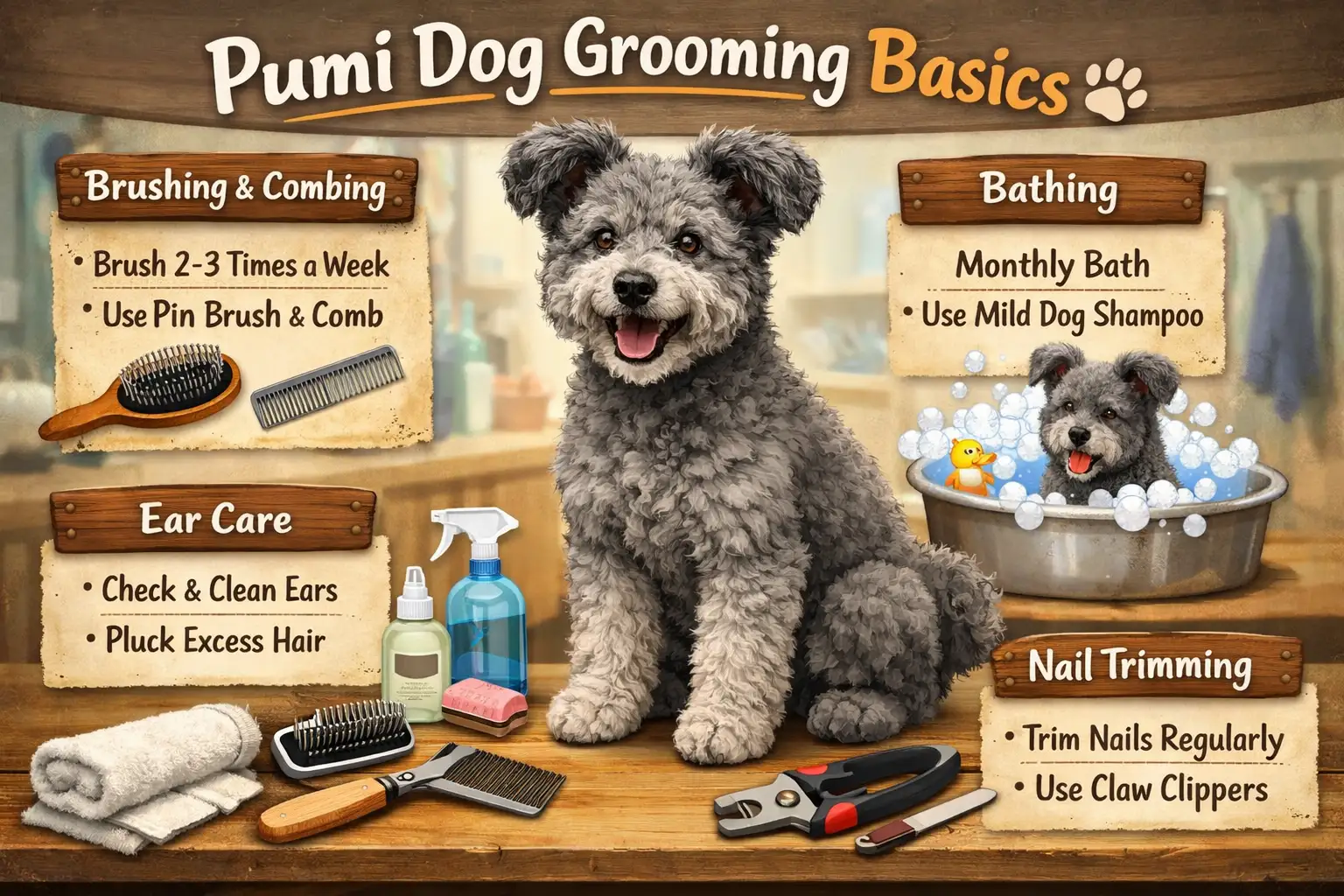
Pumi dog grooming isn’t just about keeping this breed looking neat—it’s a core part of keeping a Pumi healthy, comfortable, and mentally balanced. Many new owners are told that Pumis are “low-shedding,” which is true, but that label often leads to the wrong conclusion: that grooming is easy or optional. In reality, the Pumi’s unique curly coat requires regular, intentional care to prevent matting, skin problems, and discomfort.
This guide is designed to help Pumi owners understand why grooming matters before jumping into how to do it. When owners understand the purpose behind grooming routines, they’re far more likely to stick with them—and to recognize early signs of trouble.
Why grooming is essential for Pumi dogs
The Pumi has a dense, curly, corkscrew-style coat that traps loose hair instead of shedding it onto the floor. This makes the breed appealing for people who want a cleaner home, but it also means dead hair stays in the coat unless it’s removed through brushing and bathing. When that trapped hair isn’t managed properly, it forms mats close to the skin, interferes with airflow, and can lead to irritation, hot spots, or secondary infections.
Regular grooming also supports:
- Healthy skin function and natural oil distribution
- Temperature regulation during warm and cold seasons
- Early detection of skin, ear, nail, or coat problems
- Better comfort and movement, especially for active Pumis
From a behavioral standpoint, grooming done correctly and consistently helps Pumis become more relaxed with handling. This is especially important for a breed known for alertness, sensitivity, and high intelligence.
Low shedding does not mean low maintenance
One of the most common grooming misunderstandings with Pumis is assuming that low shedding equals low work. In practice, the opposite is often true. Low-shedding, curly-coated dogs usually need more frequent grooming attention, not less, because the coat doesn’t naturally self-clear.
Owners who skip grooming often don’t notice a problem until the coat is already tightly matted—at which point grooming becomes stressful for the dog and difficult or even unsafe to handle at home.
Pumi grooming at a glance
The table below sets realistic expectations and helps new owners quickly understand what grooming a Pumi actually involves.
| Grooming Factor | What to Expect with a Pumi |
|---|---|
| Coat type | Curly, dense, corkscrew texture |
| Shedding level | Low shedding, hair stays in coat |
| Grooming difficulty | Moderate to high if neglected |
| Weekly time commitment | 30–60 minutes at home |
| Professional grooming | Recommended every 6–10 weeks |
| Common risk if skipped | Matting, skin irritation, odor |
Understanding these basics upfront prevents frustration later. Proper grooming isn’t about perfection or show standards—it’s about maintaining a healthy coat that supports the dog’s overall well-being.
Understanding the Pumi Coat and Grooming Needs
To groom a Pumi well, you must first understand the coat. The Pumi does not have a straight or fluffy coat like many other dogs. It has a tight, curly coat made of soft hair mixed with rougher hair. These curls form small ringlets that sit close to the body.
This coat is strong and weather-resistant, but it also needs regular care. When grooming is skipped, the curls tangle together and turn into mats that pull on the skin and trap dirt and moisture.
What makes the Pumi coat different
The Pumi coat:
- Grows continuously instead of shedding out
- Traps loose hair inside the curls
- Mats easily if not brushed or bathed correctly
- Needs shape and balance to stay healthy
Because loose hair does not fall out on its own, brushing and bathing are the only ways to remove it. This is why Pumis are often called low-shedding but high-maintenance.
How the Pumi coat grows and mats
Pumi hair grows in cycles. Old hair stays stuck inside the curls instead of dropping off. Over time, this old hair mixes with dirt, sweat, and natural skin oils. If brushing is skipped, the hair tightens into knots, especially:
- Behind the ears
- Under the legs
- Around the neck and collar area
- On the chest and belly
Once mats form close to the skin, they can be painful and may hide skin problems like redness or infection.
Shedding truth: what owners should expect
Pumis do shed, but the hair stays in the coat. This means:
- You won’t see much hair on furniture
- The coat still gets heavy and tangled
- Grooming is needed to remove dead hair
The table below explains how the Pumi coat affects grooming.
| Coat Feature | What It Means for Grooming |
|---|---|
| Curly texture | Needs gentle brushing to avoid pulling |
| Low shedding | Loose hair must be removed by grooming |
| Dense coat | Mats form quickly if neglected |
| Mixed hair types | Wrong tools can damage curls |
| Fast growth | Regular trimming helps maintain shape |
Why coat type changes grooming frequency
Because of this coat structure, Pumis need small but regular grooming sessions. Waiting too long between grooming makes the work harder and more stressful for the dog. Short, steady care is better than long, difficult sessions after neglect.
Understanding the coat helps owners avoid common mistakes like over-brushing, dry brushing, or shaving the coat completely.
How to Groom a Pumi Dog at Home (Step-by-Step)
Grooming a Pumi at home does not need to be hard. The key is doing small tasks often instead of waiting too long. Short grooming sessions help keep the coat healthy and make the dog more comfortable with handling.
This section explains what tools you need, how often to groom, and how to brush and bathe a Pumi safely.
Grooming tools you need for a Pumi
You do not need many tools, but the right ones matter. Using the wrong brush or shampoo can damage the curls or hurt the skin.
| Tool | What It Is Used For | How Often |
|---|---|---|
| Slicker brush (soft pins) | Loosens curls and removes trapped hair | 1–2 times a week |
| Metal comb | Checks for small mats close to skin | Weekly |
| Spray bottle (water) | Lightly dampens coat before brushing | Every brushing |
| Dog shampoo (gentle) | Cleans coat and skin | Every 4–6 weeks |
| Towel or low-heat dryer | Dries coat without frizz | After baths |
| Blunt-tip scissors | Small trim around eyes or feet | As needed |
Always brush a slightly damp coat, never dry. Dry brushing pulls curls and causes breakage.
How often to groom a Pumi
Many owners ask how often grooming is needed. The table below gives a simple guide.
| Grooming Task | How Often | Notes |
|---|---|---|
| Light brushing | 1–2 times per week | Use water spray first |
| Full brushing and combing | Once a week | Focus on mat areas |
| Bathing | Every 4–6 weeks | More often if very active |
| Coat trimming | Every 6–10 weeks | Helps keep shape |
| Nail trimming | Every 3–4 weeks | Depends on activity |
Regular grooming keeps the coat loose and healthy. Skipping weeks often leads to mats that are painful to remove.
How to brush a Pumi the right way
Follow these simple steps:
- Lightly mist the coat with water
- Start brushing in small sections
- Brush gently from skin outward
- Use a comb after brushing to check for mats
- Stop if the dog becomes stressed
Never pull hard on knots. If a mat does not loosen, it is safer to get help from a groomer.
Bathing a Pumi safely
Bathing helps remove trapped hair and dirt.
- Use warm water, not hot
- Apply dog shampoo only
- Gently squeeze the coat, do not rub hard
- Rinse very well to avoid skin irritation
After the bath:
- Towel-dry first
- Let curls air-dry or use a dryer on low heat
- Do not brush while drying
This helps the curls form naturally.
Common Pumi Grooming Problems and Mistakes to Avoid
Many grooming problems in Pumi dogs happen because owners do not know what to watch for. The Pumi coat can look fine on the outside while problems are building close to the skin. Knowing common mistakes helps you keep your dog comfortable and safe.
Matting problems in Pumi dogs
Matting is the most common grooming issue in Pumis. Mats are tight knots of hair that pull on the skin and trap dirt and moisture.
Mats often form:
- Behind the ears
- Under the front legs
- Around the neck and collar
- On the chest and belly
If mats are ignored, they can cause pain, skin sores, and bad smells.
| Grooming Problem | Why It Happens | What You Should Do |
|---|---|---|
| Tight mats | Skipping brushing | Groom weekly, keep coat damp |
| Small knots | Brushing too fast | Work in small sections |
| Skin redness | Mats holding moisture | See a groomer or vet |
| Bad odor | Dirty trapped hair | Regular bathing |
Never try to pull mats out by force. This hurts the dog and creates fear around grooming.
Shaving a Pumi is a serious mistake
Some owners think shaving helps with heat or mats. This is not true for Pumi dogs.
Shaving:
- Ruins the natural curl pattern
- Exposes skin to sunburn
- Can cause uneven or weak coat regrowth
Shaving should only be done if a vet or groomer says it is needed for medical reasons.
Other common grooming mistakes
Avoid these problems:
- Dry brushing the coat
- Using human shampoo
- Bathing too often
- Ignoring ears and nails
- Waiting until mats are severe
These mistakes can damage the coat and irritate the skin.
Early warning signs to watch for
Check your Pumi during grooming. Stop and get help if you notice:
- Red or sore skin
- Strong smells from ears or coat
- Hair loss or bald spots
- Scratching or licking often
- Pain when touched
Early care is easier and safer than fixing severe problems.
Professional Grooming, Puppies, and FAQs
Some parts of Pumi grooming can be done at home, but other parts are easier and safer with professional help. Knowing when to groom at home and when to ask for help keeps your dog comfortable and stress-free.
Home grooming vs professional grooming
Home grooming works well for regular care like light brushing and basic baths. Professional groomers are helpful for shaping the coat, fixing mats, and handling tools safely.
| Grooming Task | Can Be Done at Home? | Professional Groomer Needed? |
|---|---|---|
| Light brushing | Yes | No |
| Regular baths | Yes | No |
| Coat shaping | Sometimes | Often |
| Heavy mat removal | No | Yes |
| Full grooming style | No | Yes |
Professional grooming is usually needed every 6 to 10 weeks for most Pumis.
Grooming Pumi puppies and older dogs
Pumi puppies should start grooming early. Short and calm sessions help them learn that grooming is safe.
For puppies:
- Start brushing for a few minutes at a time
- Touch paws, ears, and face gently
- Do not worry about perfect grooming
For adult Pumis:
- Keep a regular grooming schedule
- Watch for mats and skin changes
For senior Pumis:
- Groom more gently
- Watch for sore joints or thin skin
- Shorter sessions are better
Common Pumi grooming questions
Do Pumi dogs shed?
Pumis shed very little, but loose hair stays in the coat and must be removed by grooming.
How often should I bathe my Pumi?
Most Pumis need a bath every 4 to 6 weeks, or sooner if very dirty.
Can I shave my Pumi in summer?
No. Shaving damages the coat and can harm the skin. It does not help with heat.
Are Pumi dogs hard to groom?
They are not hard, but they do need regular care. Skipping grooming makes it difficult later.
When to see a vet or groomer
Get help if you see:
- Large or tight mats
- Red, sore, or infected skin
- Strong ear smells
- Pain during grooming
Professional help keeps small problems from becoming serious.
For a trusted overview of the Pumi breed’s history, coat characteristics, and care needs, you can also visit the American Kennel Club’s official Pumi breed page for more detailed information. American Kennel Club Pumi Breed Information – AKC

Ata Ur Rehman is the founder of Pet Age in Human Years Calculator, an educational platform that provides age conversion charts and lifespan guides for dogs, cats, birds, and other companion animals. His work focuses on helping pet owners understand how animal ages translate into human years using commonly accepted age conversion formulas and published lifespan averages.
The website compiles breed and species lifespan data from kennel clubs, breed organizations, and general animal lifespan studies to present simple and easy-to-understand guides for pet owners worldwide.
This website was created to centralize animal age conversion charts into one easy reference platform for pet owners.