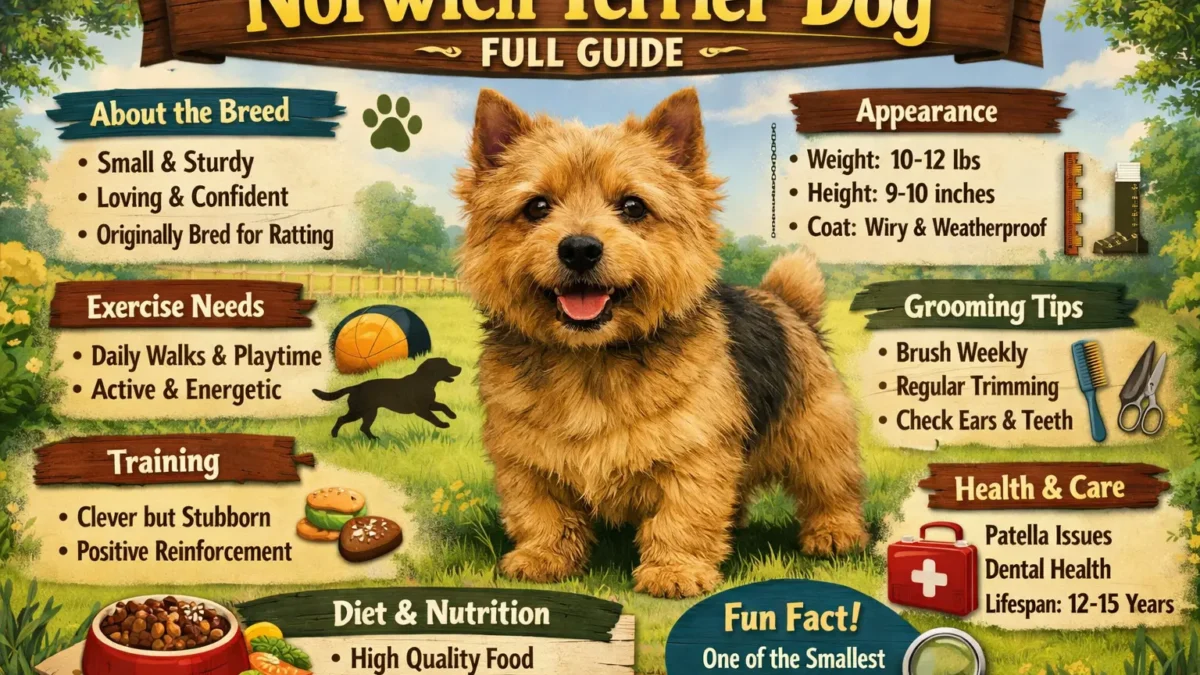
Norwich Terrier Dog: Complete Breed Guide, Temperament, Care, and Costs
The Norwich Terrier is a small but tough dog with a confident personality and strong working roots. Even though this breed is compact, it was never meant to be a lap dog only. Norwich Terriers were bred to work underground, chase pests, and stay fearless in tight spaces. That history still shows today in their alert nature, sturdy body, and bold attitude.
Originally developed in England, the Norwich Terrier was commonly used by farmers and students to control rats and other small vermin. Over time, the breed became popular as a companion because of its loyal nature and manageable size. Despite this shift, the Norwich Terrier has kept its working-dog mindset, which explains why it is more active and determined than many other small breeds.
One important thing many people don’t realize is that the Norwich Terrier is different from the Norfolk Terrier. Norwich Terriers have upright, pointed ears, while Norfolk Terriers have folded ears. This small difference also reflects slight personality and handling differences, especially in alertness and expression.
Physically, the Norwich Terrier is low to the ground, solidly built, and surprisingly strong for its size. It has a dense double coat with a harsh outer layer that helps protect it from dirt, weather, and rough terrain. The breed comes in several natural colors, including red, wheaten, black and tan, and grizzle. Shedding is moderate, but the coat requires proper care to stay healthy.
Below is a quick snapshot that helps readers understand the breed at a glance before diving deeper into temperament and care.
| Norwich Terrier Quick Facts | Details |
|---|---|
| Origin | England |
| Height | About 9–10 inches |
| Weight | Around 11–12 pounds |
| Lifespan | 12–15 years |
| Coat Type | Double coat, wiry outer layer |
| Energy Level | Moderate to high |
| Barking Tendency | Moderate |
| Rarity | Considered a rare breed |
Overall, the Norwich Terrier is best described as a “big dog in a small body.” It combines courage, intelligence, and affection in a compact form, making it appealing to owners who want an active companion without the size of a larger terrier.
Norwich Terrier Temperament and Personality in Real Life
The Norwich Terrier may be small, but its personality is anything but quiet. This breed is confident, curious, and full of energy. Many owners describe Norwich Terriers as brave little dogs that act much bigger than they look. They are alert, aware of their surroundings, and always ready to investigate new sounds or movements.
Norwich Terriers are very loyal to their families. They enjoy being close to their people and often follow them from room to room. At the same time, they are not overly clingy. This breed likes affection but also values independence, which comes from its working terrier background.
With strangers, Norwich Terriers are usually alert but not aggressive. They may bark when someone new arrives, making them good little watchdogs. Once they feel safe, most Norwich Terriers warm up quickly. Early social time helps them stay confident and calm in new places.
Around children, this breed generally does well when treated with respect. Norwich Terriers enjoy play but do not like rough handling. They are a better match for families with older children who understand how to interact gently with dogs.
One important trait to understand is prey drive. Norwich Terriers were bred to hunt small animals, so they may chase squirrels, birds, or other small pets. This does not mean they cannot live with cats or other dogs, but careful introductions and supervision are important.
The table below shows the most common temperament traits and what they mean for daily life.
| Temperament Trait | Level | What This Means for Owners |
|---|---|---|
| Affection | High | Enjoys family time and attention |
| Energy | Moderate to High | Needs daily walks and play |
| Trainability | Moderate | Smart but can be stubborn |
| Barking | Moderate | Will alert you to sounds |
| Prey Drive | Moderate to High | May chase small animals |
| Independence | Moderate | Likes attention but not clingy |
Many first-time owners are surprised by how confident and fearless this breed is. A common myth is that small dogs are always easy and calm. In reality, the Norwich Terrier needs structure, activity, and clear rules to stay well behaved.
Is the Norwich Terrier Right for You? Lifestyle, Exercise, and Training Reality
Before choosing a Norwich Terrier, it is important to understand how this breed fits into daily life. Even though they are small, Norwich Terriers are active dogs that need regular movement and mental work. They are not happy sitting around all day with nothing to do.
Most Norwich Terriers need at least one good walk every day, along with playtime. They enjoy games like fetch, short hikes, and puzzle toys. When they do not get enough exercise, they may bark more, dig, or become restless inside the home.
This breed can live in an apartment, but only if its exercise needs are met. Norwich Terriers are alert and may bark at noises, so training and routine help a lot. They usually do better in homes where owners can spend time playing and interacting with them.
Training a Norwich Terrier can be a mix of fun and challenge. They are smart and learn quickly, but they can also be stubborn. Many owners struggle with recall because this breed loves to chase smells and movement. Short, positive training sessions work best. Harsh methods often backfire and cause the dog to shut down or ignore commands.
Norwich Terriers can work well for families, seniors, or active adults, but they are not a good match for everyone. People looking for a very calm or low-effort dog may feel overwhelmed by this breed’s energy and confidence.
The table below helps show how well the Norwich Terrier fits different lifestyles.
| Lifestyle Situation | Compatibility |
|---|---|
| Families with children | Good with respectful kids |
| First-time owners | Fair, needs patience |
| Apartment living | Good with daily exercise |
| Seniors | Good if activity needs are met |
| Active owners | Excellent |
| Multi-pet homes | Fair with supervision |
The Norwich Terrier is best for people who enjoy an active, alert companion and are willing to train and engage with their dog daily. It is not the best choice for someone who wants a quiet dog with very low needs.
Norwich Terrier Care: Grooming, Health, Lifespan, and Maintenance
Caring for a Norwich Terrier is not difficult, but it does require consistency. This breed has specific grooming and health needs that owners should understand before bringing one home.
The Norwich Terrier has a wiry double coat. It does shed, but not heavily. Regular brushing helps remove loose hair and keeps the coat clean. Many owners choose hand-stripping instead of clipping. Hand-stripping keeps the coat rough and healthy, while clipping makes it softer but may change the coat over time. Baths are only needed when the dog gets dirty.
Basic care also includes trimming nails, cleaning ears, and brushing teeth. Like many small dogs, Norwich Terriers can have dental problems if teeth are not cleaned often. Simple weekly care can prevent many issues later.
The table below gives a clear look at grooming needs.
| Grooming Area | What to Expect |
|---|---|
| Shedding level | Low to moderate |
| Brushing | 1–2 times per week |
| Professional grooming | Occasional |
| Coat maintenance | Moderate effort |
| Dental care | Very important |
In general, Norwich Terriers are healthy dogs with a good lifespan. Most live between 12 and 15 years. However, like all breeds, they can have some genetic health problems. Common concerns include knee issues, hip problems, and certain eye conditions. Buying from a responsible breeder and keeping up with vet visits helps reduce risks.
The table below shows common health concerns owners should be aware of.
| Health Issue | How Common | Why It Matters |
|---|---|---|
| Patellar luxation | Moderate | Can affect movement |
| Hip dysplasia | Low to moderate | Joint discomfort over time |
| Eye problems | Low | Vision health |
| Dental disease | Common | Tooth loss and pain |
Norwich Terriers handle cool weather well because of their coat. In hot weather, they need shade, water, and shorter outdoor sessions to avoid overheating.
With proper grooming, regular vet care, and daily attention, most Norwich Terriers stay healthy and active well into old age.
Norwich Terrier Cost, Pros and Cons, and Similar Breed Comparisons
Before choosing a Norwich Terrier, it helps to understand the cost and how this breed compares to other small terriers. This breed is rare, which affects both price and availability.
Norwich Terrier puppies are often more expensive than many other small dogs. Responsible breeders spend a lot on health testing and proper care, which raises the price. On top of that, ongoing costs like grooming, vet visits, and dental care should be planned for.
Below is a simple look at the main strengths and challenges of owning this breed.
| Pros | Cons |
|---|---|
| Small but strong and confident | Can be stubborn during training |
| Loyal and affectionate | May bark at sounds and strangers |
| Good watchdog | Prey drive can cause chasing |
| Long lifespan | Not a low-energy dog |
| Fits many home sizes | Rare and often expensive |
Many people also compare the Norwich Terrier with similar terrier breeds. While they share some traits, daily life with each breed can feel very different.
| Breed | Size | Energy Level | Grooming Needs | Best For |
|---|---|---|---|---|
| Norwich Terrier | Small | Moderate to high | Moderate | Active owners wanting a small dog |
| Norfolk Terrier | Small | Moderate | Moderate | Similar feel with drop ears |
| Cairn Terrier | Small to medium | High | Moderate | Very active families |
| Border Terrier | Small to medium | Moderate | Low to moderate | Owners wanting an easier-going terrier |
The Norwich Terrier is a great choice for people who want a small dog with a bold personality and are ready to stay active. It is not the best fit for someone looking for a quiet, low-effort pet or a dog that can be left alone often.
If you enjoy training, daily walks, and a dog that keeps you alert and entertained, the Norwich Terrier can be a rewarding companion.
For more detailed information about the Norwich Terrier breed, you can visit the official American Kennel Club page: AKC – Norwich Terrier.