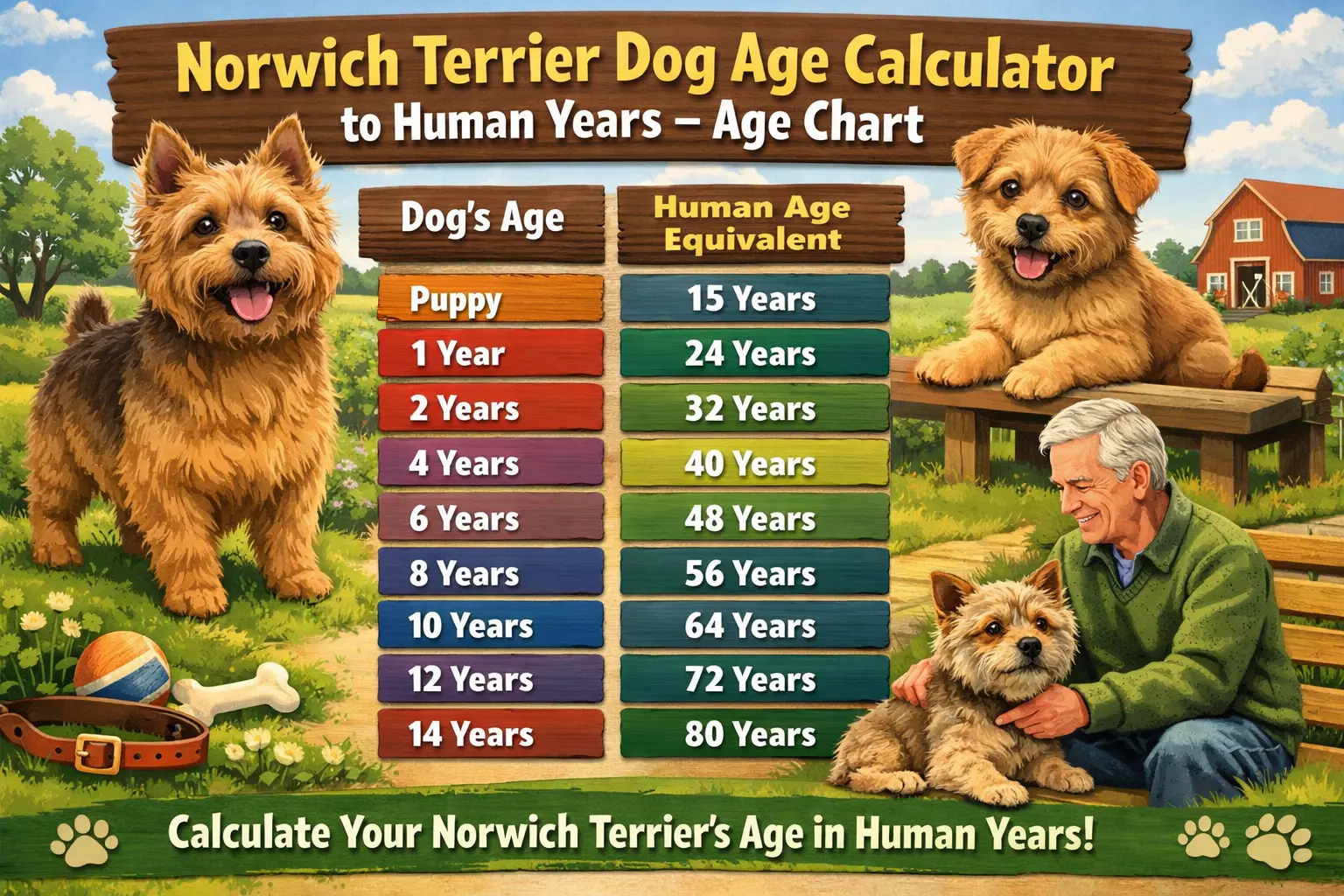
If you’ve ever wondered how old your Norwich Terrier really is in human years, you’re not alone. Many dog owners quickly learn that the old “1 dog year = 7 human years” rule doesn’t give accurate answers—especially for small breeds like the Norwich Terrier.
A Norwich Terrier age calculator converts your dog’s age into human years using modern veterinary aging research instead of outdated guesses. This approach reflects how Norwich Terriers grow, mature, and age over time.
Here’s what makes this calculator more accurate and useful:
- Norwich Terriers are a small, long-lived breed that age differently than large dogs
- Puppies mature very fast in their first year, then aging slows down
- Adult Norwich Terriers stay biologically “younger” for longer compared to humans
- Senior aging happens later than in medium or large breeds
Instead of multiplying by seven, this calculator estimates age based on real biological changes, not just calendar years.
For example, a 1-year-old Norwich Terrier is already similar to a young adult human, while a 10-year-old Norwich Terrier may still be comparable to a healthy middle-aged person rather than “elderly.”
Norwich Terrier Age Chart to Human Years (Small Breed)
The Norwich Terrier age chart helps you quickly see how your dog’s age compares to human years. This is useful if you don’t want to use a calculator and just want a clear answer at a glance.
Norwich Terriers are a small breed, which means they usually age more slowly after their early years compared to larger dogs. That’s why their age conversion looks different from the old 7-year rule.
Below is a simple and easy-to-read age chart made especially for Norwich Terriers.
Norwich Terrier Age to Human Years Chart
| Norwich Terrier Age (Years) | Human Age Equivalent | Life Stage |
|---|---|---|
| 0.5 (6 months) | ~10 years | Puppy |
| 1 | ~15 years | Puppy |
| 2 | ~24 years | Adult |
| 3 | ~28 years | Adult |
| 5 | ~36 years | Adult |
| 7 | ~44 years | Adult |
| 9 | ~52 years | Mature Adult |
| 11 | ~60 years | Senior |
| 13 | ~68 years | Senior |
| 15 | ~76 years | Senior |
How to read this chart:
- Find your Norwich Terrier’s age on the left
- Look across to see the matching human age
- Check the life stage to understand what this age usually means
For example, a 5-year-old Norwich Terrier is similar to a 36-year-old human, not a 35-year-old as the 7-year rule would suggest.
How Norwich Terriers Age Compared to Humans
Dogs do not age at the same speed as humans, and Norwich Terriers age in their own unique way. This is why simple math, like multiplying by seven, does not give correct results.
Here is what happens as Norwich Terriers grow older:
- Puppies age very fast in the first year
A Norwich Terrier puppy reaches adult size and maturity much quicker than a human child. - Adult aging slows down
After about 2 years of age, Norwich Terriers age more slowly than humans. This is common in small dog breeds. - Small dogs live longer
Norwich Terriers usually live longer than medium or large dogs. Their bodies handle aging better over time.
Why the 7-year rule is wrong:
- It assumes dogs age at a steady speed, which is not true
- It ignores breed size and genetics
- It makes small dogs seem “older” than they really are
For example:
- A 7-year-old Norwich Terrier is not like a 49-year-old human
- Biologically, they are closer to someone in their early 40s
This is why using a breed-specific age chart or calculator gives a more realistic picture of your dog’s age and health.
Norwich Terrier Life Stages and Aging Signs
Knowing your Norwich Terrier’s life stage helps you understand what changes are normal and when your dog may need extra care. Small breeds like Norwich Terriers often stay playful and active longer than bigger dogs, but they still go through clear aging stages.
Here is a simple breakdown of what to expect.
Puppy stage (up to about 1 year)
- Fast growth and lots of energy
- Learning basic behavior and training
- Baby teeth fall out and adult teeth grow in
- Needs frequent meals, training, and vet visits
Adult stage (about 2 to 8 years)
- Stable energy and behavior
- Strong muscles and healthy joints
- Best years for learning, playing, and exercise
- Weight control becomes important
Senior stage (around 9 years and older)
- Slower movement and more rest
- Gray hair around the face
- Possible hearing or vision changes
- Joints may feel stiff, especially in the morning
Normal aging signs can include sleeping more, moving slower, and needing gentler exercise.
Warning signs to watch for include sudden weight loss, confusion, pain, or big behavior changes.
Understanding these stages helps you give the right care at the right time instead of guessing based only on age numbers.
How to Help a Norwich Terrier Live a Longer, Healthier Life
Caring for your Norwich Terrier properly can slow aging, prevent health problems, and keep your dog happy. Small dogs like Norwich Terriers often live longer when their owners focus on nutrition, exercise, and regular vet care. Here’s a simple guide.
Care Tips by Life Stage
| Life Stage | Key Care Focus | Simple Owner Action |
|---|---|---|
| Puppy (0–1 year) | Growth and training | Provide high-quality puppy food, socialization, basic training, regular vet check-ups |
| Adult (2–8 years) | Maintaining health | Balanced diet, daily exercise, mental stimulation, regular vet exams |
| Senior (9+ years) | Mobility and comfort | Joint-friendly diet, gentle walks, soft bedding, frequent vet check-ups, monitor for age-related changes |
Other important ways to help your Norwich Terrier live longer:
- Nutrition and weight control: Feed a balanced diet and avoid overfeeding to prevent obesity.
- Exercise and mental enrichment: Daily walks, playtime, and puzzles keep them active and happy.
- Vet care: Regular check-ups, vaccinations, and preventive screenings help detect issues early.
- Lifestyle factors: Spaying or neutering, avoiding toxins, and providing a safe environment all support longevity.
By following these simple steps, you can help your Norwich Terrier stay healthy and comfortable throughout every stage of life.
For more expert guidance on Norwich Terriers, including health, behavior, and care tips, you can visit the American Kennel Club’s breed page: https://www.akc.org/dog-breeds/norwich-terrier/

Ata Ur Rehman is the founder of Pet Age in Human Years Calculator, an educational platform that provides age conversion charts and lifespan guides for dogs, cats, birds, and other companion animals. His work focuses on helping pet owners understand how animal ages translate into human years using commonly accepted age conversion formulas and published lifespan averages.
The website compiles breed and species lifespan data from kennel clubs, breed organizations, and general animal lifespan studies to present simple and easy-to-understand guides for pet owners worldwide.
This website was created to centralize animal age conversion charts into one easy reference platform for pet owners.