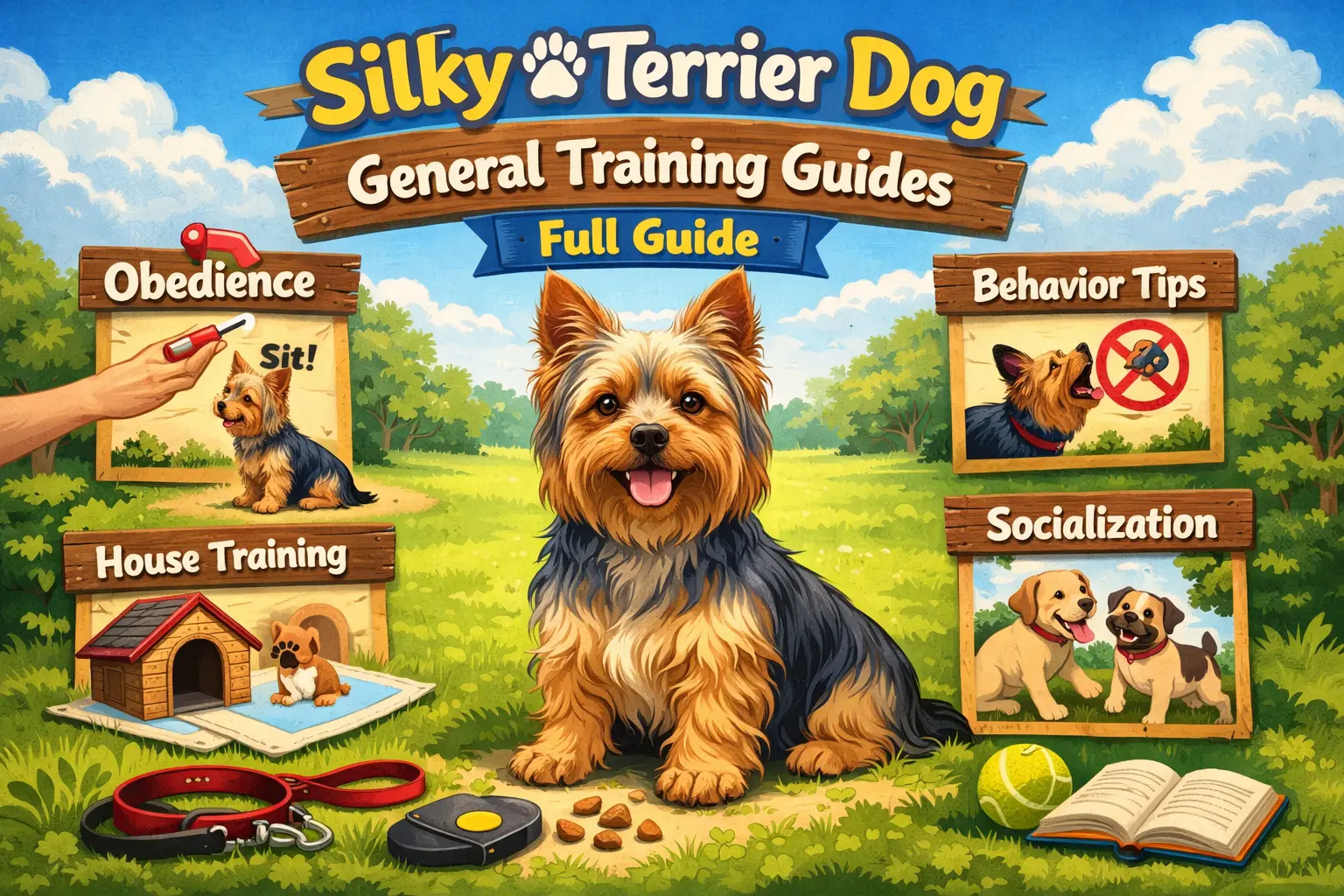
The Silky Terrier is a small, lively, and intelligent breed known for its alert personality and playful energy. Despite their size, Silky Terriers are bold and curious, which can make them both fun and challenging to train. Early and consistent training is key to ensuring they grow into well-behaved, confident dogs.
Training your Silky Terrier is important for several reasons:
- Safety: Proper training helps prevent unwanted behaviors like excessive barking, jumping, or running off.
- Behavior management: Small dogs often develop “small-dog syndrome” if not taught boundaries early.
- Happiness: A trained dog feels more confident and enjoys better interactions with family, other pets, and strangers.
- Socialization: Silky Terriers can be wary of new environments or people; training helps them navigate these situations calmly.
While Silky Terriers are intelligent and quick learners, they also have an independent streak. This means training should be fun, positive, and consistent, with short sessions that match their energy levels. Using rewards like treats, praise, or play helps reinforce good behavior and keeps your dog motivated.
Quick Trait Reference Table
| Trait | Impact on Training | Tip for Owners |
|---|---|---|
| High energy | May get bored quickly | Use short, frequent sessions |
| Independent | Might ignore commands | Use high-value rewards |
| Alert / vocal | Prone to barking | Teach “quiet” early |
By understanding your Silky Terrier’s personality and starting training early, you’ll set the foundation for a happy, obedient, and confident dog.
Understanding Silky Terrier Behavior
Silky Terriers are smart, lively, and full of energy. They are small dogs, but they think big! Because of their curious and independent nature, they can sometimes be stubborn or bossy. Knowing how they behave will help you train them better.
Here are some common behavior traits and challenges:
- Curious and energetic: They love exploring and playing, so they can get distracted during training.
- Alert and vocal: Silky Terriers often bark at new people or noises.
- Independent: They like making their own choices, which can make them ignore commands.
- Fear or shyness: Some can be nervous around strangers or other dogs if not socialized early.
Behavior Challenges Table
| Behavior Challenge | Why It Happens | Simple Fix / Strategy |
|---|---|---|
| Barking | Alert or bored | Reward quiet, redirect attention to a toy or game |
| Nipping | Play or teething | Stop play immediately, offer a chew toy, praise gentle play |
| Stubbornness | Independent nature | Keep training sessions short, use high-value rewards |
| Fear of strangers | Lack of socialization | Gradually introduce new people with treats and praise |
By understanding these behaviors, you can set up training in a way that works with your Silky Terrier’s personality, not against it.
Step-by-Step Training Guide
Training your Silky Terrier can be simple and fun if you use short sessions and rewards. These dogs learn quickly, but they can get bored easily. Keep sessions 5–15 minutes, a few times each day, and always reward good behavior with treats, praise, or play.
Core Training Tips
- Consistency is key: Always use the same commands and gestures.
- Positive reinforcement: Reward your dog immediately when they do something right.
- Short and frequent sessions: Silky Terriers have short attention spans, so multiple short sessions work better than one long one.
- Socialization: Introduce your dog to new people, dogs, and places to build confidence.
Training Session Quick-Reference Table
| Command / Skill | Session Length | Rewards | Notes |
|---|---|---|---|
| Sit | 5–10 min | Treat / Praise | Start indoors, move outside gradually |
| Come / Recall | 5 min | High-value treat | Short distance first, low distractions |
| Stay | 5–10 min | Treat / Praise | Begin with short time, increase gradually |
| Leash Walking | 10–15 min | Treat / Praise | Stop pulling, reward walking calmly |
| House Training | 5 min | Treats | Schedule after meals or naps, use consistent spot |
| Socialization | 5–10 min | Treats / Praise | Controlled exposure to new people, dogs, or places |
Using this plan, you can gradually teach your Silky Terrier obedience while keeping training fun and stress-free. Remember to adapt the rewards and pace depending on your dog’s energy and mood.
Common Problems and How to Fix Them
Even with training, Silky Terriers can have some common behavior problems. Understanding why these happen and how to fix them will make life easier for both you and your dog.
Common Issues
- Excessive barking: They may bark at strangers, noises, or when they are bored.
- Jumping and nipping: Excitement or playfulness can lead to jumping on people or gentle biting.
- Separation anxiety: Some Silky Terriers feel nervous when left alone.
- Stubbornness / selective hearing: Independent nature can make them ignore commands.
- Household challenges: Multi-pet homes or busy apartments may increase stress or distractions.
Common Problems and Quick Fixes Table
| Problem | Cause | Quick Fix |
|---|---|---|
| Barking | Alert / boredom | Redirect attention, reward quiet, provide toys |
| Jumping | Excitement | Turn away, reward calm sitting |
| Nipping / biting | Play / teething | Offer toy, stop play, praise gentle behavior |
| Separation anxiety | Fear / attachment | Gradual alone time, reward calm behavior |
| Stubbornness | Independent nature | Short sessions, high-value rewards |
By recognizing these problems early, you can apply simple fixes consistently, which will prevent small issues from becoming big habits.
When to Seek Professional Help
Most Silky Terriers respond well to consistent training at home. However, some problems need professional guidance. Knowing when to get help keeps your dog and family safe and prevents small issues from becoming serious.
Red Flags
- Aggression toward people or other pets
- Severe fear or anxiety
- Uncontrollable barking
- Severe separation anxiety
Red Flag Checklist Table
| Sign | Severity | Recommended Action |
|---|---|---|
| Aggression toward people | High | Contact certified trainer or veterinary behaviorist immediately |
| Aggression toward other dogs | High | Seek professional guidance before interactions |
| Uncontrollable barking | Medium | Structured training, if persists hire a professional |
| Severe separation anxiety | Medium/High | Gradual desensitization + professional guidance |
| Fear of new environments | Low/Medium | Controlled exposure and reward calm behavior |
If your Silky Terrier shows any of these signs, don’t wait. Early intervention from a qualified trainer or vet behaviorist ensures your dog learns safe, healthy ways to cope. Even small adjustments guided by a professional can make training much faster and more effective
For more detailed breed characteristics, training tips, and care needs specific to the Silky Terrier, visit the Silky Terrier breed page — https://www.akc.org/dog-breeds/silky-terrier/American Kennel Club

Ata Ur Rehman is the founder of Pet Age in Human Years Calculator, an educational platform that provides age conversion charts and lifespan guides for dogs, cats, birds, and other companion animals. His work focuses on helping pet owners understand how animal ages translate into human years using commonly accepted age conversion formulas and published lifespan averages.
The website compiles breed and species lifespan data from kennel clubs, breed organizations, and general animal lifespan studies to present simple and easy-to-understand guides for pet owners worldwide.
This website was created to centralize animal age conversion charts into one easy reference platform for pet owners.