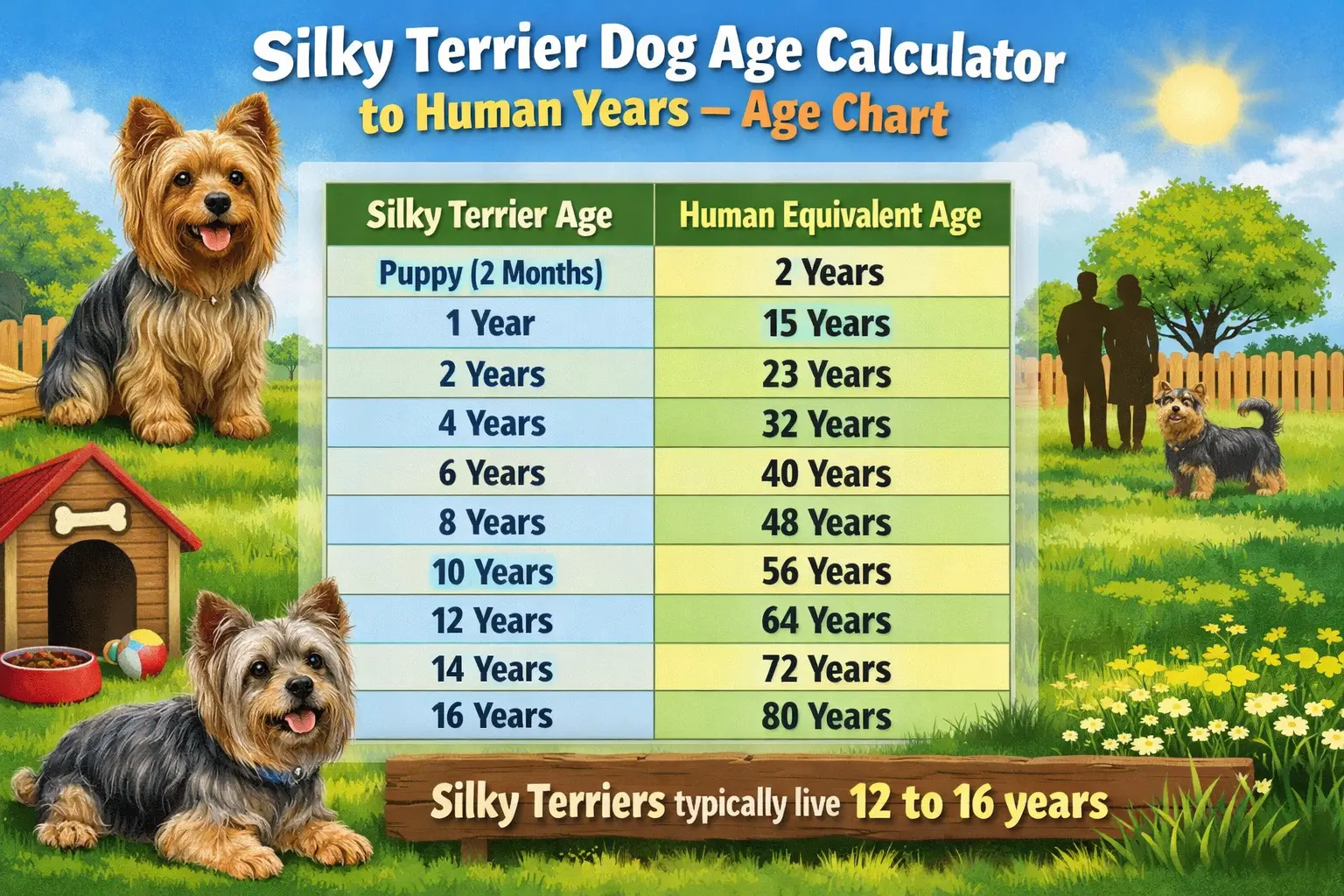
Understanding your Silky Terrier’s age in human years can help you provide the right care at every stage of life. Unlike the old “1 dog year = 7 human years” rule, small breeds like Silky Terriers age differently from larger dogs. Their early years pass quickly, but as they reach adulthood, their aging slows relative to larger breeds.
Using a Silky Terrier dog age calculator or a simple conversion formula makes it easier to see how your dog’s years translate into human years. This helps you anticipate developmental milestones, health needs, and lifestyle changes.
Here’s a quick example of how the calculation works for Silky Terriers:
| Dog Age (Years) | Human Age Equivalent (Years) |
|---|---|
| 1 | 15 |
| 2 | 24 |
| 3 | 28 |
| 4 | 32 |
| 5 | 36 |
Knowing your Silky Terrier’s human age equivalent helps you:
- Plan vet visits and vaccinations
- Adjust diet and exercise routines
- Monitor for signs of aging early
Silky Terrier Life Stages: Puppy, Adult, and Senior
Silky Terriers grow and change at different speeds as they get older. Understanding their life stages helps you take better care of them. Small breeds like Silky Terriers develop quickly in the first year, enjoy a long adult life, and then slowly enter their senior years.
Here’s an easy guide to the life stages of a Silky Terrier:
| Dog Age (Years) | Life Stage | Human Age Equivalent (Years) | Key Traits / Milestones |
|---|---|---|---|
| 0–1 | Puppy | 0–15 | Fast growth, learning basic commands, lots of play |
| 1–3 | Young Adult | 16–28 | High energy, social, learning good behavior |
| 4–7 | Adult | 29–44 | Steady energy, fully grown, needs regular exercise |
| 8–11 | Mature Adult | 45–60 | Slower activity, may start showing minor aging signs |
| 12+ | Senior | 61+ | Less active, more rest, monitor health closely |
By knowing these stages, you can plan:
- Diet changes to match energy levels
- Exercise routines to prevent weight gain
- Health check-ups to catch problems early
Understanding life stages also makes it easier to compare your Silky Terrier’s age to human years, which is helpful when using an age calculator or chart.
Silky Terrier Age Chart: Dog Years to Human Years
To understand your Silky Terrier’s age better, it helps to see a full dog-to-human age chart. Small breeds like Silky Terriers grow fast in their first years, then slow down as they age. This chart shows every year of life and its human age equivalent.
| Dog Age (Years) | Human Age Equivalent (Years) | Notes / Examples |
|---|---|---|
| 1 | 15 | Puppy learning basic skills |
| 2 | 24 | Young adult, very playful |
| 3 | 28 | High energy, socializing |
| 4 | 32 | Adult, steady routine |
| 5 | 36 | Adult, healthy and active |
| 6 | 40 | Adult, start monitoring weight |
| 7 | 44 | Mature adult, slower pace |
| 8 | 48 | Mature adult, more rest |
| 9 | 52 | Early senior signs may appear |
| 10 | 56 | Senior, monitor health closely |
| 11 | 60 | Senior, less active |
| 12 | 64 | Senior, may need joint support |
| 13 | 68 | Senior, regular vet visits important |
| 14 | 72 | Senior, low activity, watch diet |
| 15 | 76 | Senior, comfort and gentle care needed |
| 16 | 80 | Senior, daily monitoring recommended |
This table helps you see your Silky Terrier’s age at a glance. You can quickly find out how old your dog is in human years and adjust exercise, diet, and care routines accordingly.
How to Help Your Silky Terrier Age Healthily
Helping your Silky Terrier stay healthy as they get older is very important. Small breeds like Silky Terriers can live a long life if you give them the right food, exercise, and medical care. Adjusting care at each life stage keeps them happy, active, and comfortable.
Here’s a simple guide for healthy aging:
| Dog Age Range | Diet / Nutrition Tips | Exercise / Mental Stimulation | Vet / Preventive Care |
|---|---|---|---|
| 0–1 year | High-quality puppy food, small meals | Short play sessions, learning commands | Vaccinations, regular checkups |
| 1–3 years | Balanced adult diet, monitor treats | Daily walks, interactive toys | Annual vet visits, dental care |
| 4–7 years | Maintain healthy weight, avoid overfeeding | Regular exercise, puzzle toys | Vet checkups, monitor joint health |
| 8–11 years | Senior diet if recommended, controlled portions | Gentle walks, mental games | Bi-annual vet visits, blood tests, dental checks |
| 12+ years | Soft food if needed, supplements for joints | Low-impact exercise, mental enrichment | Frequent vet visits, monitor mobility, watch for signs of illness |
Tips for a healthy Silky Terrier:
- Keep them active but don’t over-exercise senior dogs.
- Provide mental stimulation with toys, training, or simple games.
- Regular vet checkups help catch problems early.
- Adjust diet as they slow down to prevent weight gain.
- Watch for changes in behavior, mobility, or appetite, which may signal aging or health issues.
Frequently Asked Questions About Silky Terrier Aging
Many Silky Terrier owners have questions about their dog’s age and health. Here are the most common questions answered simply, along with human age equivalents when helpful.
| Question | Answer | Human Age Equivalent Example |
|---|---|---|
| How old is my Silky Terrier in human years? | Use the dog age calculator or chart. Small breeds like Silky Terriers grow fast in the first 2 years, then slower. | 5-year-old Silky Terrier ≈ 36 human years |
| When is a Silky Terrier considered a senior? | Usually around 12 years, but watch for signs like less energy or slower movement. | 12+ dog years ≈ 61+ human years |
| Does size affect aging? | Yes, small dogs like Silky Terriers age slower than large breeds after the first 2 years. | N/A |
| Is the “1 dog year = 7 human years” rule accurate? | No, it’s outdated. Age depends on breed and size. Use a breed-specific chart or calculator. | N/A |
| What should I do as my Silky Terrier ages? | Adjust diet, exercise, mental activities, and schedule regular vet visits. | N/A |
By using this table, you can quickly get answers to common questions about your Silky Terrier’s age, health, and care. Always remember that every dog is unique, so check with your vet for advice tailored to your pet.
For more detailed information on dog aging and small breed care, you can visit the American Kennel Club’s guide on dog life stages: https://www.akc.org/expert-advice/health/dog-life-stages/

Ata Ur Rehman is the founder of Pet Age in Human Years Calculator, an educational platform that provides age conversion charts and lifespan guides for dogs, cats, birds, and other companion animals. His work focuses on helping pet owners understand how animal ages translate into human years using commonly accepted age conversion formulas and published lifespan averages.
The website compiles breed and species lifespan data from kennel clubs, breed organizations, and general animal lifespan studies to present simple and easy-to-understand guides for pet owners worldwide.
This website was created to centralize animal age conversion charts into one easy reference platform for pet owners.