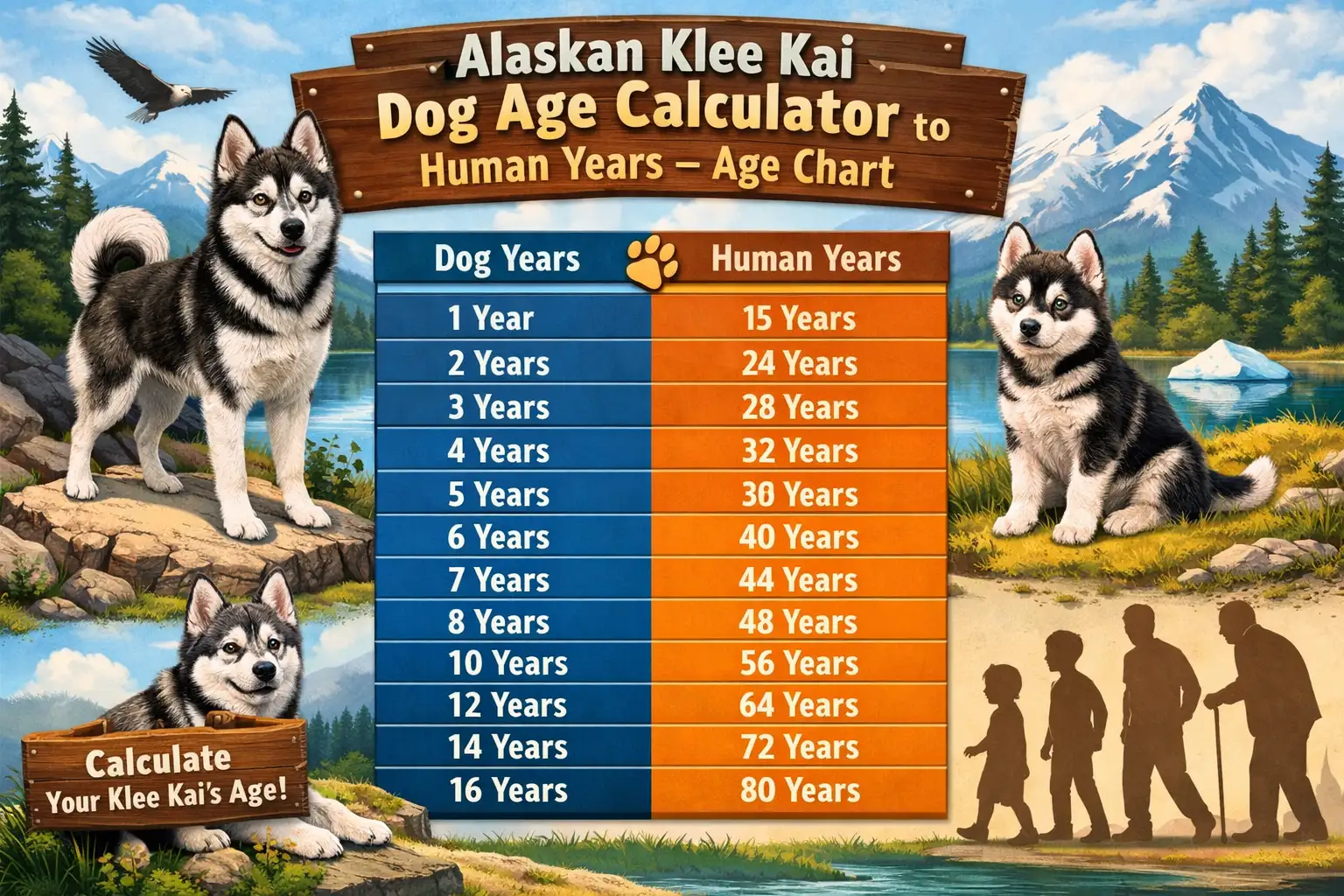
Many dog owners assume that 1 dog year equals 7 human years, but this is a common misconception—especially for small breeds like the Alaskan Klee Kai. Dogs age faster in their first two years, then the aging rate slows down. This means that a 2-year-old Klee Kai is already like a young adult in human years, while a 5-year-old may still be considered middle-aged.
Alaskan Klee Kais are a small, active breed, typically living 12–16 years with proper care. Because they are small, they mature quickly as puppies, but their senior years come later than larger breeds. Understanding how your Klee Kai ages helps you anticipate health needs, behavioral changes, and care requirements at each life stage.
Here’s a quick overview of their life stages with approximate human age equivalents:
| Life Stage | Dog Age Range | Human Age Equivalent | Notes |
|---|---|---|---|
| Puppy | 0–1 year | 0–15 years | Rapid growth, teething, learning basic commands |
| Junior / Young Adult | 1–3 years | 15–28 years | Physical maturity, high energy, socialization |
| Adult | 3–7 years | 28–44 years | Steady energy, mental maturity, routine training |
| Senior | 7+ years | 45+ years | Slower metabolism, joint changes, early signs of aging |
The Science Behind Alaskan Klee Kai Aging
Alaskan Klee Kais, like all dogs, do not age in a straight line. They grow quickly as puppies, slow down in adulthood, and show signs of aging more gradually as seniors. Scientists have found that small breeds age differently than large breeds, which is why a small dog like a Klee Kai can live much longer than a Great Dane.
Recent research, including the 2019 canine epigenetic study, shows that dog aging follows a logarithmic curve rather than a simple 7:1 rule. This means the first year of a dog’s life counts for about 15 human years, the second year about 9 human years, and each year after is fewer human years, depending on the dog’s size.
Here’s a simple size-based aging comparison to help you understand how Klee Kais differ from larger breeds:
| Breed Size | Average Lifespan | Aging Pattern | Example Breeds |
|---|---|---|---|
| Small | 12–16 years | Fast early growth, slower senior years | Alaskan Klee Kai, Chihuahua, Miniature Poodle |
| Medium | 10–13 years | Moderate growth early, noticeable aging from 7 | Beagle, Cocker Spaniel, Bulldog |
| Large | 8–10 years | Slower early growth, faster aging after 5 | Labrador, Golden Retriever, Boxer |
| Giant | 6–8 years | Slow start, rapid aging in mid-life | Great Dane, Saint Bernard, Mastiff |
This table shows that size matters when calculating dog years. Small dogs like Klee Kais mature quickly in the first two years, but their senior years arrive later than larger breeds. Understanding this helps you anticipate health needs and care routines as your dog grows.
Alaskan Klee Kai Age to Human Years: Calculator & Chart
Now that we understand how Klee Kais age, it’s time to convert their age into human years. Instead of using the old 7:1 rule, we use a more accurate formula for small breeds:
- First year = 15 human years
- Second year = 9 human years
- Each year after = about 4–5 human years
This formula matches research from the 2019 epigenetic study and reflects how small dogs like Klee Kais age more slowly after their early years.
Here is a full age conversion chart for Alaskan Klee Kais:
| Dog Age (Years) | Human Age Equivalent | Life Stage | Notes |
|---|---|---|---|
| 0.5 | 7.5 | Puppy | Rapid growth, teething |
| 1 | 15 | Puppy | Physical maturity approaching |
| 2 | 24 | Junior/Young Adult | Socialization, energy peak |
| 3 | 28 | Adult | Mental maturity, stable energy |
| 4 | 32 | Adult | Regular training, routine habits |
| 5 | 36 | Adult | Middle-aged, watch weight |
| 6 | 40 | Adult | Slight slower metabolism |
| 7 | 44 | Senior | Early signs of aging, joint care |
| 8 | 48 | Senior | Cognitive changes may appear |
| 9 | 52 | Senior | Monitor health, preventive vet visits |
| 10 | 56 | Senior | Slower activity, joint support |
| 11 | 60 | Senior | Extra care for mobility |
| 12 | 64 | Senior | Older adult stage, watch diet |
| 13 | 68 | Senior | Advanced age, monitor all health |
| 14 | 72 | Senior | Very senior, vet checkups crucial |
| 15 | 76 | Senior | Exceptional age, extra support |
This chart makes it easy to see at a glance how old your Alaskan Klee Kai is in human years. You can use it to adjust exercise, diet, and health care for each stage of life.
Alaskan Klee Kai Life Stages: Puppy, Adult, Senior
Understanding the life stages of your Alaskan Klee Kai helps you plan training, care, and health checks. Small breeds like Klee Kais grow quickly at first, then settle into adult life, and eventually enter their senior years.
Here’s a simple table summarizing the key milestones and changes at each stage:
| Life Stage | Age Range | Key Physical Changes | Behavioral Notes | Health Watch Points |
|---|---|---|---|---|
| Puppy | 0–1 year | Rapid growth, teething, adult teeth appear | Learns commands, socializes, high energy | Vaccinations, spay/neuter, proper nutrition |
| Junior / Young Adult | 1–3 years | Full height, lean body | Active, curious, training reinforcement | Regular vet visits, monitor weight |
| Adult | 3–7 years | Muscles develop, stable weight | Predictable behavior, routine energy | Dental care, balanced diet, exercise |
| Senior | 7+ years | Slower metabolism, graying fur, joint changes | Reduced activity, may nap more | Joint support, vet checkups, monitor for cognitive changes |
This table helps you recognize what’s normal at each stage and spot early signs of aging or health issues.
By following these milestones, you can adjust training, play, and health routines to keep your Klee Kai happy and healthy throughout their life.
Helping Your Alaskan Klee Kai Age Healthily
Taking care of your Alaskan Klee Kai as they grow older is important to keep them happy, active, and healthy. Small breeds like Klee Kais live long, but their needs change at each stage of life. Nutrition, exercise, mental enrichment, and regular vet visits are all key.
Here’s a quick-reference table for keeping your Klee Kai healthy at different ages:
| Age Range | Recommended Nutrition | Exercise & Enrichment | Vet Checks | Lifestyle Tips |
|---|---|---|---|---|
| 0–1 year | High-quality puppy food | Short walks, playtime, training | Vaccinations, deworming | Socialization, basic training, teething toys |
| 1–3 years | Adult small-breed food | Daily walks, puzzle toys, agility play | Spay/neuter, dental check | Reinforce training, mental stimulation |
| 3–7 years | Balanced adult diet | Moderate daily exercise, mental games | Annual wellness check | Maintain healthy weight, joint-friendly activities |
| 7+ years | Senior dog food with joint support | Gentle walks, low-impact play | Bi-annual vet check, blood work | Monitor weight, joint care, cognitive enrichment |
By following these tips, you can support your Klee Kai’s longevity, prevent obesity, maintain joint health, and spot early signs of aging or illness.
Small changes in diet, exercise, and care can make a big difference in quality of life, especially in their senior years.
For more detailed breed information, including typical lifespan and care needs of Alaskan Klee Kai dogs, you can visit the American Kennel Club’s breed profile at the AKC website. akc.org

Ata Ur Rehman is the founder of Pet Age in Human Years Calculator, an educational platform that provides age conversion charts and lifespan guides for dogs, cats, birds, and other companion animals. His work focuses on helping pet owners understand how animal ages translate into human years using commonly accepted age conversion formulas and published lifespan averages.
The website compiles breed and species lifespan data from kennel clubs, breed organizations, and general animal lifespan studies to present simple and easy-to-understand guides for pet owners worldwide.
This website was created to centralize animal age conversion charts into one easy reference platform for pet owners.