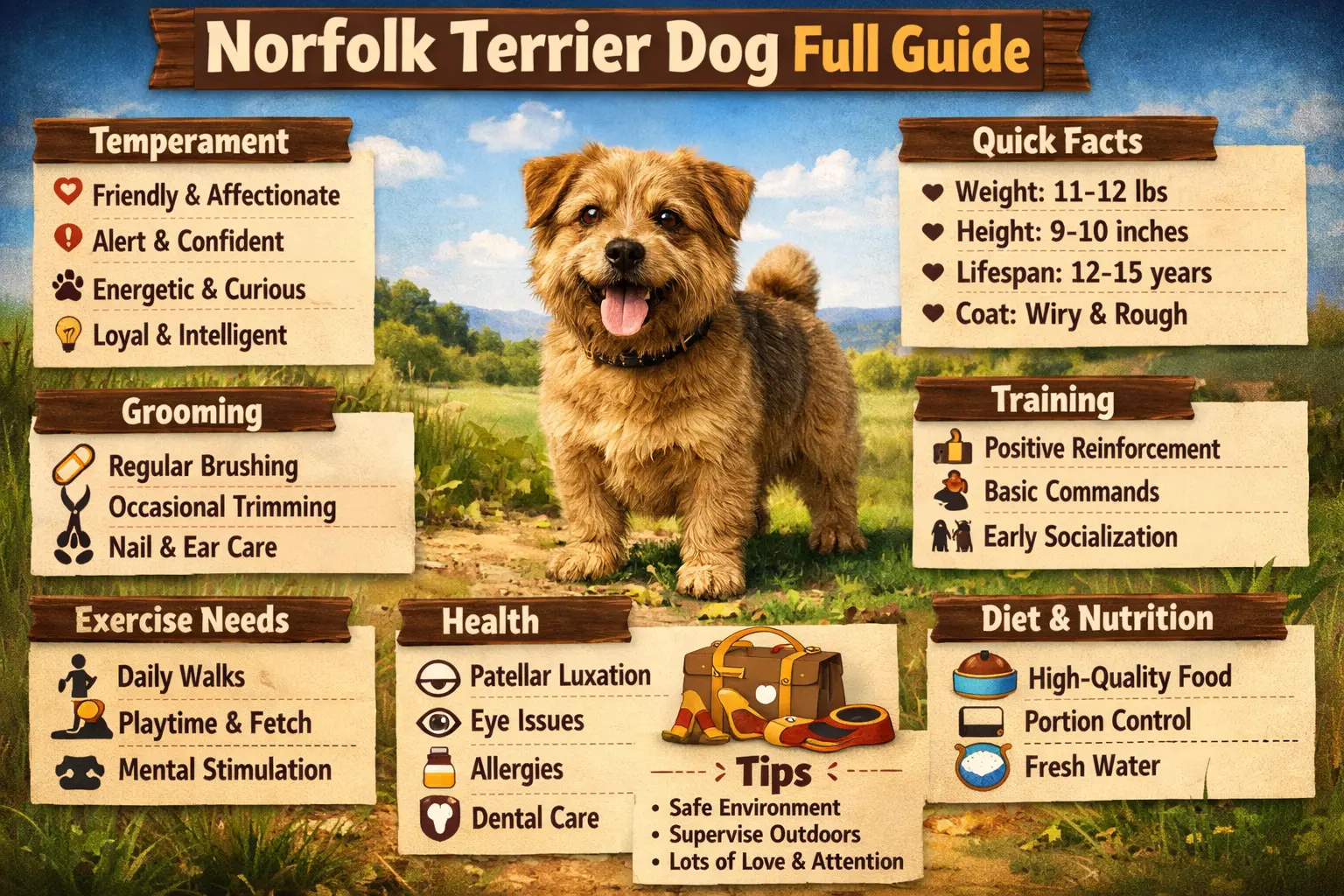
The Norfolk Terrier is one of the smallest yet most spirited members of the terrier family. Known for its compact size, wiry coat, and alert expression, this little dog carries a big personality. Energetic, affectionate, and fearless, Norfolk Terriers were originally bred in the UK as skilled ratters and hunting companions, but today they thrive as loving family pets and loyal companions.
Despite their small stature—standing just 9 to 10 inches at the shoulder and weighing around 11 to 12 pounds—Norfolk Terriers are remarkably sturdy and confident. They are often described as “big dogs in small bodies,” with intelligence and curiosity that can sometimes get them into playful mischief.
What makes this breed particularly appealing is its versatility. Norfolk Terriers adapt well to different living environments, from country homes with large yards to city apartments, provided they receive enough daily exercise and mental stimulation. They form strong bonds with their owners and are often described as affectionate “velcro dogs,” following family members from room to room.
This full guide will explore the Norfolk Terrier’s history, appearance, temperament, care needs, health considerations, and suitability for different households, offering prospective owners a complete picture of what life with this small but spirited terrier is truly like.
History, Appearance & Characteristics
The Norfolk Terrier comes from the eastern part of England, where it was first bred to catch rats and small pests on farms. Over time, these small, brave dogs became popular as companion pets, loved for their friendly and lively nature. They were officially recognized as a separate breed from the Norwich Terrier in the early 20th century.
Norfolk Terriers are small but strong dogs. They are compact, with a sturdy body and short legs. Their wiry coat helps protect them from cold and wet weather. They usually have drop ears, bright round eyes, and a happy, alert expression.
These dogs come in a few different colors. The most common are red, wheaten, black & tan, and grizzle. Their small size doesn’t mean they are fragile—they are tough, active, and full of energy. Norfolk Terriers love to explore, play, and stay busy.
Because of their lively and curious nature, they are smart and can sometimes get into small trouble if they are bored. This makes understanding their personality and providing enough activity very important for a happy dog.
Here is a simple table showing their key features:
| Feature | Details |
|---|---|
| Size | 9–10 inches at shoulder |
| Weight | 11–12 lbs (adult) |
| Coat | Wiry, dense, weather-resistant |
| Colors | Red, wheaten, black & tan, grizzle |
| Distinctive Traits | Drop ears, expressive eyes, sturdy compact body |
Temperament, Behavior & Suitability
Norfolk Terriers are small dogs with big personalities. They are brave, curious, and full of energy. Even though they are tiny, they are very confident and love to explore their surroundings. They are also very loyal and love spending time with their family.
With children, Norfolk Terriers are usually gentle and playful, but like all small dogs, they should be handled carefully. They enjoy being part of family activities and can be very affectionate. Around strangers, they are alert and may bark to let you know someone is coming, but they are rarely aggressive.
These dogs can get along with other pets, especially if they are raised together. However, because they have a terrier background, they may have a strong prey drive, which means they might chase smaller animals like cats or squirrels if not supervised. Early socialization helps them live peacefully in a multi-pet household.
Norfolk Terriers adapt well to different homes. They do well in apartments as long as they get daily exercise. They are also good for first-time dog owners who are ready to give them attention and consistent training. Active families and seniors can enjoy having a Norfolk Terrier, as they are small, lively, and loving companions.
Here is a quick table showing how suitable they are for different situations:
| Situation | Suitability / Notes |
|---|---|
| Families with children | Good, but supervision advised |
| First-time owners | Moderate, needs consistent care |
| Apartment living | Suitable with daily exercise |
| Active/athletic owners | Excellent for walks and play |
| Seniors | Loving, easy to manage |
| Multi-pet households | Usually compatible, early socialization helps |
Care, Exercise, Grooming & Health
Norfolk Terriers are small dogs, but they have lots of energy and need daily care to stay happy and healthy. They enjoy walks, playtime, and activities that challenge their mind, like toys or simple games. Most Norfolk Terriers need about 30 to 60 minutes of exercise every day. This can include walks, play in the yard, or interactive games inside.
Training Norfolk Terriers can be fun but sometimes tricky. They are smart and like to learn, but they can also be stubborn. Using gentle, positive reinforcement works best. Short training sessions are more effective than long ones, and consistency is very important.
Grooming is not too hard but still needs attention. Their wiry coat should be brushed weekly to remove tangles and dirt. Some Norfolk Terriers may need hand-stripping a few times a year to keep the coat healthy. Nails should be trimmed regularly, ears checked for cleanliness, and teeth brushed to prevent dental problems.
Norfolk Terriers are generally healthy dogs with a lifespan of 12 to 15 years. Some common health issues include hip dysplasia, patellar luxation (knee problems), and certain eye conditions. Regular vet check-ups and screenings can help catch health problems early and keep your Norfolk Terrier in good shape.
Here is a quick table summarizing their care and health needs:
| Care Aspect | Norfolk Terrier Notes |
|---|---|
| Exercise | 30–60 min/day, interactive play, walks, mental stimulation |
| Training | Positive reinforcement, short sessions, consistent approach |
| Grooming | Weekly brushing, occasional hand-stripping, low shedding |
| Health | Lifespan 12–15 yrs; prone to hip dysplasia, patellar luxation, eye conditions |
Pros, Cons, Similar Breeds & FAQs
Norfolk Terriers are small dogs with a lot of energy and personality. They are fun, loyal, and affectionate companions. Like any breed, they have strengths and some challenges that owners should know about before bringing one home.
Here is a simple table of their main pros and cons:
| Pros | Cons |
|---|---|
| Small, affectionate, energetic | High energy may be too much for inactive owners |
| Adaptable to homes and families | Can be stubborn or independent at times |
| Intelligent and trainable | Prey drive may lead them to chase small animals |
Norfolk Terriers are also similar to a few other small terrier breeds. Comparing them can help future owners choose the right dog:
| Breed | Size | Energy | Grooming | Temperament |
|---|---|---|---|---|
| Norfolk Terrier | 9–10 in / 11–12 lbs | High | Low–moderate | Affectionate, alert, playful |
| Norwich Terrier | 10 in / 12–14 lbs | High | Low | Spirited, friendly |
| Cairn Terrier | 9–13 in / 13–18 lbs | High | Moderate | Confident, energetic |
| Border Terrier | 10–11 in / 11–16 lbs | High | Moderate | Friendly, affectionate |
Many people have questions about Norfolk Terriers. Here are some common ones:
FAQs
- Are Norfolk Terriers good with children? Yes, but handle gently as they are small dogs.
- How much exercise does a Norfolk Terrier need? About 30–60 minutes daily.
- Do Norfolk Terriers bark a lot? They are alert and may bark to warn of strangers, but they are not excessively noisy.
- What health issues are common in Norfolk Terriers? Hip dysplasia, patellar luxation, and some eye conditions.
- How often should you groom a Norfolk Terrier? Weekly brushing, occasional hand-stripping.
- Norfolk Terrier vs Norwich Terrier: The Norfolk has drop ears; the Norwich has prick ears. Both are small, energetic, and affectionate.
For more detailed information on Norfolk Terrier breed standards, care recommendations, and official guidelines, you can visit the American Kennel Club page for Norfolk Terriers: AKC Norfolk Terrier.

Ata Ur Rehman is the founder of Pet Age in Human Years Calculator, an educational platform that provides age conversion charts and lifespan guides for dogs, cats, birds, and other companion animals. His work focuses on helping pet owners understand how animal ages translate into human years using commonly accepted age conversion formulas and published lifespan averages.
The website compiles breed and species lifespan data from kennel clubs, breed organizations, and general animal lifespan studies to present simple and easy-to-understand guides for pet owners worldwide.
This website was created to centralize animal age conversion charts into one easy reference platform for pet owners.