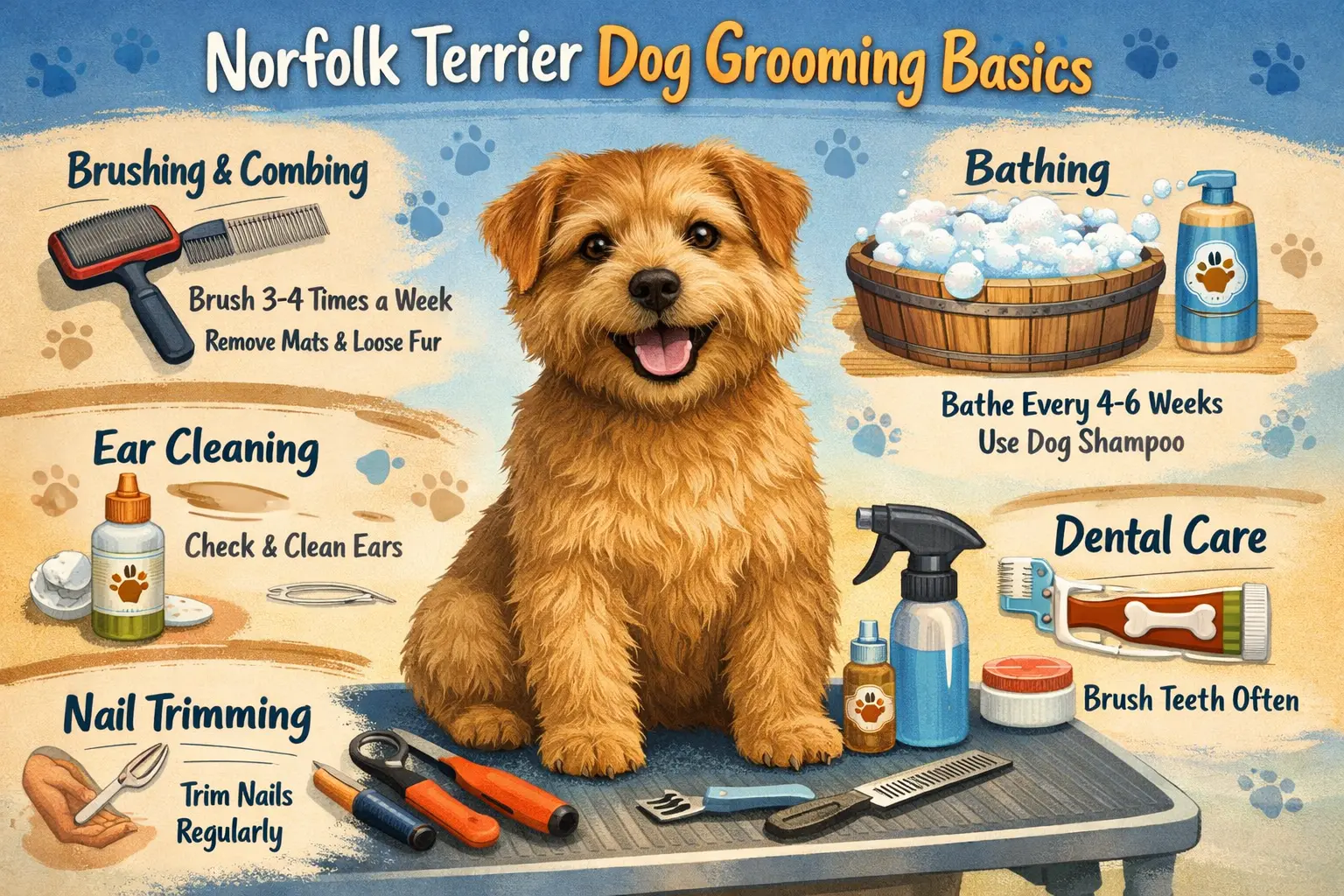
Grooming your Norfolk Terrier isn’t just about keeping them looking cute — it’s a crucial part of maintaining their health, comfort, and overall well-being. With their wiry, dense coat and soft undercoat, Norfolk Terriers require a grooming routine tailored to their unique coat type. Proper grooming helps prevent mats and tangles, reduces the risk of skin irritations, and keeps shedding under control.
Beyond coat care, grooming is also a way to monitor your dog’s skin, nails, ears, and teeth, allowing you to spot early signs of potential health issues. Regular grooming sessions strengthen the bond between you and your Norfolk Terrier, making them more comfortable with handling and touch, which can reduce anxiety during vet visits or professional grooming appointments.
This guide will walk you through everything you need to know about Norfolk Terrier grooming, from understanding their coat to setting up a practical home grooming routine, tackling common problems, and knowing when to seek professional help. By following these tips, you can ensure your Norfolk Terrier stays happy, healthy, and looking their best.
Understanding the Norfolk Terrier Coat
The Norfolk Terrier has a wiry outer coat that feels rough to the touch and a soft undercoat that keeps them warm. This type of coat helps protect their skin and makes them look neat, but it also means they need regular grooming to stay healthy.
Different parts of their coat behave differently: some areas, like behind the ears, under the collar, and under the legs, can get mats if not brushed often. Their coat does not shed a lot, but mats and tangles can trap dirt and cause odor if not cared for properly.
Here is a simple table to help you understand the coat and how it affects grooming:
| Coat Feature | Shedding | Matting Risk | Odor | Grooming Needs |
|---|---|---|---|---|
| Wiry outer coat | Low | Medium | Low | Regular brushing, hand-stripping |
| Soft undercoat | Low | Medium | Low | Gentle brushing to prevent mats |
| Ears & collar area | Low | High | Medium | Check and detangle often |
| Legs & underbody | Low | Medium | Low | Brush regularly to avoid tangles |
Core Grooming Routine at Home
Grooming your Norfolk Terrier at home can be simple if you know the right steps and tools. Doing this regularly keeps your dog’s coat clean, healthy, and free of mats.
Here are the main tools you will need:
| Tool | Use |
|---|---|
| Slicker brush | Remove tangles and loose hair |
| Pin brush | Smooth the coat and finish brushing |
| Comb | Check for small mats and tangles |
| Stripping knife | Remove dead hair from wiry coat |
| Nail clippers | Trim nails safely |
| Dog shampoo | Clean coat without drying skin |
| Conditioner | Optional for softer coat |
| Ear-cleaning solution | Prevent ear infections |
Step-by-step routine:
- Brushing: Brush your dog at least 2–3 times a week. Focus on areas that tangle easily like behind ears, under collar, and under legs.
- Hand-stripping: Remove dead hair from the wiry coat every few weeks. This keeps the coat healthy and helps it grow correctly.
- Bathing: Bathe only when needed, about once a month. Use dog shampoo, rinse well, and dry with a towel or low-heat dryer. Avoid over-bathing to keep natural oils in the coat.
- Nail trimming: Check nails weekly and trim as needed. Be careful not to cut too short.
- Ear cleaning: Clean ears gently once a week to avoid infections.
Extra Care and Common Grooming Challenges
Taking care of your Norfolk Terrier is more than brushing and bathing. Nails, ears, teeth, and skin all need attention to keep your dog healthy. Some dogs may also have special needs, like puppies, seniors, or dogs that get anxious during grooming.
| Area | What to Do | How Often | Tips |
|---|---|---|---|
| Nails | Trim carefully with dog clippers | Weekly or as needed | Avoid cutting too short to prevent bleeding |
| Ears | Clean with dog-safe solution | Once a week | Check for redness, wax, or smell |
| Teeth | Brush with dog toothpaste | 2–3 times a week | Give dental chews to help prevent tartar |
| Skin & Coat | Check for dryness, mats, or irritation | Every grooming session | Look for hotspots, redness, or flaky skin |
| Special Cases | Puppies, seniors, anxious dogs | Adjust grooming approach | Be gentle, keep sessions short, reward with treats |
| Seasonal Coat Changes | Shedding in spring/fall | Increase brushing | Focus on undercoat and mat-prone areas |
Tips for common challenges:
- Mats: Gently comb small mats; for big mats, hand-strip or visit a professional groomer.
- Anxious dogs: Keep sessions short, calm, and reward with treats.
- Seasonal shedding: Brush more often in spring and fall to prevent tangles and remove loose hair.
- Puppies and seniors: Handle gently, use shorter grooming sessions, and focus on making grooming a positive experience.
Quick Reference, FAQs, and When to Seek Professional Help
Here is a simple summary to help you keep your Norfolk Terrier groomed and healthy. You can use this as a quick reference for weekly and monthly tasks.
| Task | How Often | Quick Tips |
|---|---|---|
| Brushing | 2–3 times a week | Focus on mat-prone areas like behind ears and under collar |
| Hand-stripping | Every few weeks | Remove dead hair to keep coat healthy |
| Bathing | About once a month | Use dog shampoo, rinse well, dry gently |
| Nail trimming | Weekly | Avoid cutting too short |
| Ear cleaning | Weekly | Look for wax, redness, or smell |
| Teeth brushing | 2–3 times a week | Use dog toothpaste and chews |
| Coat check | Every grooming session | Check for mats, dry skin, hotspots, or irritation |
Common owner questions:
- Do Norfolk Terriers shed a lot?
They shed very little, but mats can form if not brushed regularly. - Can I clip or shave the coat?
Avoid shaving the wiry coat — hand-stripping is best to keep it healthy. - How can I stop mats behind the ears?
Brush those areas daily and check after walks or playtime. - How often should I hand-strip?
Every few weeks, depending on coat growth and condition.
When to see a professional groomer or vet:
- Large mats that are hard to remove at home
- Signs of skin infection, redness, or irritation
- Ear infections or persistent odor
- Difficulty handling anxious or senior dogs during grooming
For trusted, breed-specific grooming advice, you can visit the Norfolk Terrier Club of America’s official coat care page: Norfolk Terrier Coat Care.

Ata Ur Rehman is the founder of Pet Age in Human Years Calculator, an educational platform that provides age conversion charts and lifespan guides for dogs, cats, birds, and other companion animals. His work focuses on helping pet owners understand how animal ages translate into human years using commonly accepted age conversion formulas and published lifespan averages.
The website compiles breed and species lifespan data from kennel clubs, breed organizations, and general animal lifespan studies to present simple and easy-to-understand guides for pet owners worldwide.
This website was created to centralize animal age conversion charts into one easy reference platform for pet owners.