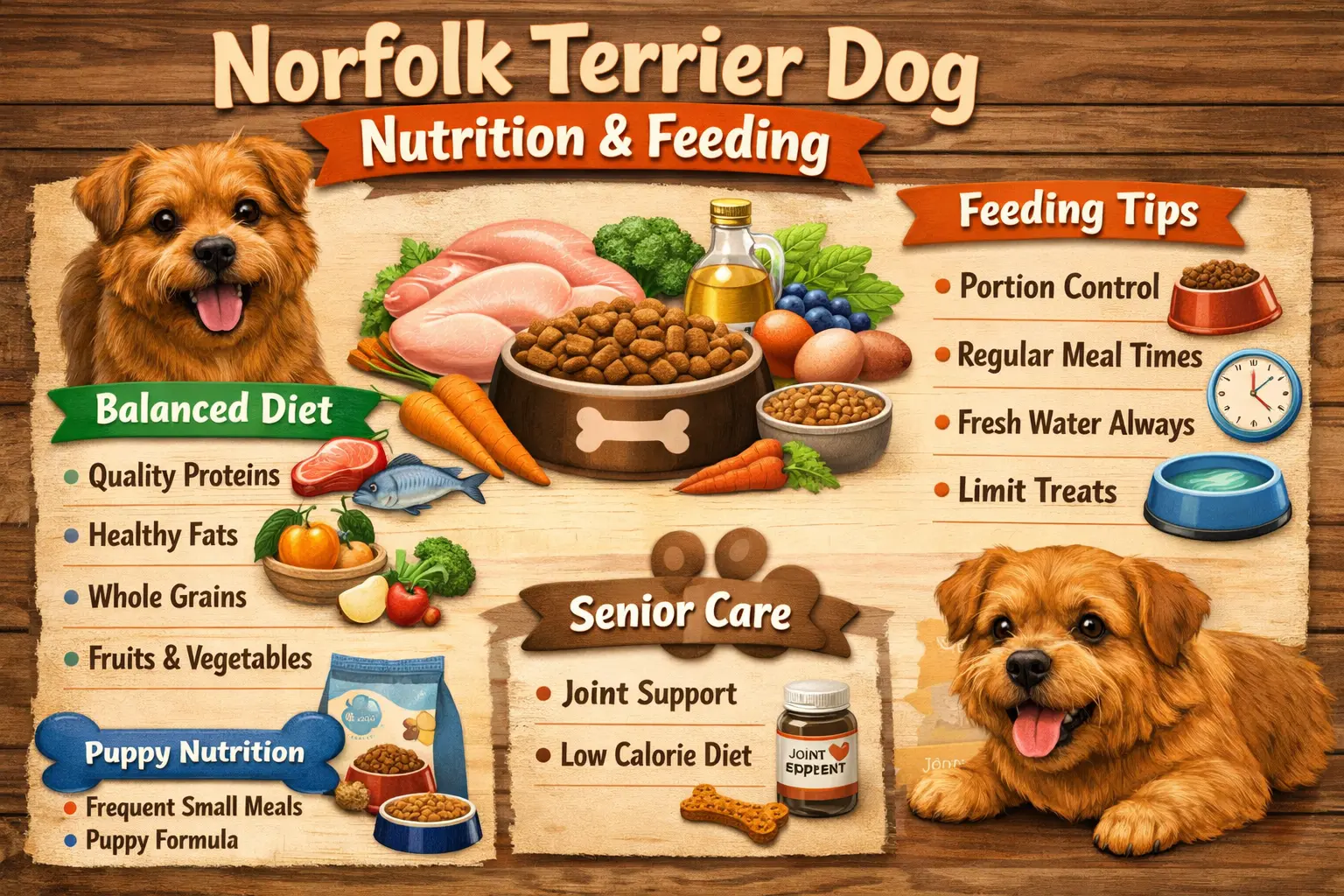
Nutrition is the foundation of a Norfolk Terrier’s health, energy, and overall wellbeing. These small, energetic dogs have fast metabolisms and unique nutritional needs that differ from larger breeds. Feeding your Norfolk Terrier a balanced diet ensures they maintain a healthy weight, strong muscles, shiny coat, and optimal digestive function. Proper nutrition also supports mental sharpness, behavior stability, and a longer, healthier life.
This guide will help you understand everything you need to feed your Norfolk Terrier correctly—from life-stage portioning and calorie requirements to choosing the right food types and avoiding unsafe ingredients. Whether you’re a first-time Norfolk Terrier owner or have experience with small breeds, following breed-specific feeding practices will help prevent common health problems like obesity, digestive upset, and nutrient deficiencies.
Small changes in feeding routines, portion control, and diet quality can make a big difference in your dog’s energy levels and longevity. By the end of this guide, you’ll have practical strategies, charts, and tips to feed your Norfolk Terrier confidently, safely, and in a way that supports their unique needs.
Understanding Norfolk Terrier Nutritional Needs
Norfolk Terriers are small dogs with lots of energy. To stay healthy, they need the right balance of protein, fat, carbohydrates, vitamins, and minerals. Each type of nutrient helps the body in a different way:
- Protein helps build strong muscles and keeps your dog active.
- Fat gives energy and helps keep the coat shiny.
- Carbohydrates give fuel for daily activity.
- Vitamins and minerals support bones, teeth, skin, and overall health.
- Fiber and probiotics help the digestive system work well.
Here is a simple table showing the recommended nutrient ranges and food sources for Norfolk Terriers:
Norfolk Terrier Macronutrient Ranges and Food Sources
| Nutrient | Recommended % of Daily Diet | Example Food Sources |
|---|---|---|
| Protein | 25–30% | Chicken, turkey, fish, eggs |
| Fat | 10–15% | Fish oil, chicken fat, flaxseed |
| Carbohydrates | 40–50% | Rice, oats, sweet potatoes |
| Fiber | 2–4% | Pumpkin, green beans, peas |
| Omega-3 | Small amount | Fish oil, salmon |
| Vitamins & Minerals | As per AAFCO guidelines | Commercial dog food or supplements |
It’s important to remember that small breeds like Norfolk Terriers can burn calories quickly. They also need smaller, more frequent meals than larger dogs. High-quality food with balanced nutrients will help prevent problems like weight gain, weak muscles, and dull coat.
How Much to Feed and Life Stage Guidelines
Norfolk Terriers need the right amount of food for their age, size, and activity. Puppies need more energy to grow, adults need maintenance food, and seniors need fewer calories to avoid weight gain. You can also adjust food if your dog is very active or mostly indoors.
Here is a simple table showing daily calorie needs by weight and life stage:
Daily Calorie Needs for Norfolk Terriers
| Weight (lbs) | Puppy Calories | Adult Calories | Senior Calories | Notes |
|---|---|---|---|---|
| 5–7 | 250–300 kcal | 220–260 kcal | 200–240 kcal | Small breed, active puppies need more meals |
| 8–10 | 300–350 kcal | 260–300 kcal | 240–280 kcal | Adjust for activity level |
| 11–12 | 350–400 kcal | 300–340 kcal | 280–320 kcal | Keep portions small to avoid overeating |
Norfolk Terriers also do better with 2–3 smaller meals a day rather than one big meal. Puppies may need 3–4 meals, adults 2–3, and seniors usually 2.
Feeding Schedule and Portion Sizes
| Life Stage | Meals per Day | Portion Size Tips |
|---|---|---|
| Puppy | 3–4 | Small meals, adjust if very active |
| Adult | 2–3 | Portion to maintain healthy weight |
| Senior | 2 | Slightly smaller portions, monitor weight |
Safe vs Toxic Foods for Norfolk Terriers
| Safe Foods | Foods to Avoid | Notes |
|---|---|---|
| Chicken, turkey | Chocolate, caffeine | Chocolate can be deadly |
| Fish, eggs | Grapes, raisins | Can cause kidney damage |
| Pumpkin, green beans | Onions, garlic | Can damage red blood cells |
| Rice, oats | Macadamia nuts | Toxic to dogs |
| Carrots, peas | Alcohol, xylitol | Xylitol in candy/gum is dangerous |
Feeding the right amount and avoiding unsafe foods helps Norfolk Terriers stay at a healthy weight and avoid stomach problems.
Best Food Types, Treats, and Practical Feeding Tips
Norfolk Terriers can eat many types of dog food. Each type has good and bad points. Choosing the right food helps keep your dog healthy, active, and happy.
Pros and Cons of Food Types
| Food Type | Pros | Cons | Notes |
|---|---|---|---|
| Kibble | Easy to store, balanced nutrients | Some low-quality brands exist | Choose high-quality kibble |
| Wet/Canned | Tasty, high moisture | Can be expensive, messy | Good for picky eaters |
| Raw | High protein, natural diet | Risk of bacteria, prep time | Consult vet before starting |
| Fresh/Frozen | Nutritious, less processed | Expensive | Often delivered in meal packs |
| Freeze-dried | Long shelf life, easy to store | Can be pricey | Rehydrate before feeding |
| Homemade | Full control over ingredients | Hard to balance nutrients | Use vet-approved recipes |
Treats are fun but should not be too many. Overfeeding treats can cause weight gain and stomach problems.
Treat and Snack Guidelines
| Treat Type | Recommended Amount / Day | Notes |
|---|---|---|
| Small commercial treats | 2–4 small pieces | Include in daily calorie count |
| Baby carrots, peas | 1–2 tablespoons | Good for teeth and fiber |
| Cheese cubes | 1–2 small cubes | High in fat, feed sparingly |
| Freeze-dried liver | 1–2 small pieces | Healthy protein treat |
| Human food (safe only) | Very small amount | Avoid toxic foods like chocolate, grapes, onions |
Practical tips for feeding Norfolk Terriers:
- Feed multiple small meals instead of one large meal.
- Mix wet and dry food to encourage picky eaters.
- Avoid feeding table scraps, which can upset the stomach.
- Monitor your dog’s weight and adjust food as needed.
Special Diets, Common Problems, and Owner Solutions
Some Norfolk Terriers have special needs. They may have allergies, sensitive stomachs, or need help with weight control. Knowing common problems and how to fix them helps your dog stay healthy and happy.
Special Diets and Tips
| Special Need | Diet Tips | Notes |
|---|---|---|
| Allergies | Grain-free or limited ingredient diets | Introduce slowly, monitor reactions |
| Sensitive stomachs | Easily digestible foods like chicken & rice | Avoid sudden food changes |
| Overweight dogs | Low-fat, high-fiber foods, smaller portions | Measure portions carefully |
| High-energy dogs | Higher protein and calorie foods | Feed in 2–3 meals to maintain energy |
| Low-activity / older dogs | Lower calorie, nutrient-dense foods | Avoid overfeeding treats |
Common feeding problems include picky eating, food aggression, and switching foods too quickly. Here’s a table with solutions:
Common Feeding Problems and Solutions
| Problem | Solution |
|---|---|
| Picky eater | Mix wet food with kibble, feed smaller meals |
| Multiple dogs, different needs | Feed separately or adjust portions individually |
| Food aggression / guarding | Feed dogs in separate areas, supervise meals |
| Loose stools after new food | Introduce food gradually over 7–10 days |
| Always hungry / weight gain | Measure portions, increase fiber if needed |
Tips for owners:
- Always watch your dog’s weight and body condition score.
- Avoid sudden changes in diet. Introduce new foods slowly.
- Keep treats minimal and healthy.
- Consult a veterinarian or veterinary nutritionist if your dog has ongoing health issues or special diet needs.
For more detailed information on Norfolk Terrier health and nutrition standards, you can visit the American Kennel Club’s official breed page: AKC Norfolk Terrier Breed Information.

Ata Ur Rehman is the founder of Pet Age in Human Years Calculator, an educational platform that provides age conversion charts and lifespan guides for dogs, cats, birds, and other companion animals. His work focuses on helping pet owners understand how animal ages translate into human years using commonly accepted age conversion formulas and published lifespan averages.
The website compiles breed and species lifespan data from kennel clubs, breed organizations, and general animal lifespan studies to present simple and easy-to-understand guides for pet owners worldwide.
This website was created to centralize animal age conversion charts into one easy reference platform for pet owners.