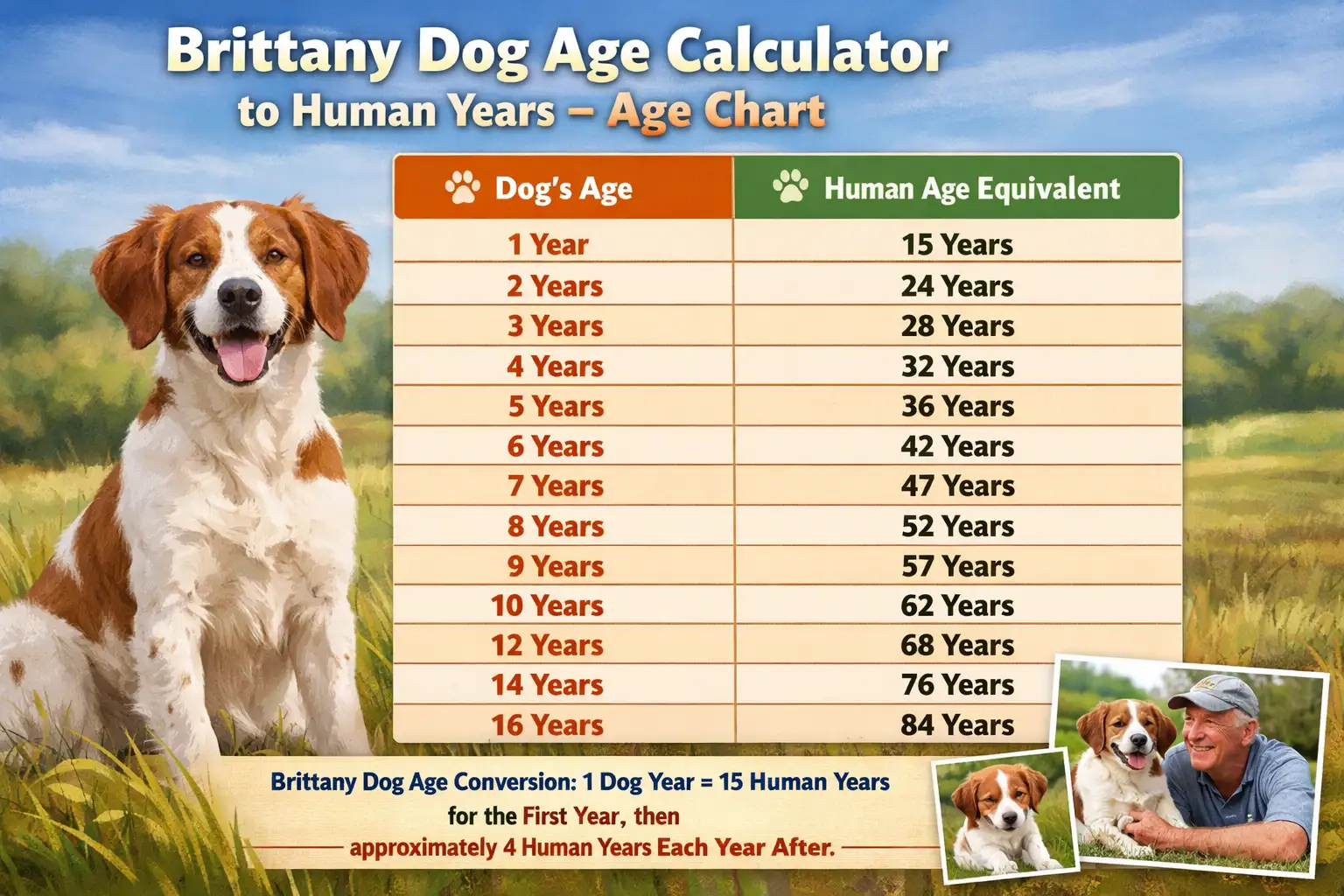
Aging in dogs is a unique process that differs significantly from humans, especially when it comes to certain breeds like the Brittany. Unlike the outdated “1 dog year = 7 human years” model, which oversimplifies the aging process, understanding how Brittany dogs age involves considering factors like size, breed characteristics, and lifestyle. Let’s explore why the traditional formula doesn’t apply to Brittanys, how they age differently from other breeds, and the key factors that influence their lifespan.
Why the “7-Year Rule” Doesn’t Apply to Brittany Dogs
For decades, the “1 dog year = 7 human years” rule was widely used to estimate a dog’s age in human terms. However, this formula is based on broad assumptions and does not take into account the natural differences in aging rates among various dog breeds. While it might give a rough estimate, it’s not accurate for all breeds, particularly those like the Brittany.
Brittany dogs, being a medium-sized breed, age at a rate that falls between that of smaller and larger dogs. Smaller dogs tend to age more slowly, while larger breeds experience faster aging. The Brittany’s medium size places it in a category where its aging process is not accurately captured by the 7-year rule. This is why modern research and age calculators provide more precise methods of conversion.
How Brittany Dogs Age Differently from Other Breeds
The Brittany is classified as a medium-sized breed, which plays a significant role in its aging process. Generally, smaller dogs have a longer lifespan and age more slowly, while larger dogs have shorter lifespans and age more rapidly. Brittany dogs, due to their size and energetic nature, fall into the middle range.
Compared to smaller breeds, Brittanys may enter their senior years earlier, typically around 7-9 years old, but they still maintain a longer lifespan than larger breeds like the Great Dane or St. Bernard. Understanding how these differences impact their health and aging process is key to providing the right care at different life stages.
Key Factors Affecting Brittany’s Lifespan (Size, Genetics, Lifestyle)
Like all dogs, a Brittany’s aging process is influenced by several factors:
- Size: Brittanys, as medium-sized dogs, generally live between 12 and 14 years. Their size affects how quickly they age, with medium-sized breeds typically having a more moderate aging curve compared to small or large breeds.
- Genetics: Inherited health conditions can also impact how a Brittany ages. Genetics play a major role in determining whether a dog will develop certain diseases or conditions as they age, such as hip dysplasia, heart disease, or cognitive dysfunction.
- Lifestyle: Diet, exercise, and healthcare significantly affect how a Brittany ages. A well-balanced diet, regular exercise, mental stimulation, and frequent vet check-ups can help slow down the aging process, keeping them healthier for longer. Regular grooming, vaccinations, and preventive treatments also contribute to a longer, healthier life.
The Science Behind Brittany Dog Aging
As we learn more about how dogs age, science has shown us that aging is not the same for every breed. Brittany dogs, like all dogs, age both in ways that are similar to humans and in ways that are unique to them. Understanding how Brittany dogs age can help owners take better care of them at every stage of life. Let’s explore the science behind Brittany dog aging in simple terms.
Biological vs. Chronological Aging in Brittany Dogs
Dogs, like humans, have chronological age (how old they are in terms of years) and biological age (how their body and organs are actually aging). Chronological age is easy to measure; it’s just the number of years a dog has lived. But biological age is a little trickier. It refers to how well or poorly a dog’s organs, cells, and systems are working as they age.
In Brittany dogs, the gap between chronological and biological age can vary. A Brittany might be 5 years old chronologically, but their biological age might be more like that of a 6-year-old dog if they haven’t been living a healthy lifestyle. Conversely, a Brittany that has received good care might show biological signs of being younger than their chronological age.
How Epigenetic Research Is Changing Our Understanding of Dog Aging
Epigenetics is a field of science that studies how the environment and lifestyle can affect how our genes work over time. New research on epigenetics is showing that dogs, like Brittanys, can age differently based on factors such as diet, exercise, and mental stimulation. This research suggests that aging might not be as simple as just counting years.
For example, the 2019 epigenetic methylation study on dogs showed that dogs have an aging curve that’s more complex than just adding 7 years for every year of a dog’s life. The study found that dogs age faster when they are younger and slower as they get older, which means their age isn’t linear. This helps explain why a Brittany puppy ages quickly in the first couple of years, but then slows down as they reach adulthood.
Why Size and Breed Influence Dog Aging (Focusing on Medium-Sized Brittanys)
The size of a dog has a big effect on how fast they age. Larger breeds, like Great Danes, tend to age much faster and have shorter lifespans than smaller breeds like Chihuahuas. Brittanys, being medium-sized, fall in between. This means they have a more moderate aging process compared to smaller and larger breeds.
For Brittany dogs, aging usually happens at a steady pace until they hit their senior years. Around the age of 7 or 8, they may start to slow down a little, showing signs of aging such as reduced energy or difficulty jumping. However, they are still likely to have a long, healthy life ahead of them, especially with proper care.
Brittany Dog Age to Human Years Conversion
Figuring out how old your Brittany dog is in human years can be tricky because dogs don’t age the same way humans do. The old “1 dog year = 7 human years” rule doesn’t work for all breeds, and it’s especially not accurate for Brittanys. Let’s look at how we can better calculate the age of a Brittany dog and why the new formula is more accurate.
Why the “1 Dog Year = 7 Human Years” Model Is Outdated
The idea that one dog year equals seven human years was an easy way to compare dog and human ages. But it’s not based on science. Dogs, especially different breeds like the Brittany, age much faster in their early years. A 1-year-old Brittany may already be as mature as a teenager in human years! That’s why we need a more accurate way to measure dog years, especially for breeds like the Brittany.
Research shows that dogs age more quickly when they are puppies and young adults, and then slow down in their senior years. For example, a 2-year-old Brittany is more like a 24-year-old human. But as they get older, the aging slows down, so a 10-year-old Brittany is more like a 56-year-old human.
Updated Conversion Formula and Brittany-Specific Adjustments
Instead of using the 7-year rule, scientists have developed a more accurate formula to convert dog years into human years. For Brittany dogs, this formula takes into account their medium size and aging pattern. The new model suggests that the first two years of a Brittany’s life count for a larger human age equivalent, and then the following years count slower.
Here’s the formula that can be used to better estimate a Brittany dog’s age in human years:
- For the first 2 years of a Brittany’s life:
- Each year is equivalent to 12 human years.
- After that, for every year of the Brittany’s life:
- Add 4 human years for each additional year.
Brittany Dog Age Chart: From Puppy to Senior (Including Human Age Equivalents)
To make it easier to understand, here’s a chart that shows the approximate human age equivalent for Brittany dogs at different ages:
| Brittany Dog Age (Years) | Human Age Equivalent |
|---|---|
| 1 | 15 |
| 2 | 24 |
| 3 | 28 |
| 4 | 32 |
| 5 | 36 |
| 6 | 40 |
| 7 | 44 |
| 8 | 48 |
| 9 | 52 |
| 10 | 56 |
| 11 | 60 |
| 12 | 64 |
| 13 | 68 |
This chart helps you see how a Brittany dog’s age compares to human years. It shows how the aging process speeds up in the first two years and slows down after that. By using this updated formula and chart, you can get a better idea of where your Brittany stands in terms of their age and development.
Brittany Dog Life Stages and What to Expect
As your Brittany grows, it goes through different life stages, each with its own set of changes. Knowing what to expect at each stage can help you care for your dog better and keep them happy and healthy throughout their life. From puppyhood to adulthood and senior years, let’s break down the changes that happen as your Brittany gets older.
Developmental Milestones: Puppy to Adult to Senior
A Brittany dog’s life can be divided into three main stages: puppyhood, adulthood, and senior years. At each stage, they grow and change in different ways.
- Puppy (0-2 years): This is when your Brittany is growing the fastest. They’re playful, curious, and full of energy. During this time, they learn about the world around them and start socializing with other dogs and people. You’ll notice rapid growth in size and mental development.
- Adult (3-7 years): As your Brittany enters adulthood, they’ll have settled into their size and weight. They’re usually in their best physical condition, with lots of energy for play, exercise, and training. This is the peak of their physical and mental abilities.
- Senior (8+ years): When your Brittany becomes a senior, you may notice a decrease in energy and mobility. They might sleep more, take longer naps, and prefer slower walks. They may also start showing signs of aging like joint stiffness or hearing loss. But with the right care, senior Brittanys can still be very happy and enjoy life.
Common Physical and Behavioral Changes in Senior Brittany Dogs
As your Brittany enters their senior years, you may notice some changes in how they look and act. These changes are a normal part of aging, but it’s important to be aware of them so you can take better care of your dog.
- Physical Changes: Senior Brittanys often experience changes in their coat, skin, and joints. They might have some gray hairs, and their coat may not be as shiny as it was in their youth. Their joints can become stiff, making it harder for them to jump or run as easily. You may also notice that they don’t move as quickly or easily as before.
- Behavioral Changes: As Brittanys get older, they might start to slow down. They may not have the same energy for play and exercise. They might sleep more often, and their eating habits could change as well. Some older Brittanys may also show signs of cognitive decline, like forgetting familiar people or places. It’s important to give them time to adjust and provide extra care and comfort.
Key Signs of Aging and How to Recognize Them
Recognizing the signs of aging early can help you give your Brittany the right care. Here are a few common signs that your Brittany is entering their senior years:
| Sign of Aging | What It Means |
|---|---|
| Slower movement or stiffness | Arthritis or joint pain might be developing. |
| More naps or longer sleep | Your Brittany may need extra rest due to aging. |
| Reduced activity level | Less interest in play or exercise. |
| Weight gain or loss | Changes in metabolism can cause weight fluctuations. |
| Cognitive changes | Signs of confusion or forgetfulness. |
If you notice any of these changes, it’s important to talk to your vet. They can help you manage your Brittany’s aging process and suggest ways to keep them comfortable and healthy as they grow older.
How to Help Your Brittany Dog Age Healthily
As your Brittany gets older, you’ll want to make sure they stay as healthy and happy as possible. There are many things you can do to help your senior Brittany live a long, comfortable life. From making sure they eat the right food to helping them stay active, this section will give you the best tips for caring for your aging Brittany.
Senior Dog Care: Nutrition, Exercise, and Vet Visits
Just like people, dogs need special care as they grow older. The right food, exercise, and regular vet visits are key to keeping your Brittany healthy in their senior years.
- Nutrition: As your Brittany ages, their dietary needs may change. Senior dogs often need a diet that’s lower in fat but higher in fiber to help with digestion. Some senior dog foods also have extra joint support to keep your Brittany’s joints healthy as they age.
- Exercise: Older Brittanys may not have as much energy as they did when they were younger, but it’s still important to keep them moving. Short, gentle walks are a great way to keep their muscles strong without putting too much stress on their joints. Regular exercise also helps prevent weight gain, which can cause other health problems.
- Vet Visits: Regular vet check-ups are more important than ever for senior dogs. Your vet can check for common age-related issues like arthritis, heart disease, or dental problems. They can also recommend treatments or medications to help your Brittany stay healthy.
Lifestyle Factors That Can Enhance Longevity in Brittany Dogs
In addition to food, exercise, and vet visits, there are other things you can do to help your Brittany live a longer, healthier life.
- Mental Stimulation: Just like physical exercise, mental exercise is important. Puzzle toys, training games, and new experiences can help keep your Brittany’s mind sharp.
- Comfortable Living Space: Make sure your senior Brittany has a soft, comfortable place to rest. Senior dogs may have joint pain or other health issues that make hard floors uncomfortable. Consider getting them a soft bed that provides extra support.
- Weight Management: Keeping your Brittany at a healthy weight is one of the most important things you can do to help them live longer. Overweight dogs are at a higher risk for problems like joint pain, heart disease, and diabetes. Make sure to feed them the right amount of food and provide regular exercise to keep them in shape.
Preventive Health Tips and At-Home Care for Senior Brittany Dogs
| Care Tip | Why It Helps |
|---|---|
| Provide joint supplements | Helps with mobility and reduces pain from arthritis. |
| Keep their environment cool and comfortable | Older dogs can struggle with temperature regulation, so a cool environment can help keep them comfortable. |
| Regular grooming | Helps prevent skin problems and keeps their coat shiny. |
| Monitor their weight | Helps avoid health problems caused by obesity, like diabetes or joint pain. |
These simple steps can help your Brittany stay comfortable as they get older. By paying attention to their physical and emotional needs, you can make sure they continue to live a happy and fulfilling life in their senior years.
Brittany Dog Aging FAQs
As your Brittany grows older, you may have a lot of questions about their aging process and how to care for them. This section answers some of the most common questions that dog owners have when their Brittany reaches their senior years. From understanding when your Brittany is officially a senior to knowing when it’s time to visit the vet, these answers can help guide you in taking the best care of your aging dog.
Most Common Owner Questions About Brittany Dog Aging
When is my Brittany considered a senior dog?
Brittanys typically become senior dogs around the age of 7 or 8. During this time, you may notice they start slowing down, and they may need extra care and attention. However, every dog is different, and some Brittanys may stay active and healthy well into their senior years.
How can I tell if my Brittany is in pain?
Older dogs often experience joint pain, arthritis, or other health issues that can cause discomfort. If your Brittany is limping, having trouble jumping or climbing stairs, or seems more tired than usual, these could be signs of pain. It’s a good idea to consult with your vet to help manage any pain your dog might be feeling.
What are the signs that my Brittany is getting older?
Some common signs that your Brittany is aging include:
- Slowing down or taking longer naps.
- Difficulty jumping or climbing stairs.
- Changes in their eating habits, like eating less or more than usual.
- Behavioral changes, like becoming forgetful or confused.
Is it normal for my Brittany to have gray hair as they age?
Yes! Just like humans, dogs can develop gray hair as they get older. You may start to see gray hairs around their face, especially near their muzzle. This is a normal part of aging and doesn’t necessarily mean there’s something wrong with your dog.
Myths vs. Reality: Dog Age Conversion
Myth: One dog year equals seven human years.
Reality: The “7-year rule” is not accurate. Dogs, especially Brittanys, age much faster in the first few years of their life, and the aging process slows down as they get older. The new conversion formula gives a more accurate estimate of your Brittany’s age.
Myth: Senior dogs can’t have a good quality of life.
Reality: Many senior Brittanys can still live happy, active lives if they are given the right care. By providing proper nutrition, regular exercise, and regular vet visits, you can help your Brittany age gracefully and comfortably.
When to Talk to Your Vet About Aging Concerns
It’s always a good idea to talk to your vet if you notice any major changes in your Brittany’s health or behavior. Some signs that it’s time to visit the vet include:
- Significant weight loss or gain.
- Difficulty breathing or coughing.
- Limping or trouble moving.
- Unexplained changes in appetite or drinking habits.
- Cognitive changes, like confusion or forgetfulness.
Your vet can help you manage your Brittany’s aging process and make sure they stay healthy throughout their senior years.
For more detailed information on dog aging and senior dog care, you can visit the American Kennel Club’s guide on senior dog health

Ata Ur Rehman is the founder of Pet Age in Human Years Calculator, an educational platform that provides age conversion charts and lifespan guides for dogs, cats, birds, and other companion animals. His work focuses on helping pet owners understand how animal ages translate into human years using commonly accepted age conversion formulas and published lifespan averages.
The website compiles breed and species lifespan data from kennel clubs, breed organizations, and general animal lifespan studies to present simple and easy-to-understand guides for pet owners worldwide.
This website was created to centralize animal age conversion charts into one easy reference platform for pet owners.