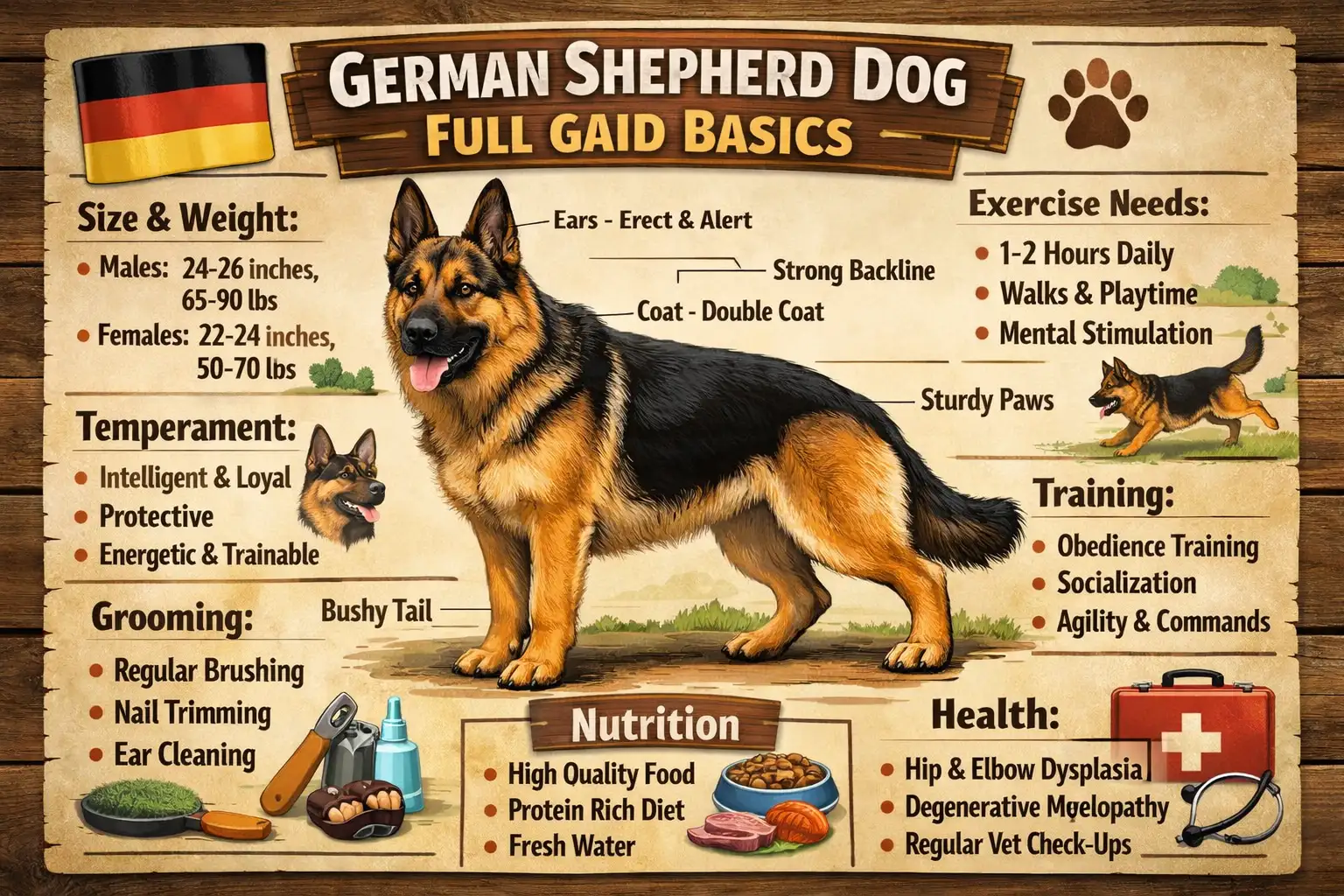
The German Shepherd is a breed that has earned its place as one of the most beloved and versatile dog breeds in the world. Known for their intelligence, loyalty, and strong work ethic, German Shepherds are often employed in high-demand roles, including police work, search and rescue, and service dog duties. They are equally cherished as family pets due to their protective nature and deep bond with their owners.
In this comprehensive guide, we’ll delve into every aspect of the German Shepherd, from their history and appearance to their temperament, exercise needs, grooming requirements, and potential health concerns. Whether you’re considering adding one to your family or looking to learn more about this remarkable breed, this guide will provide you with all the essential information you need to ensure a happy and healthy life for your German Shepherd.
German Shepherd Characteristics and Appearance
German Shepherds are known for their strong, athletic bodies and distinctive looks. They are medium to large dogs, with a muscular build that reflects their working background. Whether you’re admiring their posture or seeing them in action, there’s no mistaking their strength and agility.
Size and Weight
German Shepherds are well-built dogs. The size of a German Shepherd can vary slightly depending on whether they are bred for working or show purposes. On average:
| Gender | Height Range | Weight Range |
|---|---|---|
| Male | 24-26 inches | 65-90 pounds |
| Female | 22-24 inches | 50-70 pounds |
Males are generally larger and heavier than females, but both sizes are strong and capable.
Build and Body Type
These dogs have a robust and muscular frame, designed for strength and endurance. Their body is well-proportioned, with a slightly sloped back and a deep chest, which helps with their breathing during physical activity. Their athleticism is one of the reasons they excel in police, military, and search-and-rescue work.
Coat Type and Colors
German Shepherds have a double coat, meaning they have a dense, insulating undercoat and a coarser outer coat. Their coat length can vary, but it’s most commonly medium length, with a thick texture that helps protect them in colder weather.
As for colors, German Shepherds come in various combinations, including:
- Black and tan (most common)
- Sable (a mix of black and brown)
- Solid black
- Gray and white variations
Their coat requires regular grooming to manage shedding, especially during seasonal changes.
Distinguishing Features
One of the most recognizable features of a German Shepherd is its erect ears, which give the breed its alert expression. Their face has a wolf-like appearance, with sharp, intelligent eyes that always seem to be watching and thinking. Their movement is elegant and swift, showing off their natural agility and strength.
German Shepherd Temperament and Personality
German Shepherds are known for their strong personalities and loyal nature. They are not only intelligent but also protective, making them ideal working dogs and family pets. Let’s take a closer look at their temperament and how they behave in different situations.
Core Traits
German Shepherds are brave, confident, and alert. They are highly protective of their families and homes. They can be calm and friendly at home, but they are always ready to act if they sense danger. These dogs are also very intelligent, which makes them quick learners, but it also means they need plenty of mental stimulation to stay happy.
Behavior with Family and Kids
German Shepherds are very loyal to their families. They are gentle and affectionate, especially with children. However, because they are protective, they may be cautious around new people or strangers. If raised in a loving and social environment, they can be very good with kids, though it’s always important to supervise playtime, especially with younger children.
Behavior with Strangers and Other Pets
When it comes to strangers, German Shepherds can be reserved or even suspicious. This makes them excellent guard dogs, but it’s important to socialize them early on so they can learn to distinguish between normal situations and potential threats. With other pets, they can be friendly, but they might need time and training to get along well, especially with other dogs. Early socialization is key to preventing territorial behavior.
| Interaction With | Behavior Details |
|---|---|
| Family | Loyal, affectionate, good with children |
| Strangers | Reserved, protective, cautious |
| Other Pets | Needs early socialization; can be territorial |
German Shepherd Care, Grooming, and Health
Taking care of a German Shepherd involves more than just feeding them. They need regular grooming, exercise, and health checkups to stay happy and healthy. Let’s look at what goes into properly caring for your German Shepherd.
Grooming Needs
German Shepherds have a thick double coat that sheds quite a bit, especially during seasonal changes. Regular grooming helps keep their coat healthy and reduces shedding around the house.
- Brushing: They should be brushed at least once a week to remove loose fur and prevent matting. During shedding season, you may need to brush more often.
- Bathing: Bathing should be done when necessary, typically every couple of months or when they get dirty.
- Nails, Ears, and Teeth: Make sure to trim their nails regularly, clean their ears to prevent infections, and brush their teeth to maintain good oral health.
Health Concerns
Like all breeds, German Shepherds are prone to certain health issues. It’s important to keep an eye on these to ensure they stay in good shape.
| Health Issue | Prevalence | Recommended Screening |
|---|---|---|
| Hip Dysplasia | High | OFA hip screening, X-rays |
| Elbow Dysplasia | Moderate | Elbow X-rays, genetic tests |
| Degenerative Myelopathy | Low | Genetic testing |
Regular vet visits and screenings can help detect these issues early and allow you to take preventive steps.
Lifespan and General Health
German Shepherds typically live between 9 to 13 years. With proper care, good nutrition, and regular checkups, they can live a long, happy life. Keeping them active, eating a balanced diet, and addressing health issues early are key to their longevity.
Training and Exercise Needs for German Shepherds
German Shepherds are highly energetic dogs that need a lot of exercise and training to stay happy. They are intelligent and eager to learn, but they also require strong leadership and consistency from their owners. Here’s what you need to know about their training and exercise needs.
Training Challenges and Methods
German Shepherds are very smart, which makes them quick learners, but it also means they can get bored easily if they aren’t given enough mental challenges. Training them requires patience and consistency. Positive reinforcement works best—using treats and praise when they do well. Be firm but kind, as they need a leader who is confident and consistent.
Because of their protective instincts, it’s important to train them early on to avoid any territorial behavior. Early socialization with people and other pets is also key.
Exercise Requirements
German Shepherds need at least 1 to 2 hours of exercise every day. They are active dogs and need to run, play, and explore. Some great activities include:
- Running and hiking: German Shepherds are built for running and love outdoor activities.
- Agility training: This helps them burn off energy while learning new skills.
- Scent work or obedience training: Mental challenges are just as important as physical exercise for this breed.
They also enjoy playing fetch, swimming, and other interactive games. Regular exercise is necessary to keep them fit, healthy, and mentally stimulated.
| Activity Type | Duration | Description |
|---|---|---|
| Physical Exercise | 1-2 hours/day | Running, hiking, agility |
| Mental Stimulation | 30-45 mins/day | Puzzle games, obedience training |
| Socialization | Ongoing | Interacting with other dogs, people |
If you can provide a variety of activities that combine both physical and mental stimulation, your German Shepherd will stay happy and well-behaved.
German Shepherd Ownership: Costs, Pros, Cons, and Suitability
Owning a German Shepherd comes with great rewards, but it’s important to understand both the costs and responsibilities involved. This section will help you decide if this breed is a good fit for your lifestyle.
Cost to Own
German Shepherds are generally affordable to purchase, but the costs of caring for them can add up. Here’s a breakdown of what to expect:
- Puppy Price: The cost for a German Shepherd puppy typically ranges from $500 to $2,000, depending on the breeder and whether the dog is from a working or show line.
- Veterinary Care: Routine vet visits, vaccinations, and preventive care can cost between $300 and $500 per year.
- Grooming: Regular grooming costs around $300 to $500 annually, though some owners may groom their dogs at home to save money.
- Insurance: Dog insurance can cost $300 to $600 per year, depending on your coverage and location.
| Expense Type | Estimated Cost (Annually) | Notes |
|---|---|---|
| Puppy Purchase | $500 – $2,000 | Varies by breeder, lineage |
| Veterinary Care | $300 – $500 | Regular check-ups, vaccinations |
| Grooming | $300 – $500 | Professional grooming services |
| Insurance | $300 – $600 | Depending on coverage and location |
Pros and Cons
Before deciding to adopt a German Shepherd, it’s helpful to weigh the pros and cons.
| Pros | Cons |
|---|---|
| Loyal, protective, intelligent | High energy and exercise needs |
| Great for active families | Can be territorial and dominant |
| Highly trainable | Requires consistent leadership |
Who This Breed Is Ideal For
German Shepherds are perfect for active families or individuals who have experience with dogs and can provide a lot of attention and training. They are ideal for people who enjoy outdoor activities like running, hiking, or agility training.
Who Should Avoid This Breed
German Shepherds are not recommended for first-time dog owners or people who cannot commit to providing the necessary exercise and training. They are also not ideal for small apartments, as they need plenty of space to roam and play.
For more detailed information on German Shepherd health and breed standards, check out the American Kennel Club’s German Shepherd Breed Information page.

Ata Ur Rehman is the founder of Pet Age in Human Years Calculator, an educational platform that provides age conversion charts and lifespan guides for dogs, cats, birds, and other companion animals. His work focuses on helping pet owners understand how animal ages translate into human years using commonly accepted age conversion formulas and published lifespan averages.
The website compiles breed and species lifespan data from kennel clubs, breed organizations, and general animal lifespan studies to present simple and easy-to-understand guides for pet owners worldwide.
This website was created to centralize animal age conversion charts into one easy reference platform for pet owners.