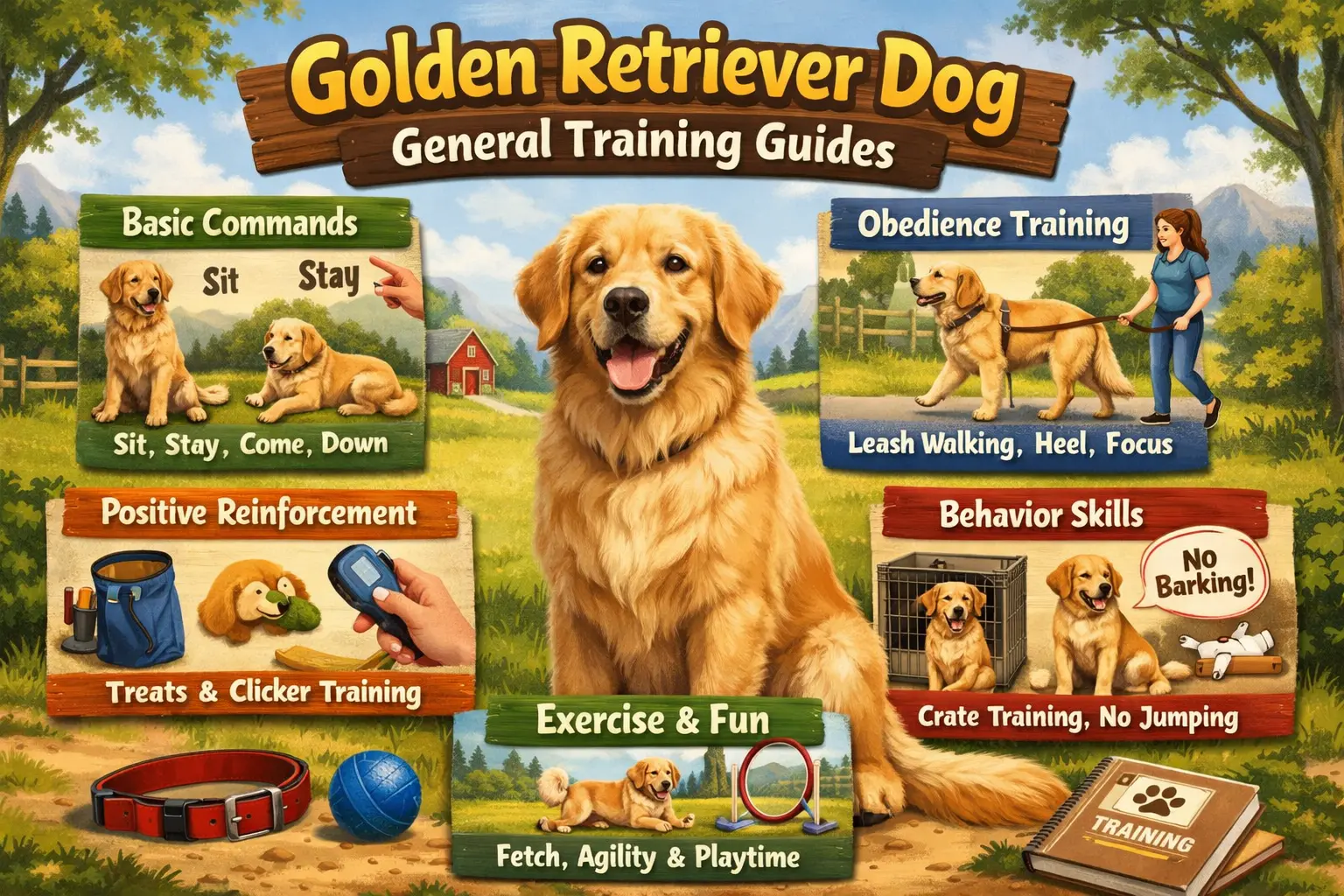
Golden Retrievers are one of the most popular and beloved dog breeds, known for their friendly, intelligent, and eager-to-please nature. These traits make them highly trainable, but training is still essential for them to grow into well-mannered, balanced companions.
Training a Golden Retriever involves more than just teaching commands; it’s about building a strong bond between you and your dog, creating trust, and fostering a positive environment. Whether you’re raising a playful puppy or refining the behavior of an adult Golden Retriever, the process can be rewarding for both the dog and the owner.
In this guide, we’ll cover the basics of training your Golden Retriever, from essential commands to troubleshooting common behavior problems, and offer tips for long-term training success. Whether you’re a first-time dog owner or an experienced handler, this article will give you the tools and knowledge you need to train your Golden Retriever effectively.
Why Golden Retriever Training Matters
Training your Golden Retriever is more than just teaching them to sit or stay — it’s about helping them become well-behaved, confident, and happy dogs. Golden Retrievers are naturally eager to please, which makes them highly trainable, but that also means they can easily pick up bad habits without proper guidance. Training not only improves their behavior but also strengthens the bond between you and your dog.
Here’s why training is so important for your Golden Retriever:
- Improved Behavior: Proper training helps prevent common issues like excessive barking, chewing, and jumping. A well-trained Golden is less likely to develop bad habits.
- Stronger Bond: Training gives you and your dog a chance to communicate. It creates a relationship based on trust and respect, helping your dog understand what you expect and giving them the chance to meet those expectations.
- Mental Stimulation: Golden Retrievers are very intelligent, and training provides them with much-needed mental stimulation. A bored dog may resort to destructive behaviors like chewing or digging. Training helps keep their minds engaged and happy.
- Socialization: Training helps your Golden Retriever interact well with people, other dogs, and different environments. Socialized dogs are generally calmer and better behaved, which makes outings and visits to the vet or groomer much easier.
Training also gives you the tools to manage potential problems before they become bigger issues. By being consistent and using positive reinforcement, you’ll be able to shape your Golden’s behavior in a way that’s both effective and enjoyable.
Key Commands and Basic Training Techniques
| Command | Step-by-Step Instructions | Tips |
|---|---|---|
| Sit | 1. Hold a treat above your dog’s nose. 2. Slowly move your hand up and back, causing their bottom to lower. 3. As soon as they sit, say “sit” and give them the treat. 4. Repeat using the word “sit” consistently. | Start with short sessions (5-10 minutes) 2-3 times a day. Be patient and praise them every time they sit. |
| Stay | 1. Ask your dog to sit. 2. Hold your hand out like a stop sign and say “stay.” 3. Take a step back, then slowly return to your dog. 4. If they stayed, reward with a treat and praise. 5. Gradually increase the distance and time they stay. | Start with short durations and build up. Keep sessions short and positive. |
| Come | 1. Call your dog’s name followed by “come.” 2. Use a happy, excited tone to encourage them to approach. 3. Reward them immediately when they come to you. | Practice in a safe, enclosed area. Start with short distances and make it fun. |
| Leash Training | 1. Start walking with your dog in a quiet area. 2. Encourage them to walk beside you with treats. 3. If they pull ahead, stop walking until they return to your side. 4. Reward them once they are walking by your side. | Keep training sessions positive and short. Avoid pulling on the leash, instead, stop and wait for them to return. |
Troubleshooting Common Golden Retriever Behavior Problems
| Problem | Why It Happens | Solution |
|---|---|---|
| Excessive Barking | Golden Retrievers bark when excited, bored, or seeking attention. | 1. Teach the “quiet” command. 2. When barking, say “quiet” calmly and wait for them to stop. 3. Reward when they stop barking. 4. Keep them mentally and physically active to reduce boredom. |
| Chewing Furniture | Puppies teethe, and adult dogs may chew out of boredom or stress. | 1. Provide chew toys and bones. 2. Redirect chewing to toys. 3. Consider crate training to prevent unsupervised chewing. |
| Jumping on People | Golden Retrievers are friendly and excited to greet people, leading to jumping. | 1. Teach the “sit” command when greeting. 2. Only reward calm, sitting behavior. 3. Be consistent: avoid giving attention when they jump. |
| Separation Anxiety | Golden Retrievers are social and may get anxious when left alone for long periods. | 1. Start by leaving them alone for short periods, gradually increasing the time. 2. Create a calm environment with toys or a comfortable bed. 3. Use calming aids like music or special treats. |
Advanced Training and Long-Term Success
Once your Golden Retriever has mastered the basics, it’s time to move on to more advanced training. Advanced training not only helps keep your dog well-behaved but also provides mental stimulation, which is important for this intelligent breed. Here are some ways to build on the foundation and keep your dog learning as they grow.
Advanced Commands: Recall and Off-Leash Training
- Recall: This is when your dog comes to you on command, even from a distance or when distracted. Start in a safe, enclosed area and use the “come” command, rewarding them each time they return to you. Gradually increase the distance and distractions as your dog improves.
- Off-Leash Training: This is more advanced, but it’s important for teaching your dog to follow commands even without a leash. Practice in a safe, fenced-in area. Start with basic commands and gradually introduce more complex ones, like “stay” and “come.”
Agility Training
Golden Retrievers love to move and are natural athletes. Agility training can be a fun way to challenge your dog and improve their focus. Start with simple obstacles like tunnels and weave poles, and gradually increase the difficulty. Always keep training sessions positive and short to avoid overwhelming your dog.
Mental Stimulation: Keep Your Dog Engaged
Golden Retrievers need mental stimulation to stay happy and healthy. Without enough challenges, they may become bored and act out. Try using puzzle toys, hide-and-seek games, or teaching them new tricks. The more you keep their minds active, the better they will behave in the long run.
Long-Term Success
Training doesn’t stop once your dog has learned basic commands. Consistent training throughout their life is key to maintaining good behavior. Regular practice, positive reinforcement, and continued mental stimulation will ensure that your Golden Retriever remains a happy, well-behaved companion for years to come.
For more in-depth training tips and resources, visit the American Kennel Club’s Golden Retriever Training Guide.

Ata Ur Rehman is the founder of Pet Age in Human Years Calculator, an educational platform that provides age conversion charts and lifespan guides for dogs, cats, birds, and other companion animals. His work focuses on helping pet owners understand how animal ages translate into human years using commonly accepted age conversion formulas and published lifespan averages.
The website compiles breed and species lifespan data from kennel clubs, breed organizations, and general animal lifespan studies to present simple and easy-to-understand guides for pet owners worldwide.
This website was created to centralize animal age conversion charts into one easy reference platform for pet owners.