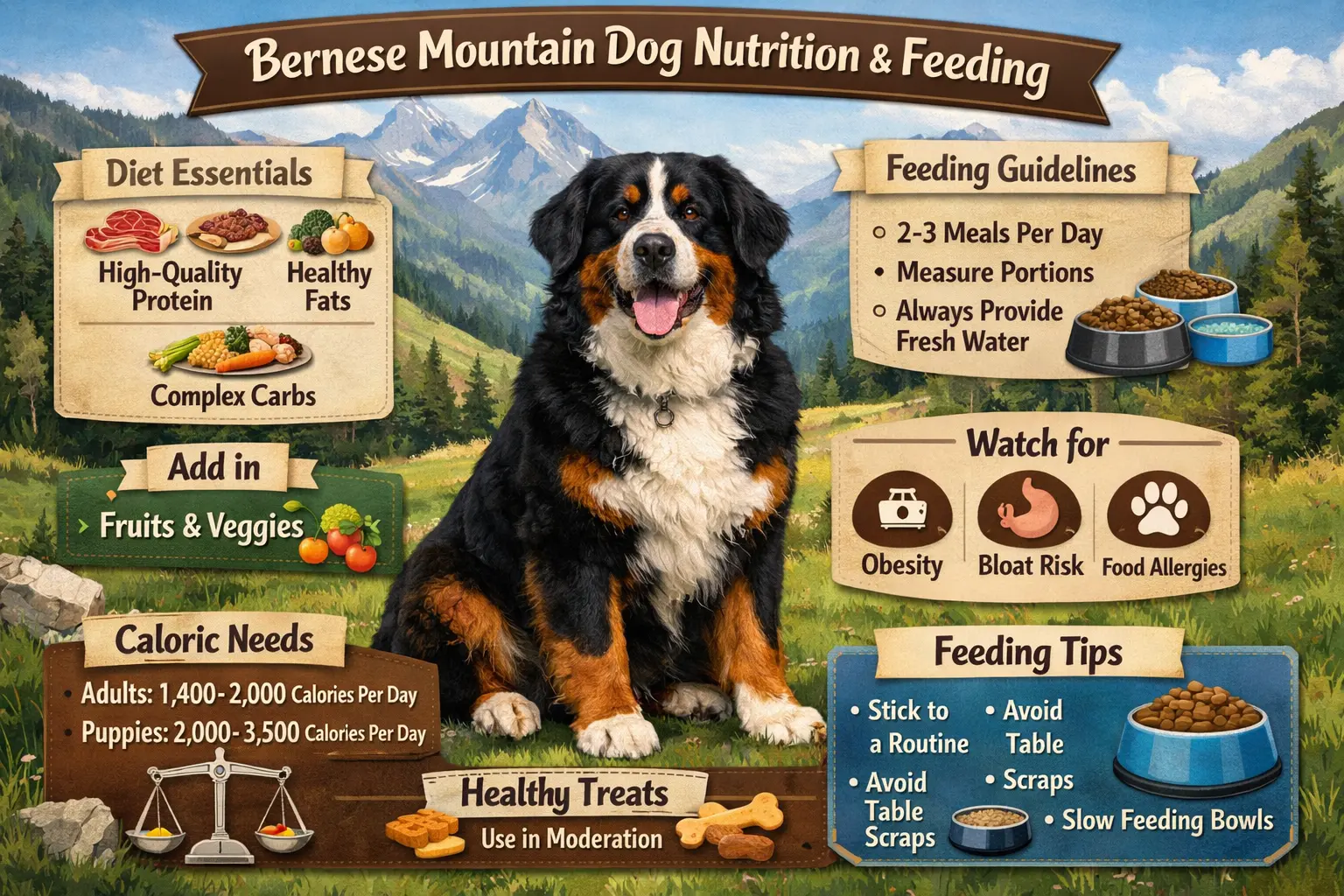
Bernese Mountain Dogs are not just “big dogs that eat more.” They are a slow-maturing, giant-breed working dog with a unique combination of rapid early growth, heavy adult weight, joint vulnerability, and a relatively short average lifespan. Nutrition plays a direct role in how well a Bernese grows, moves, ages, and maintains quality of life.
This guide is designed to help you make safe, evidence-based feeding decisions—not to chase trends or brand hype. Whether you are raising a Bernese puppy, maintaining a healthy adult, or supporting a senior with joint or weight concerns, the foundation is always the same: feeding for controlled growth, lean muscle, joint protection, and metabolic balance.
Why nutrition matters more for Bernese Mountain Dogs than many other breeds
Bernese Mountain Dogs grow large quickly but mature slowly. Their bones, joints, and connective tissues take much longer to fully develop than their body weight suggests. Feeding too many calories, too much calcium, or the wrong nutrient balance—especially during puppyhood—can increase the risk of:
- Abnormal bone development
- Joint stress and early arthritis
- Excess weight that compounds orthopedic strain
- Shortened functional lifespan
At the same time, underfeeding protein, essential fats, or micronutrients can lead to poor muscle support, weak immune response, dull coat, and low energy.
The goal is not maximum growth or maximum calories, but steady, controlled development and long-term resilience.
Core nutritional priorities for this breed
Bernese Mountain Dogs thrive on diets that prioritize:
- High-quality, digestible protein to maintain muscle without forcing rapid growth
- Moderate fat for energy and coat health without excess weight gain
- Controlled mineral balance to protect joints and growth plates
- Adequate fiber to support gut health in a breed that can be digestion-sensitive
The table below summarizes the most important nutritional components and what owners should look for when choosing or evaluating food.
Core Nutritional Needs for Bernese Mountain Dogs
| Nutrient | Why It Matters for Bernese Mountain Dogs | What Owners Should Look For |
|---|---|---|
| Protein | Supports muscle mass, joint stability, immune function | Named animal proteins as primary ingredients; adequate but not extreme levels |
| Fat | Provides energy and supports coat and skin health | Moderate fat levels; avoid very high-fat diets unless medically indicated |
| Carbohydrates | Supply energy and aid digestion | Easily digestible sources; avoid heavy reliance on fillers |
| Fiber | Promotes healthy digestion and stool quality | Balanced fiber, not excessive; helpful for sensitive stomachs |
| Calcium & Phosphorus | Critical for bone growth and joint safety | Proper ratio, especially in puppies; avoid excess calcium |
| Omega-3 Fatty Acids | Reduce inflammation and support joints | Fish oil or marine sources listed in ingredients |
| Antioxidants | Support immune health and cellular protection | Whole-food sources like fruits, vegetables, or functional additives |
Supplements: helpful or harmful?
One of the most common mistakes Bernese owners make is adding supplements “just in case,” especially calcium or joint products, during puppyhood. For this breed, more is not better. Over-supplementation—particularly minerals—can do more harm than good when a complete, properly formulated food is already being fed.
In most cases:
- Puppies should not receive extra calcium or minerals
- Adults may benefit from targeted supplements only when there is a clear reason
- Seniors may benefit from joint or omega-3 support under veterinary guidance
Supplements should support a diet, not compensate for a poorly chosen one.
How Much to Feed a Bernese Mountain Dog (Feeding Chart & Portions)
This is the most common and most important question Bernese Mountain Dog owners ask:
“How much should I feed my dog each day?”
There is no single perfect number. The right amount depends on body weight, age, activity level, and metabolism. Two Bernese Mountain Dogs of the same weight may need very different portions.
The goal is simple:
Feed enough to keep your dog lean, strong, and energetic — not heavy.
Bernese Mountain Dog Feeding Chart (By Weight & Activity)
Calories are more accurate than cups because different foods have different calorie densities.
| Adult Weight | Low Activity (Calories/day) | Moderate Activity (Calories/day) | High Activity (Calories/day) |
|---|---|---|---|
| 70 lb (32 kg) | 1,600 – 1,800 | 1,900 – 2,100 | 2,200 – 2,400 |
| 85 lb (39 kg) | 1,900 – 2,100 | 2,200 – 2,400 | 2,500 – 2,700 |
| 100 lb (45 kg) | 2,200 – 2,400 | 2,500 – 2,700 | 2,800 – 3,000 |
| 115 lb (52 kg) | 2,500 – 2,700 | 2,800 – 3,000 | 3,100 – 3,300 |
Important notes for owners:
- These numbers include all calories (meals, treats, chews).
- Neutered dogs usually need 10–20% fewer calories.
- Seniors often need less food, even if they seem hungry.
Feeding Frequency by Life Stage
How often you feed matters just as much as how much you feed.
| Life Stage | Meals Per Day | Why It Matters |
|---|---|---|
| Puppy (8–6 months) | 3 meals | Supports steady growth and digestion |
| Puppy (6–18 months) | 2–3 meals | Prevents overeating and joint stress |
| Adult | 2 meals | Helps weight control and energy balance |
| Senior | 2 smaller meals | Easier digestion and better blood sugar control |
Large meals once per day are not recommended for Bernese Mountain Dogs.
Why puppy portions matter so much for this breed
Bernese Mountain Dog puppies should not grow fast. Feeding too much food or too many calories can cause:
- Weak joints
- Bone development problems
- Lifelong mobility issues
A healthy Bernese puppy should look lean, not round or heavy. Slow growth is a good thing.
Use body shape, not the bowl, to guide portions
Instead of focusing only on cups:
- You should feel ribs easily with light pressure
- The waist should be visible when viewed from above
- The belly should tuck up slightly from the side
If your dog is gaining weight:
- Reduce food by 10%
- Cut back on treats
- Recheck body shape after 2–3 weeks
Small changes make a big difference for large dogs.
Best Food for Bernese Mountain Dogs (Kibble, Fresh, Raw, and Treats)
Choosing the best food for a Bernese Mountain Dog can feel confusing. There are many options, and every brand claims to be the best. The truth is simpler: the best food is one that is safe, balanced, easy to digest, and right for your dog’s age and lifestyle.
Bernese Mountain Dogs do best on food that supports joint health, lean muscle, and steady weight, not fast growth or excess calories.
Common food types and how they compare
This table helps you quickly see the differences between popular dog food types and who they are best for.
| Food Type | Pros | Cons | Best For |
|---|---|---|---|
| Dry food (kibble) | Easy to store, affordable, balanced when high quality | Quality varies by brand | Most Bernese Mountain Dogs |
| Canned food | Tasty, high moisture | Higher cost, more calories | Picky eaters, short-term use |
| Fresh food | Whole ingredients, high digestibility | Expensive, short shelf life | Owners who want fresh meals |
| Raw food | High protein, minimal processing | Safety risks if unbalanced | Experienced owners only |
| Freeze-dried | Long shelf life, simple ingredients | Costly, needs rehydration | Travel or rotation feeding |
| Homemade | Full ingredient control | Easy to unbalance | Only with expert guidance |
For most families, a high-quality large-breed kibble or vet-approved fresh food is the safest and easiest choice.
Puppy food vs adult food matters a lot
Bernese Mountain Dog puppies should eat large-breed puppy food, not regular puppy food.
Large-breed puppy formulas are made to:
- Control calcium levels
- Slow down growth
- Protect developing joints
Switch to adult food only after your dog finishes growing, usually around 18 to 24 months.
How to read a dog food label (the simple way)
You do not need to be an expert. Just check these basics:
- The first ingredient should be a named meat (like chicken or beef)
- Avoid vague terms like “meat by-product”
- Look for food made for large or giant breeds
- Avoid extreme claims like “miracle,” “superfood,” or “cure-all”
Balanced food should meet recognized nutrition standards and not rely on heavy marketing words.
Safe vs unsafe human foods for Bernese Mountain Dogs
Some human foods are safe in small amounts. Others are dangerous.
| Safe (Small Amounts) | Unsafe / Toxic |
|---|---|
| Plain cooked chicken | Chocolate |
| Plain rice or oats | Grapes and raisins |
| Carrots | Onions and garlic |
| Apples (no seeds) | Xylitol (sweetener) |
| Green beans | Alcohol |
| Pumpkin (plain) | Cooked bones |
Human food should never replace a balanced dog diet.
Treats and snacks: keep them under control
Bernese Mountain Dogs love food, but treats add weight fast.
Good rules to follow:
- Treats should be less than 10% of daily calories
- Use small pieces
- Avoid fatty or sugary snacks
- Count treats as part of the daily food amount
Healthy dogs stay lean, not full.
Feeding Problems, Special Diets, and Real-Life Bernese Scenarios
Even when owners choose good food and follow feeding charts, problems can still happen. Bernese Mountain Dogs are big, sensitive dogs, and small feeding mistakes can lead to weight gain, stomach issues, or poor appetite. The good news is that most feeding problems are easy to fix once you know the cause.
Common feeding problems and what to do
The table below shows the most common feeding issues Bernese owners face and simple steps to fix them.
| Problem | Common Cause | What Usually Helps |
|---|---|---|
| Dog gains weight fast | Too many calories or treats | Reduce food by 10%, cut treats |
| Dog always seems hungry | Low fiber or boredom | Add fiber, increase activity |
| Loose stool | Food switch too fast | Slow transition over 7–10 days |
| Picky eating | Too many toppers or treats | Stick to one food, set meal times |
| Won’t eat breakfast | Free-feeding habits | Offer food for 15 minutes only |
| Gas or bloating | Poor digestion or rich food | Choose simpler, lower-fat food |
Most issues are not emergencies, but they should not be ignored.
Feeding Bernese Mountain Dog Puppies Safely
| Guideline | Explanation |
|---|---|
| Puppies need careful feeding | More food does not mean healthier growth |
| Lean puppies are healthy puppies | Slightly lean is ideal for joint health |
| Do not add calcium or supplements | Extra calcium increases orthopedic risk |
| Avoid overfeeding to boost growth | Rapid growth damages joints and bones |
| Use large-breed puppy formulas only | Proper calcium–phosphorus balance |
| Fast growth causes joint problems | Issues often appear later in life |
Feeding Adult Bernese Mountain Dogs
| Adult Feeding Needs | Why It Matters |
|---|---|
| Stable portions | Prevents weight gain |
| Fewer treats | Treat calories add up fast |
| Regular weight checks | Catch problems early |
Feeding Senior Bernese Mountain Dogs
| Senior Feeding Need | Purpose |
|---|---|
| Fewer calories | Slower metabolism |
| Joint support nutrients | Helps mobility |
| Easy-to-digest food | Reduces GI stress |
| Reduce portions if weight increases | Even if intake stays the same |
Sensitive Stomachs & Food Reactions
| Common Symptoms | Notes |
|---|---|
| Soft stool | Often diet-related |
| Gas | Can indicate intolerance |
| Occasional vomiting | Monitor frequency |
| Simple Fix | Why It Helps |
|---|---|
| Avoid fast food changes | Prevents GI upset |
| Use limited-ingredient diets | Reduces triggers |
| Keep feeding times consistent | Supports digestion |
| Seek professional advice after 2 weeks | Rules out medical causes |
Feeding Picky Eaters Without Creating Bad Habits
| Strategy | Reason |
|---|---|
| No free-feeding | Encourages appetite regulation |
| Remove bowl after 15 minutes | Prevents grazing |
| Don’t add new toppers daily | Stops food manipulation |
| Stay consistent several days | Dogs test routines |
| Healthy dogs won’t starve | Hunger resets appetite |
Feeding More Than One Dog
| Best Practice | Benefit |
|---|---|
| Measure each dog’s food | Prevents over/underfeeding |
| Feed separately if needed | Stops food stealing |
| Avoid shared bowls | Prevents dominance issues |
| Monitor big dogs closely | Large breeds eat fast |
Switching Dog Food the Safe Way
| Days | Old Food | New Food |
|---|---|---|
| Day 1–3 | 75% | 25% |
| Day 4–6 | 50% | 50% |
| Day 7–10 | 25% | 75% |
| Key Rule | Explanation |
|---|---|
| Always switch slowly | Fast changes cause stomach problems |
Practical Feeding Tools, FAQs, and When to See a Vet
simple tools, clear answers, and warning signs to watch for. You do not need to be perfect. You just need to be consistent and observant.
Use this quick checklist to stay on track each day.
| Check | Yes / No |
|---|---|
| Measured meals (not guessing) | |
| Treats kept under 10% of calories | |
| Two meals per day (not free-feeding) | |
| Fresh water available all day | |
| Dog looks lean, not heavy | |
| Stool is firm and regular |
If you answer “no” to several items, small changes can make a big difference.
When feeding issues need professional help
Some problems should not be fixed at home. The table below helps you know when to call a professional.
| Warning Sign | Who to Contact |
|---|---|
| Fast weight gain or loss | Veterinarian |
| Ongoing diarrhea (over 2 weeks) | Veterinarian |
| Refuses food for 48 hours | Veterinarian |
| Signs of pain while eating | Veterinarian |
| Food allergy symptoms | Veterinarian |
| Homemade or raw diet planning | Veterinary nutritionist |
| Puppy with abnormal growth | Veterinarian |
Early help prevents long-term problems, especially in large breeds.
Common feeding questions owners ask
- Should I free-feed my Bernese Mountain Dog?
No. Free-feeding often causes weight gain. - Is grain-free food better?
Not always. Only use it if advised by a professional. - Do Bernese Mountain Dogs need supplements?
Most do not if fed a balanced food. - How fast should I change food?
Over 7 to 10 days. - How much water does my dog need?
Always allow free access to clean water.
Final feeding tips to remember
- Lean dogs live longer
- Slow growth protects joints
- Treats count as calories
- Consistency matters more than brand names
- Watch your dog’s body, not just the bowl
Good feeding habits are built over time, not in one day.
Final note for Bernese Mountain Dog owners
Feeding your Bernese Mountain Dog the right way helps them move better, feel better, and stay with you longer. You do not need fancy food or perfect math. You need balance, patience, and regular checks.
For owners who want to understand how complete and balanced dog foods are regulated, you can learn more about official pet food nutrition standards from the Association of American Feed Control Officials (AAFCO) which sets the nutrient profiles used by most reputable dog food manufacturers.

Ata Ur Rehman is the founder of Pet Age in Human Years Calculator, an educational platform that provides age conversion charts and lifespan guides for dogs, cats, birds, and other companion animals. His work focuses on helping pet owners understand how animal ages translate into human years using commonly accepted age conversion formulas and published lifespan averages.
The website compiles breed and species lifespan data from kennel clubs, breed organizations, and general animal lifespan studies to present simple and easy-to-understand guides for pet owners worldwide.
This website was created to centralize animal age conversion charts into one easy reference platform for pet owners.