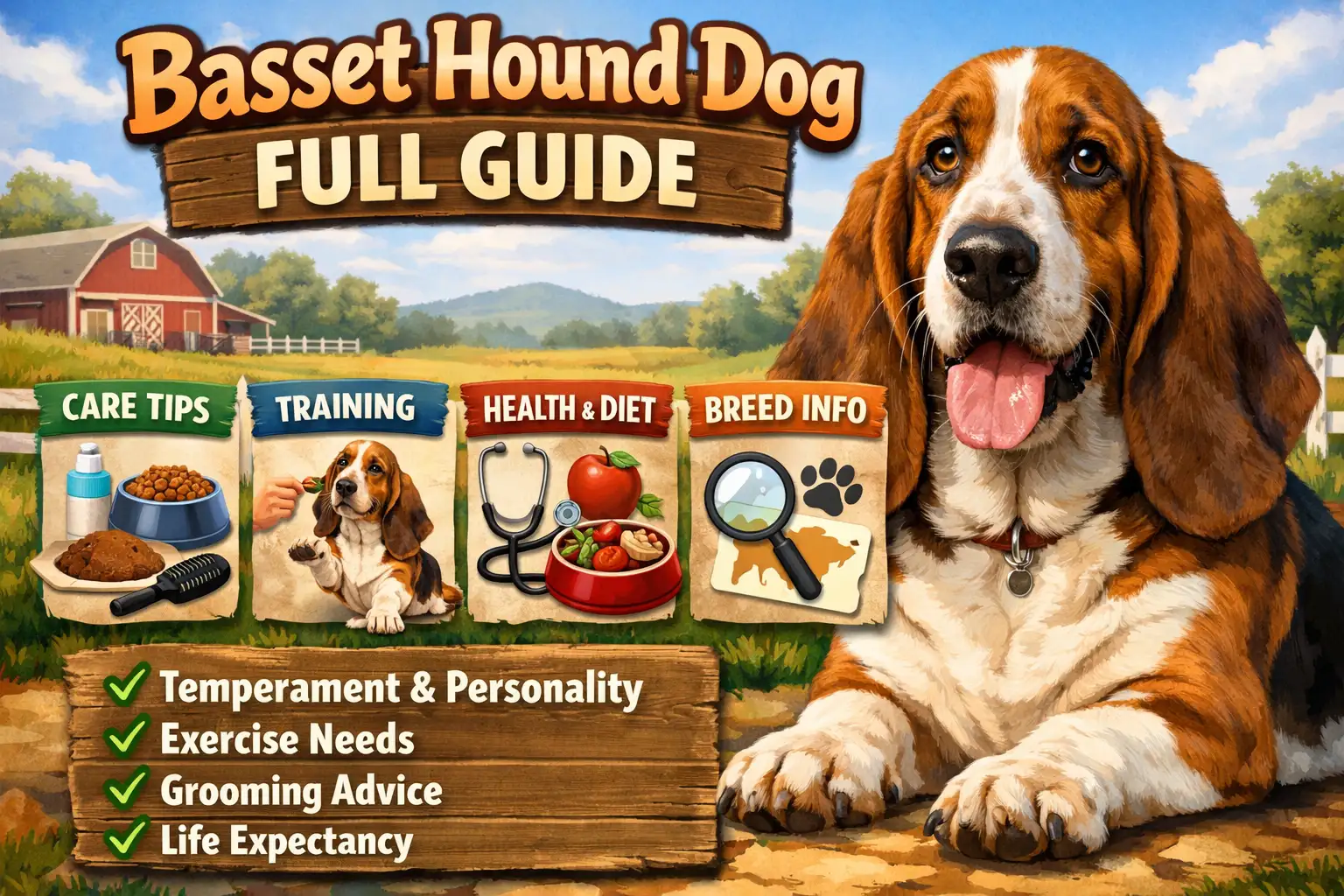
The Basset Hound is one of the most instantly recognizable dog breeds in the world, known for its long ears, soulful eyes, and laid-back expression. But behind that calm, almost comical appearance is a highly skilled scent hound with a strong independent streak and a nose that rivals far more athletic-looking dogs. This contrast between looks and function is where many new owners either fall in love with the breed—or misunderstand it.
Originally developed for slow, methodical tracking alongside human hunters, the Basset Hound is not a high-energy or fast-moving dog, but it is persistent, determined, and deeply motivated by scent. In everyday life, this translates into a dog that is typically relaxed indoors, affectionate with its people, and happy to lounge for hours, yet suddenly laser-focused the moment an interesting smell appears. This dual nature is central to understanding what living with a Basset Hound is really like.
This guide is designed for prospective and current owners who want a realistic, experience-based understanding of the Basset Hound as a companion dog. It focuses on temperament, lifestyle fit, daily care realities, and ownership expectations rather than surface-level breed stereotypes. Detailed training methods, grooming routines, nutrition planning, and universal cost breakdowns are intentionally handled in separate, in-depth guides.
Basset Hound History, Appearance, and Breed Characteristics
The Basset Hound comes from France, where it was bred to follow scent trails slowly and carefully. Hunters wanted a dog that could track rabbits and small game while people walked behind on foot. This is why the Basset Hound is low to the ground, steady, and very focused on smells. Later, the breed became popular in England and the United States, mostly as a companion dog, but it never lost its strong hunting nose.
Even today, the Basset Hound’s body shows its working background. Every part of its shape has a job. The short legs keep the nose close to the ground. The long ears help trap scent near the face. The loose skin around the head helps hold smells longer while tracking. These traits may look funny or cute, but they are the reason the breed is so good at scent work.
The Basset Hound is also heavier and stronger than it looks. Many people are surprised by how solid this dog feels when walking on a leash. This strong build is helpful for tracking, but it also means owners must watch weight and joint health carefully.
Basset Hound Size and Physical Stats
| Trait | Typical Range |
|---|---|
| Height | About 13–15 inches |
| Weight | About 40–65 pounds |
| Body type | Long body, heavy bone, short legs |
| Coat type | Short, smooth, and dense |
| Common colors | Tri-color, lemon and white, red and white |
The Basset Hound’s coat is easy to recognize. It is short and smooth, lying close to the body. This coat helps protect the dog outdoors but does not need heavy grooming. Color patterns vary, but most Bassets have large patches of color on a white base.
Movement is another key feature. The Basset Hound has a slow, rolling walk that may look lazy, but it is designed for long tracking sessions, not speed. This is not a running or jumping breed, and its body is not built for rough exercise.
Distinctive Physical Features and Their Purpose
| Feature | Why It Exists |
|---|---|
| Long ears | Trap scent close to the nose |
| Loose facial skin | Helps hold scent while tracking |
| Short legs | Keeps nose near the ground |
| Strong nose | One of the best scent abilities among dogs |
Because of this special body shape, Basset Hounds need owners who understand their limits. Stairs, jumping, and extra weight can stress the back and joints. Knowing why the breed looks the way it does helps owners care for it better and avoid common mistakes.
Basset Hound Temperament, Personality, and Behavior
The Basset Hound is best known for its calm, friendly, and gentle nature. Most Bassets enjoy being close to their people and like spending time indoors, often resting near family members. They are not usually nervous or aggressive dogs. Instead, they are relaxed, patient, and social when raised in a stable home.
At the same time, the Basset Hound is very independent. This breed was trained to work alone while following scent trails, and that trait is still strong today. A Basset may hear you calling but choose to ignore you if it smells something interesting. This is not bad behavior—it is part of how the breed thinks and works.
With family members, Basset Hounds are usually loving and loyal. They enjoy attention but do not demand it all the time. Many owners describe them as “easy to live with” because they are happy to nap for long periods once their basic needs are met.
Around children, the Basset Hound is often patient and tolerant. Their slow movement and sturdy body make them less likely to knock kids over compared to more energetic breeds. However, children should still be taught to be gentle, especially around the ears and face.
With strangers, most Basset Hounds are friendly or neutral. They are not strong guard dogs. Some may bark or howl when someone arrives, but this is more about excitement than protection.
When it comes to other pets, Basset Hounds usually do well with other dogs. They were bred to work in packs, so dog-to-dog aggression is uncommon. With cats or small animals, behavior depends on early training and exposure. The strong scent drive can sometimes cause chasing, especially outdoors.
Basset Hound Temperament Traits at a Glance
| Trait | What It Means in Daily Life |
|---|---|
| Affection level | Enjoys company and family time |
| Independence | Likes to make its own choices |
| Stubbornness | May ignore commands when distracted |
| Prey drive | Strong interest in smells and trails |
| Vocal behavior | Known for barking and howling |
One thing many new owners do not expect is the Basset Hound’s voice. This breed can bark and howl loudly, especially when bored or excited. This is normal for a hound and should be considered by people living in close neighborhoods or apartments.
Understanding the Basset Hound’s personality helps prevent frustration. This is not a dog that lives to please, but it is a dog that builds strong bonds and brings a calm, steady presence into the home.
Living With a Basset Hound: Daily Care, Exercise, and Health Realities
Living with a Basset Hound is usually calm and predictable, but it still comes with daily responsibilities. This breed does best with a steady routine. When owners understand what the dog truly needs, life with a Basset Hound is easier and more enjoyable.
Exercise for a Basset Hound is important, but it does not need to be hard or fast. Short daily walks are usually enough. These walks should allow time for sniffing, which is very important for this breed’s mind. Running, jumping, or long hikes are not ideal because of the dog’s long back and short legs.
Mental activity matters just as much as physical movement. Basset Hounds enjoy scent games, slow walks in new places, and simple puzzle toys. Without mental activity, they may bark, howl, or become stubborn and bored.
Daily care also includes grooming and health checks. The short coat is easy to manage, but the ears need special attention. Long ears can trap moisture and dirt, which may lead to infections if not cleaned often. Nails should be kept short because long nails can affect how the dog walks and cause joint stress.
Health is another key part of daily life. Basset Hounds are known to gain weight easily, especially if overfed or under-exercised. Extra weight puts pressure on the back, hips, and joints. Watching food intake and keeping a healthy routine is very important for long-term comfort.
Daily Life With a Basset Hound
| Area | What Owners Should Expect |
|---|---|
| Exercise needs | Short daily walks, slow pace |
| Mental stimulation | Strong need for scent-based activities |
| Training difficulty | Moderate due to independence |
| Grooming effort | Low coat care, high ear care |
| Health focus | Weight control and joint care |
Basset Hounds usually live long, happy lives when cared for properly. Regular vet visits, ear checks, and weight monitoring can prevent many common problems. This breed may look low-effort, but small daily habits make a big difference over time.
Is a Basset Hound Right for You? Pros, Cons, Costs, and Final Verdict
Choosing a Basset Hound should be a careful decision, not just based on looks. This breed fits some homes very well, but it can be frustrating for the wrong owner. Understanding the good and the hard parts helps avoid regret later.
Basset Hounds are usually calm, friendly, and loving dogs. They enjoy spending time at home and do not need intense exercise. However, they are also stubborn, noisy at times, and slow to train. Their strong nose can make walks and recall training challenging.
Cost is another thing to think about. Basset Hounds are not the most expensive breed, but they are not cheap either. Puppy prices can vary based on breeder quality. Ongoing costs often include vet visits, ear care, weight management, and possible back or joint issues later in life. Many owners choose pet insurance early because health costs can increase with age.
Basset Hound Pros and Cons
| Pros | Cons |
|---|---|
| Calm and relaxed indoors | Can be very stubborn |
| Friendly with family | Loud barking or howling |
| Good with children | Strong pulling on leash |
| Low coat grooming needs | Prone to weight gain |
| Loyal and affectionate | Ear and back health risks |
Lifestyle fit matters more than experience level. A Basset Hound can work for first-time owners who are patient and realistic. It can live in an apartment if noise and exercise needs are managed. Seniors often enjoy this breed’s calm nature, but lifting or handling a heavy dog may be hard for some people.
Ownership Suitability Snapshot
| Lifestyle | Good Match? |
|---|---|
| Families with children | Yes, with supervision |
| Apartment living | Possible with training |
| First-time owners | Yes, if patient |
| Seniors | Yes, if mobility allows |
| Multi-pet homes | Usually yes |
A Basset Hound is a great choice for someone who wants a calm, loving dog and does not expect perfect obedience. This breed is best for people who enjoy slow walks, relaxed evenings, and a dog with a strong personality. It is not ideal for owners who want a quiet, highly trainable, or very active dog.
For official breed standards, temperament details, and recognized health information, you can also review the American Kennel Club Basset Hound breed profile, which provides authoritative background and breeder-focused insights on this breed.

Ata Ur Rehman is the founder of Pet Age in Human Years Calculator, an educational platform that provides age conversion charts and lifespan guides for dogs, cats, birds, and other companion animals. His work focuses on helping pet owners understand how animal ages translate into human years using commonly accepted age conversion formulas and published lifespan averages.
The website compiles breed and species lifespan data from kennel clubs, breed organizations, and general animal lifespan studies to present simple and easy-to-understand guides for pet owners worldwide.
This website was created to centralize animal age conversion charts into one easy reference platform for pet owners.