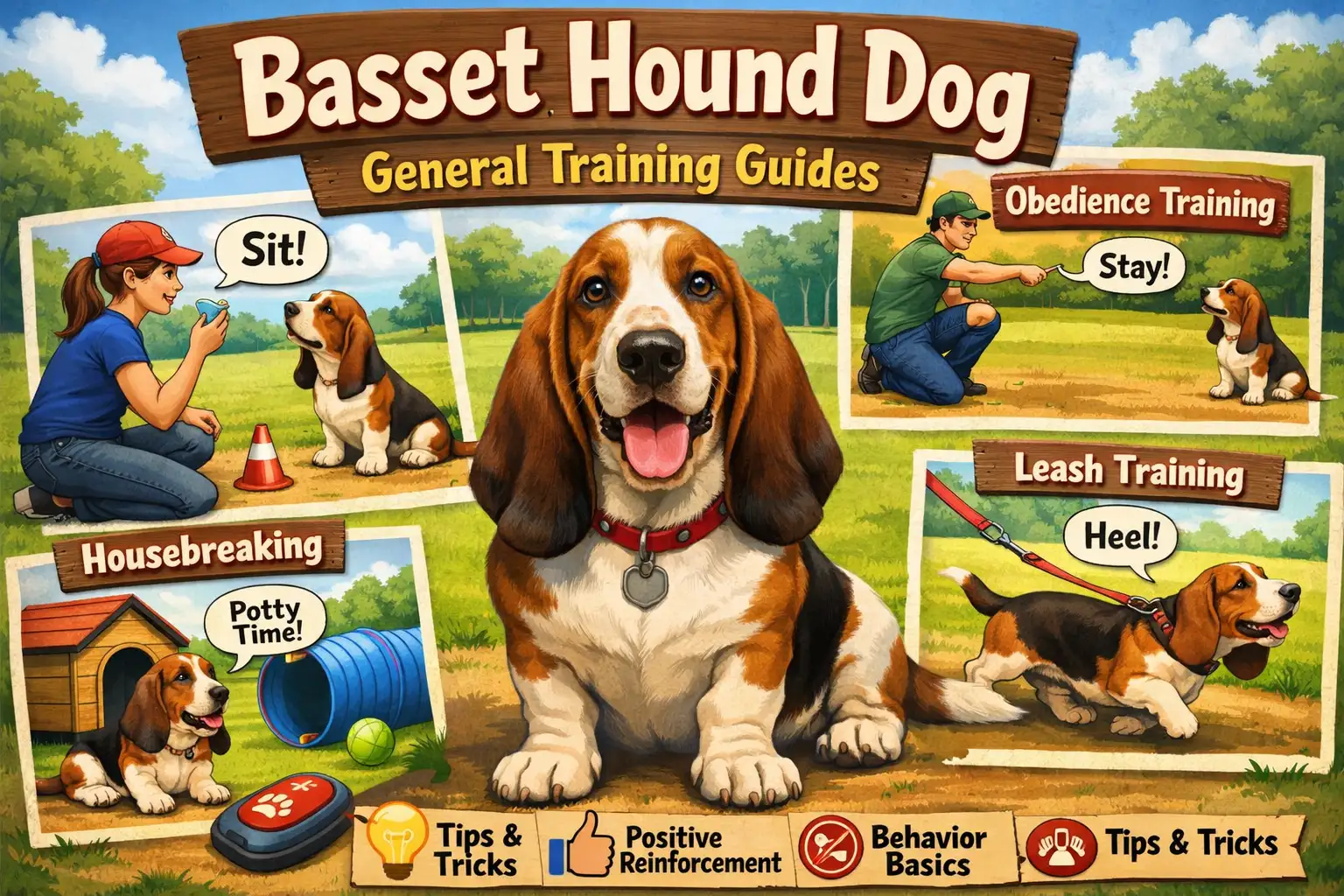
Training a Basset Hound is not about forcing obedience or repeating commands louder and longer. It’s about understanding how this breed thinks, what motivates them, and why traditional “one-size-fits-all” dog training advice often falls flat with scent hounds. Many owners assume their Basset is stubborn, lazy, or simply unwilling to listen, when in reality the dog is processing the world very differently than more handler-focused breeds.
Basset Hounds were bred to follow scent trails independently, often at a distance from humans. That independence is not a flaw—it’s a working trait. But it does mean training requires patience, strategy, and realistic expectations. Progress tends to be slower, responses may be delayed, and motivation can disappear the moment an interesting smell takes over. None of this means training isn’t working; it means it needs to be adapted to the breed.
This guide is designed as a general training foundation for Basset Hounds of all ages, whether you’re raising a puppy, working with an adult rescue, or trying to improve everyday manners with a stubborn-seeming companion. The focus is on practical, reward-based methods that respect the Basset Hound’s instincts while still building reliable behavior in real-world situations.
You won’t find quick fixes or dominance-based techniques here. Instead, this article explains how to work with your Basset Hound’s natural tendencies, build cooperation without conflict, and create training routines that fit into normal household life. When expectations are aligned and training is approached correctly, Basset Hounds can become responsive, well-mannered dogs—just on their own terms and timeline.
Why Training a Basset Hound Matters More Than You Think
Many people think Basset Hounds do not need much training because they are calm, friendly, and not very active indoors. This is a common mistake. Even though Basset Hounds are gentle dogs, lack of training can lead to serious daily problems and safety risks.
Basset Hounds follow their nose before anything else. If they are not trained, they may ignore you outside, pull hard on the leash, or wander away when they catch a scent. This can be dangerous near roads, parks, or open areas. Training helps your Basset Hound stay safe while still enjoying their natural instincts.
Training also protects your relationship with your dog. Without training, many owners feel frustrated and start repeating commands, pulling the leash, or giving up. This creates stress for both the dog and the human. With clear training, your Basset Hound learns how to live calmly in the home and how to understand what you want.
Below is a simple table that shows why training truly matters for Basset Hounds.
| Without Proper Training | With Consistent Training |
|---|---|
| Ignores commands outdoors | Responds more reliably |
| Pulls hard on the leash | Walks with better control |
| Wanders off following smells | Stays safer near you |
| Owner feels frustrated | Stronger trust and bond |
| Dog gets confused | Dog understands expectations |
Training is not about changing your Basset Hound’s personality. It is about giving them clear rules and guidance so they can relax and make better choices. A trained Basset Hound is not less independent — they are simply safer, calmer, and easier to live with.
Understanding the Basset Hound Mind and Behavior
To train a Basset Hound well, you must first understand how they think. This breed does not make choices the same way many other dogs do. Their nose leads their brain. When a smell is interesting, it can feel more important than your voice, a toy, or even food.
Many owners call Basset Hounds “stubborn,” but this is not the full truth. Most Basset Hounds are not trying to disobey. They are slow decision-makers and very focused on scent. They often pause before responding, which can look like ignoring you. This pause is normal for the breed.
Basset Hounds are also very independent. They were bred to work away from people while tracking scents. Because of this, they do not naturally look to humans for guidance the way some breeds do. Training must teach them that listening to you is rewarding and worth their time.
They are also sensitive dogs. Yelling, leash jerks, or pressure can cause them to shut down or stop trying. Calm voices, patience, and rewards work much better. When training feels safe and positive, Basset Hounds learn more willingly.
The table below explains common Basset Hound traits and how they affect training.
| Basset Hound Trait | What It Means for Training |
|---|---|
| Strong sense of smell | Smells can distract from commands |
| Independent nature | Obedience must be taught, not expected |
| Slow response time | Pauses are normal, not defiance |
| Sensitive temperament | Harsh methods reduce learning |
| Food motivation | Rewards work best when high value |
Once you understand that your Basset Hound is scent-driven, thoughtful, and sensitive, training becomes less frustrating. You stop fighting the dog and start working with how their brain is built.
Step-by-Step Basset Hound Training Approach That Works
Training a Basset Hound works best when it is simple, short, and consistent. Long sessions and repeated commands do not help this breed. Instead, small steps done every day lead to better results over time.
Start training in a quiet place with very few distractions. Your Basset Hound needs to learn what words and signals mean before they can listen outside. Always reward good behavior right away. Timing matters. The reward should come within one or two seconds so your dog understands what they did right.
Keep training sessions short. Five to ten minutes is enough. You can train more than once a day, but stop before your dog gets bored or walks away. Ending on a good note helps your Basset Hound stay interested next time.
Use food rewards that your dog truly cares about. Many Basset Hounds lose interest if the reward is boring. Small pieces of soft, smelly food usually work best. Praise is helpful, but food is often the main reason a Basset Hound chooses to listen.
The table below shows a simple and realistic training setup that works well for most Basset Hounds.
| Training Part | Best Practice |
|---|---|
| Session length | 5–10 minutes |
| Sessions per day | 2–4 short sessions |
| Training location | Quiet area first |
| Reward type | High-value food |
| Progress speed | Slow but steady |
| Owner behavior | Calm and patient |
Training puppies and adult Basset Hounds is similar, but adults may take longer to change habits. Puppies learn faster but lose focus quickly. Adult dogs may be slower, but they can still learn very well with the right rewards and patience.
Always increase difficulty slowly. First train indoors, then in the yard, and only later in busy places. If your Basset Hound stops listening, go back to an easier step instead of pushing harder.
Common Basset Hound Training Problems and Practical Fixes
Many Basset Hound owners feel stuck because the same problems keep showing up during training. These issues are normal for this breed and do not mean your dog cannot learn. Most problems come from scent distractions, unclear timing, or moving too fast.
One common issue is a Basset Hound ignoring commands outside. This usually happens because smells are stronger than the reward you are offering. Another problem is pulling on the leash with the nose glued to the ground. This is natural scent behavior, not bad manners. Slow responses are also common and should not be confused with disobedience.
Owners often make training harder without realizing it. Repeating commands, getting frustrated, or training for too long can cause the dog to shut down or walk away. Calm patience and better rewards fix most of these problems.
The table below shows common problems, why they happen, and what to do instead.
| Training Problem | Why It Happens | Practical Fix |
|---|---|---|
| Ignores commands outdoors | Strong scent distractions | Train in quiet areas first, use better food rewards |
| Pulls on the leash | Nose-first walking style | Stop often, reward calm walking, move slowly |
| Stops responding mid-session | Bored or tired | Shorten sessions and end early |
| Slow response to cues | Natural thinking pause | Wait calmly, do not repeat the command |
| Training gets worse over time | Owner frustration or pressure | Stay calm, reduce difficulty, reward more |
If your Basset Hound suddenly refuses to train, shows fear, or seems uncomfortable, training may not be the real problem. Pain, anxiety, or stress can affect behavior. In these cases, a vet or professional trainer should be consulted.
Most Basset Hounds improve when training is clear, calm, and fair. Progress may be slow, but steady improvement is a sign that your training is working.
For official breed information and general training guidance, you can also review the American Kennel Club’s Basset Hound profile, which provides reliable background on temperament, behavior traits, and breed standards that support effective training decisions.

Ata Ur Rehman is the founder of Pet Age in Human Years Calculator, an educational platform that provides age conversion charts and lifespan guides for dogs, cats, birds, and other companion animals. His work focuses on helping pet owners understand how animal ages translate into human years using commonly accepted age conversion formulas and published lifespan averages.
The website compiles breed and species lifespan data from kennel clubs, breed organizations, and general animal lifespan studies to present simple and easy-to-understand guides for pet owners worldwide.
This website was created to centralize animal age conversion charts into one easy reference platform for pet owners.