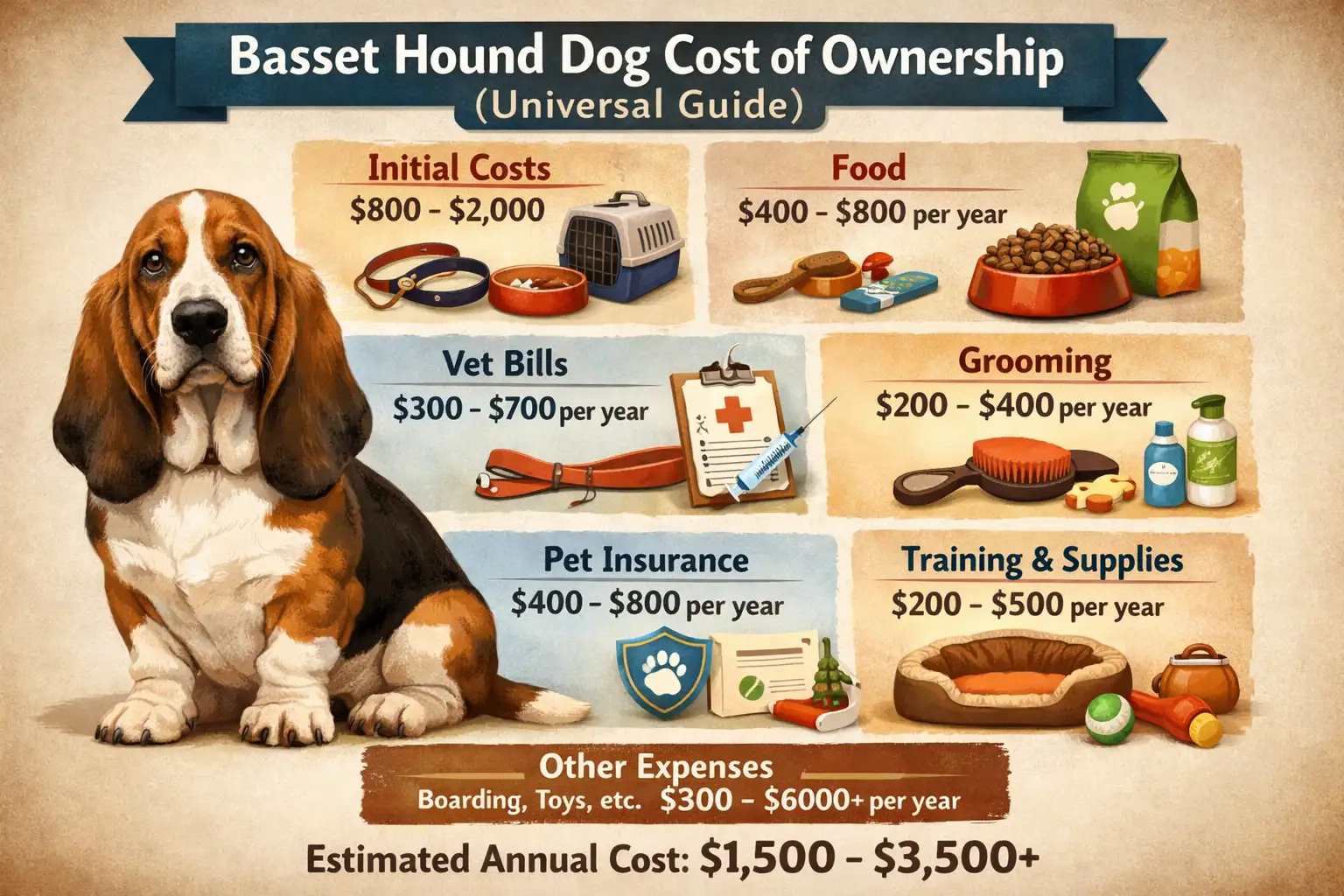
Basset Hound Cost of Ownership In Human Years Guide
Owning a Basset Hound is often assumed to be affordable because they’re calm, medium-sized dogs with modest exercise needs. In reality, the true cost of owning a Basset Hound is higher than many new owners expect, mainly due to food intake, routine veterinary care, breed-specific health risks, and long-term maintenance.
Recommended Dog Care Products
Based on your dog’s age, these products may help with comfort, health, grooming, and daily care.

Purina Pro Plan Veterinary Supplements
Daily probiotics for dogs to support digestive and gut health.
View on Amazon ↗
Earth Rated Poop Bags for Dogs
Leak-proof, extra thick waste bag refill rolls with lavender scent.
View on Amazon ↗
Greenies Pill Pockets for Dogs
Large dog treats for capsule medication, peanut butter flavor.
View on Amazon ↗
HONEY CARE All-Absorb Dog Wrap
Small male dog wraps, 50 count, useful for daily care support.
View on Amazon ↗
Seresto Flea & Tick Collar
Flea and tick treatment and prevention for dogs over 18 lbs.
View on Amazon ↗
Milk-Bone MaroSnacks
Small dog treats with real bone marrow in a 40 oz canister.
View on Amazon ↗
Vital Essentials Dog Treats
Freeze dried beef liver dog treats, grain free and single ingredient.
View on Amazon ↗
Stain & Odor Eliminator
Enzyme cleaner for pet stains, carpet messes, and strong odors.
View on Amazon ↗
Pur Luv Chicken Jerky Treats
Dog treats made with real chicken breast, high protein and chew-friendly.
View on Amazon ↗
Milk-Bone Flavor Snacks
Mini crunchy dog biscuits in a 36 oz canister for small rewards.
View on Amazon ↗As an Amazon Associate, we may earn from qualifying purchases.
This guide is designed for people asking the most common (and important) questions:
- How much does a Basset Hound really cost?
- What should I budget per month and per year?
- Can I realistically afford one long term?
Rather than focusing on the lowest possible numbers, this article uses realistic averages that reflect how most owners actually care for their dogs.
The financial reality in plain terms
A Basset Hound is not a “cheap dog,” but it’s also not among the most expensive breeds to own. Most owners fall somewhere in the middle: manageable monthly costs, moderate-to-high lifetime expenses, and occasional expensive years driven by health or emergencies.
To set expectations clearly, here’s a high-level overview before we dive into details.
Basset Hound cost at a glance
| Cost Type | Estimated Range |
|---|---|
| Average monthly cost | $150 – $300 |
| Average annual cost | $1,800 – $3,600 |
| Estimated lifetime cost (10–12 years) | $18,000 – $40,000+ |
These figures assume:
- Quality commercial food (not bargain-only diets)
- Routine veterinary care
- Basic grooming and ear maintenance
- Occasional training or enrichment
- No extreme medical crises (which can raise costs significantly)
Why Basset Hounds cost more than people expect
Several breed-specific factors influence ownership costs:
- Large appetite for their size
Basset Hounds are short but heavy-boned, typically weighing 40–65 pounds. They eat more than many people anticipate, especially if weight isn’t carefully managed. - High maintenance ears and skin
Their long, floppy ears and skin folds require ongoing cleaning. Chronic ear infections are common and can become a recurring veterinary expense. - Joint and back concerns
Their long backs and short legs make them prone to orthopedic issues, especially with excess weight or aging. - Long lifespan
Many Basset Hounds live 10–12 years or longer, meaning costs accumulate over a decade or more.
One-Time and First-Year Costs of a Basset Hound
The first year with a Basset Hound is usually the most expensive. This is when you pay for adoption or purchase, first vet visits, and all the basic items your dog needs to live safely and comfortably in your home.
Many owners feel surprised by how fast these costs add up. Seeing them clearly can help you plan better and avoid stress later.
Recommended Dog Care Products
Based on your dog’s age, these products may help with comfort, health, grooming, and daily care.
Purina Pro Plan Veterinary Supplements
Daily probiotics for dogs to support digestive and gut health.
View on Amazon ↗
Earth Rated Poop Bags for Dogs
Leak-proof, extra thick waste bag refill rolls with lavender scent.
View on Amazon ↗
Greenies Pill Pockets for Dogs
Large dog treats for capsule medication, peanut butter flavor.
View on Amazon ↗
HONEY CARE All-Absorb Dog Wrap
Small male dog wraps, 50 count, useful for daily care support.
View on Amazon ↗
Seresto Flea & Tick Collar
Flea and tick treatment and prevention for dogs over 18 lbs.
View on Amazon ↗
Milk-Bone MaroSnacks
Small dog treats with real bone marrow in a 40 oz canister.
View on Amazon ↗
Vital Essentials Dog Treats
Freeze dried beef liver dog treats, grain free and single ingredient.
View on Amazon ↗
Stain & Odor Eliminator
Enzyme cleaner for pet stains, carpet messes, and strong odors.
View on Amazon ↗
Pur Luv Chicken Jerky Treats
Dog treats made with real chicken breast, high protein and chew-friendly.
View on Amazon ↗
Milk-Bone Flavor Snacks
Mini crunchy dog biscuits in a 36 oz canister for small rewards.
View on Amazon ↗As an Amazon Associate, we may earn from qualifying purchases.
One-time startup costs
These are costs you usually pay only once at the beginning.
| Expense | Typical Cost Range |
|---|---|
| Adoption fee (shelter/rescue) | $100 – $500 |
| Breeder purchase price | $800 – $2,000+ |
| Initial vet exam | $75 – $150 |
| Vaccines & deworming | $100 – $300 |
| Spay or neuter surgery | $200 – $600 |
| Microchip | $40 – $75 |
| Crate | $60 – $150 |
| Bed, bowls, leash, harness | $80 – $200 |
| Toys & basic supplies | $40 – $100 |
Not every owner will pay all of these. For example, many rescue dogs are already spayed, neutered, and vaccinated. Puppies usually need everything done in the first year.
First-year cost comparison: puppy vs adult dog
The age of the dog makes a big difference in your first-year budget.
| Cost Type | Puppy (First Year) | Adult Dog (First Year) |
|---|---|---|
| Purchase or adoption | Higher (breeder fees) | Lower (rescue fees) |
| Vet visits | Higher (many visits) | Moderate |
| Training | Higher (puppy classes) | Lower or optional |
| Supplies | Higher (everything is new) | Moderate |
| Estimated first-year total | $2,000 – $4,500+ | $1,500 – $3,000 |
Puppies cost more because they need:
- More vet visits
- Training classes
- Replacement items as they grow
Adult dogs usually cost less at the start, but may have higher vet costs later depending on health.
Why first-year costs matter
The first year sets the tone for your dog’s health and behavior. Skipping care or buying poor-quality food to save money often leads to higher vet bills later. Planning for these early costs helps your dog start life in a healthy way.
Monthly and Annual Cost to Own a Basset Hound
After the first year, most costs become monthly or yearly. These are the expenses you pay again and again as long as you own a Basset Hound. This section helps you understand what a normal budget looks like, so there are no surprises.
These costs may look small on their own, but together they make up most of the lifetime cost.
Recommended Dog Care Products
Based on your dog’s age, these products may help with comfort, health, grooming, and daily care.
Purina Pro Plan Veterinary Supplements
Daily probiotics for dogs to support digestive and gut health.
View on Amazon ↗
Earth Rated Poop Bags for Dogs
Leak-proof, extra thick waste bag refill rolls with lavender scent.
View on Amazon ↗
Greenies Pill Pockets for Dogs
Large dog treats for capsule medication, peanut butter flavor.
View on Amazon ↗
HONEY CARE All-Absorb Dog Wrap
Small male dog wraps, 50 count, useful for daily care support.
View on Amazon ↗
Seresto Flea & Tick Collar
Flea and tick treatment and prevention for dogs over 18 lbs.
View on Amazon ↗
Milk-Bone MaroSnacks
Small dog treats with real bone marrow in a 40 oz canister.
View on Amazon ↗
Vital Essentials Dog Treats
Freeze dried beef liver dog treats, grain free and single ingredient.
View on Amazon ↗
Stain & Odor Eliminator
Enzyme cleaner for pet stains, carpet messes, and strong odors.
View on Amazon ↗
Pur Luv Chicken Jerky Treats
Dog treats made with real chicken breast, high protein and chew-friendly.
View on Amazon ↗
Milk-Bone Flavor Snacks
Mini crunchy dog biscuits in a 36 oz canister for small rewards.
View on Amazon ↗As an Amazon Associate, we may earn from qualifying purchases.
Average monthly cost breakdown
| Monthly Expense | Typical Cost Range |
|---|---|
| Food | $40 – $80 |
| Flea, tick, and heartworm prevention | $20 – $40 |
| Supplements or medications | $10 – $30 |
| Grooming and ear care supplies | $10 – $25 |
| Training, toys, and enrichment | $10 – $30 |
| Miscellaneous costs | $10 – $20 |
| Estimated monthly total | $150 – $300 |
Most owners spend the most on food and health care. Basset Hounds eat more than many people expect, and ear care is an ongoing need.
Average annual cost breakdown
| Yearly Expense | Typical Cost Range |
|---|---|
| Routine vet exam and vaccines | $200 – $400 |
| Preventative medications (yearly total) | $250 – $500 |
| Grooming, nail trims, ear care | $150 – $300 |
| Training refreshers or classes | $100 – $300 |
| Licenses and local fees | $20 – $50 |
| Estimated annual total | $1,800 – $3,600 |
These numbers reflect normal, healthy years. Some years will cost less, and some will cost more.
Why these costs are easy to underestimate
Many owners plan only for food and vet visits. They forget about:
- Preventative medicine every month
- Ear cleaning supplies
- Replacing toys, beds, and leashes
- Training or behavior help when problems come up
Skipping regular care may save money short term, but it often leads to higher vet bills later.
Major Cost Drivers That Make Basset Hounds More Expensive
Not all Basset Hound owners spend the same amount each year. Some dogs stay healthy and cost less. Others need more care and cost much more. This section explains what raises costs the most, so you know where the real financial risks are.
Health issues and vet costs
| Common Health Issue | Typical Cost Per Year or Event |
|---|---|
| Ear infections (ongoing) | $200 – $800 per year |
| Joint or back problems | $300 – $2,000+ |
| Obesity-related issues | $200 – $1,000+ |
| Dental disease treatment | $300 – $900 |
| Emergency vet visit | $800 – $3,000+ |
Dogs with long ears often get repeat ear infections. Dogs that gain weight may develop joint or back pain. These costs usually increase as the dog gets older.
Recommended Dog Care Products
Based on your dog’s age, these products may help with comfort, health, grooming, and daily care.
Purina Pro Plan Veterinary Supplements
Daily probiotics for dogs to support digestive and gut health.
View on Amazon ↗
Earth Rated Poop Bags for Dogs
Leak-proof, extra thick waste bag refill rolls with lavender scent.
View on Amazon ↗
Greenies Pill Pockets for Dogs
Large dog treats for capsule medication, peanut butter flavor.
View on Amazon ↗
HONEY CARE All-Absorb Dog Wrap
Small male dog wraps, 50 count, useful for daily care support.
View on Amazon ↗
Seresto Flea & Tick Collar
Flea and tick treatment and prevention for dogs over 18 lbs.
View on Amazon ↗
Milk-Bone MaroSnacks
Small dog treats with real bone marrow in a 40 oz canister.
View on Amazon ↗
Vital Essentials Dog Treats
Freeze dried beef liver dog treats, grain free and single ingredient.
View on Amazon ↗
Stain & Odor Eliminator
Enzyme cleaner for pet stains, carpet messes, and strong odors.
View on Amazon ↗
Pur Luv Chicken Jerky Treats
Dog treats made with real chicken breast, high protein and chew-friendly.
View on Amazon ↗
Milk-Bone Flavor Snacks
Mini crunchy dog biscuits in a 36 oz canister for small rewards.
View on Amazon ↗As an Amazon Associate, we may earn from qualifying purchases.
Emergency vet care and unexpected bills
Even healthy dogs can have accidents or sudden illness. Emergency care is one of the hardest costs to plan for.
Examples include:
- Slipped discs or back injuries
- Severe ear infections
- Stomach problems
- Injuries from jumping or falling
One emergency visit can cost more than an entire year of routine care.
Pet insurance can help manage big vet bills, but it also adds a monthly cost.
| Insurance Type | Typical Monthly Cost |
|---|---|
| Accident-only plan | $20 – $35 |
| Accident + illness plan | $40 – $70 |
| Higher coverage plans | $70 – $100+ |
Insurance works best when started early. Older dogs or dogs with health problems often cost more to insure or may not be fully covered.
Lifestyle and location impact
Your living situation also affects costs:
- City vet clinics usually cost more than rural clinics
- Apartment living may require more training support
- Multi-dog homes often have higher total costs
- Travel, boarding, or pet sitting can add hundreds per year
Hidden Costs, Lifetime Cost Summary, and Budget Reality Check
Many people plan for food and vet visits, but they forget about hidden costs. These are the small and not-so-small expenses that show up over time when owning a Basset Hound. This section helps you see the full picture before making a final decision.
Hidden costs many owners forget
These costs do not happen every month, but they add up over the years.
- Professional dental cleanings
- Extra ear infection treatments
- Replacing chewed beds, toys, and leashes
- Boarding or pet sitting during travel
- Ramps, joint supplements, or special beds for older dogs
- Higher food costs if weight control or special diets are needed
Even careful owners often spend hundreds to thousands more than planned over a dog’s lifetime.
Lifetime cost of owning a Basset Hound
| Cost Scenario | Estimated Lifetime Cost |
|---|---|
| Low-cost (very healthy dog) | $18,000 – $22,000 |
| Average realistic ownership | $25,000 – $35,000 |
| High-cost (health issues) | $40,000+ |
Most owners fall into the average range, not the lowest one.
Common budgeting mistakes
Many owners run into money stress because they:
- Only plan for food and basic vet care
- Do not save for emergencies
- Delay ear or dental care to save money
- Underestimate how long costs last (10+ years)
Small monthly savings can help avoid big problems later.
Final budget reality check
Before getting a Basset Hound, ask yourself:
- Can I afford $150–$300 every month?
- Can I handle a sudden $1,000–$3,000 vet bill?
- Am I ready for long-term care, not just the puppy stage?
If the answer is yes, a Basset Hound can be a loving and rewarding companion. If the answer is no, it’s better to wait and plan.
For more general data on pet care and responsible ownership costs, you can also review guidance from the American Society for the Prevention of Cruelty to Animals (ASPCA), which regularly publishes research and resources on the real costs of caring for dogs over their lifetime.

Ata Ur Rehman is the founder of Pet Age in Human Years Calculator, an educational platform that provides age conversion charts and lifespan guides for dogs, cats, birds, and other companion animals. His work focuses on helping pet owners understand how animal ages translate into human years using commonly accepted age conversion formulas and published lifespan averages.
The website compiles breed and species lifespan data from kennel clubs, breed organizations, and general animal lifespan studies to present simple and easy-to-understand guides for pet owners worldwide.
This website was created to centralize animal age conversion charts into one easy reference platform for pet owners.