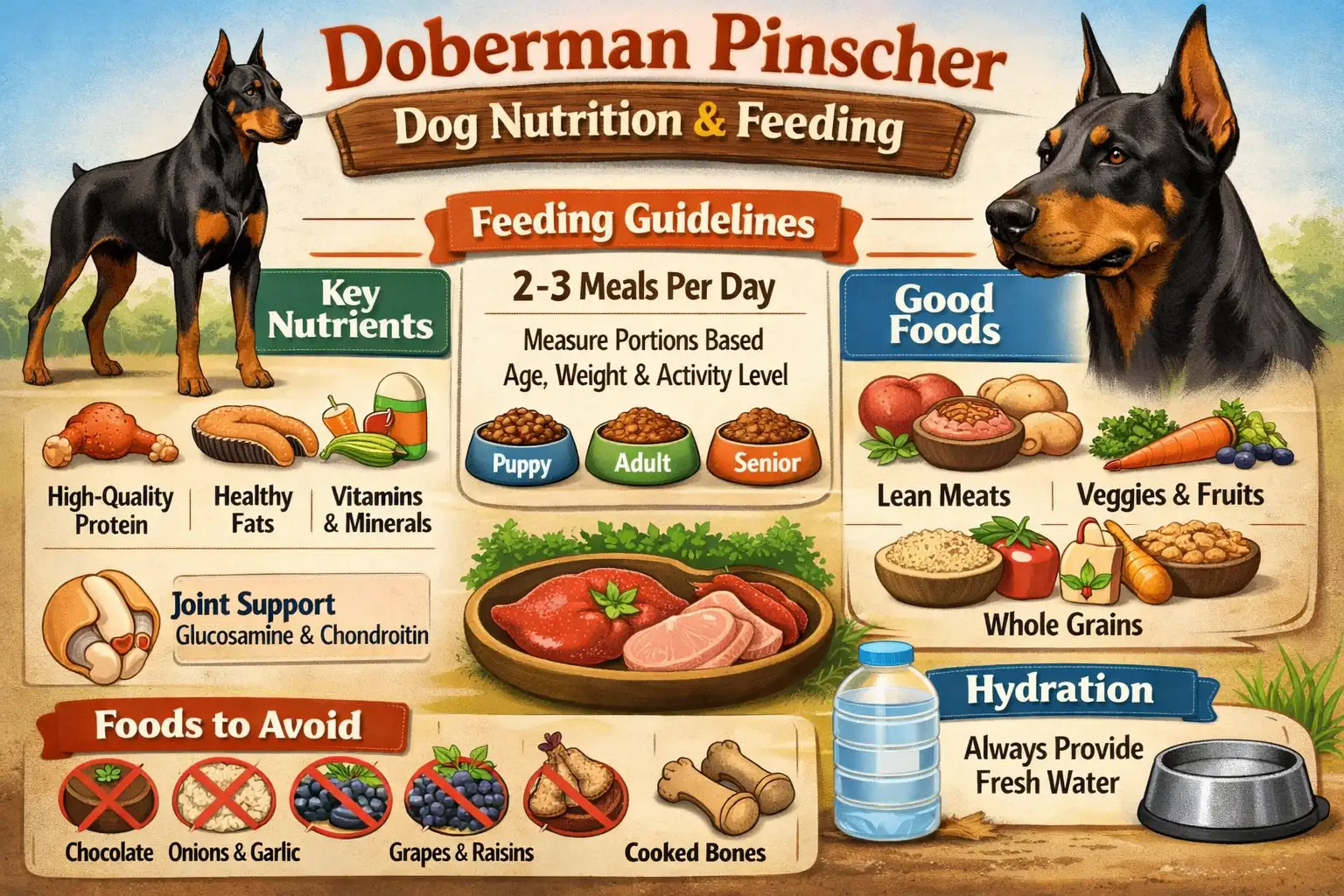
Dobermans are strong, active, and intelligent dogs with unique nutritional needs. Feeding your Doberman the right diet is essential for healthy growth, energy levels, and long-term health. A proper diet helps maintain a lean, muscular body, supports heart and joint health, and keeps their coat shiny and skin healthy.
Good nutrition also affects behavior and energy. Underfeeding or poor-quality food can lead to lethargy, weight problems, digestive issues, or even behavior changes like irritability or hyperactivity. Overfeeding can cause obesity, which increases the risk of joint problems, heart disease, and shorter lifespan.
This guide will help you:
- Understand the nutritional needs of Dobermans at different life stages.
- Learn how much to feed and how often.
- Choose the best type of food for your dog’s health and lifestyle.
- Handle special feeding scenarios, like picky eaters or multiple dogs.
- Avoid common feeding mistakes that many Doberman owners make.
Doberman Nutritional Needs and Feeding Basics
Dobermans are active, muscular dogs that need a balanced diet to stay healthy. Their meals should include protein for muscles, healthy fats for energy and coat, and carbohydrates for fuel. Vitamins and minerals keep their bones, joints, heart, and immune system strong.
How much your Doberman should eat depends on age, weight, and activity level. Puppies need more calories per pound to grow, while adult dogs need maintenance calories. Senior Dobermans may need fewer calories but higher-quality nutrients for joint and heart health.
Feeding frequency also changes with age: puppies usually eat 3–4 small meals a day, adults 2 meals, and seniors 1–2 meals, depending on their appetite.
Using a Body Condition Score (BCS) helps you adjust portions. A BCS lets you see if your dog is underweight, ideal, or overweight, so you can change meal sizes or treats.
Feeding Amounts by Life Stage and Weight
| Life Stage | Weight (lbs) | Daily Food Amount (cups) | Meals per Day |
|---|---|---|---|
| Puppy | 10–25 | 1–2 | 3–4 |
| Puppy | 25–50 | 2–3 | 3–4 |
| Adult | 50–70 | 3–4 | 2 |
| Adult | 70–90 | 4–5 | 2 |
| Senior | 50–70 | 2.5–3.5 | 1–2 |
| Senior | 70–90 | 3–4.5 | 1–2 |
Daily Calorie Needs by Activity Level
| Activity Level | Calories per Day (approx.) |
|---|---|
| Low activity | 25–30 kcal per lb |
| Moderate activity | 30–35 kcal per lb |
| High activity | 35–45 kcal per lb |
Remember, these are guidelines. Some Dobermans may need slightly more or less depending on metabolism, health, and exercise. Always monitor body condition and adjust meals accordingly.
Choosing the Right Food for Your Doberman
Dobermans can eat many types of dog food, but choosing the right one is important for health, energy, and longevity. The main food types include kibble, canned, raw, fresh, homemade, and freeze-dried diets. Each type has benefits and drawbacks, so knowing them helps you pick the best option for your dog.
A good diet should have: high-quality protein for muscles, healthy fats for energy and coat, moderate carbs for fuel, and vitamins and minerals. Always check the ingredients list and guaranteed analysis on the label. Avoid foods with too many fillers or artificial additives.
Food Type Comparison for Dobermans
| Food Type | Pros | Cons | Best For |
|---|---|---|---|
| Kibble | Convenient, long shelf-life | May contain fillers, less moisture | Adults, busy owners |
| Canned | High moisture, tasty | Can be expensive, shorter shelf-life | Dogs with hydration needs |
| Raw / BARF | High protein, natural diet | Risk of bacteria, prep time | Active dogs, owners experienced with raw |
| Fresh / Homemade | Controlled ingredients, quality | Expensive, needs planning | Dogs with allergies or sensitivities |
| Freeze-dried | Long shelf-life, nutrient-dense | Expensive, may need rehydration | Travel, owners wanting raw benefits |
Safe vs Toxic Foods for Dobermans
| Safe Foods | Avoid / Toxic Foods |
|---|---|
| Chicken, turkey, beef | Chocolate, caffeine |
| Carrots, peas, pumpkin | Grapes, raisins |
| Sweet potatoes, rice | Onions, garlic |
| Apples (no seeds) | Avocado |
| Blueberries, cranberries | Macadamia nuts, alcohol |
Dobermans love treats, but too many can lead to weight gain. Use treats as rewards, not extra meals, and choose healthy options like small pieces of cooked meat or vegetables.
Special Diets, Common Feeding Challenges, and Real-Life Scenarios
Some Dobermans need special diets or extra care because of allergies, sensitive stomachs, weight issues, or high energy levels. Knowing how to handle these situations helps keep your dog healthy and happy.
Special Diet Guide for Dobermans
| Condition / Need | Recommended Approach | Notes |
|---|---|---|
| Food allergies | Limited ingredient diets, novel proteins | Monitor for itching, digestive upset |
| Sensitive stomach | Easily digestible food, small frequent meals | Avoid sudden diet changes |
| Overweight | Portion control, high protein, low fat | Use BCS to track progress |
| Underweight / active dogs | High-calorie food, extra protein | Feed energy-dense meals |
| High-energy / working dogs | High-protein, moderate fat, carbs for fuel | Feed pre-activity for sustained energy |
| Low-activity / apartment dogs | Lower calories, smaller meals | Avoid overfeeding and excessive treats |
Common Feeding Challenges & Solutions
| Problem | Solution |
|---|---|
| Picky eater | Mix wet & dry food, try high-quality protein |
| Food aggression | Feed separately, use calm feeding routines |
| Multiple dogs with different needs | Portion individually, track BCS |
| Loose stool or diarrhea | Slow diet transition, sensitive or digestible food |
| Bloating risk | Feed smaller, frequent meals; avoid exercise immediately after eating |
Feeding schedules and diets can also change during travel. For trips, bring familiar food and stick to usual portions and meal times to avoid digestive upset.
Practical Tools, Sample Plans, FAQs, and Expert Guidance
Having the right tools and information at your fingertips helps make feeding your Doberman easier. Here are some sample meal plans, a feeding checklist, and answers to the most common questions Doberman owners have.
Sample Daily Meal Plan for Dobermans
| Life Stage | Meal Plan Example |
|---|---|
| Puppy | 3 meals of high-quality kibble (split into 1/3 morning, 1/3 afternoon, 1/3 evening) |
| Adult | 2 meals of balanced kibble or raw food (morning and evening) |
| Senior | 2 meals of easily digestible food, possibly with joint supplements (morning and evening) |
Feeding Checklist
| Task | Done? (✓) |
|---|---|
| Measure food portions based on weight and activity level | |
| Feed on a consistent schedule | |
| Check your dog’s body condition weekly | |
| Provide fresh water at all times | |
| Avoid feeding immediately before or after exercise |
Frequently Asked Questions
Q: How do I know if I’m feeding my Doberman the right amount?
A: Use the Body Condition Score (BCS) to check if your dog is at a healthy weight. Adjust portions based on the score.
Q: Can I feed my Doberman human food?
A: Yes, but only safe foods like carrots, apple slices (without seeds), or cooked chicken. Avoid toxic foods like chocolate, grapes, and onions.
Q: How do I deal with a picky eater?
A: Try mixing wet food with kibble, or add a small amount of broth or cooked meat to make meals more appealing.
Q: When should I consult a vet or nutritionist?
A: If your Doberman has persistent weight issues, vomiting, or diarrhea, or if you’re unsure about the right food, consult a vet or a pet nutritionist.
With this, you now have all the information to feed your Doberman Pinscher a balanced and healthy diet, ensuring they stay strong, active, and happy. Always pay attention to their body condition, and don’t hesitate to adjust meals as needed.
For more detailed guidance on feeding large breed dogs like the Doberman Pinscher, check out the American Kennel Club’s guide on dog nutrition.

Ata Ur Rehman is the founder of Pet Age in Human Years Calculator, an educational platform that provides age conversion charts and lifespan guides for dogs, cats, birds, and other companion animals. His work focuses on helping pet owners understand how animal ages translate into human years using commonly accepted age conversion formulas and published lifespan averages.
The website compiles breed and species lifespan data from kennel clubs, breed organizations, and general animal lifespan studies to present simple and easy-to-understand guides for pet owners worldwide.
This website was created to centralize animal age conversion charts into one easy reference platform for pet owners.