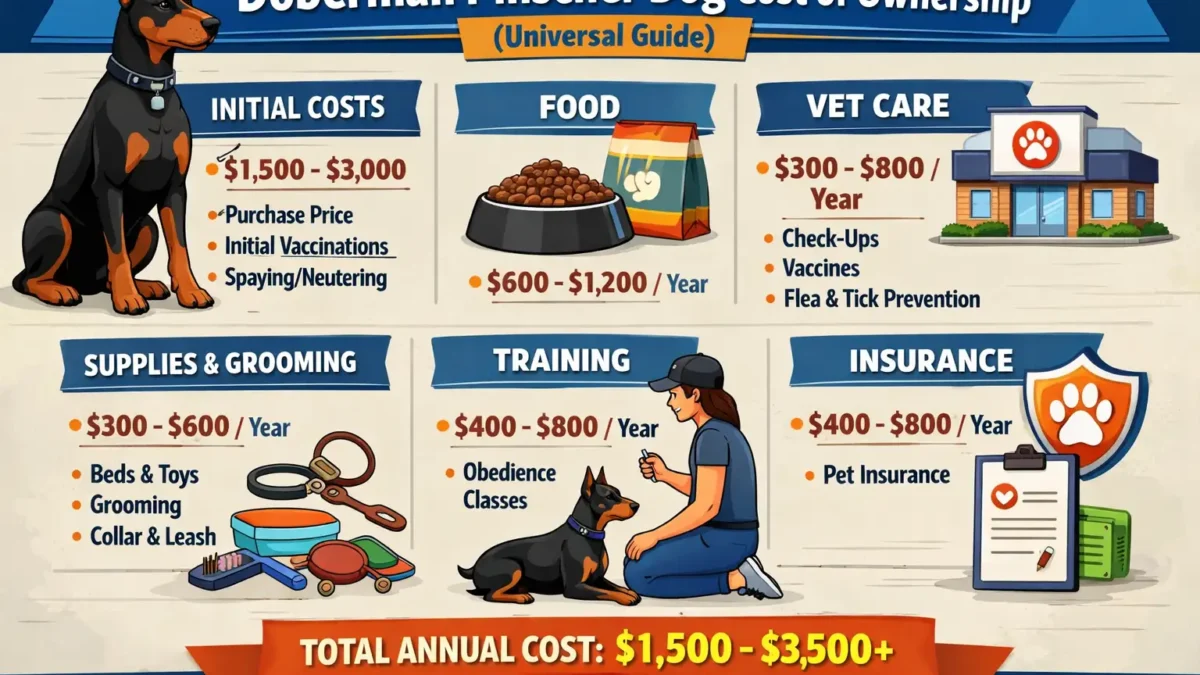
Doberman Pinscher Cost of Ownership Full Guide
Owning a Doberman Pinscher can be an incredibly rewarding experience, but it also comes with financial responsibilities that many new owners underestimate. These dogs are large, active, and intelligent, which means their needs — from nutrition to healthcare — can add up quickly. Understanding the real costs before bringing a Doberman home helps you plan properly and avoid surprises.
This guide breaks down all the expenses associated with Doberman ownership, from one-time startup costs to monthly and annual recurring expenses. You’ll see what a typical first year looks like, how ongoing costs compare as your dog grows, and what unexpected expenses you should prepare for.
Dobermans are known for their loyalty, energy, and protective instincts, but these traits also mean they require proper training, preventive healthcare, and quality nutrition. Skipping or underestimating any of these areas can lead to higher costs down the road, whether it’s due to emergency vet visits, behavioral issues, or early health problems.
Even though every dog’s expenses will vary depending on where you live, your lifestyle, and your dog’s health, this guide provides realistic cost ranges and practical budgeting tips for Doberman owners. By the end, you’ll have a clear understanding of what it truly costs to own this breed and how to prepare financially.
One-Time and First-Year Expenses for Dobermans
The first year of owning a Doberman Pinscher comes with several one-time and initial costs that are important to budget for. These include the price of getting your dog, initial veterinary care, and all the supplies needed to set up a safe and comfortable home. Understanding these costs early helps you avoid surprises and plan your budget accurately.
Here’s a clear breakdown of typical one-time and first-year expenses for a Doberman:
| Item | Cost Range (USD) | Notes |
|---|---|---|
| Doberman puppy / adoption fee | $1,500–$3,500 | Cost depends on breeder, adoption, and location |
| Initial vet care | $300–$700 | Vaccines, microchip, spay/neuter |
| Supplies (crate, bed, bowls, leash, toys) | $200–$500 | Durable, large-breed items |
| Training tools | $50–$200 | Basic equipment for obedience or crate training |
Comparison of First-Year vs Adult-Year Costs
| Cost Category | First-Year ($) | Adult-Year ($) | Notes |
|---|---|---|---|
| Food | $1,000–$1,500 | $900–$1,400 | Puppies eat more per pound of body weight, adults need maintenance diet |
| Vet care | $500–$1,000 | $300–$700 | First year includes more vaccinations, spay/neuter |
| Supplies | $200–$500 | $50–$150 | Most initial gear is one-time; replacements are occasional |
| Training | $300–$800 | $100–$400 | Puppy classes vs ongoing refresher training |
| Total Estimated Cost | $2,500–$6,000 | $1,350–$2,650 | Approximate ranges, can vary by location and dog health |
Budgeting for these costs upfront ensures you can provide quality care and a safe environment for your Doberman from day one.
Ongoing Monthly and Annual Costs
After the first year, owning a Doberman Pinscher comes with monthly and yearly expenses that are important to plan for. These include food, healthcare, grooming, training, and other regular costs that keep your dog healthy and happy. Being aware of these helps you budget properly and avoid surprises.
Here is a typical breakdown of monthly and annual costs for a Doberman:
| Expense | Monthly ($) | Annual ($) | Notes |
|---|---|---|---|
| Food | $80–$150 | $960–$1,800 | Adult Dobermans need high-quality large-breed food |
| Preventatives, supplements, medications | $20–$60 | $240–$720 | Flea, tick, heartworm, joint supplements |
| Routine vet visits | $25–$50 | $300–$600 | Yearly checkups and vaccinations |
| Grooming | $20–$60 | $240–$720 | Short coat; nails, ears, occasional bath |
| Training | $30–$100 | $360–$1,200 | Ongoing obedience or refresher classes |
| Licenses and registration | $5–$15 | $60–$180 | Required in most areas |
On average, the monthly cost for a Doberman can range from $180 to $435, while the annual cost ranges from $2,160 to $5,220, depending on your dog’s health, diet, and local prices. These estimates cover normal care but do not include emergencies or unexpected expenses.
Planning for these ongoing costs ensures your Doberman stays healthy, active, and well-cared for throughout their adult life.
Major Cost Drivers and Variations
The cost of owning a Doberman Pinscher can vary a lot depending on factors like the dog’s size, age, health, and your living situation. Understanding these major cost drivers helps you plan better and avoid surprises.
| Factor | Typical Cost Range (USD) | Notes |
|---|---|---|
| Insurance | $40–$100/month | Depends on coverage, deductible, and dog’s age |
| Emergency vet care | $500–$3,000+ | Accidents, sudden illnesses, surgeries |
| Chronic health conditions | $200–$1,000/year | Conditions like heart issues, hip problems, or allergies |
| Multi-dog households | +20–50% | Food, vet, grooming, and supplies multiply per dog |
| Living situation | Varies | Urban vs rural, apartment vs house affects boarding, space, and care costs |
Large breeds like Dobermans also require more food, larger beds, and durable toys, which can increase costs compared to smaller dogs. Emergency and chronic health care can quickly become a big part of the annual budget, so it’s smart to plan for insurance and an emergency fund.
By knowing how size, health, and living conditions affect costs, you can create a more realistic budget and avoid financial stress.
Hidden Costs, Budgeting, and Smart Saving
Owning a Doberman Pinscher can come with some hidden costs that many owners don’t think about at first. These expenses can sneak up on you, so it’s important to be prepared. Some of these costs are harder to predict, like boarding fees when you travel or the cost of replacing damaged furniture.
Here are some common hidden costs for Doberman owners:
| Hidden Cost | Average Cost Range (USD) | Tips to Save |
|---|---|---|
| Boarding / pet sitting | $25–$75/day | Book early, or ask friends/family to watch your dog |
| Furniture damage | $50–$500/year | Use chew-proof items or train your dog to stop chewing |
| Dental care | $200–$500/year | Brush your dog’s teeth at home, get regular cleanings |
| Travel & emergencies | $100–$1,000+ | Set up an emergency fund, get pet insurance |
Budgeting for these costs is essential to making sure you don’t run out of funds when unexpected things come up. Make sure to set aside money each month for emergencies or savings to avoid stress when something unexpected happens.
Here are some smart ways to save on dog ownership without sacrificing your dog’s care:
- Shop for food in bulk or buy on sale
- Consider home grooming to save on professional grooming costs
- Use preventive care and regular vet checkups to avoid costly medical treatments later
- Look for discounts on pet supplies from local stores or online retailers
Common budgeting mistakes include:
- Underestimating first-year costs, especially for food, vet visits, and training
- Skipping pet insurance to save money, only to face huge emergency bills later
- Forgetting to budget for recurring but small costs like toys, grooming, or annual licenses
For more detailed information on dog ownership costs, check out the American Kennel Club’s comprehensive guide on costs of owning a doghere.