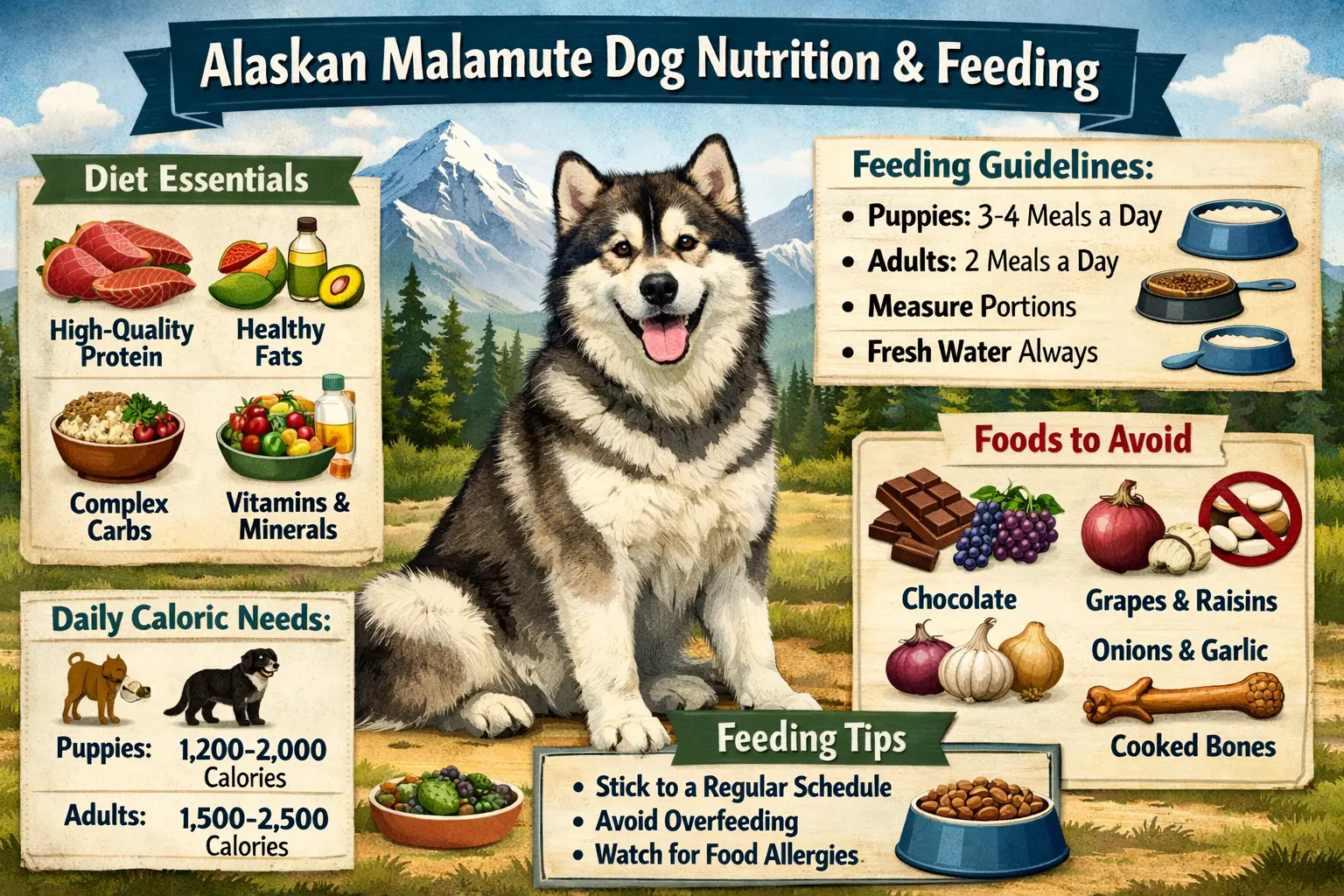
Alaskan Malamutes are large, strong, and high-energy dogs that require carefully managed feeding portions to stay healthy. Proper nutrition is essential not only for maintaining their muscular build and thick double coat, but also for supporting their energy levels, joint health, and overall longevity. If you’re new to the breed, our detailed Alaskan Malamute breed guide explains their temperament, size, and activity levels, which directly influence feeding needs. Feeding a Malamute the right diet can help prevent obesity, digestive issues, and nutrient deficiencies, which are common in large breeds when portions or food types are not properly managed.
This guide will provide a complete overview of Alaskan Malamute nutrition, including daily calorie needs, feeding amounts, food types, special diet considerations, and practical tips for real-life scenarios. Whether you are raising a Malamute puppy, managing an adult dog, or caring for a senior, the information here is designed to help you make informed decisions and keep your dog healthy, active, and happy.
Alaskan Malamutes thrive on diets that are rich in high-quality protein and healthy fats, balanced with the right vitamins and minerals. Their metabolism, activity level, and growth patterns differ from smaller breeds, so it is critical to understand how to tailor their meals. By following the guidance in this article, owners can confidently provide meals that meet their Malamute’s energy requirements, support joint and coat health, and prevent common feeding mistakes.
How Much Should You Feed an Alaskan Malamute?
An adult Alaskan Malamute typically needs 2.5 to 4 cups of high-quality dry food per day, depending on weight and activity level. Puppies may need 3–5 cups daily divided into multiple meals, while seniors usually require slightly less. Most adult Malamutes need 1,500–2,000 calories per day, adjusted based on exercise and body condition.
How Many Cups Should I Feed My Alaskan Malamute?
Most adult Alaskan Malamutes need 2.5 to 4 cups of dry dog food per day, divided into two meals. Puppies may require 3 to 5 cups daily split into three meals. The exact amount depends on weight, metabolism, and activity level.
How Many Times a Day Should You Feed a Malamute?
Adult Alaskan Malamutes should be fed twice per day to maintain stable energy and digestion. Puppies under six months may need three to four meals daily. Seniors usually stay on a two-meal schedule with adjusted portions.
Feeding Chart by Weight and Life Stage
| Dog Weight (lbs) | Puppy (3-12 months) | Adult (1-7 years) | Senior (7+ years) |
|---|---|---|---|
| 40-60 | 2.5 – 3 cups/day | 2 – 2.5 cups/day | 1.5 – 2 cups/day |
| 60-80 | 3 – 4 cups/day | 2.5 – 3 cups/day | 2 – 2.5 cups/day |
| 80-100 | 4 – 5 cups/day | 3 – 3.5 cups/day | 2.5 – 3 cups/day |
| 100+ | 5+ cups/day | 3.5 – 4 cups/day | 3 – 3.5 cups/day |
Core Nutritional Needs and Feeding Amounts
Alaskan Malamutes need food that gives them enough energy to stay active, strong, and healthy. Their meals should have the right mix of protein, fat, and carbohydrates, along with vitamins and minerals. Puppies, adults, and senior Malamutes all need different amounts, so it is important to adjust portions as they grow or as their activity changes.
Protein is very important for building strong muscles. Fat gives them energy and helps keep their thick coat shiny. A proper diet works alongside grooming. Learn how coat care impacts shedding and skin health in our Alaskan Malamute grooming guide. Carbohydrates give extra energy, but too many can cause weight gain. Vitamins and minerals support bones, joints, and overall health.
One way to make sure your Malamute gets the right amount is to follow a feeding chart based on their weight and age. Here’s an example:
Another helpful table shows the recommended macronutrient ranges for Malamutes:
Macronutrient Ranges for Alaskan Malamutes
| Nutrient | Recommended % of Diet | Notes |
|---|---|---|
| Protein | 25-35% | Supports muscles and growth |
| Fat | 15-25% | Provides energy and coat health |
| Carbs | 30-40% | For extra energy, adjust based on activity |
Always provide fresh water at all times. Malamutes are large dogs and can drink more than smaller breeds, especially after exercise or play.
Types of Dog Food and What to Put in the Bowl
Alaskan Malamutes can eat many types of dog food. Each type has its own benefits and things to watch out for. Choosing the right food depends on your dog’s age, activity, health, and your budget. High-quality food is part of long-term expenses. See the full breakdown in our Alaskan Malamute cost of ownership guide to plan responsibly.
Comparison of Dog Food Types
| Food Type | Pros | Cons | Best For |
|---|---|---|---|
| Kibble (Dry) | Easy to store, good for teeth | Some low-quality brands | Adult dogs, busy owners |
| Wet/Canned | Tasty, high moisture | More expensive, short shelf life | Picky eaters, seniors |
| Raw (BARF) | High protein, natural diet | Risk of bacteria, prep time | Active dogs, experienced owners |
| Fresh/Commercial | High-quality ingredients | Costly | All life stages, healthy coat |
| Freeze-dried | Long shelf life, retains nutrients | Expensive, needs water | Travel, high-energy dogs |
| Homemade | Control over ingredients | Needs careful planning | Owners who cook for pets |
It is important to always check dog food labels. Look for high-quality protein sources, moderate fat, and essential vitamins and minerals. Avoid foods with too many fillers or artificial ingredients.
Special Diets, Common Problems, and Real-Life Scenarios
Some Alaskan Malamutes need special diets or extra care with feeding. This can be because of allergies, sensitive stomachs, weight issues, or high activity levels. Understanding these needs helps keep your dog healthy and happy.
Special Diets for Alaskan Malamutes
| Diet Type | When Needed | Key Tips | Notes |
|---|---|---|---|
| Allergy Diet | Food allergies or skin issues | Limited ingredients, hypoallergenic | Consult vet before switching |
| Sensitive Stomach | Loose stools or digestive upset | Easily digestible foods, small meals | Introduce new food gradually |
| Weight Management | Overweight dogs | Lower calories, high protein | Monitor body condition |
| High-Energy/Working Dogs | Active or sled dogs | More calories, higher protein | Adjust meals based on activity |
| Low-Activity Dogs | Less exercise, apartment dogs | Lower calories, smaller portions | Avoid overfeeding |
Alaskan Malamutes can also have common feeding problems. Using a simple troubleshooting table helps solve them quickly.
Common Feeding Problems and Solutions
| Problem | Likely Cause | Recommended Action |
|---|---|---|
| Loose stool | New food or sensitive stomach | Switch gradually, feed easily digestible food |
| Refusing to eat | Picky eater or illness | Try different high-quality foods, check with vet |
| Weight gain | Too many calories or low activity | Adjust portions, increase exercise |
| Food aggression | Competition or anxiety | Feed separately, use slow feeder |
| Constant hunger | High energy needs or treats overload | Reduce treats, check calorie intake |
Real-life feeding scenarios are common for Malamute owners:
- Multiple dogs with different needs: Feed separately to avoid overeating or aggression.
- Picky eaters: Try wet food or mix small amounts of fresh food with kibble.
- Travel or schedule changes: Pack measured portions in advance and keep a consistent feeding time.
- Fast eaters or food aggression: Use slow feeders or puzzle toys to make eating safer.
Consistent routines and structure also help prevent feeding issues. Our Alaskan Malamute training guide covers behavior management tips that support better mealtime habits.
Practical Tools, Charts, and FAQs
To make feeding your Alaskan Malamute easier, here are some tools and charts to help guide you. These will give you quick references to portions, meal plans, and common questions.
Sample Daily Feeding Schedule for Alaskan Malamutes
| Life Stage | Meal 1 | Meal 2 | Meal 3 | Notes |
|---|---|---|---|---|
| Puppy (3-6 months) | 1 – 1.5 cups | 1 – 1.5 cups | N/A | Feed 3-4 times a day |
| Adult (1-7 years) | 2.5 – 3 cups | 2.5 – 3 cups | N/A | Feed 2 times a day |
| Senior (7+ years) | 2 – 2.5 cups | 2 – 2.5 cups | N/A | Feed 2 times a day, adjust for weight |
Frequently Asked Questions (FAQs)
| Question | Answer |
|---|---|
| How many calories does my Malamute need? | Typically 1,500-2,000 calories per day, depending on age and activity level. |
| Can I feed my Malamute homemade food? | Yes, but make sure it’s balanced with protein, fat, and essential nutrients. Consider consulting a vet. |
| How do I switch my Malamute’s food? | Gradually mix new food with old food over 7-10 days to avoid stomach upset. |
| What human foods can Malamutes eat? | Carrots, apples (remove seeds), peanut butter, chicken (cooked, no bones). Avoid grapes, chocolate, and onions. |
You can also estimate your dog’s life stage more accurately using our Alaskan Malamute age calculator, which helps adjust feeding portions as your dog matures.
How Are Calorie Needs Calculated for an Alaskan Malamute?
Daily calorie needs are typically estimated using a dog’s Resting Energy Requirement (RER), which is based on body weight. Active adult Alaskan Malamutes usually require 1.6–2.5 times their RER depending on activity level. Working or sled dogs may need significantly more during heavy exercise seasons.
When to Consult a Vet or Nutritionist
If your Malamute has trouble with weight, digestion, or allergies, it’s a good idea to consult a vet or a certified veterinary nutritionist. They can help design a specific diet plan and ensure your dog gets the right nutrients.
For more information on dog nutrition standards and guidelines, visit the AAFCO website, which provides valuable resources for ensuring your dog’s food meets industry standards.
Alaskan Malamute Feeding FAQs
How much should a 70 lb Alaskan Malamute eat?
A 70 lb adult Alaskan Malamute typically needs 2.5 to 3.5 cups of high-quality dry food per day, depending on activity level. Highly active dogs may require closer to 3.5 cups, while less active dogs may need slightly less to maintain a healthy weight.
Is 2 cups of food enough for a Malamute?
For most adult Malamutes, 2 cups per day is usually too little unless the dog is small, senior, or on a calorie-dense diet. Most require between 2.5 and 4 cups daily to meet energy needs.
What is the best diet for an Alaskan Malamute?
The best diet for an Alaskan Malamute is high in quality animal protein (25–35%), moderate in fat (15–25%), and balanced with essential vitamins and minerals. Active or working dogs may need higher fat levels for sustained energy.
Do Alaskan Malamutes need a high-protein diet?
Yes. Due to their muscular build and working heritage, Alaskan Malamutes thrive on diets rich in animal-based protein. Protein supports muscle maintenance, joint stability, and overall metabolic health.
What Human Foods Can Alaskan Malamutes Eat?
Safe vs Unsafe Foods for Alaskan Malamutes
| Food | Safe to Feed | Notes / Cautions |
|---|---|---|
| Carrots | Yes | Good crunchy treat |
| Apples | Yes | Remove seeds |
| Peanut Butter | Yes | Unsalted, no xylitol |
| Chicken | Yes | Cooked, no bones |
| Chocolate | No | Toxic, do not feed |
| Grapes / Raisins | No | Can cause kidney problems |
| Onions / Garlic | No | Can damage red blood cells |
| Bones (cooked) | No | Can splinter, dangerous |
Treats should not make up more than 10% of your dog’s daily calories. Always offer fresh water, especially when feeding dry kibble.

Ata Ur Rehman is the founder of Pet Age in Human Years Calculator, an educational platform that provides age conversion charts and lifespan guides for dogs, cats, birds, and other companion animals. His work focuses on helping pet owners understand how animal ages translate into human years using commonly accepted age conversion formulas and published lifespan averages.
The website compiles breed and species lifespan data from kennel clubs, breed organizations, and general animal lifespan studies to present simple and easy-to-understand guides for pet owners worldwide.
This website was created to centralize animal age conversion charts into one easy reference platform for pet owners.