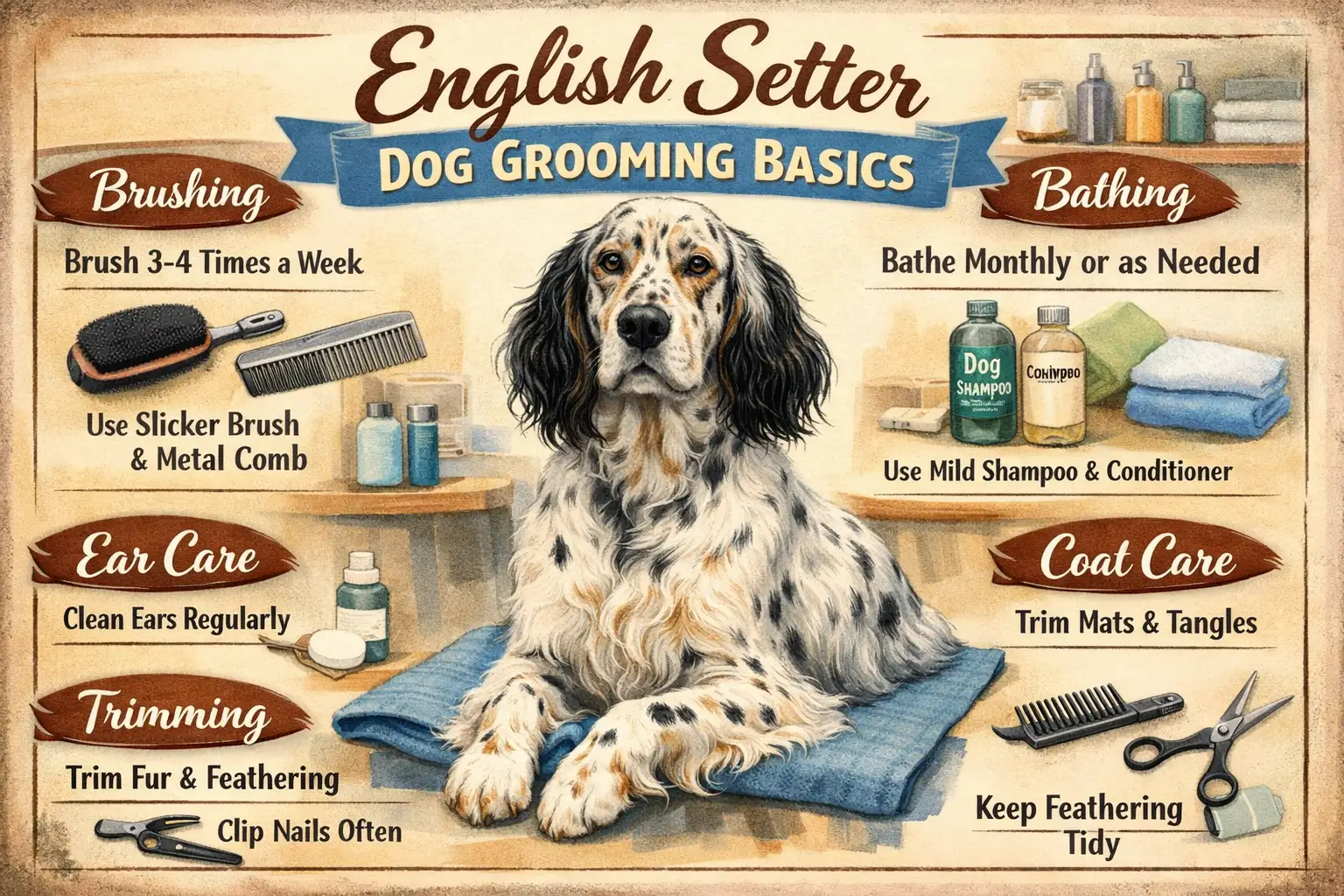
This guide is designed to give English Setter owners a clear, realistic, and breed-appropriate grooming routine—without turning grooming into an overwhelming or overly technical task. English Setters have a beautiful, silky, feathered coat that looks effortless when it’s well maintained, but that appearance depends on consistent, correct care.
By the end of this guide, you’ll know:
- How to care for an English Setter’s feathered coat at home
- How often to brush, bathe, and trim without damaging coat quality
- Which grooming tools actually work for this breed (and which ones don’t)
- How to prevent common issues like matting, ear problems, excess shedding, and skin irritation
- When home grooming is enough—and when a professional groomer or veterinarian is the better option
This is not a show-grooming manual. It focuses on practical, everyday grooming that keeps English Setters comfortable, clean, and healthy in real-life homes.
How grooming affects comfort, skin health, and behavior
Grooming for English Setters is about far more than appearance. Their coat type, ear shape, and active nature make grooming directly tied to skin health, comfort, and overall wellbeing.
Regular grooming helps:
- Prevent mats in high-friction areas like behind the ears, under the arms, and along feathering
- Reduce trapped dirt, moisture, and allergens that can lead to hot spots or skin infections
- Improve air circulation to the skin and ears, lowering the risk of yeast and bacterial issues
- Control shedding before loose hair spreads through the home
- Make handling and physical checks easier, helping owners notice problems early
From a behavior standpoint, dogs that are groomed consistently tend to be more relaxed during handling. Brushing, nail trims, and ear care become routine rather than stressful events. In contrast, neglected grooming often leads to painful mats, tender skin, and fear-based resistance—especially common in feathered sporting breeds like the English Setter.
When done correctly and regularly, grooming becomes a preventive health practice, not a cosmetic chore.
English Setter Coat Type and Grooming Requirements
English Setters have a silky, feathered coat that feels soft and smooth. It is not a heavy double coat like a Husky, but it is also not a short, low-care coat. This means the coat needs regular attention, especially in certain areas.
The coat grows longer on the:
- Ears
- Chest
- Belly
- Back of the legs
- Tail (feathering)
These longer areas rub together when the dog moves, runs, or lies down. Because of this, mats and tangles form easily if brushing is skipped.
English Setters also love outdoor activity. Dirt, grass seeds, mud, and moisture get trapped in the feathering, which can lead to:
- Knots and mats
- Bad smell
- Skin irritation
- Hot spots
That is why grooming is not optional for this breed. It is part of keeping them comfortable and healthy.
Where English Setters Mat and Shed the Most (Quick Scan)
- Behind the ears
- Under the front legs (armpits)
- Chest and belly
- Around the collar area
- Back of the thighs
- Tail feathering
These spots should always be checked, even on days when you do not do full grooming.
English Setter Grooming Frequency Overview
| Grooming Task | How Often | Why It Matters |
|---|---|---|
| Brushing | 3–4 times per week | Prevents mats and removes dirt before it sticks |
| Full coat check | Every few days | Finds tangles early before they tighten |
| Bathing | Every 4–6 weeks | Keeps skin clean without drying it out |
| Feather trimming | Every 6–8 weeks | Keeps coat neat and easier to manage |
| Ear check | Weekly | Long ears trap moisture and dirt |
| Nail trimming | Every 3–4 weeks | Active dogs still need nail care |
This table gives you a simple routine you can follow without guessing.
Is the English Setter a High-Shedding Dog?
English Setters are moderate shedders. They shed more during seasonal coat changes, usually in spring and fall. Regular brushing controls shedding and keeps loose hair from spreading around the house.
They are not a shave-down breed. Shaving can damage the coat and make skin problems worse.
Core Grooming Routine at Home
This section explains how to groom an English Setter at home, step by step. You do not need fancy skills. You just need the right tools and a calm routine. Short sessions done often work better than long sessions done rarely.
Grooming at home should feel slow, gentle, and positive for your dog. Talk calmly, take breaks, and stop if your dog becomes stressed.
Grooming tools you actually need
| Tool | What It Is Used For | How Often |
|---|---|---|
| Slicker brush | Removes loose hair and small tangles | 2–4 times per week |
| Pin brush | Smooths feathering and long hair | 2–4 times per week |
| Metal comb | Finds hidden knots near skin | After brushing |
| Dog shampoo | Cleans coat and skin | Every 4–6 weeks |
| Towel or dog dryer | Dries coat fully after baths | After every bath |
| Nail clippers or grinder | Trims nails | Every 3–4 weeks |
Avoid human brushes and human shampoo. Dog skin is different and more sensitive.
Brushing an English Setter the right way
Brushing is the most important grooming step for this breed.
Start brushing when the coat is dry and clean. Wet hair breaks more easily.
Simple brushing steps:
- Start at the legs and work upward
- Use short, gentle strokes
- Brush small areas at a time
- Pay extra attention behind ears and under arms
- Use a comb at the end to check for hidden knots
If you find a knot:
- Do not pull hard
- Hold the hair near the skin
- Gently loosen it with the brush or comb
Brushing often keeps grooming easy. Skipping brushing causes painful mats that may need professional help.
Bathing an English Setter safely
| Dog Lifestyle | Bathing Frequency | Notes |
|---|---|---|
| Indoor family pet | Every 4–6 weeks | Brush well before bathing |
| Very active outdoor dog | Every 3–4 weeks | Rinse mud sooner if needed |
| Sensitive skin dog | As advised by vet | Use gentle or medicated shampoo |
Bathing tips:
- Brush before the bath
- Use lukewarm water
- Avoid water in ears
- Rinse very well
- Dry the coat fully, especially feathering
Never let an English Setter air-dry fully. Damp feathering can cause skin problems.
Drying matters more than people think
Drying is part of grooming, not an extra step.
After a bath:
- Towel dry first
- Use a low-heat dog dryer or fan
- Brush lightly while drying
A fully dry coat stays cleaner, smells better, and mats less.
Feather Care, Trimming, and Coat Maintenance
English Setters are known for their beautiful feathering. Feathering is the longer hair on the ears, chest, belly, legs, and tail. This hair needs special care. If it is ignored, it mats fast and becomes uncomfortable for the dog.
Feather care is about keeping hair neat, clean, and easy to brush, not about cutting everything short.
What feather trimming is (and what it is not)
Feather trimming means tidying, not shaving.
You should:
- Lightly trim messy edges
- Shorten hair that drags on the ground
- Clean up hair around feet and hocks
- Keep ear feathering neat and untangled
You should not:
- Shave the coat
- Cut feathering very short
- Use clippers on the body coat
Shaving can damage the coat and make skin problems worse.
Common feather problem areas to check often
| Body Area | Why Mats Form Here | How Often to Check |
|---|---|---|
| Behind ears | Rubbing and moisture | Every 2–3 days |
| Under front legs | Movement and friction | Every 2–3 days |
| Belly | Soft hair and dirt | Weekly |
| Back of legs | Long feathering | Weekly |
| Tail | Sitting and wagging | Weekly |
Checking these areas often helps you fix small tangles before they turn into painful mats.
Seasonal shedding and coat changes
| Season | What Happens | What You Should Do |
|---|---|---|
| Spring | Old coat falls out | Brush more often |
| Summer | Coat feels lighter | Keep feathering clean |
| Fall | New coat grows in | Watch for mats |
| Winter | Coat feels thicker | Dry coat fully after baths |
During shedding season, brushing 4–5 times a week may be needed.
Early signs of coat and skin trouble
| Sign You See | What It May Mean | What to Do |
|---|---|---|
| Bad smell | Trapped moisture | Bathe and dry well |
| Red skin | Irritation or allergy | Reduce bathing, see vet if needed |
| Thick mats | Missed brushing | Increase brushing or see groomer |
| Dull coat | Poor coat care or diet | Improve grooming routine |
If skin looks sore, wet, or painful, stop grooming and contact a veterinarian.
Extra Care: Nails, Ears, Teeth, and Grooming Safety
This section covers the small grooming jobs that protect your English Setter’s health. These steps are quick, but skipping them can cause pain or infections. Doing a little often is better than waiting too long.
Nail care and paw health
| Nail Check | What You See | What It Means |
|---|---|---|
| Nails click on floor | Too long | Time to trim |
| Toes spread wide | Nail pressure | Trim soon |
| Dog pulls paw away | Nail too close | Go slower or see a groomer |
Trim small amounts at a time. If you are unsure, a groomer or vet can help.
Ear cleaning for long-eared dogs
| Safe Ear Care | Unsafe Ear Care |
|---|---|
| Clean once a week | Cleaning every day |
| Use dog ear cleaner | Using alcohol or vinegar |
| Wipe only what you see | Pushing deep into ear |
| Dry ears after baths | Leaving ears wet |
If you see strong smell, redness, or thick discharge, stop cleaning and contact a veterinarian.
Dental care most owners forget
| Dental Care | How Often |
|---|---|
| Tooth brushing | 2–3 times per week |
| Dental chews | As directed |
| Mouth check | Weekly |
Bad breath is often a sign of dental trouble, not just a dirty mouth.
Common grooming mistakes to avoid
| Mistake | Why It Is Bad | Better Choice |
|---|---|---|
| Skipping brushing | Causes painful mats | Brush often |
| Shaving the coat | Damages coat and skin | Trim feathering only |
| Bathing too often | Dries skin | Bathe every 4–6 weeks |
| Using human shampoo | Skin irritation | Use dog shampoo |
| Rushing grooming | Fear and stress | Slow and calm routine |
Safe grooming keeps your dog calm and comfortable.
Special Situations, FAQs, and Quick Grooming Summary
This final section helps you handle real-life grooming situations. Not every English Setter is the same. Age, health, and lifestyle all change how grooming should be done.
Grooming English Setters by age
| Life Stage | Grooming Focus | Helpful Tips |
|---|---|---|
| Puppy | Getting used to touch | Short, gentle sessions |
| Adult | Regular full routine | Keep a schedule |
| Senior | Comfort and safety | Go slow, avoid stress |
Puppies should learn grooming early. Seniors may need softer brushes and more breaks.
Home grooming vs professional grooming
| Groom at Home | See a Professional Groomer |
|---|---|
| Regular brushing | Heavy matting |
| Simple baths | Full feather trims |
| Nail trims (if calm) | Nervous or aggressive dogs |
| Ear wiping | Skin or coat problems |
Professional groomers have tools and training to handle difficult coats safely.
Common English Setter grooming questions
| Question | Simple Answer |
|---|---|
| Do English Setters need haircuts? | No, only light trimming |
| Can I shave my English Setter? | No, it can harm the coat |
| Do they smell a lot? | Not if groomed regularly |
| How often should I brush? | 3–4 times per week |
| Are they hard to groom? | Not if grooming is routine |
Quick grooming routine summary
| Grooming Task | How Often |
|---|---|
| Brushing | 3–4 times per week |
| Bathing | Every 4–6 weeks |
| Feather trimming | Every 6–8 weeks |
| Ear cleaning | Weekly |
| Nail trimming | Every 3–4 weeks |
| Full coat check | Every few days |
When to see a groomer or veterinarian
Get help if you notice:
- Tight mats close to the skin
- Red, wet, or painful skin
- Strong ear odor or discharge
- Sudden hair loss
- Your dog shows pain during grooming
These signs mean grooming should stop until the problem is checked.
For official breed standards and additional grooming guidance, you can also review the American Kennel Club English Setter breed information, which offers trusted, breed-specific details from a leading canine authority.

Ata Ur Rehman is the founder of Pet Age in Human Years Calculator, an educational platform that provides age conversion charts and lifespan guides for dogs, cats, birds, and other companion animals. His work focuses on helping pet owners understand how animal ages translate into human years using commonly accepted age conversion formulas and published lifespan averages.
The website compiles breed and species lifespan data from kennel clubs, breed organizations, and general animal lifespan studies to present simple and easy-to-understand guides for pet owners worldwide.
This website was created to centralize animal age conversion charts into one easy reference platform for pet owners.