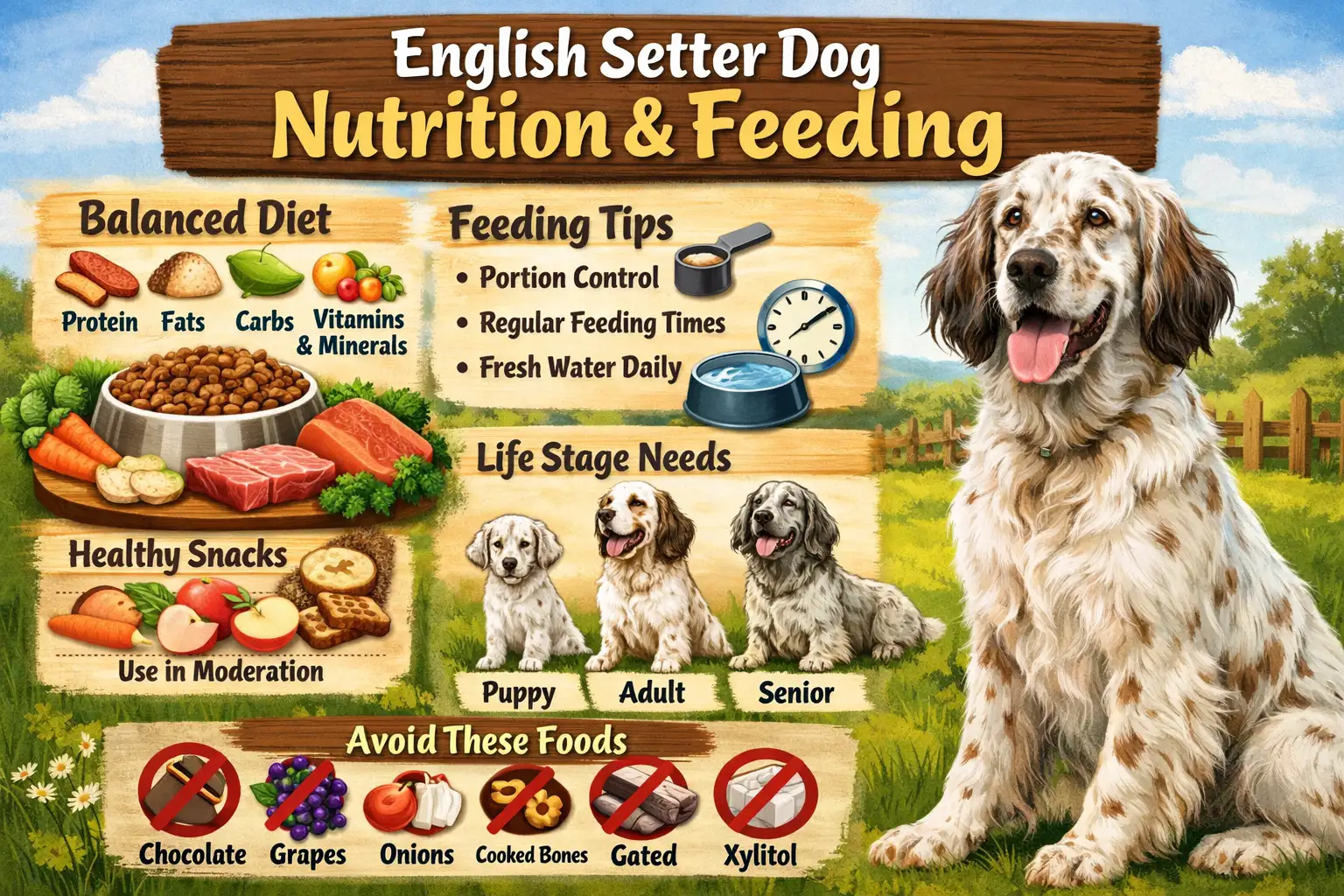
This guide is designed to help you feed your English Setter with confidence—whether you’re raising a growing puppy, managing an active adult, or supporting a senior dog’s changing needs. You’ll learn what to feed, how much to feed, and how to adjust meals over time based on age, activity level, body condition, and real-life situations. The goal isn’t perfection or chasing food trends—it’s building a balanced, sustainable feeding routine that keeps your dog healthy, energetic, and comfortable long term.
How nutrition affects energy, coat quality, joints, digestion, and lifespan
Nutrition directly shapes how an English Setter looks, feels, and performs every day. Adequate protein supports lean muscle and stamina. The right fats fuel endurance, protect joints, and keep the coat glossy rather than dull or flaky. Balanced fiber and digestible carbohydrates help maintain consistent stools and gut comfort—something many setters struggle with if fed poorly matched diets. Over time, proper nutrition also plays a role in weight control, joint health, immune function, and overall longevity, while chronic overfeeding or nutrient imbalances quietly increase the risk of obesity, orthopedic strain, and metabolic issues.
Why English Setters have different nutritional needs than low-energy breeds
English Setters are not couch-potato dogs by design. Even as companions, they tend to have higher baseline energy needs than many similarly sized breeds, and working or field-bred individuals can burn significantly more calories. Their lean build means underfeeding shows quickly as ribby appearance and fatigue, while overfeeding often leads to soft weight gain that stresses joints. They also tend to benefit from diets that support muscle recovery, joint resilience, and coat health, rather than generic “maintenance” formulas aimed at low-activity dogs. Feeding an English Setter well means matching nutrition to how your individual dog actually lives—not just what’s printed on the bag.
Core Nutrition Principles for English Setters
English Setters do best when their food matches their body, energy level, and lifestyle. You do not need complicated diets or trendy foods. You need balance, consistency, and the right nutrients in the right amounts.
English Setters are active, athletic dogs. Their bodies need fuel to support:
- Daily movement and exercise
- Strong muscles and joints
- Healthy skin and a shiny coat
- Good digestion and steady energy
Feeding too little can lead to weight loss, low energy, and muscle loss. Feeding too much or the wrong balance can cause weight gain, joint strain, and stomach issues.
Macronutrients: what your English Setter needs most
Macronutrients are the main building blocks of dog food. These include protein, fat, and carbohydrates.
Protein
Protein helps build and maintain muscles. English Setters usually need moderate to high protein, especially if they are active.
Good protein supports:
- Muscle strength
- Energy recovery
- Healthy immune system
Low-protein diets may leave an English Setter looking thin or tired.
Fat
Fat is a key energy source. It also supports the coat, skin, and joints.
Healthy fats help with:
- Endurance and stamina
- Joint comfort
- Coat shine
Too little fat can cause dry skin and low energy. Too much fat can lead to weight gain.
Carbohydrates and fiber
Carbohydrates give quick energy. Fiber helps digestion and stool quality.
Good carbs and fiber help with:
- Steady energy
- Healthy gut
- Regular stools
Very high-carb, low-protein foods often do not suit English Setters well.
Recommended macronutrient ranges for English Setters
| Life Stage | Protein | Fat | Fiber |
|---|---|---|---|
| Puppy | 24–30% | 12–18% | 3–5% |
| Adult | 22–28% | 10–16% | 3–5% |
| Senior | 20–26% | 8–14% | 4–6% |
These are general ranges, not exact rules. Activity level and health matter too.
Micronutrients: small nutrients with big impact
Micronutrients include vitamins and minerals. Dogs usually get these from complete and balanced dog food, so extra supplements are not always needed.
Important micronutrients support:
- Bones and joints
- Immune system
- Skin and coat
- Nerve and muscle function
Too many supplements can be harmful. Always be careful before adding anything extra.
Key micronutrients English Setters benefit from
| Nutrient | Why it matters | Common source |
|---|---|---|
| Calcium & Phosphorus | Bone and joint strength | Balanced dog food |
| Zinc | Skin and coat health | Meat, fish |
| Omega-3 fatty acids | Joints, skin, brain | Fish oil, fish-based foods |
| Vitamin E | Immune support | Fats and oils |
How to read a dog food label (simple version)
Dog food labels can be confusing. Focus on facts, not marketing words.
Look for:
- “Complete and balanced” on the label
- AAFCO feeding statement
- Named animal protein (like chicken, lamb, or fish)
- Clear feeding guidelines
Be careful with:
- Fancy claims like “premium” or “holistic”
- Very long ingredient lists full of fillers
- Foods that promise extreme results
A good food is one your English Setter digests well, maintains weight on, and stays active with.
How Much to Feed an English Setter and How Often
Feeding the right amount is just as important as choosing the right food. Even a good diet can cause problems if your English Setter eats too much or too little.
There is no single perfect amount for every dog. Age, weight, activity level, and daily exercise all matter.
English Setters are usually active dogs. A hunting or very active dog needs more food than a calm house dog. Puppies and young adults burn more energy than seniors.
Start with feeding guidelines, then adjust based on your dog’s body and energy.
Daily calorie needs for English Setters
| Dog Weight | Low Activity | Moderate Activity | High Activity |
|---|---|---|---|
| 40 lbs (18 kg) | 900–1,000 | 1,100–1,300 | 1,400–1,600 |
| 50 lbs (23 kg) | 1,000–1,200 | 1,300–1,500 | 1,600–1,800 |
| 60 lbs (27 kg) | 1,200–1,400 | 1,500–1,700 | 1,800–2,100 |
| 70 lbs (32 kg) | 1,400–1,600 | 1,700–1,900 | 2,100–2,400 |
If your dog gains weight, reduce portions slightly. If ribs become too visible and energy drops, increase food slowly.
How often to feed your English Setter
| Life Stage | Meals Per Day | Notes |
|---|---|---|
| Puppy (under 6 months) | 3–4 meals | Supports growth and digestion |
| Puppy (6–12 months) | 2–3 meals | Slowly reduce meal count |
| Adult | 2 meals | Morning and evening works best |
| Senior | 2 smaller meals | Easier on digestion |
Feeding twice a day helps prevent hunger spikes and reduces stomach upset.
Using body condition instead of guessing
Do not rely only on the measuring cup. Look at your dog.
A healthy English Setter:
- Has a visible waist when viewed from above
- You can feel ribs but not see them clearly
- Has steady energy without acting hungry all the time
Use this simple guide to adjust food.
| Body Condition | What You See | What to Do |
|---|---|---|
| Too thin | Ribs clearly visible, low energy | Increase food slightly |
| Healthy | Waist visible, ribs easy to feel | Keep feeding the same |
| Overweight | No waist, ribs hard to feel | Reduce portions slowly |
Check body condition every few weeks.
Portion control tips that actually work
- Measure food with the same cup every time
- Limit treats to no more than 10% of daily calories
- Adjust food when exercise level changes
- Weigh your dog monthly if possible
Small changes matter more than big ones.
Types of Dog Food and What Works Best for English Setters
There are many types of dog food, and this can feel confusing. The good news is that many options can work well for English Setters if the food is balanced and fed correctly.
The best food is one your dog:
- Eats well
- Digests easily
- Keeps a healthy weight on
- Has good energy and a shiny coat
Common types of dog food
| Food Type | What it is | Good points | Things to watch |
|---|---|---|---|
| Dry food (kibble) | Dry, crunchy food | Easy to store, affordable, good for teeth | Some dogs need added moisture |
| Wet food (canned) | Soft, moist food | Tasty, helps hydration | Higher cost, spoils faster |
| Fresh food | Cooked, lightly processed meals | Very tasty, good digestion for some dogs | Expensive, must be balanced |
| Raw food | Uncooked meat-based diet | High protein, small stools | Safety risks if poorly handled |
| Freeze-dried | Raw or cooked food, dried | Easy storage, high quality | Needs water, higher cost |
| Homemade | Home-cooked meals | Full control over ingredients | Risk of missing nutrients |
Many owners mix dry food with wet or fresh food to improve taste and hydration.
Choosing food for English Setter needs
English Setters often benefit from food that supports:
- Lean muscle
- Joint health
- Skin and coat quality
- Steady energy
Look for food with:
- Named animal protein as the first ingredient
- Moderate fat, not extremely high
- Added omega-3 fats for joints and coat
Avoid switching foods too often. Dogs like routine.
Safe human foods English Setters can eat
| Food | Safe? | Notes |
|---|---|---|
| Plain cooked chicken | Yes | No bones or seasoning |
| Plain rice | Yes | Good for upset stomach |
| Eggs | Yes | Cooked is safest |
| Carrots | Yes | Low calorie snack |
| Apples | Yes | No seeds or core |
These foods should be extras, not main meals.
Foods English Setters must never eat
| Food | Safe? | Why |
|---|---|---|
| Chocolate | No | Toxic to dogs |
| Grapes / raisins | No | Can cause kidney failure |
| Onions / garlic | No | Damage red blood cells |
| Xylitol | No | Can cause low blood sugar |
| Cooked bones | No | Risk of choking or injury |
Keep these foods out of reach at all times.
Treat rules that keep dogs healthy
| Dog Weight | Max Treat Calories Per Day |
|---|---|
| 40 lbs | About 90 calories |
| 50 lbs | About 110 calories |
| 60 lbs | About 130 calories |
| 70 lbs | About 150 calories |
Treats should make up no more than 10% of daily calories.
Special Diets, Common Feeding Problems, and Real-Life Situations
Not every English Setter eats the same way. Some are very active, some are calm. Some have sensitive stomachs, while others will eat anything. This section helps you handle real-life feeding problems in a simple and safe way.
Some English Setters need special diets because of health, age, or lifestyle.
- Puppies need food that supports steady growth
- Seniors need fewer calories but strong nutrition
- Very active or hunting dogs need more energy
- Calm house dogs need careful portion control
Feeding should change as your dog changes.
| Life Stage | What to focus on | Feeding tips |
|---|---|---|
| Puppy | Growth and bones | Feed puppy food, small meals |
| Adult | Energy and muscle | Adjust food to activity |
| Senior | Weight and joints | Slightly less food, easy to digest |
Do not rush puppies into adult food. Seniors may need fewer calories but better-quality protein.
Diets for sensitive stomachs and allergies
Some English Setters have loose stool, gas, or itchy skin.
Common causes include:
- Sudden food changes
- Too many treats
- Low-quality ingredients
Helpful steps:
- Switch foods slowly
- Choose simple ingredient foods
- Avoid table scraps
If problems last more than a few weeks, talk to a vet.
Weight gain and weight loss problems
Weight changes happen slowly, so it is easy to miss them.
| Problem | Common reason | What helps |
|---|---|---|
| Weight gain | Too many treats, low exercise | Reduce food slightly |
| Weight loss | Not enough calories | Increase food slowly |
| Always hungry | Low fiber or habits | Add structure, check portions |
Never make big changes fast. Small changes work better.
Picky eaters and fast eaters
Some English Setters eat too fast. Others refuse meals.
For fast eaters:
- Use slow feeder bowls
- Split meals into smaller portions
For picky eaters:
- Keep meal times short
- Do not add extras every day
- Feed at the same times daily
Healthy dogs usually eat when hungry.
How to switch dog food safely
| Day | Old Food | New Food |
|---|---|---|
| 1–2 | 75% | 25% |
| 3–4 | 50% | 50% |
| 5–6 | 25% | 75% |
| 7+ | 0% | 100% |
If loose stool starts, slow the switch.
Simple daily feeding examples
| Life Stage | Meals per day | Example feeding plan |
|---|---|---|
| Puppy | 3–4 | Puppy food split into small meals |
| Adult | 2 | Morning and evening meals |
| Senior | 2 | Smaller portions, easy to digest food |
Consistency matters more than perfection.
How much water does an English Setter need?
Water is just as important as food.
| Dog Weight | Normal daily water |
|---|---|
| 40 lbs | 1.5–2 liters |
| 50 lbs | 2–2.5 liters |
| 60 lbs | 2.5–3 liters |
| 70 lbs | 3–3.5 liters |
Dogs need more water when:
- It is hot
- They exercise a lot
- They eat dry food
Always keep fresh water available.
| Question | Short answer |
|---|---|
| How often should I feed my dog? | Usually twice a day |
| Can I mix dry and wet food? | Yes, many dogs do well |
| Is grain-free food better? | Not always, balance matters |
| Can my dog eat human food? | Some foods, in small amounts |
| Why is my dog always hungry? | Portions, habits, or low fiber |
If something feels wrong, trust your instincts.
When to see a vet or nutrition expert
Get professional help if your English Setter:
- Loses or gains weight without reason
- Has ongoing diarrhea or vomiting
- Stops eating for more than 24–48 hours
- Has skin, coat, or allergy problems
- Needs a homemade or medical diet
A vet or veterinary nutritionist can help prevent bigger problems later.
Final feeding tips for English Setter owners
- Feed for your dog’s activity level, not just age
- Measure food and limit treats
- Make slow changes
- Watch body shape and energy
- Keep feeding simple and steady
Good nutrition is a long-term habit, not a short-term fix.
For more science-based guidance on complete and balanced dog diets, you can review the official nutrition standards published by the Association of American Feed Control Officials (AAFCO), which set the nutritional guidelines used by most reputable dog food manufacturers worldwide.

Ata Ur Rehman is the founder of Pet Age in Human Years Calculator, an educational platform that provides age conversion charts and lifespan guides for dogs, cats, birds, and other companion animals. His work focuses on helping pet owners understand how animal ages translate into human years using commonly accepted age conversion formulas and published lifespan averages.
The website compiles breed and species lifespan data from kennel clubs, breed organizations, and general animal lifespan studies to present simple and easy-to-understand guides for pet owners worldwide.
This website was created to centralize animal age conversion charts into one easy reference platform for pet owners.