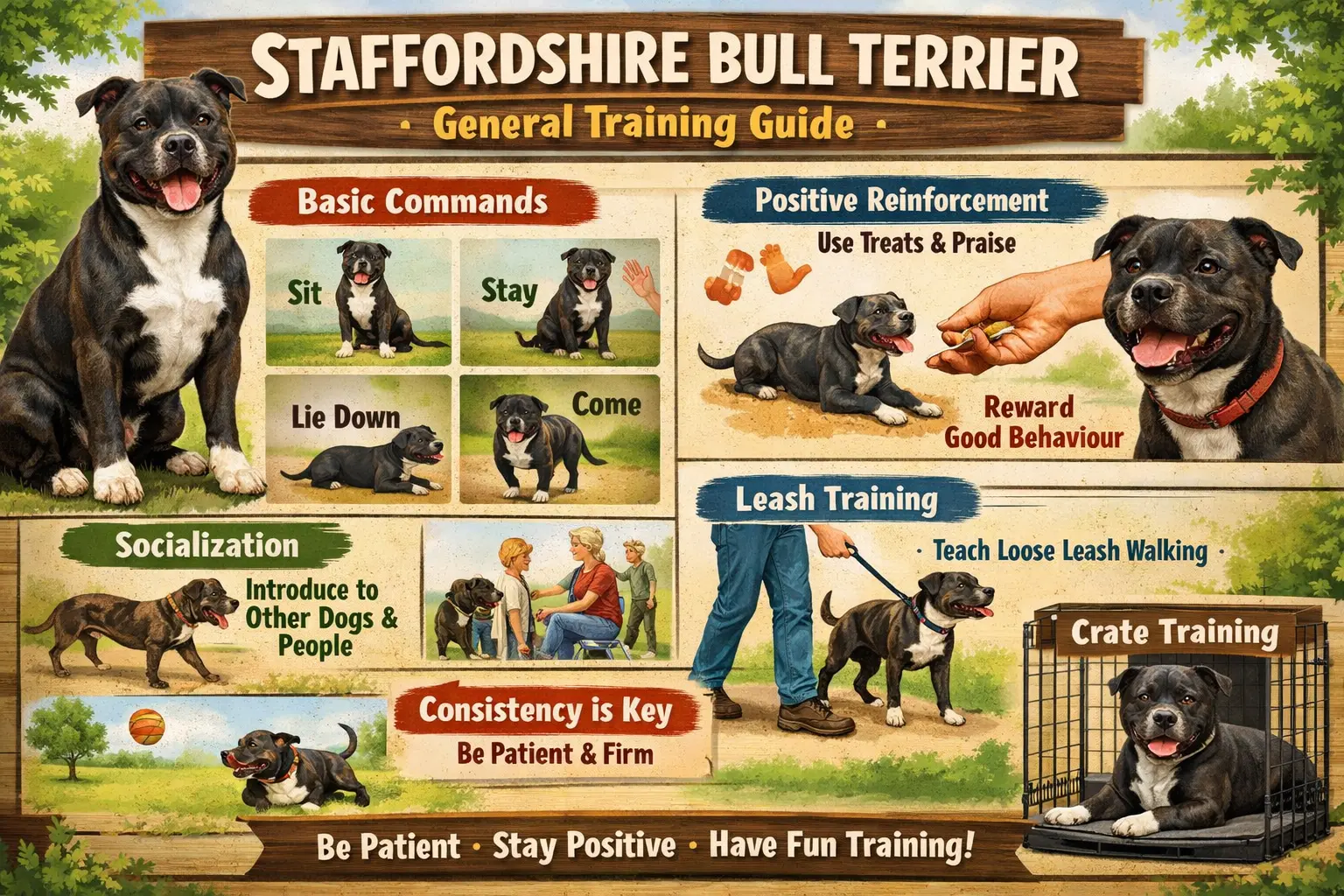
Training a Staffordshire Bull Terrier isn’t about forcing control or “handling a tough dog” — it’s about channeling enthusiasm, strength, and emotional intensity into reliable, everyday behaviors. Staffies are people-focused, energetic, and deeply responsive to how their owners interact with them, which makes training both highly rewarding and uniquely demanding.
This guide is designed to give you clear, breed-specific training direction that works in real homes, not just ideal training environments. Whether you’re raising a Staffy puppy, working with an adolescent dog testing boundaries, or helping an adult or rescue dog build better habits, the goal is the same: create a dog that is calm, responsive, and safe in everyday life.
Rather than overwhelming you with commands or rigid programs, this guide focuses on foundational training principles that suit the Staffordshire Bull Terrier temperament. You’ll learn how to build engagement, manage excitement, structure training sessions effectively, and prevent common problems before they become ingrained habits.
Why This Training Matters
Training a Staffordshire Bull Terrier is not optional — it is essential for daily safety, good behavior, and a happy life together. This breed is strong, energetic, and very people-focused. Without clear training, small behavior problems can quickly turn into big challenges.
Good training helps your Staffy understand what is expected, how to stay calm, and how to behave around people, children, and other dogs. It also helps owners feel confident when walking their dog, welcoming visitors, or going out in public.
Many behavior issues seen in this breed are not aggression, but frustration, overexcitement, or confusion. Training gives your dog better ways to handle excitement and stress instead of jumping, pulling, or ignoring commands.
This is also important because Staffordshire Bull Terriers are often judged unfairly. A well-trained dog protects both the dog’s safety and the owner’s reputation.
Why Training Is Essential for Staffordshire Bull Terriers
| Area | Why It Matters |
|---|---|
| Physical strength | Prevents accidental injuries to people or pets |
| High energy | Helps control excitement and impulsive behavior |
| Emotional sensitivity | Reduces frustration and stress |
| Public settings | Improves safety and reliability |
| Owner confidence | Makes daily life easier and calmer |
Training is not about being strict. It is about teaching clear rules, rewarding good choices, and helping your Staffy succeed in real-life situations.
Understanding the Behavior
To train a Staffordshire Bull Terrier well, you first need to understand how they think and feel. This breed is not stubborn or aggressive by nature. Most training problems come from too much excitement, strong emotions, or unclear rules.
Staffies love people. They want attention, play, and connection. This makes them easy to motivate, but it also means they can get overexcited very fast. When excitement goes too high, listening goes down.
They are also very strong for their size. A small mistake in training can turn into pulling, jumping, or rough play if calm behavior is not taught early.
Another key point is emotional sensitivity. Staffies react strongly to tone of voice, timing, and energy. Harsh corrections or yelling often make things worse, not better. Calm, clear, and reward-based training works best.
Staffordshire Bull Terrier Traits and Training Impact
| Breed Trait | What It Means for Training |
|---|---|
| Very people-focused | Learns best when training feels like a game |
| High energy | Needs calm skills taught early |
| Strong body | Loose-leash and impulse control are important |
| Emotionally sensitive | Responds better to praise than pressure |
| Easily excited | Short training sessions work best |
Understanding these traits helps you train smarter, not harder. When training matches the dog’s nature, progress is faster and stress is lower for both dog and owner.
Step-by-Step Training Method
Training a Staffordshire Bull Terrier works best when it is clear, calm, and consistent. This breed learns fast, but only when training is done in the right order. Trying to rush or train for too long often leads to frustration for both the dog and the owner.
Start training in a quiet place with very few distractions. Once your dog understands what to do, you can slowly practice in busier places like the yard, street, or park.
Keep training sessions short. Staffies give their best focus in short bursts. Ending a session early while the dog is doing well is better than pushing too long.
Rewards matter. Use treats, praise, toys, or play — whatever your dog loves most. Give the reward right after the good behavior so your dog understands what they did right.
Staffy Training Session Blueprint
| Training Part | What to Do |
|---|---|
| Session length | 5–10 minutes |
| Sessions per day | 1–3 short sessions |
| Rewards | Small treats, praise, or toys |
| Training place | Quiet area first |
| Progress speed | Slow and steady |
| End the session | On a success |
Always focus on one skill at a time. Mixing too many commands in one session can confuse your dog. Be patient and repeat lessons often.
Training is not about being perfect. It is about building habits step by step until good behavior becomes normal.
Common Problems & Fixes
Many training problems with Staffordshire Bull Terriers come from too much excitement, unclear rules, or training that moves too fast. These issues are common and can be fixed with calm and steady work.
If your Staffy pulls, jumps, or ignores you, it does not mean they are being bad. It usually means they are overstimulated or confused. Fixing the cause is more important than correcting the behavior.
Training works best when you lower excitement first, then ask for calm behavior, and reward it right away.
Common Staffy Training Issues and Practical Fixes
| Problem | Why It Happens | What Helps |
|---|---|---|
| Pulling on the leash | Too excited to move forward | Stop, reward calm walking |
| Jumping on people | Wants attention | Ignore jumping, reward calm |
| Not listening | Too many distractions | Practice in quieter places |
| Gets frustrated fast | Sessions are too long | Shorter, easier sessions |
| Rough play | Overexcitement | Pause play, reward calm |
Do not rush progress. Practice the same skill many times in easy places before moving to harder ones. Calm behavior must be taught just like any command.
Small improvements each day lead to big changes over time.
When to Seek Professional Help
Most Staffordshire Bull Terriers can be trained at home with time, patience, and consistency. But some situations need extra support, and asking for help is a smart choice, not a failure.
If training is not working after weeks of effort, or if behavior is getting worse instead of better, a professional can help you understand what is going wrong. Some problems are not about obedience — they can be linked to fear, stress, or anxiety.
When DIY Training Isn’t Enough
| Situation | What to Do |
|---|---|
| No progress after several weeks | Contact a qualified dog trainer |
| Dog seems very anxious or fearful | Speak to a vet or behavior expert |
| Behavior is getting worse | Get professional guidance early |
| Owner feels overwhelmed | Ask for structured training support |
| Safety concerns | Seek help right away |
A good trainer or behavior professional will guide you using calm, reward-based methods and help you build a clear plan that fits your dog and your home.
For more trusted, welfare-focused advice on dog training and behavior, you can also read the training guidance from the RSPCA, which promotes kind, reward-based methods that support both dogs and owners.

Ata Ur Rehman is the founder of Pet Age in Human Years Calculator, an educational platform that provides age conversion charts and lifespan guides for dogs, cats, birds, and other companion animals. His work focuses on helping pet owners understand how animal ages translate into human years using commonly accepted age conversion formulas and published lifespan averages.
The website compiles breed and species lifespan data from kennel clubs, breed organizations, and general animal lifespan studies to present simple and easy-to-understand guides for pet owners worldwide.
This website was created to centralize animal age conversion charts into one easy reference platform for pet owners.