How old is a Staffordshire Bull Terrier on their birthday?
On each birthday, your Staffordshire Bull Terrier increases by one dog year, but their human age equivalent depends on their life stage. For example, a 1-year-old Staffy is about 15 human years old, while a 2-year-old is around 24 human years old. After that, each birthday adds roughly 4–5 human years.
Quick Answer: A Staffordshire Bull Terrier is about 15 human years old at 1 year, 24 human years at 2 years, and then gains roughly 4–5 human years for each additional dog year. For example, a 7-year-old Staffy is approximately 44 human years old.
Why Staffordshire Bull Terrier years aren’t “7 human years”
The traditional 7-year rule assumes dogs age at a constant rate from birth to old age. In reality:
- Staffordshire Bull Terrier puppies develop much faster than human children
- Early adult years represent a long “prime” period
- Aging accelerates again as the dog reaches senior years
This means a 1-year-old Staffy is biologically closer to a human teenager, while a 7-year-old Staffy is not the equivalent of a 49-year-old human. Accurate age calculation must account for growth speed, size, and life stage, not just calendar years.
Life stages of a Staffordshire Bull Terrier at a glance
Understanding life stages helps owners interpret age charts correctly and decide when to use a detailed calculator for personalized estimates. If you’d like a complete overview of the breed’s temperament, history, and characteristics, read our detailed Staffordshire Bull Terrier breed guide. Staffordshire Bull Terriers are classified as medium-breed dogs, which gives them a balanced aging curve compared to very small or giant breeds.
| Staffordshire Bull Terrier Age | Life Stage | What This Means for Owners |
|---|---|---|
| 0–12 months | Puppy | Rapid growth, training foundations, high energy |
| 1–6 years | Adult | Physical and mental prime, stable behavior |
| 7–10 years | Mature | Subtle aging begins, stamina may decrease |
| 11+ years | Senior | Increased health monitoring and comfort care |
Rather than focusing on a single “human age” number, it’s more useful to understand where your Staffy fits within these stages, because health needs, behavior, and care priorities change with each phase.
How breed size and genetics influence aging
Staffordshire Bull Terriers typically live 12–14 years, which is average to slightly above average for medium-sized breeds. Their compact build, strong musculature, and genetic profile contribute to:
- Slower aging than giant breeds
- Faster early development than toy breeds
- A relatively long adult life stage
Because of this, breed-specific age calculators are far more accurate than generic dog-year formulas. we’ll break down the science behind canine aging and show exactly how Staffordshire Bull Terrier years translate into human years using modern research-based models.
Average Lifespan of a Staffordshire Bull Terrier
Staffordshire Bull Terriers typically live between 12 and 14 years, which is considered healthy for a medium-sized breed. With proper nutrition, exercise, and regular veterinary care, many Staffies live long, active lives well into their senior years.
Several factors influence lifespan, including genetics, body weight, joint health, dental care, and overall lifestyle. Maintaining a healthy weight and providing age-appropriate exercise are two of the most important ways to support long-term health.
The Science Behind Staffordshire Bull Terrier Aging
Dogs do not age the same way humans do. They grow very fast in the beginning, slow down during adulthood, and then age faster again later in life. Staffordshire Bull Terriers follow this pattern clearly, which is why their age cannot be calculated using one simple number.
In the first year of life, a Staffordshire Bull Terrier goes from a newborn puppy to a fully grown adult. That kind of change takes many years in humans, but only months in dogs. After that fast start, adult dogs age more slowly for several years. Once they reach their senior stage, aging speeds up again and health changes become more noticeable.
Another important factor is size. Staffordshire Bull Terriers are medium-sized dogs. Medium dogs usually live longer than very large dogs but slightly shorter lives than very small dogs. This puts Staffies in a balanced position when it comes to aging. They are not rushed into old age early, but they also do not stay young as long as tiny breeds.
Modern science has helped us understand dog aging much better. Researchers have studied changes in dog DNA over time and found that dogs age in a curved pattern, not a straight line. This means:
- Young dogs age very fast
- Adult dogs age slowly
- Senior dogs age faster again
This is the main reason the old “7 dog years equals 1 human year” rule is wrong.
Dog aging models compared
| Aging Model | How It Works | Accuracy |
|---|---|---|
| 7-year rule | Same aging speed every year | Very low |
| Size-based model | Adjusts for dog size | Better |
| Modern science model | Follows real aging speed | Most accurate |
Using science-based and size-aware models gives a much clearer picture of how old a Staffordshire Bull Terrier really is in human terms. These models are what modern dog age calculators use today.
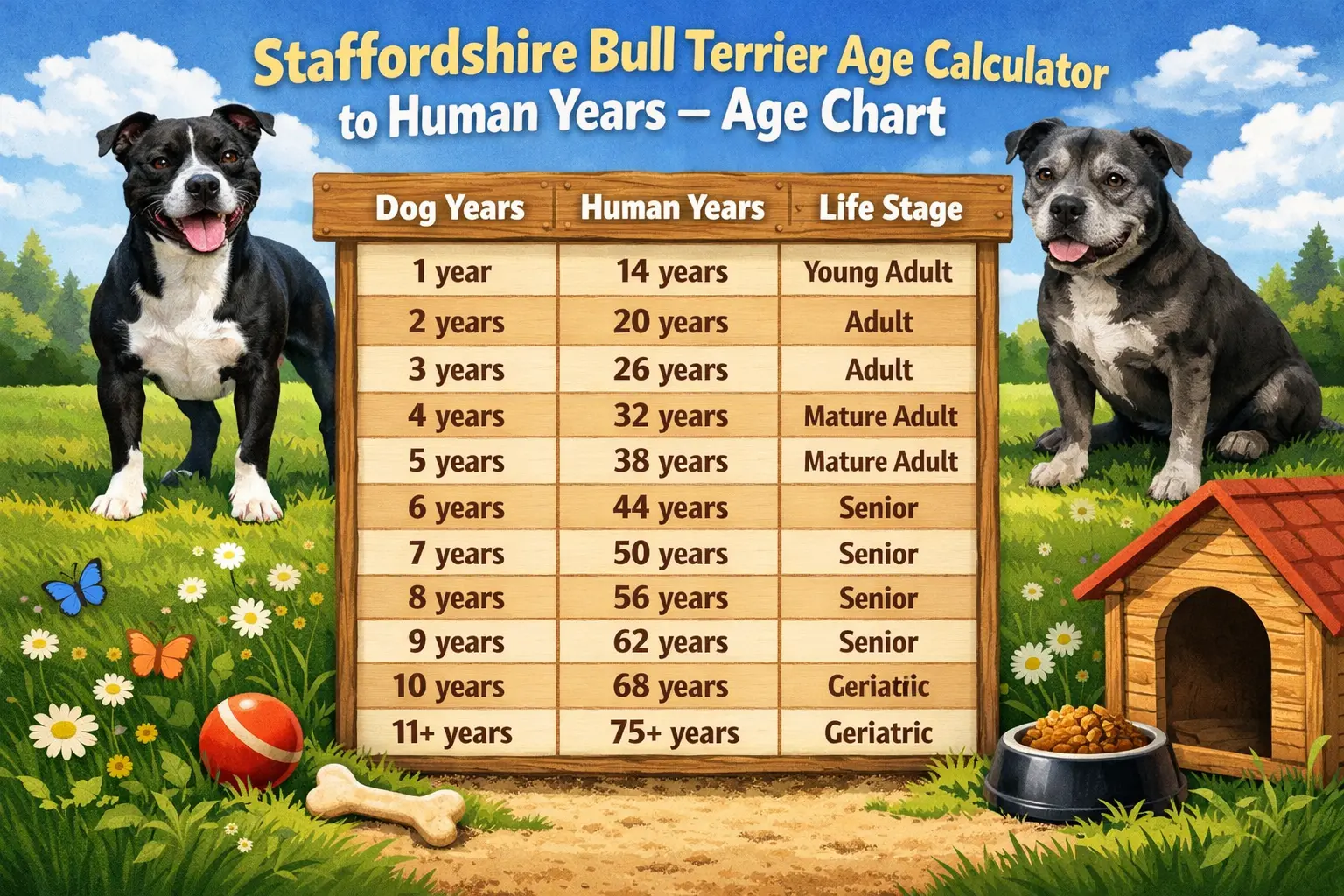
This age chart shows the approximate human age equivalent for each year of a Staffordshire Bull Terrier’s life, based on modern medium-breed aging research.
Staffordshire Bull Terrier Dog Years to Human Years Chart
Simple Staffordshire Bull Terrier age conversion rule
For a quick estimate, you can use this simplified pattern: the first year equals about 15 human years, the second year adds about 9 human years (bringing the total to around 24), and each additional year adds roughly 4–5 human years. This reflects the faster early development and slower adult aging of medium-sized breeds like the Staffy.
This section gives you the clear answer most owners want: how old your Staffordshire Bull Terrier (often called a Staffy) is in human years.
The idea is simple. Staffordshire Bull Terriers grow very fast when young, age slowly through adulthood, and then age faster again as seniors. Because of this, their age must be converted using different speeds at different life stages.
Staffordshire Bull Terrier dog age to human age chart
| Dog Age (Staffordshire Bull Terrier) | Human Age Equivalent |
|---|---|
| 1 year | About 15 years |
| 2 years | About 24 years |
| 3 years | About 28 years |
| 4 years | About 32 years |
| 5 years | About 36 years |
| 6 years | About 40 years |
| 7 years | About 44 years |
| 8 years | About 51 years |
| 9 years | About 56 years |
| 10 years | About 60 years |
| 11 years | About 65 years |
| 12 years | About 69 years |
| 13 years | About 74 years |
| 14 years | About 78–80 years |
These numbers are estimates, but they are far more accurate than the 7-year rule.
How these Staffordshire Bull Terrier age numbers are calculated
The human age equivalents in this chart are based on modern size-adjusted aging models for medium-breed dogs. These models account for rapid development in the first two years, followed by a slower adult aging phase, and then accelerated aging during senior years. This curved aging pattern reflects biological changes in metabolism, cellular aging, and overall lifespan expectations for Staffordshire Bull Terriers.
Real-life age examples most owners ask about
This table explains what those numbers really mean in daily life.
| Dog Age | What It Means in Human Terms |
|---|---|
| 2 years | Young adult with high energy |
| 5 years | Adult in their mid-30s |
| 8 years | Early senior, like early 50s |
| 10 years | Senior stage, around 60 |
| 12 years | Older senior, late 60s to early 70s |
If your Staffordshire Bull Terrier is 7 or 8 years old, they may still look strong and playful. That’s normal. Aging is not only about looks—it’s about internal changes like joints, metabolism, and recovery speed.
This is why knowing your dog’s real “human age” helps you:
- Adjust exercise levels
- Choose the right food
- Plan vet visits
- Watch for early aging signs
Staffordshire Bull Terrier Life Stages Explained
Every Staffordshire Bull Terrier goes through clear life stages. Knowing these stages helps you understand your dog’s needs, behavior, and health at different ages. Even dogs with the same birthday can act very differently depending on their life stage.
Puppy stage (birth to 12 months)
| Puppy Age | What’s Happening |
|---|---|
| 8–12 weeks | Learning basic social skills |
| 3–4 months | Teething and chewing |
| 5–6 months | Fast growth and high energy |
| 7–12 months | Near adult size, still playful |
Puppies may look clumsy and tire quickly. This is normal. Short playtimes and gentle training work best.
Adult stage (1 to 6 years)
| Adult Age | What Owners Notice |
|---|---|
| 1–2 years | Full energy, needs training |
| 3–5 years | Physical and mental peak |
| 6 years | Slight slowing may begin |
Adult Staffies enjoy daily walks, games, and learning new skills. For structured routines and behavior tips, see our Staffordshire Bull Terrier training guide for age-appropriate methods. This is also the best time to build healthy habits that support long life.
Mature and senior stage (7 years and older)
| Age Range | Common Changes |
|---|---|
| 7–9 years | Less stamina, more rest |
| 10–11 years | Stiffer joints, weight gain |
| 12+ years | Slower movement, more sleep |
Senior dogs may still act playful but need more rest and care. Regular vet checkups become very important at this stage.
Signs your Staffordshire Bull Terrier is getting older
| Area | Early Signs |
|---|---|
| Movement | Slower to stand or jump |
| Energy | Shorter play sessions |
| Weight | Gains weight easily |
| Behavior | Sleeps more, calmer mood |
Not every senior dog shows all these signs, but noticing them early helps you support your dog better.
Helping Your Staffordshire Bull Terrier Age Healthily
Aging is natural, but how your Staffordshire Bull Terrier ages depends a lot on daily care. Simple choices about food, exercise, and vet visits can help your dog stay comfortable and active for more years.
Keeping your dog at a healthy weight is one of the most important things you can do. Age-specific feeding adjustments are essential. Our Staffordshire Bull Terrier nutrition and feeding guide explains what to change at each life stage. Extra weight puts stress on joints, the heart, and internal organs. As dogs get older, they burn fewer calories, so food portions often need to be adjusted.
Regular movement also matters. Older dogs still need exercise, but it should be gentler and shorter. Walks, light play, and mental games help keep the body and brain active without causing pain.
Vet care becomes more important as your dog ages. Small health problems are easier to manage when found early. Senior dogs often benefit from more frequent checkups.
Nutrition and weight care by age
| Age Stage | Feeding Focus |
|---|---|
| Puppy | High-quality food for growth |
| Adult | Balanced diet and steady portions |
| Senior | Fewer calories, joint support |
Exercise needs as your dog gets older
| Age Stage | Best Activities |
|---|---|
| Puppy | Short play sessions |
| Adult | Walks, games, training |
| Senior | Gentle walks, slow play |
Vet care and health checks
| Age | Vet Visit Focus |
|---|---|
| Puppy | Vaccines and growth checks |
| Adult | Yearly exams |
| Senior | Exams every 6 months |
Senior checkups may include blood tests or joint checks to catch problems early.
As dogs age, medical expenses may increase. Review long-term planning considerations in our Staffordshire Bull Terrier cost of ownership guide.
Simple at-home care for senior Staffies
| Care Area | Why It Helps |
|---|---|
| Soft bedding | Protects joints |
| Dental care | Supports overall health |
| Mental games | Keeps the brain active |
| Calm routine | Reduces stress |
Small changes at home can make a big difference in comfort and quality of life.
Regular coat care also supports skin health as dogs age. Learn proper routines in our Staffordshire Bull Terrier grooming guide.
How we determine Staffordshire Bull Terrier human age equivalents
This age chart is based on modern veterinary aging research and size-adjusted canine lifespan models for medium-breed dogs. Instead of using the outdated “7 dog years” rule, we apply stage-based aging patterns that reflect rapid early development, slower adult aging, and accelerated senior aging.
Because individual dogs vary by genetics, health, weight, and lifestyle, these numbers are informed estimates rather than exact biological measurements. For personalized advice about your Staffordshire Bull Terrier’s health or aging signs, always consult a licensed veterinarian.
Staffordshire Bull Terrier Age FAQs
The most common questions owners ask about Staffordshire Bull Terrier age and aging. The answers are short, clear, and easy to understand.
How old is a 7-year-old Staffordshire Bull Terrier in human years?
A 7-year-old Staffordshire Bull Terrier is about 44 human years old. At this stage, most Staffies are entering their mature years. They may still be active and playful, but subtle aging changes like reduced stamina or joint stiffness can begin to appear.
How old is a 10-year-old Staffordshire Bull Terrier in human years?
A 10-year-old Staffordshire Bull Terrier is roughly 60 human years old. This is considered the senior stage for most medium-sized dogs. Regular vet checkups, joint support, and adjusted exercise routines become increasingly important at this age.
Common questions and simple answers
| Question | Simple Answer |
|---|---|
| How long do Staffordshire Bull Terriers live? | Most live about 12 to 14 years. |
| When is a Staffordshire Bull Terrier considered old? | Around 7 years old, they slowly enter senior years. |
| Is a 7-year-old Staffordshire Bull Terrier very old? | Not really. Many are still active but may slow down slightly. |
| Do Staffordshire Bull Terriers age faster than other dogs? | They age slower than large dogs but faster than small dogs. |
| Is the 7-year rule accurate? | No. Dogs age at different speeds at different life stages. |
| Should senior Staffies stop exercising? | No. They still need exercise, just gentler and shorter. |
Myths vs reality about dog years
| Myth | Reality |
|---|---|
| One dog year equals seven human years | Dogs age faster when young and slower as adults |
| Gray hair means a dog is very old | Some dogs gray early and are still healthy |
| Old dogs cannot learn | Senior dogs can still learn new things |
Is a 7-year-old Staffordshire Bull Terrier considered old?
A 7-year-old Staffordshire Bull Terrier is entering the early senior stage but is not considered very old. Many Staffies at this age remain active and healthy, though subtle changes in stamina and recovery may begin.
Do Staffordshire Bull Terriers age faster than other breeds?
Staffordshire Bull Terriers age slower than large breeds but slightly faster than small toy breeds. As a medium-sized breed, they typically live between 12 and 14 years with proper care.
Why is the 7-year rule inaccurate for Staffies?
The 7-year rule assumes dogs age at a constant rate, which is incorrect. Staffordshire Bull Terriers develop very rapidly in their first two years, then age more gradually during adulthood before aging accelerates again in senior years.
When to talk to your vet about aging
You should talk to your vet if your Staffordshire Bull Terrier:
- Has trouble standing or walking
- Gains or loses weight quickly
- Sleeps much more than before
- Acts confused or restless
- Loses interest in food or play
Early vet care helps dogs stay comfortable and active longer.
For more detailed, breed-specific information on Staffordshire Bull Terrier health, care, and lifespan, you can also visit the official breed page from the American Kennel Club, which provides trusted guidance backed by veterinary and breed-club data.
Want a more personalized age estimate?
We also provide breed-specific age charts for many other dog breeds, all based on modern size-adjusted aging research.
If you’d like a more detailed calculation based on your dog’s exact age, try our Staffordshire Bull Terrier age calculator for a customized estimate.

Ata Ur Rehman is the founder of Pet Age in Human Years Calculator, an educational platform that provides age conversion charts and lifespan guides for dogs, cats, birds, and other companion animals. His work focuses on helping pet owners understand how animal ages translate into human years using commonly accepted age conversion formulas and published lifespan averages.
The website compiles breed and species lifespan data from kennel clubs, breed organizations, and general animal lifespan studies to present simple and easy-to-understand guides for pet owners worldwide.
This website was created to centralize animal age conversion charts into one easy reference platform for pet owners.