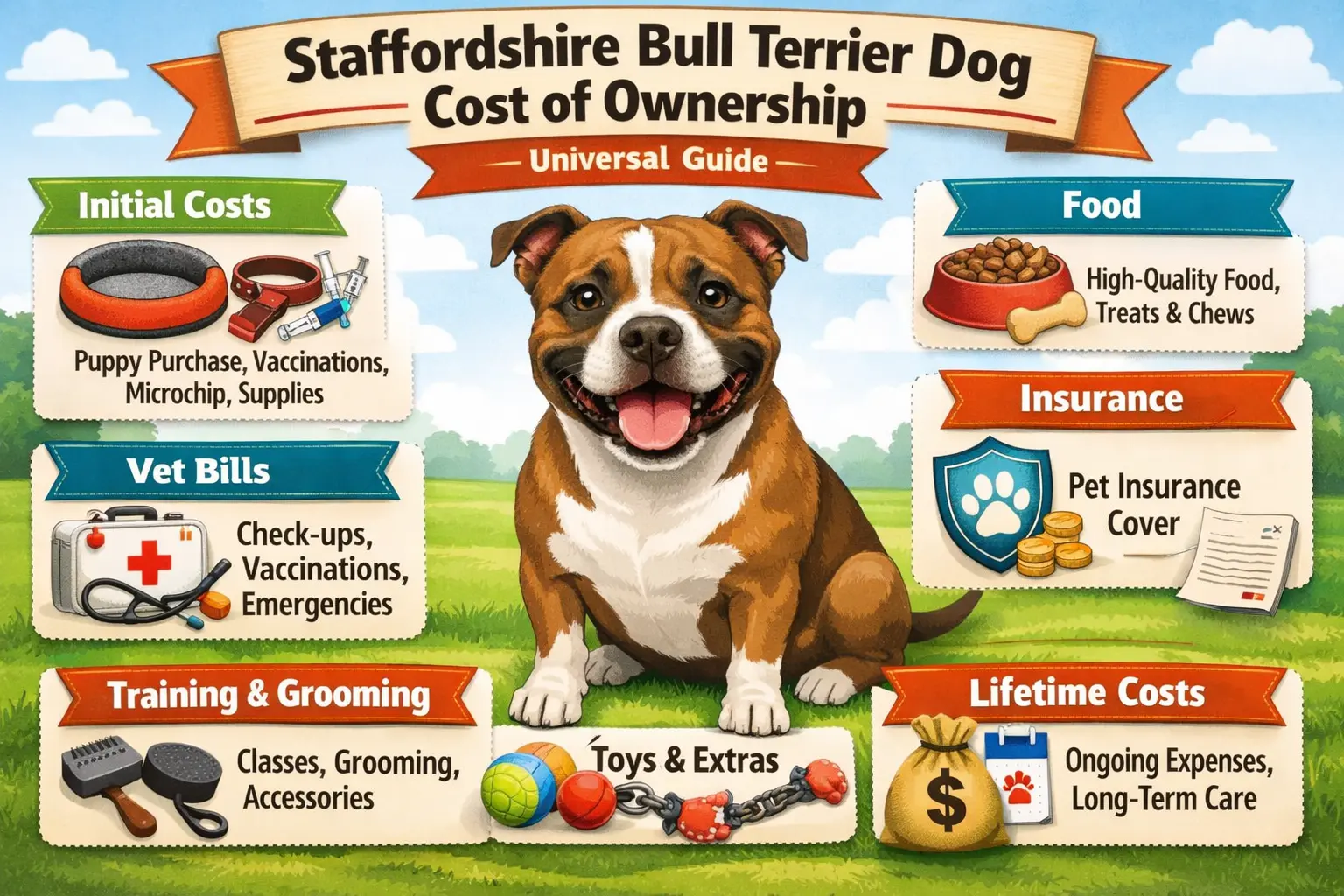
This guide breaks down the real, full cost of owning a Staffordshire Bull Terrier—not just the purchase price, but everything that follows: first-year setup, monthly expenses, annual care, hidden costs, and long-term financial commitment.
It’s written for:
- Prospective owners deciding whether a Staffy fits their budget
- New owners who want to avoid financial surprises
- Existing owners planning ahead for rising costs, vet care, or lifestyle changes
The numbers and scenarios in this guide are designed to reflect real-world ownership, not best-case or “budget fantasy” scenarios.
Why Staffordshire Bull Terriers cost more than many people expect
Staffordshire Bull Terriers are often described as a “medium-sized, short-coat, low-maintenance” breed—which leads many people to assume they’re inexpensive to own. In practice, that assumption is often wrong.
While they don’t require professional grooming like long-coated breeds, Staffies tend to have higher ongoing costs in other areas, including:
- Food (dense muscle mass and high activity levels)
- Training and enrichment (strength, drive, and socialization needs)
- Veterinary care (skin allergies, sensitivities, and injury risk)
- Insurance or housing-related costs (breed stigma and restrictions in some areas)
The result is that many owners underestimate the monthly and annual financial commitment, especially during the first year.
At-a-glance cost reality (quick expectations snapshot)
Before diving into detailed tables and breakdowns later in this guide, here’s the financial reality most owners experience:
- Monthly cost: Moderate to high for a medium-sized dog
- Annual cost: Comparable to other active, muscular breeds
- First year: Significantly more expensive than later years due to setup, vet care, and training
- Lifetime cost: A long-term commitment spanning a decade or more
The key takeaway:
Owning a Staffordshire Bull Terrier is not just affordable dog ownership stretched over time—it’s an ongoing financial responsibility that rewards planning and honest budgeting.
One-Time and First-Year Costs
This section covers the biggest costs you will face at the start, especially in the first year. Many new owners are surprised here because these costs come all at once, not slowly over time.
For a Staffordshire Bull Terrier, the first year is usually the most expensive year of ownership.
One-time setup and first-year costs
| Expense | Typical Cost Range (First Year) | Why it matters |
|---|---|---|
| Adoption or breeder fee | Moderate to high | Depends on rescue vs breeder, location, and demand |
| First vet visits | Moderate | Vaccines, health checks, parasite treatments |
| Spay or neuter | Moderate | Often the single biggest early vet cost |
| Microchipping | Low | Helps reunite you if your dog is lost |
| Basic supplies | Moderate | Bed, crate, bowls, leash, collar, toys |
| Initial training | Moderate | Helps prevent behavior problems later |
Puppy first year vs adult first year
| Cost Area | Puppy (First Year) | Adult Dog (First Year) |
|---|---|---|
| Vet visits | Higher | Lower |
| Vaccinations | More | Fewer |
| Training | Higher | Moderate |
| Food | Moderate | Moderate |
| Supplies | Higher | Lower |
| Total first-year cost | High | Medium |
Why puppies cost more:
Puppies need more vet visits, training, supervision, and replacements for chewed items. Adult dogs often come with some basics already done.
Simple first-year cost reality
For most owners:
- The first year costs much more than later years
- Puppies cost more than adult dogs
- Skipping early care often leads to bigger bills later
Planning your first year well sets you up for lower stress and better control over future expenses.
Ongoing Monthly and Annual Expenses
After the first year, most costs become regular and ongoing. These are the expenses you pay every month and every year to keep your Staffordshire Bull Terrier healthy, safe, and happy.
These costs may feel smaller than first-year costs, but over time they make up the largest part of dog ownership.
Average monthly and yearly costs
| Expense | Monthly Cost (Average) | Yearly Cost (Average) | What this covers |
|---|---|---|---|
| Food | Medium | Medium to high | Daily meals for an active, muscular dog |
| Flea, tick, worm prevention | Low to medium | Medium | Monthly or seasonal treatments |
| Routine vet care | Low | Medium | Checkups and basic vaccines |
| Grooming and hygiene | Low | Low to medium | Nail trims, baths, ear care |
| Training and enrichment | Low to medium | Medium | Classes, toys, mental exercise |
| Miscellaneous | Low | Low | Replacing bowls, toys, collars |
| Total estimated cost | Medium | Medium to high | Varies by lifestyle and health |
Important note:
These are average costs. Some years will be cheaper, and some years will be more expensive.
Food costs for a Staffordshire Bull Terrier
Staffordshire Bull Terriers are strong and active. This means they usually need more food than people expect for a medium-sized dog.
| Activity Level | Monthly Food Cost | Why it changes |
|---|---|---|
| Low activity | Lower | Less exercise, fewer calories needed |
| Average activity | Medium | Daily walks and play |
| Very active | Higher | Sports, long walks, high energy lifestyle |
Better food often costs more, but it can help reduce vet bills later.
Routine vet and health care costs
Most years include:
- One full vet checkup
- Basic vaccines
- Parasite prevention
These costs stay fairly steady, but health problems can raise them quickly. Skin issues and allergies are common reasons for extra vet visits.
Grooming and training upkeep
Staffordshire Bull Terriers do not need haircuts, but they still need:
- Nail trimming
- Bathing
- Ear cleaning
Training does not stop after puppyhood. Many owners spend small amounts each year on:
- Refresher classes
- New toys
- Mental games
These help prevent behavior problems that can become costly.
What most owners should expect long term
- Monthly costs feel manageable, but add up fast
- Food and vet care are the biggest regular expenses
- Some years will cost more than others
Planning for higher-cost years helps avoid stress.
Major Cost Drivers and Variations for Staffordshire Bull Terriers
Not every Staffordshire Bull Terrier costs the same to care for. Some owners spend much less, while others spend a lot more. The difference usually comes from lifestyle, health, and living situation.
This section explains why costs change and what makes the biggest impact on your budget.
Cost differences by living situation
| Living Situation | Cost Level | Why costs change |
|---|---|---|
| Apartment, city | Higher | Higher vet prices, pet fees, training needs |
| House, suburb | Medium | More space, fewer restrictions |
| Rural area | Lower to medium | Lower vet costs, fewer fees |
| Multi-dog home | Higher | Food, vet, and supplies multiply |
City living often brings extra costs like pet rent, higher vet bills, and daycare or walkers.
Size, strength, and activity level
| Factor | Cost Impact | Reason |
|---|---|---|
| Muscle mass | Medium | Needs more calories than expected |
| High energy | Medium | More food and enrichment |
| Strong jaw | Medium | Toys wear out faster |
This is why Staffies often cost more than other dogs of the same size.
Veterinary risks and health costs
| Health Area | Possible Cost Impact | Why |
|---|---|---|
| Skin allergies | Medium to high | Ongoing meds and vet visits |
| Ear infections | Medium | Repeat treatments |
| Injuries | Medium | Active, playful nature |
| Dental care | Medium | Strong jaws still need cleaning |
A healthy year can be low-cost, but one health problem can change the budget fast.
Pet insurance changes how you pay for care.
| Scenario | Monthly Cost | Big Emergency Cost |
|---|---|---|
| With insurance | Medium | Lower out-of-pocket |
| Without insurance | Lower monthly | Very high one-time bills |
Insurance helps protect against large surprise bills, but it does not make ownership cheap.
Key takeaway for owners
- Costs change based on lifestyle, not just breed
- Vet care and housing rules matter a lot
- Planning for higher-cost years is smart
Knowing these cost drivers helps you make better choices early.
Hidden Costs, Budgeting, and Smart Saving
Many owners plan for food and vet visits, but hidden costs are what often break the budget. These are expenses that come up later and catch people off guard.
Planning for them early makes dog ownership much less stressful.
Common hidden costs most owners forget
| Hidden Cost | How Often It Happens | Why it adds up |
|---|---|---|
| Emergency vet visits | Sometimes | Accidents and sudden illness |
| Dental cleaning | Every few years | Not always covered by insurance |
| Boarding or pet sitting | Travel times | Needed during trips or emergencies |
| Destroyed toys and beds | Ongoing | Strong jaws wear items fast |
| Skin treatments | Ongoing for some dogs | Allergies are common |
| Training help | As needed | Behavior issues can appear later |
Even one surprise vet visit can cost more than a full year of food.
Building a simple monthly budget
A good budget includes:
- Regular monthly costs (food, prevention, small extras)
- A vet emergency fund saved over time
- Money for replacement items like beds and toys
Saving a small amount each month is easier than paying a large bill all at once.
Smart ways to save without harming care
Saving money should never mean skipping health care. Safe ways to lower costs include:
- Buying food and supplies in bulk
- Using preventive care to avoid bigger vet bills
- Keeping your dog at a healthy weight
- Training early to avoid damage and behavior costs
Cheap food and skipped vet visits often lead to higher costs later.
Common budgeting mistakes owners make
- Only planning for food
- Ignoring emergency costs
- Thinking small dogs are always cheap
- Waiting too long to start training
- Not saving for vet care
Avoiding these mistakes helps keep costs steady and predictable.
Quick Cost Summary, FAQs, and Final Reality Check
Owning a dog is a long-term promise. Most Staffordshire Bull Terriers live 10 to 14 years, and costs add up over time.
| Cost Level | Estimated Lifetime Cost | What this usually includes |
|---|---|---|
| Lower-cost care | Lower range | Healthy dog, basic care, few emergencies |
| Average care | Medium range | Regular vet care, good food, some training |
| Higher-cost care | High range | Allergies, injuries, emergency vet visits |
Even in the best case, owning a dog is never cheap. Planning ahead makes it manageable.
Quick yearly cost snapshot
| Cost Type | Typical Yearly Impact |
|---|---|
| Food | Medium |
| Vet care | Medium |
| Preventatives | Low to medium |
| Grooming | Low |
| Training and enrichment | Medium |
| Hidden and surprise costs | Varies |
Some years will cost less. Other years may cost much more.
| Question | Simple answer |
|---|---|
| Are Staffordshire Bull Terriers expensive? | They are not the cheapest, but not the most expensive |
| Are puppies more expensive than adults? | Yes, especially in the first year |
| Is pet insurance worth it? | It helps with big surprise bills |
| Do small dogs cost less? | Not always, especially active breeds |
| Can I lower costs safely? | Yes, with planning and prevention |
Final reality check
Before getting a Staffordshire Bull Terrier, ask yourself:
- Can I afford care every month, not just at the start?
- Can I handle a surprise vet bill?
- Am I ready for a 10+ year cost commitment?
If the answer is yes, a Staffordshire Bull Terrier can be a loving and rewarding companion. If the budget feels tight now, waiting and planning more is the smart and responsible choice.
For more general, data-backed insight into average dog ownership expenses and how costs can change over time, you can also review the dog cost resources published by the American Society for the Prevention of Cruelty to Animals (ASPCA), which provide widely referenced estimates used by veterinarians and animal welfare professionals

Ata Ur Rehman is the founder of Pet Age in Human Years Calculator, an educational platform that provides age conversion charts and lifespan guides for dogs, cats, birds, and other companion animals. His work focuses on helping pet owners understand how animal ages translate into human years using commonly accepted age conversion formulas and published lifespan averages.
The website compiles breed and species lifespan data from kennel clubs, breed organizations, and general animal lifespan studies to present simple and easy-to-understand guides for pet owners worldwide.
This website was created to centralize animal age conversion charts into one easy reference platform for pet owners.