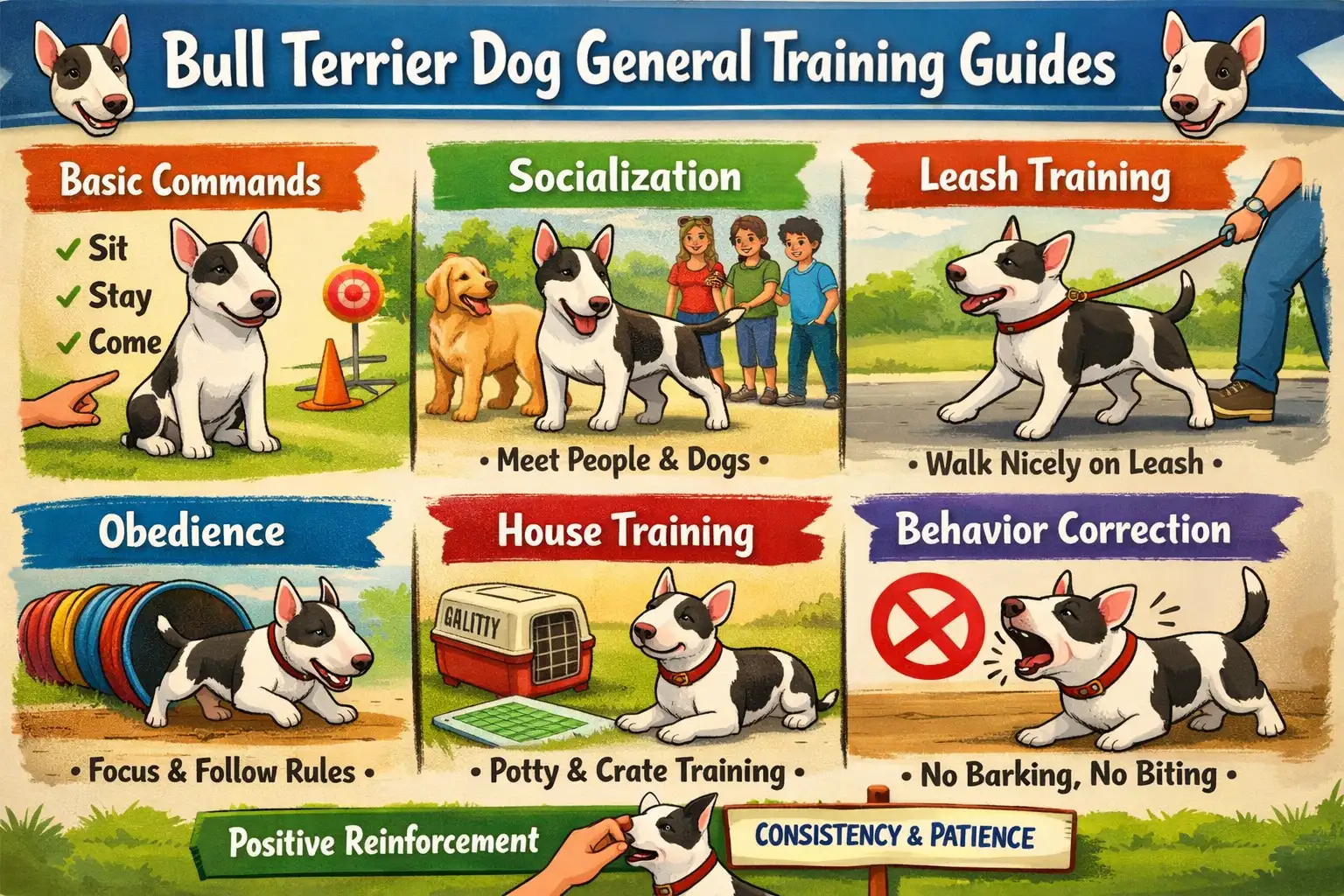
Bull Terriers are energetic, playful, and intelligent dogs with a unique personality. They are known for their strong muscles, determination, and, at times, a stubborn streak. Without proper guidance, their energy and curiosity can lead to mischief, such as chewing furniture, nipping, or ignoring commands.
Training your Bull Terrier is not just about teaching obedience—it’s about building a strong bond, ensuring safety, and helping your dog understand expectations. A well-trained Bull Terrier is easier to manage, more confident, and happier in everyday life.
Both puppies and adult Bull Terriers benefit from training, though the approach may differ. Puppies need early socialization and learning basic commands, while adult dogs may require gentle corrections and consistency to adjust their habits. Training in different environments, whether an apartment, a busy home, or around other pets, ensures your Bull Terrier can behave appropriately everywhere.
By following this guide, you’ll learn step-by-step methods, understand common behavior challenges, and know when to seek professional help if needed. Proper training also reduces stress for you and your dog, helping create a safe and enjoyable household.
Understanding Bull Terrier Behavior
Bull Terriers are strong, playful, and full of energy. They can be stubborn at times, but they are also very loyal and smart. Knowing their personality and how they learn will help you train them better.
Key personality traits:
- High energy: They need exercise and mental stimulation every day.
- Stubbornness: They may test boundaries, so patience and consistency are important.
- Playful and curious: They enjoy exploring and playing, which can sometimes lead to mischief.
- Social needs: They like being around people and other pets but need proper socialization.
Bull Terriers learn best with positive reinforcement, like treats, toys, or praise. Short, fun sessions work better than long, strict training. Puppies are easier to teach but adults can learn too with consistent routines. The environment matters too—busy homes, apartments, or multi-pet households can affect how your dog behaves.
Here’s a quick reference table to help you understand their behavior and training tips:
| Trait | Training Tip | Notes |
|---|---|---|
| High Energy | Give daily exercise and puzzle toys | Helps reduce destructive behavior |
| Stubborn | Keep training sessions short and fun | Use high-value rewards for motivation |
| Playful/Curious | Supervise and redirect to toys or tasks | Prevents chewing or nipping |
| Social Needs | Organize playdates and controlled introductions | Gradually expose to new dogs and people |
| Prey Drive | Practice recall and controlled play outdoors | Avoid off-leash near small animals |
Understanding these traits will make training more effective and help you avoid frustration.
Step-by-Step Training Method
Training a Bull Terrier is easier when you have a clear routine and use positive reinforcement. Short, frequent sessions work best, and both puppies and adults need consistency. Training should be fun and rewarding for your dog.
Daily Training Tips
- Session length: 5–15 minutes for puppies, 10–20 minutes for adults.
- Frequency: 2–4 sessions per day, depending on energy level.
- Positive reinforcement: Treats, toys, or praise immediately after the correct behavior.
- Environment: Start in a quiet space and gradually add distractions.
- Consistency: Use the same words and gestures for each command.
Here is a daily training checklist for puppies and adult Bull Terriers:
| Command / Exercise | Puppy Session (mins) | Adult Session (mins) | Notes |
|---|---|---|---|
| Sit | 5 | 10 | Use treats and praise immediately |
| Stay | 5 | 15 | Gradually increase time and distance |
| Come / Recall | 5 | 15 | Start indoors, then move outside |
| Leash Walking | 10 | 20 | Praise calm walking, stop pulling |
| Crate Training | 5 | 10 | Keep sessions positive and short |
| Impulse Control | 5 | 10 | Use “leave it” or “wait” games |
| Mental Stimulation | 5–10 | 10–15 | Puzzle toys or simple tricks |
Positive reinforcement options can also help:
| Reward Type | How to Use | Frequency |
|---|---|---|
| Treats | Small, tasty, given immediately after good behavior | Every correct attempt |
| Toys | Use for fetch or tug after success | Occasionally to maintain interest |
| Praise | Verbal encouragement or petting | Every session to reinforce learning |
Using this method consistently will help your Bull Terrier learn commands quickly and understand what is expected. Puppies will pick up behaviors faster, but adult dogs can improve with patience and regular practice.
Common Problems & Practical Fixes
Even with the best training, Bull Terriers can show some common behavior problems. Understanding why these happen and how to fix them makes training easier and your dog happier.
Common Problems and How to Fix Them
| Problem | Likely Cause | Step-by-Step Fix |
|---|---|---|
| Jumping | Excitement or attention-seeking | Turn away, ignore until calm, then praise |
| Nipping | Teething or playful behavior | Redirect to chew toy, praise gentle play |
| Hyperactivity | Boredom or lack of exercise | Structured exercise and mental games |
| Stubbornness | Short attention span or testing boundaries | Short, fun sessions, high-value rewards |
| Fear or Anxiety | Poor socialization or past trauma | Gradual desensitization and positive reinforcement |
| Multi-pet Conflicts | Resource guarding or jealousy | Supervised introductions, separate resources |
Do’s and Don’ts for Everyday Training
| Do | Don’t |
|---|---|
| Reward good behavior immediately | Punish or shout at mistakes |
| Keep training sessions short and fun | Overwhelm your dog with long sessions |
| Use consistent commands and gestures | Change commands frequently |
| Provide exercise and mental stimulation | Ignore boredom or excess energy |
| Socialize your dog gradually | Force interactions with fearful dogs |
By following these tips and using the tables above, most common Bull Terrier behavior problems can be managed at home. Consistency, patience, and positive reinforcement are key.
When to Seek Professional Help
Sometimes, even with consistent training, a Bull Terrier may show behaviors that need professional attention. Knowing when to ask for help keeps your dog and family safe and ensures your dog gets the right guidance.
Warning Signs and Actions
| Warning Sign | Action Needed | Timeline |
|---|---|---|
| Aggression toward people or other dogs | Contact certified trainer or veterinary behaviorist | Immediately |
| Severe separation anxiety | Implement behavior plan or vet consult | Within 1–2 weeks |
| Destructive behavior persists | Consult behaviorist | After consistent home training attempts |
| Stubborn or unresponsive behavior | Seek professional trainer advice | If no progress after 2–4 weeks of consistent training |
| Fear-based reactions in social situations | Gradual exposure plan with trainer supervision | As soon as identified |
Professional trainers and veterinary behaviorists can help with advanced techniques, aggression management, anxiety reduction, and complex behavioral problems. Acting early can prevent small issues from becoming serious problems.
Always prioritize safety: avoid forcing your dog into situations that cause fear or aggression, and supervise interactions with children or other pets until professional guidance is in place.
“For more detailed information on the official Bull Terrier breed standards, you can visit the AKC’s Bull Terrier page here.”

Ata Ur Rehman is the founder of Pet Age in Human Years Calculator, an educational platform that provides age conversion charts and lifespan guides for dogs, cats, birds, and other companion animals. His work focuses on helping pet owners understand how animal ages translate into human years using commonly accepted age conversion formulas and published lifespan averages.
The website compiles breed and species lifespan data from kennel clubs, breed organizations, and general animal lifespan studies to present simple and easy-to-understand guides for pet owners worldwide.
This website was created to centralize animal age conversion charts into one easy reference platform for pet owners.