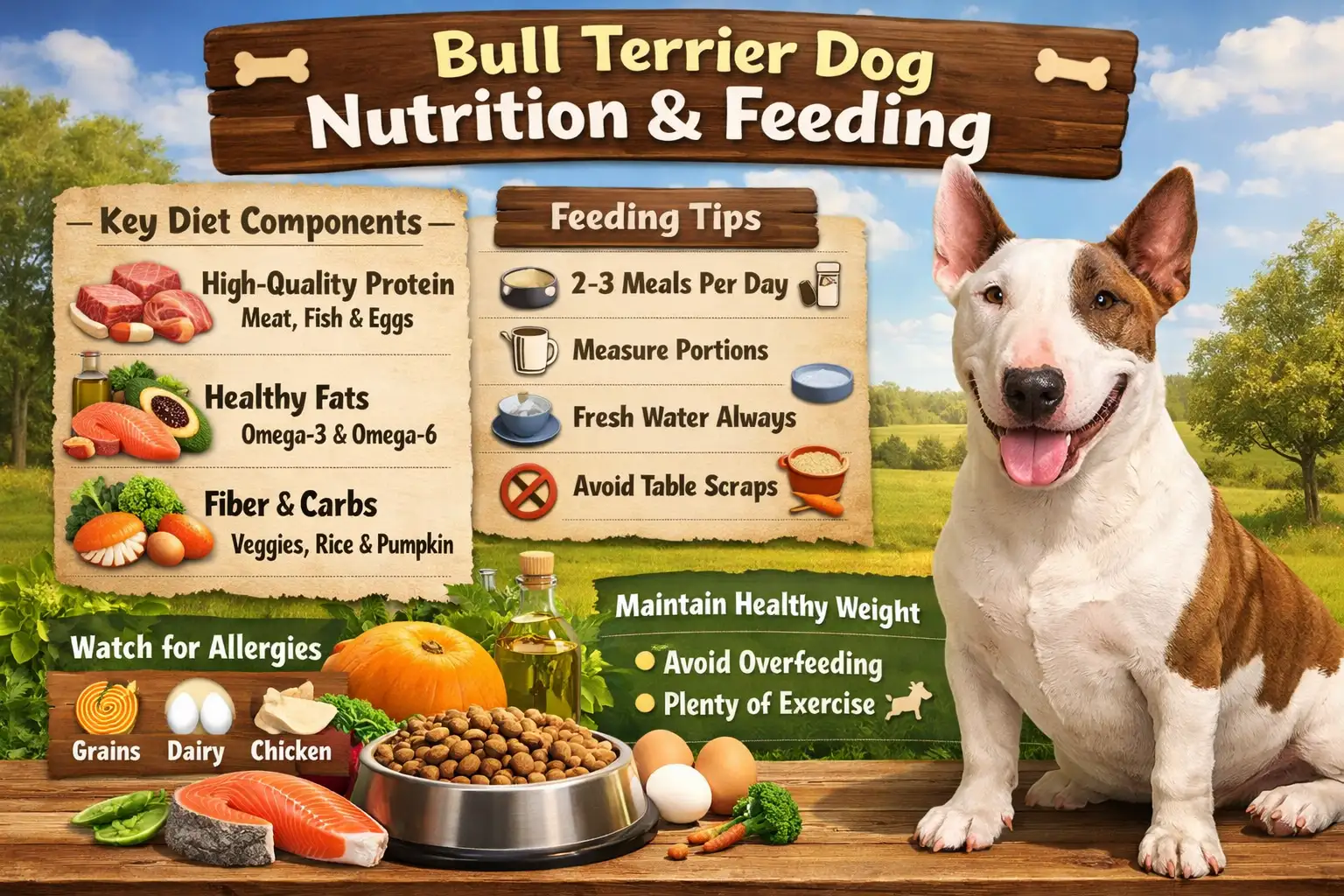
Proper nutrition is one of the most important factors in keeping a Bull Terrier healthy, energetic, and happy throughout their life. Bull Terriers are a muscular, active breed with a unique metabolism, so feeding them the right balance of nutrients is essential to support their growth, maintain ideal weight, and prevent common health problems.
Feeding the right diet can help your Bull Terrier:
- Maintain a strong, lean body and healthy muscles
- Have shiny skin and a strong coat
- Support joint health and prevent early stiffness or injury
- Boost energy for play, training, and daily activity
- Reduce the risk of obesity, digestive issues, and nutrient deficiencies
This guide will help you understand everything you need to know about feeding a Bull Terrier, from life-stage nutritional needs and portion sizes to safe foods, treats, and practical feeding tips for real-life scenarios. By following a structured feeding plan, you can ensure your Bull Terrier lives a long, active, and healthy life.
Bull Terrier Nutritional Needs and Feeding Basics
Bull Terriers need the right balance of calories, protein, and fats to stay healthy. Their needs change depending on age, size, and activity level. Feeding too much can cause weight gain, while feeding too little can make them weak or tired. Using simple guidelines and checking your dog’s body condition will help you feed them correctly.
Here’s a quick daily nutritional guide for Bull Terriers by life stage:
| Life Stage | Calories per Day | Protein % | Fat % | Notes |
|---|---|---|---|---|
| Puppy (2–12 months) | 800–1,200 kcal | 25–30% | 12–18% | Supports growth and muscle development |
| Adult (1–7 years) | 1,000–1,500 kcal | 20–25% | 10–15% | Maintains energy and lean body condition |
| Senior (7+ years) | 900–1,300 kcal | 18–22% | 8–12% | Supports joint health and prevents weight gain |
The portion size can also vary depending on the dog’s weight and activity level. This guide gives a practical reference:
| Dog Weight | Low Activity | Moderate Activity | High Activity | Feeding Frequency |
|---|---|---|---|---|
| 20 lbs (9 kg) | 1–1.25 cups | 1.25–1.5 cups | 1.5–1.75 cups | 2 meals/day |
| 30 lbs (14 kg) | 1.5–1.75 cups | 1.75–2 cups | 2–2.25 cups | 2 meals/day |
| 50 lbs (23 kg) | 2.25–2.5 cups | 2.5–3 cups | 3–3.25 cups | 2 meals/day |
| 70 lbs (32 kg) | 3–3.25 cups | 3.25–3.5 cups | 3.5–4 cups | 2 meals/day |
Tips for feeding Bull Terriers:
- Always measure food with a standard cup or scale to avoid overfeeding.
- Check your dog’s body condition weekly. You should be able to feel ribs without pressing hard.
- Puppies may need 3–4 meals a day, adults usually 2 meals, and seniors can continue 2 meals but adjust portions for lower activity.
- Active Bull Terriers, like those who exercise, train, or compete, may need slightly higher calories.
Types of Food and Safe Eating for Bull Terriers
Bull Terriers can eat different types of dog food, but each type has its pros and cons. Choosing the right food depends on your dog’s age, health, activity level, and your lifestyle. You also need to know which human foods are safe and which are toxic.
Here’s a comparison of common dog food types:
| Food Type | Pros | Cons | Cost | Convenience | Safety |
|---|---|---|---|---|---|
| Kibble | Easy to store, long shelf life, affordable | Some low-quality brands have fillers | Low | High | Safe if high-quality |
| Canned | Moist, palatable, good for picky eaters | Expensive, shorter shelf life | Medium-High | Medium | Safe if balanced |
| Raw / BARF | High protein, natural diet | Risk of bacteria, needs careful handling | Medium-High | Low | Only safe if properly prepared |
| Freeze-dried | Nutrient-rich, long shelf life | Expensive, needs water added | High | Medium | Safe if handled properly |
| Fresh / Cooked | High-quality ingredients, very palatable | Expensive, short shelf life | High | Low | Safe if balanced and stored correctly |
| Homemade | Full control of ingredients | Needs precise nutrient balance | Variable | Low | Can be risky without guidance |
It’s also important to know which foods Bull Terriers can eat safely and which ones are dangerous:
| Food Item | Safe / Toxic | Notes |
|---|---|---|
| Chicken, beef, turkey | Safe | Cooked, no bones or seasoning |
| Carrots, green beans, pumpkin | Safe | Good for fiber |
| Grapes, raisins, onions, garlic | Toxic | Can cause serious illness |
| Chocolate, caffeine | Toxic | Dangerous for heart and nerves |
| Xylitol (sweetener) | Toxic | Found in sugar-free foods, gum, and toothpaste |
| Bones (cooked) | Toxic | Can splinter and cause internal injuries |
| Plain rice, oatmeal | Safe | Easy to digest, good for sensitive stomachs |
Tips for feeding Bull Terriers:
- Always introduce new foods gradually over 7–10 days.
- Avoid giving table scraps with seasoning or sauces.
- Limit treats to less than 10% of daily calories.
- Fresh water should always be available.
Special Diets, Common Problems, and Owner Scenarios
Bull Terriers can face different feeding challenges depending on their health, activity level, and behavior. Some may need special diets due to allergies, weight problems, or picky eating habits. Let’s go over the most common issues and how to handle them.
1. Allergies and Sensitive Stomachs
Some Bull Terriers have food allergies or sensitivities that cause digestive issues or skin problems. Common allergens include grains, chicken, or beef. If your Bull Terrier has a sensitive stomach or skin problems, consider a special diet that is easy to digest and free of common allergens.
Here is a guide to common food sensitivities:
| Ingredient | Common Allergy Symptoms | Alternative Food |
|---|---|---|
| Chicken | Itchy skin, ear infections | Turkey, fish |
| Beef | Vomiting, diarrhea | Lamb, venison |
| Grains | Gas, bloating, diarrhea | Grain-free food, sweet potatoes |
| Dairy | Diarrhea, upset stomach | Lactose-free options |
2. Weight Management
Obesity is a common problem in Bull Terriers. To help manage your dog’s weight, make sure you follow a feeding plan that suits their size and activity level. Keep treats to a minimum and ensure your Bull Terrier gets enough exercise. Regular weight checks and using a Body Condition Score (BCS) chart can help you maintain an ideal weight.
Here’s a Body Condition Score guide to assess your Bull Terrier’s weight:
| BCS | Description | Action Needed |
|---|---|---|
| 1–3 | Too thin, ribs and spine are visible | Increase calories, feed more often |
| 4–5 | Ideal weight, ribs and waist are visible but not excessive | Maintain current feeding routine |
| 6–9 | Overweight or obese, ribs are hard to feel | Reduce portions, increase activity |
3. Picky Eating
If your Bull Terrier refuses to eat, there could be many reasons. It could be a health issue, a change in food, or just stubbornness. To handle picky eating, try the following tips:
- Stick to a consistent feeding schedule
- Try different food types (wet, dry, raw)
- Avoid giving too many treats or table scraps
- If problems persist, consult your vet for advice
4. Feeding Multiple Dogs
If you have multiple Bull Terriers or other pets, you may need to feed them separately to avoid food guarding or overeating. Use separate feeding stations and supervise mealtime to make sure each dog gets the right amount of food.
5. Feeding During Travel or Schedule Changes
Travel or changes in your Bull Terrier’s routine can affect their appetite and digestion. When traveling, try to stick to your regular feeding schedule and offer food at the same times each day. You can also bring their food along to avoid digestive upset.
Practical Tools, Charts, FAQs, and Expert Guidance
To make feeding your Bull Terrier easier and more accurate, practical tools, charts, and tips can help you plan meals, track weight, and avoid mistakes. Using these tools will save time and keep your dog healthy.
Here is a sample daily feeding schedule for Bull Terriers based on life stage:
| Life Stage | Morning Meal | Afternoon Meal | Evening Meal | Notes |
|---|---|---|---|---|
| Puppy (2–12 months) | 1/3 of daily portion | 1/3 of daily portion | 1/3 of daily portion | Feed 3–4 times per day for steady growth |
| Adult (1–7 years) | 50% of daily portion | — | 50% of daily portion | Feed twice daily for energy balance |
| Senior (7+ years) | 50% of daily portion | — | 50% of daily portion | Adjust portion if activity is lower |
Here is a food transition checklist to help when switching diets safely:
| Step | Duration | Tips |
|---|---|---|
| Day 1–2 | 25% new food, 75% old food | Mix thoroughly |
| Day 3–4 | 50% new, 50% old | Monitor stool and appetite |
| Day 5–6 | 75% new, 25% old | Watch for digestive upset |
| Day 7+ | 100% new food | Continue observing for tolerance |
Frequently asked questions from Bull Terrier owners:
- How often should I feed my Bull Terrier? Twice a day for adults, 3–4 times for puppies.
- Can I give my dog human food? Only safe foods like plain carrots, pumpkin, or rice; avoid chocolate, grapes, onions, or anything toxic.
- My Bull Terrier is overweight, what should I do? Reduce portion sizes, avoid extra treats, and increase exercise. Use the BCS guide to track progress.
- What if my dog refuses food? Try switching food types gradually and maintain a consistent feeding schedule. Consult your vet if problems persist.
Expert guidance:
- Always consult your veterinarian or a veterinary nutritionist if your Bull Terrier has allergies, digestive issues, or sudden changes in appetite or weight.
- Regularly track weight, body condition, and coat health to make timely adjustments to diet and portions.
- Use the sample charts and checklists to create a feeding routine that works for your dog and household schedule.
“For more detailed information on the official Bull Terrier breed standards, you can visit the AKC’s Bull Terrier page here.”

Ata Ur Rehman is the founder of Pet Age in Human Years Calculator, an educational platform that provides age conversion charts and lifespan guides for dogs, cats, birds, and other companion animals. His work focuses on helping pet owners understand how animal ages translate into human years using commonly accepted age conversion formulas and published lifespan averages.
The website compiles breed and species lifespan data from kennel clubs, breed organizations, and general animal lifespan studies to present simple and easy-to-understand guides for pet owners worldwide.
This website was created to centralize animal age conversion charts into one easy reference platform for pet owners.