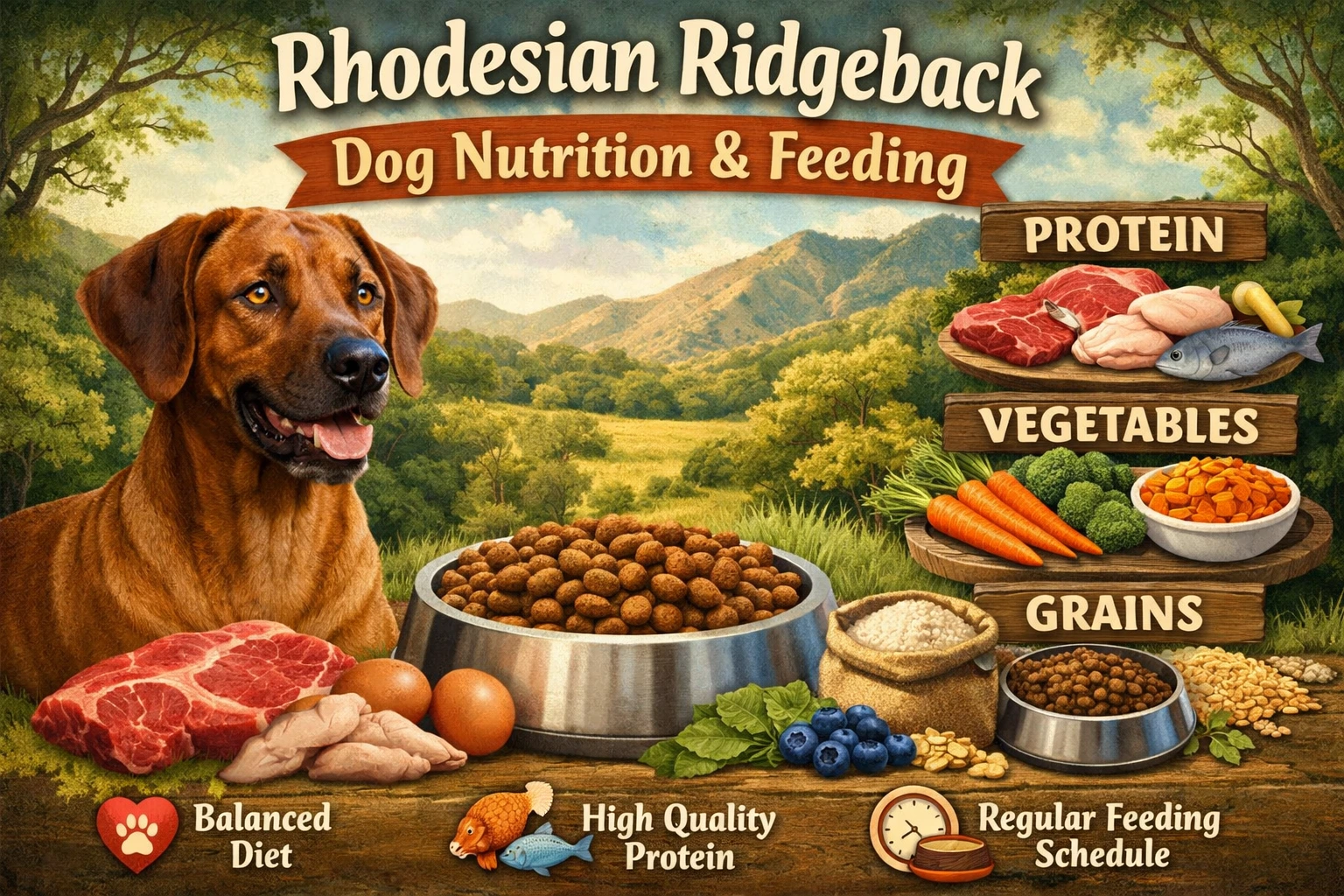
Rhodesian Ridgebacks are a large, athletic, and intelligent breed known for their stamina, strength, and distinctive ridge along their back. Proper nutrition is the cornerstone of keeping them healthy, energetic, and thriving throughout their life stages. Unlike smaller breeds, Ridgebacks have unique dietary needs that support their muscle development, joint health, coat condition, and overall longevity.
Because they are active dogs with a muscular build, feeding the right balance of protein, fat, and carbohydrates ensures they maintain optimal weight and energy levels. Overfeeding or providing low-quality food can lead to joint stress, obesity, and digestive issues — problems that are particularly concerning in a breed predisposed to hip dysplasia and other orthopedic conditions.
Nutrition also plays a vital role in their coat health. A shiny, strong coat is supported by high-quality protein and healthy fats, particularly omega-3 and omega-6 fatty acids. Additionally, vitamins and minerals contribute to bone strength, immune system function, and metabolic health.
For Ridgeback owners, understanding breed-specific nutritional considerations helps prevent common health issues and ensures your dog enjoys a long, active, and happy life. Using proper feeding practices tailored to their life stage — puppy, adult, or senior — is essential for maintaining their natural vitality and preventing health problems before they arise.
Health Aspects Supported by Proper Nutrition
| Health Aspect | Nutritional Focus | Notes |
|---|---|---|
| Joint health | Omega-3 fatty acids, glucosamine | Large, athletic breed; prone to hip dysplasia |
| Coat quality | Protein, fatty acids | Maintains shine and reduces shedding |
| Energy & stamina | Balanced macros, sufficient calories | High-energy dogs need more protein & fat |
| Bone & growth support | Calcium, phosphorus | Especially important for puppies and young adults |
| Immune health | Vitamins A, C, E, zinc | Helps prevent infections and supports recovery |
Core Nutritional Needs for Rhodesian Ridgebacks
Rhodesian Ridgebacks need a balanced diet that gives them all the nutrients their big, active bodies require. Getting the right amount of protein, fat, carbohydrates, vitamins, and minerals helps them grow strong, stay healthy, and maintain energy throughout the day. Puppies, adults, and senior Ridgebacks have slightly different needs, so understanding these differences is very important.
Protein is the building block for muscles, tissues, and a healthy coat. Ridgebacks need higher protein than some small breeds because of their muscular build and activity level.
Fats provide energy, support brain function, and help maintain a shiny coat. Healthy fats like omega-3 and omega-6 are especially good for joints and skin.
Carbohydrates give energy and fiber for good digestion. While not as critical as protein and fat, they are part of a balanced meal.
Vitamins and minerals are needed in smaller amounts but are very important for bones, immune system, and overall health. Sometimes supplements may help, especially if a dog has special health needs, but most good-quality dog foods already include what your Ridgeback needs.
Macronutrients and Daily Calorie Guide for Rhodesian Ridgebacks
| Life Stage | Protein % | Fat % | Approx. Daily Calories (25 kg dog) |
|---|---|---|---|
| Puppy | 25–30% | 12–18% | 1000–1200 kcal |
| Adult | 22–26% | 10–15% | 900–1100 kcal |
| Senior | 20–25% | 8–12% | 800–1000 kcal |
Essential Vitamins and Minerals
| Nutrient | Why It Matters | Sources |
|---|---|---|
| Calcium & Phosphorus | Bone growth and strength | Meat, dairy, balanced dog food |
| Omega-3 & Omega-6 | Skin, coat, joints | Fish oil, flaxseed, quality dog food |
| Vitamin A | Vision, immunity | Liver, eggs, dog food |
| Vitamin E | Cell protection | Vegetable oils, dog food |
| Zinc | Skin, coat, immunity | Meat, dog food |
By giving Ridgebacks the right mix of nutrients, you support their muscles, joints, coat, bones, and overall health. Puppies need more protein and calories to grow, adults need balanced energy to maintain weight and activity, and seniors may need slightly lower calories but extra nutrients for joint and organ support.
How Much and How Often to Feed Your Rhodesian Ridgeback
Feeding your Rhodesian Ridgeback the right amount is very important for their health. Too much food can make them overweight, and too little can leave them weak or underweight. The amount depends on their age, weight, and activity level. Puppies need more food for growth, adults need enough to stay active, and seniors may need slightly less to prevent weight gain.
Daily Feeding Amounts by Weight and Life Stage
| Weight (kg) | Puppy Daily Portion | Adult Daily Portion | Senior Daily Portion |
|---|---|---|---|
| 20 | 300–400 g | 250–300 g | 220–270 g |
| 25 | 350–450 g | 300–350 g | 260–310 g |
| 30 | 400–500 g | 350–400 g | 300–350 g |
Feeding frequency also changes with age: puppies eat more often, adults usually twice a day, and seniors may benefit from smaller meals once or twice daily.
Recommended Feeding Frequency by Life Stage
| Life Stage | Meals per Day |
|---|---|
| Puppy (<6 months) | 3–4 meals |
| Adult | 2 meals |
| Senior | 1–2 meals, smaller portions |
Using the Body Condition Score can help you adjust how much to feed. If your Ridgeback has a visible waist and ribs you can feel easily, they are likely at a healthy weight. If they start to gain weight or lose muscle, adjust the portions or activity level accordingly.
By following these amounts and feeding schedules, you make sure your Ridgeback stays fit, energetic, and healthy throughout their life.
Types of Dog Food and Safe Feeding Practices
Rhodesian Ridgebacks can eat different types of dog food. Each type has benefits and some downsides. Choosing the right food helps keep your dog healthy, active, and happy.
Kibble is dry dog food. It is easy to store, convenient, and usually balanced. Make sure to choose large-breed formulas that have the right protein and fat for Ridgebacks.
Raw food is uncooked meat, vegetables, and sometimes grains. It is high in protein but can carry bacteria. Only feed raw food if it is properly balanced and safe.
Canned food has high moisture and is very tasty. It is good for picky eaters, but can be more expensive.
Fresh or freeze-dried food is highly digestible and can help dogs with sensitive stomachs. It is convenient but usually costs more.
Homemade diets give you full control over ingredients. However, it is very easy to make them nutritionally unbalanced if you don’t follow a vet-approved recipe.
Treats are fine in small amounts. Healthy human foods like carrots or cooked chicken can be treats. Avoid toxic foods like chocolate, grapes, onions, garlic, macadamia nuts, and anything with xylitol.
Food Types for Rhodesian Ridgebacks – Pros and Cons
| Food Type | Pros | Cons | Notes |
|---|---|---|---|
| Kibble | Convenient, shelf-stable | Quality varies, lower moisture | Choose large-breed formulas |
| Raw | High protein, natural | Risk of pathogens, prep time | Only if balanced and vet-approved |
| Canned | Palatable, high moisture | Expensive | Can supplement kibble |
| Fresh/Freeze-dried | High digestibility | Costly | Good for picky eaters |
| Homemade | Full control of ingredients | Risk of imbalance | Consult a vet or nutritionist |
Safe vs Unsafe Foods
| Safe Foods | Foods to Avoid |
|---|---|
| Carrots, green beans, pumpkin | Chocolate, grapes, raisins |
| Chicken, turkey, lean beef | Onions, garlic, macadamia nuts |
| Rice, oatmeal | Raw yeast dough, xylitol |
Following these guidelines helps you choose the right food type for your Ridgeback while keeping them safe from harmful foods.
Special Diets, Common Problems, and Practical Feeding Tips
Some Rhodesian Ridgebacks need special diets or extra care when feeding. Puppies, adults, and seniors may have different needs. Some dogs have allergies, sensitive stomachs, or gain weight easily. Understanding these situations helps keep your Ridgeback healthy.
If your Ridgeback has allergies or a sensitive stomach, feed easily digestible food and avoid sudden changes. Dogs that gain weight easily may need lower-calorie food and more exercise. High-energy or working Ridgebacks need more protein and fat to maintain energy.
Picky eaters can be encouraged by mixing textures, rotating flavors, or adding a little wet or fresh food to kibble. If you have multiple dogs, feed them separately to avoid competition or food aggression. Traveling dogs may need smaller, more frequent meals or familiar food to reduce stress.
Switching food should always be done gradually over 7–10 days to avoid stomach upset. Watch for loose stools, vomiting, or loss of appetite as signs to slow the transition or consult a vet.
Common Feeding Problems and How to Fix Them
| Problem | Likely Cause | Practical Fix |
|---|---|---|
| Overweight adult | Overfeeding, low activity | Reduce portion, increase exercise, monitor weight |
| Loose stools | Sudden diet change | Gradually transition food over 7–10 days |
| Picky eater | Boredom, flavor fatigue | Rotate flavors, mix textures, add small wet food |
| Food aggression | Resource guarding | Feed dogs separately, train patience |
| Low energy | Underfeeding, low-quality food | Adjust portion, consider higher protein/fat food |
Special Diet Recommendations
| Condition | Recommended Approach | Notes |
|---|---|---|
| Sensitive stomach | Highly digestible kibble, small meals | Avoid sudden food changes |
| Weight management | Low-calorie, balanced food | Increase exercise gradually |
| High-energy dogs | High protein & fat | Adjust portions to activity level |
| Allergies | Limited ingredient or hypoallergenic food | Work with vet for guidance |
By following these tips and watching your dog closely, you can prevent common feeding problems and keep your Rhodesian Ridgeback healthy, happy, and full of energy. Always consult a veterinary nutritionist if your dog has special health needs or persistent problems.
For more detailed guidance on large breed dog nutrition and feeding, you can refer to the American Kennel Club’s nutrition resources: https://www.akc.org/expert-advice/nutrition/

Ata Ur Rehman is the founder of Pet Age in Human Years Calculator, an educational platform that provides age conversion charts and lifespan guides for dogs, cats, birds, and other companion animals. His work focuses on helping pet owners understand how animal ages translate into human years using commonly accepted age conversion formulas and published lifespan averages.
The website compiles breed and species lifespan data from kennel clubs, breed organizations, and general animal lifespan studies to present simple and easy-to-understand guides for pet owners worldwide.
This website was created to centralize animal age conversion charts into one easy reference platform for pet owners.