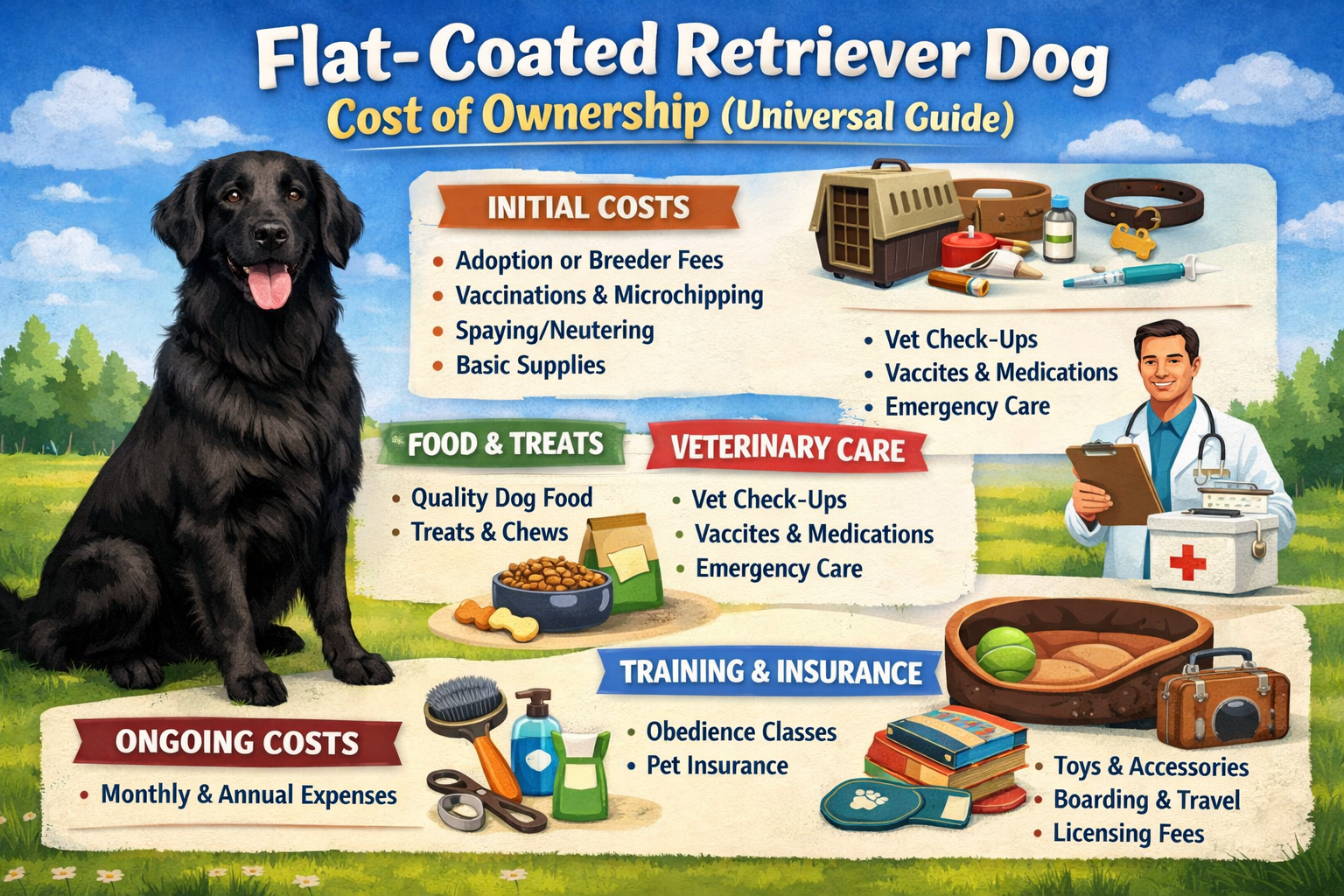
Owning a Flat-Coated Retriever is a long-term financial commitment, not just a one-time purchase. This breed is a large, athletic, slow-maturing retriever that typically lives 10–14 years, and its costs reflect high food intake, consistent training needs, routine grooming, and above-average veterinary risk as it ages.
Most prospective owners underestimate costs because they focus on the puppy price or adoption fee. In reality, ongoing care accounts for the majority of lifetime spending, especially food, veterinary care, training, and unexpected medical events.
Flat-Coated Retriever Cost Snapshot (Quick Overview)
| Cost Type | Typical Range (USD) |
|---|---|
| First-year cost | $3,500 – $7,500 |
| Annual cost (adult years) | $2,200 – $4,200 |
| Average monthly cost | $180 – $350 |
| Estimated lifetime cost (10–14 years) | $30,000 – $55,000+ |
What these numbers actually mean
- First year is the most expensive
Puppy acquisition, initial veterinary care, training, and setup supplies push costs significantly higher than later years. Puppies sit at the top of the first-year range; adult rescues usually land lower. - Monthly costs stay consistent—but aren’t “flat”
Expect predictable expenses like food and preventatives every month, with periodic spikes from grooming, training refreshers, or vet visits. - Lifetime costs vary widely by health and lifestyle
A healthy Flat-Coated Retriever with preventive care and insurance may stay near the lower end. Dogs with allergies, orthopedic issues, or cancer treatment can exceed the upper range quickly.
Why Flat-Coated Retrievers cost more than many owners expect
- Large body size → higher food, medication, and anesthesia costs
- High energy and intelligence → ongoing training and enrichment expenses
- Extended adolescence (often 3+ years) → longer training investment
- Breed health risks later in life → increased veterinary budgeting needs
Flat-Coated Retriever First-Year Costs (Puppy vs Adult Dog)
The first year is the most expensive year of owning a Flat-Coated Retriever. This is when you pay for getting the dog, early vet care, training, and all the supplies needed to start life together.
Costs are very different for puppies and adult dogs, so it’s important to look at both before deciding.
Why the first year costs more
- Many costs happen only once (spay/neuter, crate, training basics)
- Puppies need more vet visits and training
- Large dogs grow fast and need bigger gear sooner
First-Year Cost Breakdown: Puppy vs Adult Rescue
| Expense Category | Puppy (First Year) | Adult Rescue (First Year) |
|---|---|---|
| Adoption or breeder cost | $1,500 – $3,500 | $300 – $700 |
| Initial vet care | $600 – $1,500 | $400 – $900 |
| Supplies and setup | $400 – $900 | $300 – $700 |
| Training (classes or private help) | $300 – $1,200 | $200 – $800 |
| Estimated first-year total | $3,500 – $7,500 | $1,800 – $4,500 |
What’s included in these costs
- Adoption or breeder fees
Puppies from responsible breeders cost more because of health testing and early care. Adult rescues are cheaper upfront but may come with unknown history. - Initial veterinary care
This includes exams, vaccines, parasite treatment, microchipping, and spay or neuter surgery. Large dogs cost more for surgery because medication and anesthesia doses are higher. - Supplies and setup
Crate, leash, collar, bowls, bed, toys, grooming tools, and cleaning items. Puppies often outgrow items quickly, which adds cost. - Training
Flat-Coated Retrievers are smart and energetic. Early training helps prevent behavior problems that can become expensive later.
Puppy vs adult: the real difference
- Puppies cost more but allow full training from the start
- Adult dogs may cost less upfront but can still need training and medical catch-up care
- Either option needs a solid first-year budget to avoid stress
Monthly and Annual Costs of Owning a Flat-Coated Retriever
After the first year, costs become more regular and easier to plan. These are the expenses you pay every month and every year to keep a Flat-Coated Retriever healthy, trained, and comfortable.
Because this is a large and active dog, monthly costs are higher than small or low-energy breeds.
What you pay for every month
- Food for a large, energetic retriever
- Flea, tick, and heartworm prevention
- Grooming and coat care
- Training refreshers and mental activities
- Basic supplies and replacements
Some months are cheaper, and some cost more because of vet visits or training sessions.
Monthly and Annual Cost Breakdown
| Expense Type | Monthly Cost | Annual Cost |
|---|---|---|
| Food and nutrition | $70 – $120 | $850 – $1,450 |
| Vet care and preventatives | $30 – $70 | $350 – $850 |
| Grooming and coat care | $20 – $50 | $250 – $600 |
| Training and enrichment | $15 – $60 | $180 – $700 |
| Licenses and basic supplies | $5 – $15 | $60 – $180 |
| Total ongoing cost | $180 – $350 | $2,200 – $4,200 |
What affects these costs the most
- Food quality: Better food costs more but may reduce vet bills later
- Energy level: Active dogs need more food, toys, and training
- Location: City vets and groomers usually charge more
- Lifestyle: Dogs that attend training, daycare, or sports cost more
A simple budgeting tip
Plan for the high end of the range, not the low end. This makes it easier to handle surprise costs without stress.
Major Cost Drivers, Health Risks, and Insurance Considerations
Not every Flat-Coated Retriever costs the same to care for. Some dogs stay healthy and affordable. Others become expensive because of size, health issues, or emergencies.
Why some Flat-Coated Retrievers cost more than others
- Large body size means more food and higher medicine doses
- High energy means more training, toys, and activities
- Long lifespan means more years of vet care
- Health risks later in life can raise vet bills fast
Many owners are surprised that medical costs, not food, become the biggest expense as dogs get older.
Health and Insurance Cost Impact
| Cost Factor | What It Can Mean for Your Budget |
|---|---|
| Large size | Higher food, medication, and surgery costs |
| Active lifestyle | More training, gear, and enrichment needs |
| Routine vet care | $300 – $600 per year |
| Emergency vet visit | $1,500 – $5,000+ per event |
| Ongoing medical condition | $600 – $3,000+ per year |
| Pet insurance (monthly) | $40 – $80 |
Understanding health-related costs
Flat-Coated Retrievers are generally healthy dogs, but they can face serious health problems as they age. Treatment for injuries, joint problems, or cancer can quickly cost thousands of dollars.
Even one emergency visit can be more than a full year of normal care.
Is pet insurance worth it?
Pet insurance does not make care cheaper, but it can:
- Help cover large, unexpected vet bills
- Reduce financial stress during emergencies
- Allow better treatment choices
Insurance works best when started early, before health problems appear.
Simple money rule to remember
If you cannot handle a $2,000 emergency vet bill, insurance or a strong savings fund is very important.
Lifetime Cost, Hidden Expenses, and Financial Reality Check
Owning a Flat-Coated Retriever is a long-term promise, not a short one. This breed often lives 10 to 14 years, and costs add up over time. Even small monthly expenses become large numbers when spread over many years.
Estimated Lifetime Cost of a Flat-Coated Retriever
| Cost Category | Estimated Lifetime Cost |
|---|---|
| Food and nutrition | $10,000 – $18,000 |
| Routine veterinary care | $6,000 – $12,000 |
| Grooming and training | $3,000 – $7,000 |
| Supplies and replacements | $2,000 – $4,000 |
| Emergency and unexpected care | $3,000 – $14,000+ |
| Estimated lifetime total | $30,000 – $55,000+ |
These numbers are averages. Some dogs cost less. Others cost much more if they need long-term medical care.
Hidden costs many owners forget
- Boarding or pet sitting during travel
- Dental cleanings and tooth problems
- Replacing chewed beds, toys, and furniture
- Aging-related care in senior years
- Rising prices for food and vet services
These costs often arrive later, when owners feel less prepared.
Common money mistakes
- Only budgeting for food
- Skipping training and paying later for damage
- Not planning for emergencies
- Assuming costs stay the same every year
A simple reality check
You are likely ready for this breed if you can:
- Cover regular monthly costs comfortably
- Handle surprise expenses without panic
- Plan for future vet care, not just today’s needs
Flat-Coated Retrievers are loving, playful, and loyal dogs. They give a lot—but they also require steady financial care to live a healthy, happy life.
For more detailed guidance on Flat-Coated Retriever health and care, visit the American Kennel Club Flat-Coated Retriever Breed Page.

Ata Ur Rehman is the founder of Pet Age in Human Years Calculator, an educational platform that provides age conversion charts and lifespan guides for dogs, cats, birds, and other companion animals. His work focuses on helping pet owners understand how animal ages translate into human years using commonly accepted age conversion formulas and published lifespan averages.
The website compiles breed and species lifespan data from kennel clubs, breed organizations, and general animal lifespan studies to present simple and easy-to-understand guides for pet owners worldwide.
This website was created to centralize animal age conversion charts into one easy reference platform for pet owners.