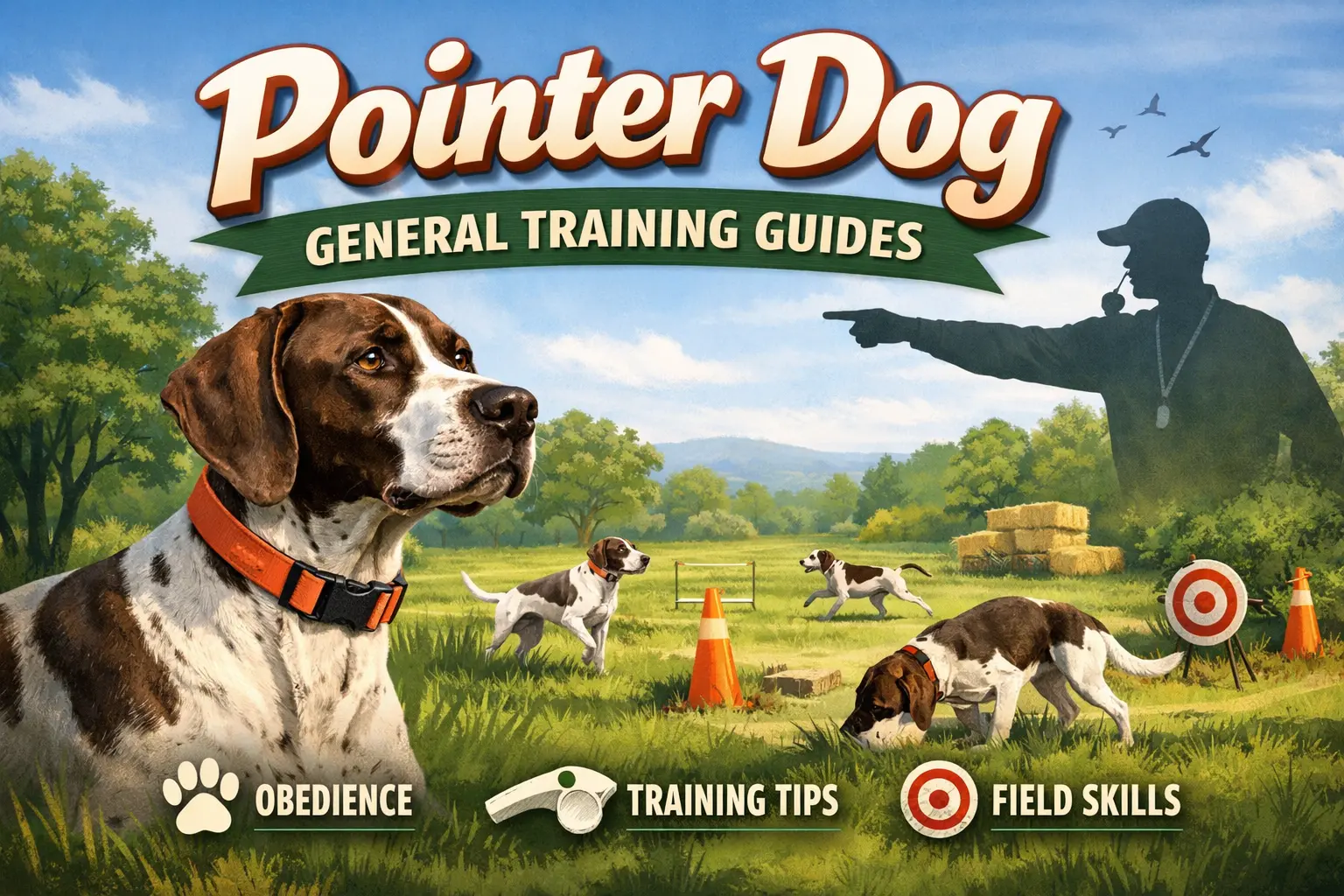
Pointer dogs are intelligent, athletic, and deeply instinct-driven. Training them successfully isn’t about working harder or being stricter—it’s about working with the breed’s natural wiring instead of against it. This guide is designed to help you understand how Pointer dogs think, learn, and respond, so training becomes effective, realistic, and sustainable.
Whether you’re raising a Pointer puppy, managing an adolescent with endless energy, or trying to improve reliability in an adult dog, this article focuses on practical, real-world training for pet homes—not just field or hunting scenarios. Many Pointer owners struggle because they apply generic dog training advice that doesn’t account for high prey drive, scent fixation, or the breed’s independence. The result is frustration, stalled progress, or unsafe behavior outdoors.
This guide sets clear expectations from the start. Pointer dogs can absolutely become well-mannered, responsive companions—but they rarely become “automatic obedience” dogs. Success looks like strong engagement, reliable recall under realistic conditions, controlled behavior on leash, and calmness at home, not robotic compliance.
Throughout this article, you’ll learn:
- Why Pointer training feels harder than expected (and why that’s normal)
- How to structure training so it fits busy households
- What skills matter most for safety and daily life
- When training struggles are normal—and when they signal a bigger issue
Why Training a Pointer Dog Is Different
Pointer dogs are not difficult on purpose. They are different because they were bred to notice the world, not ignore it. Their job for generations was to find scent, lock onto it, and move forward with confidence. This is why normal dog training advice often fails with Pointers.
Many owners think their Pointer is stubborn. In reality, the dog is usually overstimulated, distracted by scent, or unclear about what matters most. Training a Pointer is less about repeating commands and more about teaching focus, control, and decision-making.
Safety is a big reason training matters so much for this breed. A Pointer that follows a scent can run far, very fast, and without checking back. Strong recall, leash manners, and impulse control are not “nice extras” for Pointers. They are basic safety skills.
Another common mistake is relying only on exercise. Long runs or hours of play may tire the body, but they do not teach calm behavior or listening skills. Many Pointers are over-exercised and under-trained, which actually makes behavior worse over time.
The table below shows why Pointer behavior looks challenging and what training should focus on instead.
| Pointer Trait | What Owners Often See | What Training Should Focus On |
|---|---|---|
| High prey drive | Dog ignores you outside | Impulse control and staged recall |
| Strong scent focus | “Selective hearing” | Engagement before commands |
| High energy | Restless or pacing indoors | Mental work, not just running |
| Independence | Seems stubborn or bold | Motivation-based training |
When training matches how Pointer dogs are built to think and move, progress becomes faster and less stressful. Owners stop fighting the dog and start guiding it.
Understanding Pointer Dog Behavior and Learning Style
Pointer dogs learn differently than many other breeds. They notice smells, movement, and sounds very fast. Once their brain locks onto something interesting, it becomes hard for them to hear you. This does not mean they are ignoring you on purpose. It means their brain is busy processing the world.
Pointers also learn best when training feels clear, short, and rewarding. Long lessons, repeated commands, or harsh corrections often shut them down or make them lose interest. They respond better when training feels like a game with a clear goal.
Age plays a big role in behavior. Many owners expect adult-level focus from young Pointers,
| Age Stage | What Owners Often Notice | What Training Should Focus On |
|---|---|---|
| Puppy (8–16 weeks) | Easily distracted, short attention span | Name response, focus, simple recall |
| Young dog / adolescent | Ignores commands outside, tests limits | Impulse control, consistency, recall |
| Adult | Better focus but still scent-driven | Reliability and real-world practice |
| Senior | Slower body, active mind | Short sessions and mental games |
Pointers are also very sensitive to tone and timing. Calm praise, clear rewards, and good timing work better than loud voices or punishment. When training feels fair and easy to understand, Pointers try harder.
Another key point is motivation. Food, movement, praise, and access to sniffing can all be rewards. The best reward depends on the dog and the situation. Smart training uses what the dog wants most in that moment.
Understanding how your Pointer thinks makes training smoother and safer. You stop asking for too much too fast and start building skills step by step.
Step-by-Step Pointer Dog Training Approach
Training a Pointer works best when it is simple, short, and planned. This breed learns faster with clear steps instead of long lessons. Small wins each day matter more than one long session.
Start with basic skills that keep your dog safe and focused. These include responding to their name, coming when called, walking on a loose leash, and staying calm around excitement. These skills should be trained first in quiet places before moving outside.
Training sessions should be short. Most Pointers learn best in 5 to 10 minute sessions, several times a day. Stop before your dog gets tired or distracted. Ending early helps your dog stay excited for the next session.
The table below shows a simple weekly training structure that works well for most Pointer dogs.
| Training Type | How Often | Session Length |
|---|---|---|
| Basic obedience | Daily | 5–10 minutes |
| Recall practice | 4–6 times per week | 5 minutes |
| Leash training | Daily | During walks |
| Mental games | Daily | 10–20 minutes |
The table below shows Where you train matters just as much as what you train. Many owners move too fast into busy places.
| Training Stage | Location | Main Goal |
|---|---|---|
| Stage 1 | Inside the home | Learn the command |
| Stage 2 | Yard or quiet area | Focus with light distraction |
| Stage 3 | Calm outdoor space | Build reliability |
| Stage 4 | High-scent areas | Practice self-control |
Rewards should match the difficulty of the task. Food often works best indoors. Outside, many Pointers prefer movement, praise, or permission to sniff. Use the reward your dog wants most at that moment.
Progress is not always straight. Some days will feel easy, and others will feel hard. This is normal, especially during adolescence. Stay calm, stay consistent, and keep sessions short.
Common Pointer Training Problems and When to Get Help
Many Pointer training problems are normal for the breed and do not mean training has failed. Most issues come from too much freedom, moving too fast, or not enough mental work. The good news is that many problems improve with small training changes.
The table below shows common Pointer problems and simple fixes that often help.
| Problem | Why It Happens | What Usually Helps |
|---|---|---|
| Pulling on leash | Too excited, wants to explore | Slower walks and impulse control |
| Ignoring recall | Strong scent focus | Long line training and better rewards |
| Overexcited outdoors | Too much freedom too soon | Calm exposure and structure |
| Destructive behavior | Bored mind, not tired body | Training games and mental work |
| Training regression | Normal adolescence phase | Patience and consistency |
Many owners feel stuck during adolescence. This stage often brings testing limits, poor listening, and high energy. This does not mean your dog is “untrainable.” It means training needs to slow down and return to basics for a while.
Some situations do need professional help. These are not things to wait out or ignore. Early support can prevent serious safety risks.
| Warning Sign | What to Do |
|---|---|
| Running toward roads or wildlife | Contact a professional trainer quickly |
| Obsessive chasing that will not stop | Work with a breed-experienced trainer |
| Fear, shutdown, or panic | Talk to a vet and behavior specialist |
| Aggression toward people or dogs | Get professional help immediately |
Choosing the right help matters. Look for a trainer who understands sporting and pointing breeds, not just basic obedience. Breed experience makes training safer and faster.
This guide covered the basics of Pointer dog training, from understanding behavior to solving common problems. With patience, clear steps, and realistic goals, most Pointers can become safe, focused, and enjoyable companions.
For additional breed-specific guidance and official training recommendations, you can also explore the American Kennel Club training resources, which offer reliable, science-based advice for sporting and pointing breeds like the Pointer.

Ata Ur Rehman is the founder of Pet Age in Human Years Calculator, an educational platform that provides age conversion charts and lifespan guides for dogs, cats, birds, and other companion animals. His work focuses on helping pet owners understand how animal ages translate into human years using commonly accepted age conversion formulas and published lifespan averages.
The website compiles breed and species lifespan data from kennel clubs, breed organizations, and general animal lifespan studies to present simple and easy-to-understand guides for pet owners worldwide.
This website was created to centralize animal age conversion charts into one easy reference platform for pet owners.