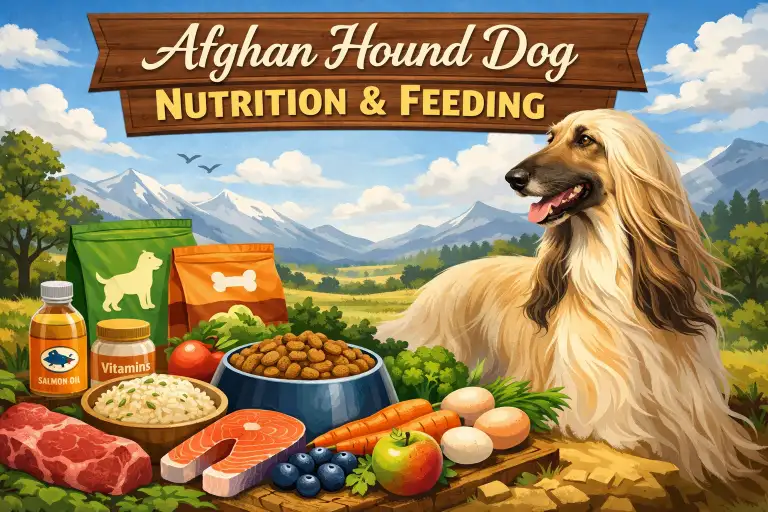
What this guide will help you do
If you own an Afghan Hound, you know this breed is elegant, energetic, and requires a diet that matches its unique body and lifestyle. This guide will help you:
- Understand the essential nutrients your Afghan Hound needs.
- Learn how much and how often to feed your dog at different life stages.
- Compare different food types and know what’s safe versus harmful.
- Apply practical feeding tips for picky eaters, high-energy dogs, or households with multiple dogs.
By the end of this guide, you’ll have a clear, actionable plan for feeding your Afghan Hound in a way that supports health, energy, coat quality, and overall longevity.
How proper nutrition affects Afghan Hound health, coat, energy, and longevity
Nutrition plays a central role in your Afghan Hound’s life. The right diet:
- Supports lean muscle and high energy levels – Afghan Hounds are athletic and need sufficient protein and calories.
- Maintains their long, flowing coat – Fatty acids like Omega-3 and Omega-6 are crucial for a shiny, healthy coat.
- Promotes digestive health – A balanced diet helps prevent sensitive stomach issues common in this breed.
- Enhances longevity and immune function – Proper nutrients and feeding schedules reduce the risk of weight issues, joint stress, and chronic illnesses.
Even small adjustments in feeding, portioning, and food choice can have a noticeable impact on your Afghan Hound’s mood, activity, and appearance. Understanding nutrition is the first step to ensuring your dog thrives at every stage of life.
Understanding Afghan Hound nutritional needs
Afghan Hounds are active, lean, and elegant dogs. They need a diet that supports their energy, muscle, and long coat. Their food should be:
- High in quality protein to keep muscles strong
- Contain healthy fats for energy and coat health
- Balanced with carbohydrates for extra energy
- Rich in vitamins and minerals for overall health
Because Afghan Hounds can be picky eaters and have sensitive stomachs, feeding the right nutrients in the right amounts is very important.
Macronutrients (protein, fats, carbs) and why they matter
| Macronutrient | Role in Afghan Hound Health | Recommended % in Diet |
|---|---|---|
| Protein | Builds and maintains lean muscle, supports energy | 22–28% (puppies may need 25–30%) |
| Fat | Provides energy, supports coat and skin, helps absorb vitamins | 10–18% (puppies may need up to 20%) |
| Carbohydrates | Quick energy source, fiber for digestion | 30–50% (mostly from healthy grains or vegetables) |
Micronutrients (vitamins and minerals) and when supplements are needed
Micronutrients help with bones, immune system, coat, and overall health. Most commercial dog foods provide these, but supplements may be needed if your Afghan Hound has special health needs.
| Nutrient | Why it’s important | Common Sources |
|---|---|---|
| Calcium & Phosphorus | Strong bones and teeth | Meat, bone meal, dairy in moderation |
| Vitamin A | Vision, skin, coat | Liver, eggs, carrots |
| Vitamin D | Bone health, immune function | Fish oils, fortified dog foods |
| Omega-3 & Omega-6 fatty acids | Coat shine, skin health, joint support | Fish oil, flaxseed, chicken fat |
| Zinc | Immune system and skin | Meat, eggs, grains |
How to read dog food labels and spot marketing vs facts
Dog food labels can be confusing. Here’s a quick cheat sheet:
| Label Term | What it really means |
|---|---|
| “Complete and Balanced” | Meets AAFCO or FEDIAF nutrient standards |
| “High Protein” | Check guaranteed analysis; may vary by brand |
| “Grain-Free” | Not always healthier; watch for taurine content |
| “Premium / Natural” | Marketing term, may not guarantee nutrient quality |
Calorie needs by weight, activity level, and age
Afghan Hounds are lean and active dogs. Their calorie needs depend on weight, age, and how active they are. Puppies, active adults, and show dogs need more calories than older or less active Afghan Hounds.
| Afghan Hound Weight | Activity Level | Daily Calories (kcal) |
|---|---|---|
| 15–22 kg (33–48 lbs) | Low activity | 900–1100 |
| 15–22 kg (33–48 lbs) | Normal activity | 1100–1300 |
| 15–22 kg (33–48 lbs) | High activity / show | 1300–1600 |
| 22–27 kg (48–60 lbs) | Low activity | 1100–1300 |
| 22–27 kg (48–60 lbs) | Normal activity | 1300–1500 |
| 22–27 kg (48–60 lbs) | High activity / show | 1500–1800 |
Using Body Condition Score (BCS) in daily life
| BCS | Description | Action |
|---|---|---|
| 1–3 | Underweight – ribs visible | Increase calories, check diet quality |
| 4–5 | Ideal – ribs just visible | Maintain current feeding |
| 6–7 | Slightly overweight | Reduce portions or increase activity |
| 8–9 | Overweight / Obese | Adjust diet, consult vet |
Feeding frequency by life stage
| Life Stage | Meals per Day | Notes |
|---|---|---|
| Puppy (up to 6 months) | 3–4 | Small, frequent meals support growth |
| Adolescent (6–12 months) | 2–3 | Adjust based on growth and activity |
| Adult (1–7 years) | 2 | Maintain weight and energy |
| Senior (7+ years) | 1–2 | Monitor weight, may need easier-to-digest food |
Feeding by dog size and activity
| Weight (kg) | Activity | Portion per Meal (grams of kibble) |
|---|---|---|
| 15–22 | Low | 130–150 |
| 15–22 | Normal | 150–180 |
| 15–22 | High | 180–220 |
| 22–27 | Low | 160–180 |
| 22–27 | Normal | 180–210 |
| 22–27 | High | 210–250 |
Overview of food types
Afghan Hounds can eat many types of dog food. Choosing the right type depends on your dog’s age, health, activity, and your lifestyle. Common options include:
- Kibble (dry food) – convenient and balanced for most dogs.
- Canned (wet food) – higher moisture, tasty, good for picky eaters.
- Raw diet – fresh meat and organs; must be carefully balanced.
- Fresh/frozen-prepared meals – commercial fresh food, convenient and nutritionally complete.
- Freeze-dried – easy storage, usually high-quality protein.
- Homemade meals – you control ingredients, must be well-balanced.
Pros and cons of each type
| Food Type | Pros | Cons |
|---|---|---|
| Kibble | Easy to store, balanced, affordable | Some dogs find it less tasty, quality varies |
| Canned | Moisture-rich, appealing taste | More expensive, may spoil faster |
| Raw | High protein, shiny coat, less fillers | Risk of bacteria, must balance nutrients carefully |
| Fresh/frozen | High-quality ingredients, convenient | Expensive, limited shelf life |
| Freeze-dried | Long shelf life, nutrient-dense | Pricey, must rehydrate |
| Homemade | Full control over ingredients | Time-consuming, risk of unbalanced diet |
Foods Afghan Hounds can eat vs foods they must avoid
| Safe Foods | Notes | Foods to Avoid | Reason |
|---|---|---|---|
| Chicken, beef, lamb | Cooked or raw, good protein | Chocolate | Toxic to dogs |
| Carrots, green beans, sweet potatoes | Cooked or raw, fiber | Grapes & raisins | Can cause kidney failure |
| Rice, oats | Digestible carbs | Onions & garlic | Can damage red blood cells |
| Eggs | Cooked, protein & vitamins | Macadamia nuts | Toxic, causes weakness |
| Blueberries, apples | Vitamins & antioxidants | Avocado | Can upset digestion |
| Plain yogurt | Probiotics | Alcohol | Dangerous for dogs |
Treat and snack guidelines
Treats should not make up more than 10% of daily calories. Healthy options include:
- Small pieces of cooked chicken or turkey
- Baby carrots or green beans
- Commercial dog treats with natural ingredients
| Treat Type | Serving Size | Notes |
|---|---|---|
| Dog biscuits | 1–2 per day | Choose low-calorie options |
| Baby carrots | 2–3 pieces | Crunchy and low-calorie |
| Cooked meat | 20–30g | Should not replace meals |
| Fruit (apple slices) | 2–3 pieces | Remove seeds |
Special diets
| Scenario | Recommended Diet | Notes |
|---|---|---|
| Sensitive stomach | Easily digestible proteins, limited ingredients | Avoid fillers, sudden diet changes |
| Weight management | Lower calories, high protein, fiber-rich | Measure portions carefully, monitor BCS |
| High-energy / working dogs | High protein, higher fat | Supports muscle and energy for active dogs |
| Low-activity / apartment dogs | Moderate protein, lower fat | Avoid overfeeding, adjust meal size |
| Show dogs | Balanced diet, high-quality ingredients | Maintain lean body, healthy coat |
Common feeding mistakes owners make and how to fix them
| Mistake | Why it happens | How to fix it |
|---|---|---|
| Overfeeding | Misjudging portion size | Use BCS chart, measure food |
| Feeding table scraps | Treats become too many calories | Limit to <10% of daily calories |
| Switching food too fast | Digestive upset | Transition slowly over 7–10 days |
| Ignoring life stage | Feeding adult food to puppy | Adjust diet for puppy, adult, or senior |
Switching foods safely and troubleshooting issues
| Problem | Possible Cause | Solution |
|---|---|---|
| Loose stool after new food | Sudden change, sensitive stomach | Gradually mix old & new food over 7–10 days |
| Refusal to eat | Picky eater or wrong flavor | Try different textures, warm food slightly |
| Excessive hunger | Not enough calories | Adjust portion size or food type |
| Weight gain despite normal feeding | Overfeeding, low activity | Recalculate calories, increase exercise |
Owner scenarios
| Scenario | Feeding Tip |
|---|---|
| Picky eater | Offer variety, mix wet and dry food, add small healthy toppers |
| Multiple dogs with different needs | Feed separately or use measured portions |
| Travel feeding | Pre-measure meals, maintain schedule, carry safe snacks |
| Food aggression / resource guarding | Feed dogs separately, establish calm routine |
For more detailed, breed-specific nutritional guidance and feeding recommendations, you can visit the American Kennel Club’s Afghan Hound page: https://www.akc.org/dog-breeds/afghan-hound/.

Ata Ur Rehman is the founder of Pet Age in Human Years Calculator, an educational platform that provides age conversion charts and lifespan guides for dogs, cats, birds, and other companion animals. His work focuses on helping pet owners understand how animal ages translate into human years using commonly accepted age conversion formulas and published lifespan averages.
The website compiles breed and species lifespan data from kennel clubs, breed organizations, and general animal lifespan studies to present simple and easy-to-understand guides for pet owners worldwide.
This website was created to centralize animal age conversion charts into one easy reference platform for pet owners.