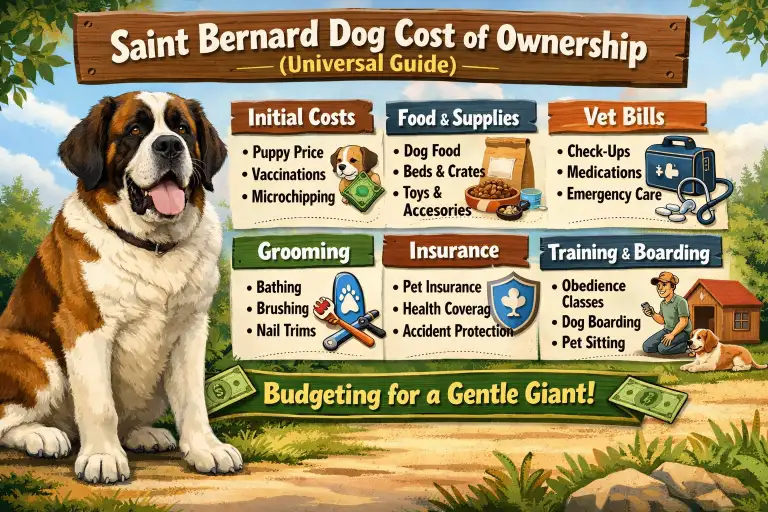
Owning a Saint Bernard is a rewarding experience, but it comes with significant financial responsibilities. These gentle giants are not only large in size but also high-maintenance when it comes to food, health care, and grooming. Many first-time owners underestimate the true cost, leading to unexpected expenses that can quickly add up.
A Saint Bernard’s cost of ownership includes more than just the initial purchase or adoption fee. You need to budget for veterinary care, proper nutrition, grooming, training, insurance, and even hidden costs like emergency care or damage caused by their size and strength. Understanding these expenses upfront can help you plan a realistic budget and ensure that your dog receives the care it deserves throughout its life.
For example, a puppy’s first year will typically cost more than subsequent years because of initial vet visits, vaccinations, spay or neuter surgery, and essential supplies like a crate, bed, and toys designed for a large breed. Adult Saint Bernards may have lower startup costs, but their ongoing expenses, particularly food and medical care, remain higher than average compared to smaller breeds.
By reading this guide, you’ll gain a clear understanding of what it really costs to own a Saint Bernard, from the first-year expenses to lifetime costs, helping you make an informed decision before bringing one of these gentle giants into your home.
One-Time and First-Year Costs for Saint Bernards
Bringing a Saint Bernard into your home involves several one-time and first-year expenses. These costs are higher than many smaller breeds because of their size and specific needs. Knowing these costs ahead of time can help you budget properly and avoid surprises.
Adoption or Purchase Fees
Adopting from a rescue is usually cheaper than buying from a breeder. Rescue fees can range from $300 to $800, while breeders may charge $1,500 to $3,500 for a healthy Saint Bernard puppy. Adult dogs can sometimes cost less, but puppies require more initial care.
Initial Veterinary Care
Your Saint Bernard will need vaccines, a microchip, and possibly spay or neuter surgery. First-year vet expenses typically range from $300 to $800 depending on your location and the services included.
Supplies and Setup
Large dogs need appropriately sized supplies. Items like a large crate, sturdy bed, big bowls, durable toys, and grooming tools add up quickly. Expect to spend $400 to $700 for all essentials.
Training and Socialization
Early training is important, especially for such a large breed. Puppy socialization and basic obedience classes cost around $200 to $500 in the first year.
Here’s a quick table summarizing typical first-year costs:
| Expense Category | Estimated Cost Range (USD) | Notes |
|---|---|---|
| Adoption / Purchase | $300 – $3,500 | Rescue vs breeder, puppy vs adult |
| Initial Vet Care | $300 – $800 | Vaccines, microchip, spay/neuter |
| Supplies & Setup | $400 – $700 | Crate, bed, bowls, toys, grooming tools |
| Training Classes | $200 – $500 | Puppy socialization / obedience |
By planning for these costs, you can ensure your Saint Bernard has a strong start in life without financial stress.
Ongoing Monthly and Annual Expenses
After the first year, Saint Bernards have ongoing costs that you need to plan for every month and year. These include food, vet care, grooming, training, and insurance. Because they are a giant breed, these costs are higher than for smaller dogs.
Food and Nutrition
Saint Bernards eat a lot. On average, they need $100 to $150 per month for high-quality dog food, which adds up to $1,200 to $1,800 per year. Large-breed formulas and supplements for joint health are recommended.
Routine Veterinary Care
Regular check-ups, vaccinations, and preventatives like heartworm, flea, and tick medication typically cost $25 to $50 per month, or $300 to $600 per year.
Grooming and Training
Even though Saint Bernards don’t require professional grooming weekly, brushing and occasional baths are important. Professional grooming can cost $30 to $70 per month depending on your location. Training refreshers or obedience classes may add extra.
Insurance and Licenses
Pet insurance helps cover unexpected health issues. Monthly premiums range from $50 to $120, or $600 to $1,440 per year. Licenses and city fees add a small extra cost of $5 to $10 per month.
Here’s a table to make these monthly and annual costs easy to see:
| Expense Category | Monthly Cost (USD) | Annual Cost (USD) |
|---|---|---|
| Food | $100 – $150 | $1,200 – $1,800 |
| Preventatives & Medications | $20 – $50 | $240 – $600 |
| Routine Vet Visits | $25 – $50 | $300 – $600 |
| Grooming | $30 – $70 | $360 – $840 |
| Insurance | $50 – $120 | $600 – $1,440 |
| Licenses & Fees | $5 – $10 | $60 – $120 |
These monthly and yearly costs show that owning a Saint Bernard is a long-term financial commitment. Planning ahead ensures your dog stays healthy and happy without surprises.
Major Cost Drivers, Variations, and Hidden Expenses
Not all Saint Bernard owners will spend the same amount. Costs can vary depending on your dog’s size, age, health, living situation, and unexpected events. Understanding these cost drivers helps you plan a realistic budget.
Size and Age Differences
Larger and older Saint Bernards may require more food, larger supplies, and additional veterinary care. Puppies have higher first-year costs, while adult dogs have higher ongoing food and medical expenses.
Living Situation
Owning a Saint Bernard in an apartment may mean extra spending on training, indoor-friendly toys, and cleaning supplies. House owners with yards may spend less on indoor maintenance but should still budget for fencing, outdoor shelters, or extra bedding. Multi-dog households increase food and vet costs proportionally.
Breed-Specific Health Issues
Saint Bernards are prone to hip dysplasia, bloat, and heart problems. Emergency vet visits or surgeries can cost $500 to $3,000 or more. Regular screenings and preventative care can help reduce risk but still add to your budget.
Hidden or Unexpected Expenses
Large dogs can accidentally damage furniture, chew items, or require additional bedding and toys. Travel, boarding, or pet-sitting costs should also be considered.
Here’s a table summarizing typical hidden and variable expenses:
| Hidden Expense | Typical Cost (USD) | Notes |
|---|---|---|
| Emergency Vet | $500 – $3,000+ | Surgeries, hospitalization, ICU care |
| Boarding / Pet-sitting | $25 – $50 per day | For vacations or travel |
| Chewed Furniture / Items | $100 – $500+ | Large breed strength can cause damage |
| Dental Care / Teeth Cleaning | $300 – $700 per year | Important for overall health |
| Medications / Supplements | $20 – $100 per month | Joint support, skin or allergy treatments |
By understanding these cost variations, you can avoid surprises and make sure your Saint Bernard receives proper care, no matter their age, size, or health needs.
Budgeting, Smart Saving, and Lifetime Cost Estimates
Owning a Saint Bernard is a long-term financial commitment. Planning your budget carefully helps make sure you can provide proper care without stress. Knowing the lifetime costs also helps you understand what to expect over the dog’s 10–12 year lifespan.
Building a Realistic Budget
Start by adding up first-year costs, then plan for ongoing monthly and annual expenses. Include food, vet care, grooming, training, insurance, and hidden expenses.
Ways to Save Money Without Compromising Care
Buying food in bulk, keeping up with preventative care, and doing some grooming at home can reduce costs. Choosing a reputable insurance plan can also save money on unexpected health bills.
Lifetime Cost Estimates
| Expense Category | Estimated Lifetime Cost (USD) | Notes |
|---|---|---|
| Food | $30,000 – $40,000 | Based on 10–12 year lifespan |
| Veterinary Care | $10,000 – $20,000 | Routine check-ups plus emergencies |
| Grooming | $5,000 – $8,000 | Brushing, baths, occasional professional grooming |
| Insurance | $6,000 – $12,000 | Depending on plan and coverage |
| Supplies, Training & Misc | $5,000 – $10,000 | Beds, crates, toys, training classes, unexpected items |
By budgeting carefully and anticipating both expected and hidden expenses, you can provide a comfortable life for your Saint Bernard while avoiding financial surprises. Planning ahead makes it easier to enjoy the joys of owning a gentle giant without stress.
For more tips on planning for your dog’s expenses and understanding pet ownership costs, visit the ASPCA’s pet care resource page: ASPCA Pet Care.“

Ata Ur Rehman is the founder of Pet Age in Human Years Calculator, an educational platform that provides age conversion charts and lifespan guides for dogs, cats, birds, and other companion animals. His work focuses on helping pet owners understand how animal ages translate into human years using commonly accepted age conversion formulas and published lifespan averages.
The website compiles breed and species lifespan data from kennel clubs, breed organizations, and general animal lifespan studies to present simple and easy-to-understand guides for pet owners worldwide.
This website was created to centralize animal age conversion charts into one easy reference platform for pet owners.