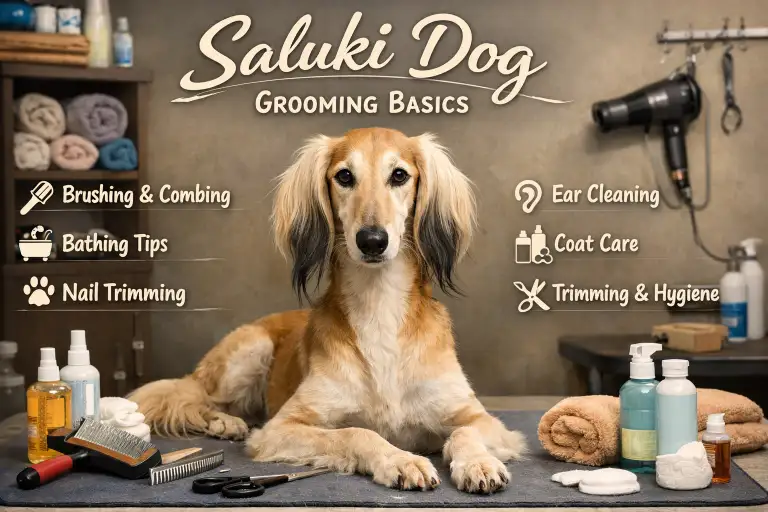
Saluki dog grooming is often described as “easy,” but that description can be misleading for first-time owners. While Salukis are not heavy shedders and don’t have thick, oily coats, they still require consistent, gentle grooming to stay comfortable and healthy. Their fine hair, delicate skin, and athletic build mean that neglect shows quickly—even if the coat looks clean at a glance.
This breed is known for being naturally clean and low-odor, which is why many owners underestimate grooming. In reality, grooming a Saluki is less about frequent bathing and more about routine maintenance, especially brushing, nail care, and monitoring skin and feathering. When done correctly, grooming supports skin health, prevents tangles, reduces breakage in feathered coats, and keeps the dog relaxed and pain-free.
Salukis also differ from many popular breeds in how they tolerate grooming. Their sensitive nature means rough handling, loud dryers, or harsh tools can quickly create stress or resistance. A calm, predictable routine matters just as much as the tools you use.
To set clear expectations, the table below gives a quick, realistic overview of what Saluki grooming actually involves.
Is the Saluki a High-Maintenance Dog to Groom?
| Grooming Factor | What Owners Should Expect |
|---|---|
| Coat type | Fine, silky hair (smooth or feathered), no dense undercoat |
| Shedding level | Low to moderate, year-round light shedding |
| Odor | Very low when properly maintained |
| Brushing needs | Light but regular (weekly minimum) |
| Bathing frequency | Infrequent (every 6–10 weeks unless dirty) |
| Matting risk | Low overall, higher in feathered areas |
| Time commitment | Short sessions, consistency matters more than length |
| Skill level | Beginner-friendly with gentle handling |
Understanding these basics helps prevent two common mistakes: over-grooming (too many baths, harsh products) and under-grooming (ignoring brushing, nails, and skin checks). Saluki grooming is about balance—doing just enough, the right way, at the right intervals.
Saluki Coat Types and Grooming Requirements (Smooth vs Feathered)
Salukis come in two coat types, and knowing which one your dog has makes grooming much easier. Both coats are fine, soft, and light, but they behave differently when it comes to brushing, matting, and upkeep.
Some Salukis have a smooth coat, which is short and lies flat against the body. Others have a feathered coat, where longer hair grows on the ears, tail, back of the legs, and sometimes the chest. These feathered areas need extra care even though the dog may still look “low maintenance.”
Smooth vs Feathered Saluki Coat Comparison
| Coat Feature | Smooth Saluki | Feathered Saluki |
|---|---|---|
| Hair length | Very short and flat | Short body hair with longer feathering |
| Shedding | Light, year-round | Light to moderate |
| Matting risk | Very low | Low overall, higher in feathered areas |
| Brushing needs | Once a week | 2–3 times per week |
| Special focus areas | Neck, hips, thighs | Ears, tail, legs, armpits |
| Grooming difficulty | Very easy | Easy, but needs attention to detail |
Smooth-coated Salukis are among the easiest dogs to groom. A gentle brush once a week removes loose hair and keeps the coat shiny. Feathered Salukis still have light grooming needs, but ignoring the feathering can lead to tangles, especially behind the ears and under the legs.
Common Matting Areas in Feathered Salukis
| Body Area | Why Mats Form Here | How to Prevent It |
|---|---|---|
| Behind the ears | Friction from movement and collars | Light brushing 2–3 times a week |
| Back of the legs | Fine hair rubs together when running | Quick checks after walks |
| Under the arms | Moisture and movement | Gentle brushing, keep dry |
| Tail feathering | Hair tangles when lying down | Finger-combing before full brushing |
Salukis do not have a thick undercoat, so shaving is unnecessary and can damage coat texture. Their fine hair also means they do not trap heat the way double-coated breeds do. Grooming should protect the natural coat, not remove it.
How often you groom a Saluki depends more on coat type and lifestyle than on how “dirty” the dog looks. Even clean dogs still need brushing to prevent knots, remove loose hair, and keep skin healthy.
Saluki Grooming Routine at Home (Brushing, Bathing, and Tools)
Grooming a Saluki at home does not need to be hard or time-consuming. The key is short, regular sessions instead of long grooming days. Most Salukis do best with calm handling, soft tools, and a simple routine they can get used to.
Saluki Grooming Frequency Guide
| Grooming Task | Smooth Coat | Feathered Coat |
|---|---|---|
| Brushing | Once per week | 2–3 times per week |
| Bathing | Every 6–10 weeks | Every 6–8 weeks |
| Nail trimming | Every 2–4 weeks | Every 2–4 weeks |
| Ear checks | Weekly | Weekly |
| Skin check | Weekly | Weekly |
Even if your Saluki looks clean, brushing is still important. It removes loose hair, spreads natural oils, and helps you notice skin problems early.
Recommended Grooming Tools for Salukis
| Tool | What It’s Used For | Notes |
|---|---|---|
| Soft slicker brush | Light brushing and feather care | Use gentle pressure |
| Pin brush | Daily brushing for feathered coats | Helps prevent tangles |
| Metal comb | Checking for small knots | Use after brushing |
| Dog shampoo (mild) | Bathing | Avoid strong scents |
| Towel | Drying after baths | Better than hot air |
| Low-heat dryer (optional) | Faster drying | Keep heat very low |
Salukis do not need heavy deshedding tools or thick undercoat rakes. These tools can pull the hair and irritate the skin.
Bathing Guidelines for Salukis
| Bathing Step | What to Do |
|---|---|
| How often | Only when dirty or every 6–10 weeks |
| Water temperature | Warm, not hot |
| Shampoo type | Mild, dog-only shampoo |
| Washing method | Gentle hand massage |
| Rinsing | Rinse very well to avoid itching |
| Drying | Towel dry or low heat only |
Too many baths can dry out a Saluki’s skin. If your dog smells clean and looks fine, a bath is usually not needed yet.
Feathered areas should never be cut short or shaved. Light brushing and gentle cleaning keep them neat without damaging the coat.
Nail, Ear, Dental, and Skin Care for Salukis
Even though Salukis have low grooming needs, basic care tasks cannot be skipped. Nails, ears, teeth, and skin all affect comfort and health. These areas are easy to manage at home if you check them often and act early.
Saluki Maintenance Checklist
| Care Task | How Often | Why It Matters |
|---|---|---|
| Nail trimming | Every 2–4 weeks | Long nails cause pain and affect walking |
| Ear check | Once a week | Prevents wax buildup and infections |
| Ear cleaning | As needed | Keeps ears dry and healthy |
| Teeth brushing | 2–3 times per week | Prevents bad breath and gum disease |
| Skin check | Weekly | Catches rashes, dryness, or sores early |
Nail Care for Salukis
Salukis have long, narrow feet and fast-growing nails. If you hear clicking on the floor, the nails are too long. Long nails can change how your dog walks and may cause joint pain over time.
Trim small amounts at a time. If you are unsure, ask a groomer to show you how.
Ear Care for Salukis
Salukis have drop ears, which means air does not flow easily inside. This can trap moisture and wax.
Ear Care Safety Tips
| What to Do | What to Avoid |
|---|---|
| Use dog-safe ear cleaner | Never use alcohol or vinegar |
| Clean only the visible area | Do not push tools deep inside |
| Dry ears after baths | Do not leave ears wet |
Redness, bad smell, or head shaking can mean an ear infection and should be checked by a vet.
Dental Care Basics
Small problems in the mouth can lead to bigger health issues. Salukis do best with soft toothbrushes and dog-safe toothpaste. Chews can help, but they do not replace brushing.
Skin and Coat Warning Signs
| Sign | Possible Cause | What to Do |
|---|---|---|
| Dry flakes | Over-bathing or dry air | Reduce baths, use mild shampoo |
| Red skin | Allergies or irritation | Monitor and call vet if it spreads |
| Hair loss spots | Licking or skin infection | Vet check needed |
| Bad smell | Skin or ear issue | Do not ignore |
Healthy skin should feel smooth, not oily or flaky. Early checks make a big difference.
Professional Grooming, Seasonal Care, and Common Saluki Grooming Mistakes
Most Salukis can be groomed at home, but there are times when extra help is useful. Knowing when to handle grooming yourself and when to visit a professional can save time, stress, and discomfort for your dog.
Home Grooming vs Professional Grooming for Salukis
| Grooming Task | Can Be Done at Home | Professional Help Recommended |
|---|---|---|
| Brushing | Yes | No |
| Bathing | Yes | Optional |
| Nail trimming | Yes (with care) | Yes if unsure |
| Mat removal | Small tangles only | Yes for heavy mats |
| Ear cleaning | Yes | Yes if infection is suspected |
| Full grooming session | No | Yes, if coat is neglected |
Professional groomers are helpful if your Saluki becomes anxious, develops mats, or needs nail trimming you’re not comfortable doing. Choose a groomer who understands sighthounds and gentle handling.
Seasonal Grooming Needs for Salukis
| Season | What Changes | What Owners Should Do |
|---|---|---|
| Spring | Light increase in shedding | Brush more often |
| Summer | Coat stays thin | Avoid shaving, use gentle baths |
| Fall | Coat settles | Return to normal routine |
| Winter | Dry skin risk | Bathe less, check skin often |
Shaving a Saluki does not help with heat and can damage the coat. Their fine hair helps protect the skin.
Common Saluki Grooming Mistakes
| Mistake | Why It’s a Problem | Better Choice |
|---|---|---|
| Over-bathing | Dries skin and causes itching | Bathe only when needed |
| Using harsh brushes | Breaks fine hair | Use soft brushes only |
| Ignoring feathering | Leads to mats | Light brushing often |
| Skipping nail trims | Causes pain and posture issues | Trim every few weeks |
| Shaving the coat | Damages hair texture | Keep coat natural |
Grooming should feel calm and gentle. If your Saluki shows stress, stop and try again later.
When to Get Extra Help
Call a groomer or vet if you notice:
- Thick mats you cannot brush out
- Red, sore, or smelly skin
- Bleeding nails or broken nails
- Strong ear odor or discharge
- Sudden coat or behavior changes
These signs mean normal grooming may not be enough.
For more breed-specific information, coat standards, and care guidance, you can also visit the official website of the Saluki Club of America, which offers detailed resources for Saluki owners and enthusiasts.

Ata Ur Rehman is the founder of Pet Age in Human Years Calculator, an educational platform that provides age conversion charts and lifespan guides for dogs, cats, birds, and other companion animals. His work focuses on helping pet owners understand how animal ages translate into human years using commonly accepted age conversion formulas and published lifespan averages.
The website compiles breed and species lifespan data from kennel clubs, breed organizations, and general animal lifespan studies to present simple and easy-to-understand guides for pet owners worldwide.
This website was created to centralize animal age conversion charts into one easy reference platform for pet owners.