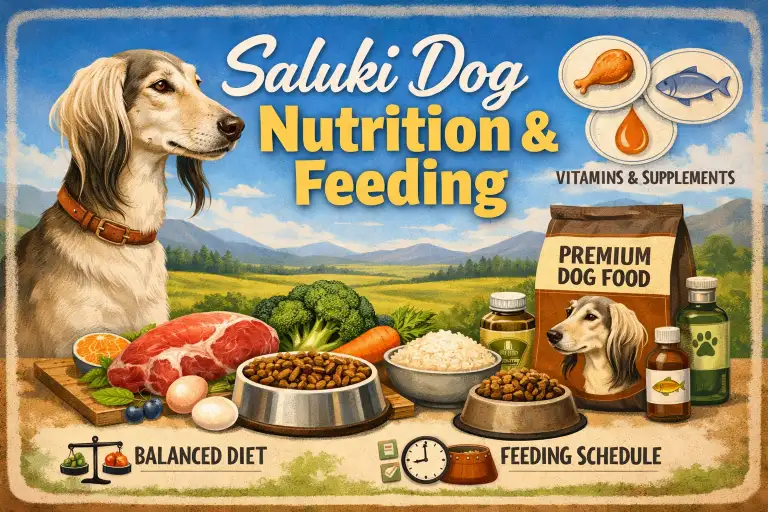
Salukis are not built like most dogs, and their nutrition should reflect that. As a lean, athletic sighthound developed for endurance and speed, the Saluki has a naturally low body-fat percentage, fine bone structure, and a metabolism that uses calories efficiently. Feeding them like a stockier or slower breed often leads to problems such as muscle loss, low energy, digestive upset, or unnecessary weight gain.
This guide is designed to help Saluki owners understand what to feed, how much to feed, and why nutrition matters so much for this breed. Whether you live with a calm companion Saluki or an active dog involved in lure coursing or running, the goal is the same: maintain lean muscle, steady energy, healthy digestion, and long-term joint and organ health.
One of the biggest challenges with Saluki nutrition is perception. Many healthy Salukis look “too thin” to owners who are unfamiliar with sighthounds. Visible muscle definition, a tucked waist, and easily felt ribs are normal for the breed. Overfeeding in an attempt to “fatten them up” can quietly lead to digestive stress, joint strain, and reduced athletic performance.
Good nutrition for a Saluki supports:
- Lean muscle maintenance without excess weight
- Sustained energy rather than short bursts followed by fatigue
- Digestive stability in a breed that can be sensitive to diet changes
- Healthy skin, coat, and joints over a long lifespan
Poor-quality diets, inconsistent feeding, or excessive treats tend to show up quickly in Salukis. Owners often notice skipped meals, loose stools, or fluctuating weight when the diet doesn’t suit the dog’s physiology. That’s why understanding the basics of Saluki nutrition from the start is essential, not optional.
Nutritional Requirements of a Saluki (Protein, Fat, Carbs, Vitamins)
Salukis need a balanced diet, but the balance is slightly different from many other dog breeds. Because they are lean, active, and naturally slim, their bodies rely more on quality nutrients than on large food portions. Feeding the right nutrients helps keep their muscles strong, energy steady, and digestion calm.
A Saluki’s food should focus on good protein first, followed by healthy fats, then easy-to-digest carbohydrates. Vitamins and minerals support bones, joints, skin, and overall health, but more is not always better.
What nutrients matter most for Salukis
| Nutrient | Recommended Range | Why It Matters for Salukis |
|---|---|---|
| Protein | 22–30% | Builds and maintains lean muscle |
| Fat | 12–18% | Provides energy without excess weight |
| Carbohydrates | Moderate | Supports digestion and steady energy |
| Omega-3 fats | Small but regular | Helps joints, skin, and coat |
| Calcium & Phosphorus | Balanced | Important for puppy growth and bone health |
Protein: the most important nutrient
Salukis need high-quality animal protein to maintain muscle. Chicken, turkey, fish, lamb, and eggs are all good sources. Low-protein foods may cause muscle loss, weakness, or poor coat condition over time.
Puppies need more protein for growth, while adult Salukis need protein to keep muscle strong. Seniors still need protein, just with careful portion control.
Fat: energy without bulk
Healthy fats give Salukis fuel for daily activity and endurance. Fat also helps with vitamin absorption and coat health. Too little fat can lead to low energy, while too much can cause unwanted weight gain, especially in less active Salukis.
Carbohydrates: helpful but not the main focus
Carbohydrates like rice, oats, and sweet potatoes can support digestion and gut health. They should never replace protein as the main ingredient. Salukis generally do better with simple, easy-to-digest carbs rather than heavy fillers.
Vitamins, minerals, and supplements
Most complete dog foods already contain the vitamins and minerals Salukis need. Extra supplements are usually unnecessary unless recommended by a vet. Over-supplementing, especially calcium in puppies, can do more harm than good.
How Much to Feed a Saluki (Portion Size, Calories, Feeding Schedule)
Knowing how much to feed a Saluki is just as important as choosing the right food. Salukis are naturally slim dogs, so feeding too much can cause weight gain, while feeding too little can lead to low energy and muscle loss. The goal is to keep your Saluki lean, active, and strong, not skinny or overweight.
Saluki feeding amounts depend on body weight, age, and activity level. A calm house Saluki needs fewer calories than a dog that runs, trains, or does lure coursing.
Daily calorie needs for Salukis
| Saluki Weight | Low Activity | Moderate Activity | High Activity |
|---|---|---|---|
| 40–45 lbs | 900–1,050 kcal | 1,100–1,250 kcal | 1,300–1,500 kcal |
| 50–55 lbs | 1,050–1,200 kcal | 1,250–1,450 kcal | 1,500–1,700 kcal |
| 60–65 lbs | 1,200–1,400 kcal | 1,450–1,650 kcal | 1,700–1,950 kcal |
These numbers are starting points, not exact rules. Some Salukis burn calories faster than others. Always adjust based on your dog’s body shape and energy level.
Feeding frequency by age
| Life Stage | Meals Per Day | Helpful Tips |
|---|---|---|
| Puppy | 3–4 meals | Supports growth and digestion |
| Adult | 2 meals | Keeps energy steady |
| Senior | 2 smaller meals | Helps digestion and muscle health |
Feeding smaller meals more often can help prevent stomach upset and energy drops.
How to tell if your Saluki is eating the right amount
A healthy Saluki should:
- Have a visible waist when viewed from above
- Have ribs that are easy to feel but not sharply sticking out
- Show good energy without acting hungry all the time
Many owners worry their Saluki is “too thin,” but this breed is meant to look lean. If ribs are clearly sticking out or your dog feels weak, you may need to increase food slightly. If the waist disappears, it’s time to reduce portions.
Adjusting portions safely
Change food amounts slowly. Increase or decrease portions by small amounts over 7–10 days. Sudden changes can upset a Saluki’s stomach.
Best Dog Food for Salukis (Kibble, Raw, Fresh, Treats, Safe Foods)
There is no single “perfect” food for every Saluki. The best dog food is one that fits your Saluki’s body, activity level, and digestion, while also being easy for you to feed every day. Salukis usually do best on simple, high-quality diets without too many fillers or sudden changes.
Below is a clear look at the most common food types and how they work for Salukis.
Dog food types and how they compare for Salukis
| Food Type | Pros | Cons | Best For |
|---|---|---|---|
| Dry kibble | Easy to store, affordable, balanced | Quality varies a lot | Most Saluki owners |
| Wet food | Tasty, adds moisture | Higher cost, softer teeth cleaning | Picky eaters |
| Fresh food | Easy to digest, high quality | Expensive, needs fridge | Sensitive stomachs |
| Raw food | High protein, small stools | Safety risks, hard to balance | Experienced owners only |
| Freeze-dried | Convenient raw option | Costly | Travel or rotation |
| Homemade | Full control of ingredients | Can be unbalanced | Only with vet guidance |
Dry kibble is the most common choice and works well when it is high in animal protein and made for active dogs. Fresh or gently cooked food can help Salukis with digestion problems, but cost and storage are important to consider.
Raw diets can work for some Salukis, but they carry risks like bacteria and nutrient imbalance. They should only be used by owners who fully understand safe handling and proper diet balance.
Treats and snacks for Salukis
Treats should make up no more than 10% of daily calories. Salukis respond well to small, soft treats during training. Too many treats can quickly cause weight gain in this lean breed.
Good treat choices include:
- Small pieces of cooked chicken or turkey
- Plain eggs
- Low-calorie commercial training treats
Avoid giving large biscuits or high-fat table scraps often.
Safe and unsafe human foods for Salukis
| Safe Foods (Plain & Cooked) | Unsafe or Toxic Foods |
|---|---|
| Chicken | Chocolate |
| Turkey | Grapes & raisins |
| Eggs | Onions & garlic |
| Rice | Xylitol (sweetener) |
| Sweet potatoes | Alcohol |
| Carrots | Cooked bones |
Always introduce new foods slowly and watch for stomach upset.
Common Saluki Feeding Problems, Special Diets, and Owner FAQs
Even with good food and correct portions, feeding problems can still happen. Salukis are sensitive dogs, both in body and behavior, so small diet mistakes often show up quickly. The good news is that most feeding issues are easy to fix once you understand the cause.
Common Saluki feeding problems and simple fixes
| Problem | Likely Cause | What You Can Do |
|---|---|---|
| Skips meals | Stress, boredom, too many treats | Feed on a schedule, limit snacks |
| Loose stool | Fast food change, rich food | Switch foods slowly over 7–10 days |
| Looks too thin | High metabolism, low calories | Increase portions slightly |
| Weight gain | Overfeeding, excess treats | Measure food, reduce treats |
| Low energy | Poor-quality food | Choose higher protein diet |
Special diet needs in Salukis
Some Salukis need special diets due to health or lifestyle.
- Sensitive stomachs may do better on simple foods with fewer ingredients
- Food allergies often improve with limited-ingredient or novel-protein diets
- Active or sporting Salukis may need more calories and fat
- Less active or senior Salukis usually need smaller portions
Never start a strict or homemade diet without guidance. Poorly balanced diets can cause serious health problems over time.
Switching food the safe way
Salukis do not handle fast food changes well. Always switch foods slowly:
- Days 1–3: 75% old food, 25% new food
- Days 4–6: 50% old, 50% new
- Days 7–10: 25% old, 75% new
- Day 11: 100% new food
If loose stool or vomiting happens, slow the process down.
Common owner questions
Is my Saluki too thin?
Most healthy Salukis look lean. You should feel the ribs easily but not see sharp bones.
Why does my Saluki skip breakfast?
Many Salukis prefer one main meal later in the day. This is usually normal.
Do Salukis need grain-free food?
Not usually. Many Salukis digest grains well, and grain-free diets are not needed unless advised by a vet.
When should I talk to a vet or nutritionist?
- Ongoing weight loss or gain
- Chronic loose stool or vomiting
- Poor growth in puppies
- Big diet changes for medical reasons
For general canine nutrition standards and feeding guidelines used by pet food manufacturers, you can review the official recommendations provided by the Association of American Feed Control Officials (AAFCO) at https://www.aafco.org.

Ata Ur Rehman is the founder of Pet Age in Human Years Calculator, an educational platform that provides age conversion charts and lifespan guides for dogs, cats, birds, and other companion animals. His work focuses on helping pet owners understand how animal ages translate into human years using commonly accepted age conversion formulas and published lifespan averages.
The website compiles breed and species lifespan data from kennel clubs, breed organizations, and general animal lifespan studies to present simple and easy-to-understand guides for pet owners worldwide.
This website was created to centralize animal age conversion charts into one easy reference platform for pet owners.