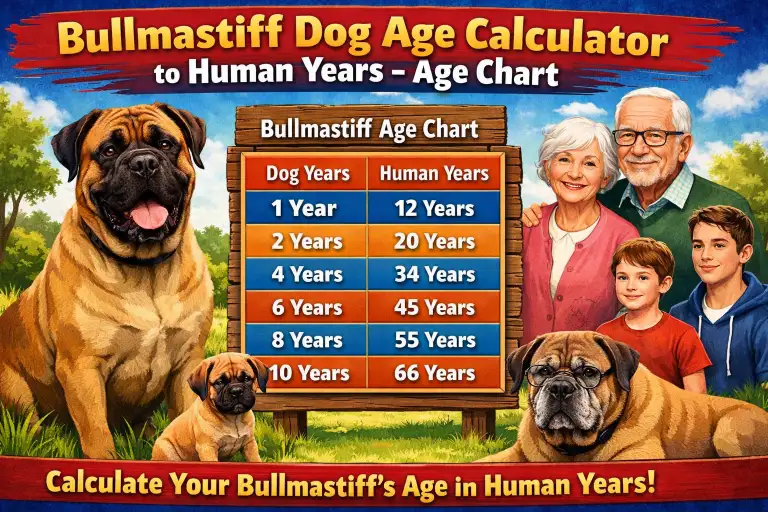
Bullmastiff Age Calculator: Convert Dog Years to Human Years
If you’ve ever wondered “How old is my Bullmastiff in human years?”, you’re not alone. Large and giant breeds like the Bullmastiff age very differently from both humans and smaller dogs, which makes simple rules misleading.
A Bullmastiff age calculator converts your dog’s actual age into an equivalent human age using size-aware and science-backed aging models. This gives you a far more realistic picture of where your Bullmastiff is in their life — whether they’re still developing, in their prime, or entering their senior years.
Unlike the outdated “1 dog year = 7 human years” rule, Bullmastiffs:
- Mature very quickly in the first two years
- Reach adulthood earlier than humans
- Show senior changes sooner due to their large body size and faster biological aging
This calculator is designed specifically for Bullmastiffs, taking into account:
- Large-breed growth patterns
- Shorter average lifespan compared to small dogs
- Accelerated aging after adulthood
Use the calculator to get an instant estimate, then refer to the age chart below to understand what that age means for your dog’s health, behavior, and care needs.
Bullmastiff Age to Human Years Chart (Puppy to Senior)
Sometimes you don’t want to calculate — you just want a clear answer. A Bullmastiff age-to-human-years chart lets you quickly see how your dog’s age compares to a human’s life stage.
Bullmastiffs age rapidly during puppyhood, slow slightly during adulthood, and then age faster again as seniors. This means a one-year difference in dog age can represent several human years, especially later in life.
In the chart below, you’ll see:
- Bullmastiff age in years
- The estimated equivalent human age
- Whether your dog is considered a puppy, adult, or senior
- What’s typically happening physically at that stage
This makes it easier to understand questions like:
- Is my 5-year-old Bullmastiff middle-aged?
- When does a Bullmastiff become a senior?
- How old is an 8-year-old Bullmastiff in human years?
The chart is especially useful for:
- New Bullmastiff owners
- Planning age-appropriate care
- Understanding when to adjust exercise, nutrition, and vet visits
Why Bullmastiffs Age Faster Than Humans (And Why the 7-Year Rule Is Wrong)
Many people still believe that 1 dog year equals 7 human years, but this rule is not accurate at all — especially for large dogs like Bullmastiffs.
Bullmastiffs grow very fast in their early years. A one-year-old Bullmastiff is already close to a teenager in human age. After that, their aging slows for a short time, then speeds up again as they get older. Humans do not age this way, which is why a simple number like “7” does not work.
Large dogs age faster mainly because:
- Their bodies grow bigger in a short time
- Their organs work harder to support that size
- Big breeds usually have shorter lifespans than small dogs
This is why a Bullmastiff may become a senior at an age when a smaller dog is still considered middle-aged.
The table below shows how the old rule compares to modern, size-based aging.
Dog Aging Comparison Table
| Method Used | How It Works | Why It Is Inaccurate for Bullmastiffs |
|---|---|---|
| 7-Year Rule | Every dog year × 7 | Ignores size, growth speed, and lifespan |
| Size-Based Aging | Faster aging in early years | Still too simple for large breeds |
| Modern Model | Fast early aging, slower adult years, faster senior aging | Best fit for Bullmastiffs |
Because Bullmastiffs are a large, heavy breed, their bodies age faster than humans and faster than small dogs. This is why a 6- or 7-year-old Bullmastiff is often already considered a senior.
Understanding this helps owners:
- Adjust care at the right time
- Watch for aging signs earlier
- Avoid pushing older dogs too hard
Bullmastiff Life Stages Explained: Puppy, Adult, Senior
Bullmastiffs go through life stages faster than many other dogs. Because they are a large and heavy breed, their bodies grow quickly and age sooner. Knowing your Bullmastiff’s life stage helps you give the right care at the right time.
A Bullmastiff may look strong and healthy on the outside, but aging can happen inside the body before you notice it. This is why it’s important to understand what each stage means, not just how old your dog is in years.
Below is a simple table that explains Bullmastiff life stages and what owners can expect.
Bullmastiff Life Stages Table
| Life Stage | Age Range (Years) | What You May Notice | Owner Focus |
|---|---|---|---|
| Puppy | 0–2 years | Fast growth, high energy, clumsy movement | Training, social skills, joint protection |
| Adult | 3–6 years | Strong body, calmer behavior, peak strength | Healthy weight, steady exercise |
| Senior | 7+ years | Slower movement, more rest, joint stiffness | Comfort, vet checks, gentle activity |
Many Bullmastiffs are already considered seniors by age 7. This is normal for the breed and does not mean your dog is unhealthy. It simply means their care needs start to change.
Signs a Bullmastiff may be entering senior years include:
- Getting tired faster on walks
- Stiffness when standing up
- Sleeping more than usual
- Less interest in rough play
Catching these changes early helps improve comfort and quality of life.
How to Help a Bullmastiff Age Healthily and Live Longer
Bullmastiffs do not live as long as small dogs, but good care can help them stay comfortable and happy as they age. Small changes made early can make a big difference later in life.
Because Bullmastiffs are heavy dogs, their joints, heart, and muscles work hard every day. As they get older, they need more support, not more pressure.
Here are simple ways owners can help their Bullmastiff age better:
- Keep body weight healthy
- Avoid hard jumping and rough exercise
- Visit the vet regularly
- Notice small changes early
The table below shows what to focus on at different ages.
Bullmastiff Healthy Aging Care Table
| Age Range | Main Health Focus | Vet Care Needs | At-Home Care Tips |
|---|---|---|---|
| 0–2 years | Proper growth, joints | Puppy exams, vaccines | Controlled exercise, good food |
| 3–6 years | Weight and strength | Yearly checkups | Daily walks, mental play |
| 7+ years | Joints, heart, comfort | Senior exams, blood tests | Soft bedding, gentle walks |
Simple signs that mean your Bullmastiff may need extra care include:
- Trouble standing or lying down
- Heavy breathing after short walks
- Weight gain without eating more
- Less interest in activity
Never wait too long to ask your vet for advice. Early care helps prevent pain and keeps your dog comfortable for longer.
For official breed information, health background, and general care guidance, you can also review the Bullmastiff breed profile from the American Kennel Club: https://www.akc.org/dog-breeds/bullmastiff/