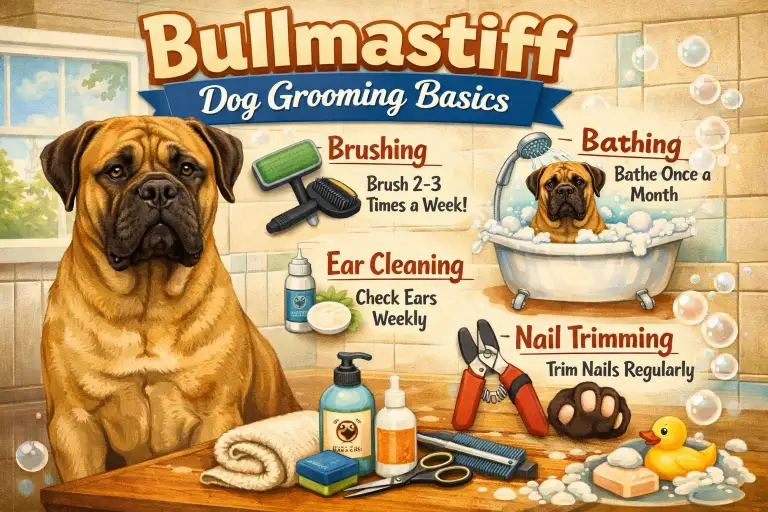
Bullmastiffs may have short coats, but they are not low-maintenance dogs when it comes to grooming. Their size, skin type, shedding patterns, and tendency toward odor mean that basic grooming plays a real role in comfort, hygiene, and long-term health.
This guide is designed to help Bullmastiff owners understand:
- What grooming a Bullmastiff actually involves
- Which tasks matter most (and which don’t)
- How often grooming should realistically be done at home
Regular grooming helps remove loose hair, distribute natural oils, reduce odor, prevent skin problems, and make it easier to spot issues early — especially important for a powerful, heavy breed that may not tolerate handling if grooming is left too long between sessions.
Despite their smooth appearance, Bullmastiffs benefit from consistent, simple routines rather than occasional, heavy grooming sessions.
Bullmastiff Grooming Overview
| Grooming Task | Why It Matters | Difficulty Level |
|---|---|---|
| Brushing | Controls shedding, improves skin health | Easy |
| Bathing | Reduces odor, removes dirt and allergens | Easy–Moderate |
| Nail trimming | Prevents joint strain and posture issues | Moderate |
| Ear cleaning | Helps prevent infections | Easy |
| Dental care | Reduces plaque and bad breath | Moderate |
This overview reflects what most Bullmastiff owners actually need to manage at home — no fancy trims, but consistent basics.
Bullmastiff Coat Type, Shedding, and Skin Care Needs
Bullmastiffs have a short, dense, close-lying coat that feels smooth to the touch but sheds more than many owners expect. The coat itself is low-matting, but the skin underneath requires attention, especially in a breed prone to sensitivities, allergies, and fold-related issues.
Because the coat is short:
- Loose hair sheds year-round rather than tangling
- Dirt and oil sit closer to the skin
- Over-bathing can dry the skin quickly
Bullmastiff Coat Characteristics
| Coat Feature | What Owners Notice | Grooming Implication |
|---|---|---|
| Short, dense coat | Hair sticks to furniture and clothes | Regular brushing reduces shedding |
| Minimal undercoat | No matting, but visible shedding | Gentle tools work best |
| Tight skin with folds | Odor and irritation in warm areas | Skin checks are important |
| Natural oils | Coat can smell “doggy” quickly | Avoid over-bathing |
Bullmastiff Shedding Expectations
| Time of Year | Shedding Level | Best Grooming Approach |
|---|---|---|
| Spring | Moderate to heavy | Brush 2–3 times weekly |
| Summer | Moderate | Weekly brushing |
| Fall | Moderate to heavy | Increase brushing frequency |
| Winter | Light to moderate | Weekly maintenance |
Shedding in Bullmastiffs is normal and unavoidable, but it becomes far more manageable with consistent brushing. Skipping grooming often leads to stronger odor, more hair around the home, and increased skin irritation.
Short coats also mean the skin is more exposed to:
- Environmental allergens
- Dry air and harsh shampoos
- Irritation from poor-quality grooming products
How to Groom a Bullmastiff at Home (Simple Routine)
Grooming a Bullmastiff at home does not need to be hard or time-consuming. The key is doing small tasks often, instead of waiting too long and trying to do everything at once. Bullmastiffs are large, strong dogs, so calm handling and short sessions work best.
Most owners can manage basic grooming at home with a simple routine that focuses on brushing, bathing, drying, and quick body checks.
Bullmastiff Grooming Frequency Guide
| Grooming Task | How Often | Helpful Notes |
|---|---|---|
| Brushing | 1–2 times per week | More often during shedding seasons |
| Bathing | Every 6–8 weeks | Too much bathing can dry the skin |
| Wipe skin folds | Weekly | Helps reduce odor and irritation |
| Full body check | Weekly | Look for bumps, redness, or sores |
Keeping to this schedule helps control shedding, smell, and skin problems without stressing the dog.
At-Home Bullmastiff Grooming Routine
| Step | What to Do | Common Mistakes to Avoid |
|---|---|---|
| Brushing | Use a soft brush and gentle strokes | Pressing too hard or brushing too fast |
| Bathing | Use warm water and dog shampoo | Using human shampoo |
| Rinsing | Rinse fully until water runs clear | Leaving soap on the skin |
| Drying | Towel dry first, then air dry | Using very hot air |
| Final check | Look at skin, ears, paws, and nails | Skipping this step |
Brushing should be calm and slow. Bullmastiffs do best when grooming feels relaxed, not rushed. Many dogs enjoy brushing once they get used to it.
When bathing, always use dog-safe shampoo. Bullmastiff skin can dry out easily, so bathing too often or using harsh products can cause itching and redness. After the bath, drying well is important, especially around the neck and skin folds where moisture can get trapped.
If your Bullmastiff dislikes baths, keep sessions short and calm. A few minutes done often is better than one long, stressful bath.
Essential Bullmastiff Grooming Tools and Hygiene Care
Using the right tools makes grooming a Bullmastiff much easier and safer. Because this breed has sensitive skin and a heavy body, the wrong tools or poor hygiene care can quickly cause problems like sore paws, cracked nails, ear infections, or bad breath.
You do not need many tools, but the ones you use should be made for dogs, not people.
Best Grooming Tools for Bullmastiffs
| Tool | What It Is Used For | Why It Works for Bullmastiffs |
|---|---|---|
| Soft bristle brush | Removing loose hair and dirt | Gentle on short, sensitive coats |
| Rubber grooming brush | Extra shedding control | Safe and comfortable for skin |
| Dog shampoo (gentle) | Cleaning coat and skin | Protects natural skin oils |
| Large towel | Drying after baths | Safer than hot dryers |
| Nail clippers or grinder | Trimming nails | Helps support joints and posture |
Avoid sharp brushes, harsh shampoos, or tools meant for long or curly coats. These can irritate Bullmastiff skin.
Hygiene Care Frequency for Bullmastiffs
| Care Area | How Often | Why It Matters |
|---|---|---|
| Nails | Every 3–4 weeks | Long nails can cause pain and limping |
| Ears | Every 1–2 weeks | Helps prevent infections |
| Teeth | 2–3 times per week | Reduces plaque and bad breath |
| Skin folds | Weekly | Prevents odor and irritation |
Nail care is very important for Bullmastiffs. Because they are heavy dogs, long nails can change how they walk and put stress on their joints. If you hear nails clicking on the floor, they are too long.
Ear cleaning should be gentle. Only clean the outer ear using a dog ear cleaner and soft cloth. Never push anything deep into the ear.
Dental care is often skipped, but Bullmastiffs can build plaque quickly. Even brushing a few times a week can make a big difference.
Skin folds, especially around the neck and face, should be checked often. Keeping these areas clean and dry helps prevent redness and bad smells.
Bullmastiff Grooming Mistakes, FAQs, and When to See a Professional
Many grooming problems in Bullmastiffs happen because of simple mistakes, not lack of care. Knowing what to avoid helps keep your dog comfortable and healthy.
Common Bullmastiff Grooming Mistakes
| Mistake | Why It Is a Problem | What to Do Instead |
|---|---|---|
| Bathing too often | Dries the skin and causes itching | Bathe every 6–8 weeks |
| Using human shampoo | Upsets dog skin balance | Use gentle dog shampoo |
| Skipping nail trims | Causes pain and joint stress | Trim every 3–4 weeks |
| Shaving the coat | Can damage skin and coat | Brush regularly instead |
| Ignoring skin folds | Leads to odor and infection | Clean and dry weekly |
Short coats do not protect Bullmastiffs from skin problems. Over-bathing and shaving can make things worse, not better.
Home Grooming vs Professional Grooming
| Grooming Task | Home or Professional | Why |
|---|---|---|
| Brushing | Home | Easy and safe |
| Bathing | Home or Professional | Depends on dog size and comfort |
| Nail trimming | Either | Some dogs resist at home |
| Deep skin issues | Professional or Vet | Needs expert care |
| Severe shedding | Professional | Strong tools and experience help |
Professional groomers are helpful if your Bullmastiff is hard to handle, very large, or has skin problems. Vets should be seen if you notice sores, hair loss, strong smell, or constant scratching.
Common Bullmastiff Grooming Questions
| Question | Simple Answer |
|---|---|
| Do Bullmastiffs need grooming? | Yes, regular basic care |
| Are Bullmastiffs easy to groom? | Yes, with a simple routine |
| Do Bullmastiffs shed a lot? | Moderate, year-round |
| Can I shave my Bullmastiff? | No, it can harm the skin |
| Why does my Bullmastiff smell? | Skin oils, folds, or infrequent grooming |
Watching your dog during grooming helps you notice changes early. Red skin, bumps, bad smells, or behavior changes are signs something may be wrong.
Grooming is also a good bonding time. Calm, gentle handling builds trust and makes future grooming easier.
For more breed-specific guidance and official care recommendations, you can also review the Bullmastiff breed information provided by the American Kennel Club, which includes general coat care and health considerations for Bullmastiffs.

Ata Ur Rehman is the founder of Pet Age in Human Years Calculator, an educational platform that provides age conversion charts and lifespan guides for dogs, cats, birds, and other companion animals. His work focuses on helping pet owners understand how animal ages translate into human years using commonly accepted age conversion formulas and published lifespan averages.
The website compiles breed and species lifespan data from kennel clubs, breed organizations, and general animal lifespan studies to present simple and easy-to-understand guides for pet owners worldwide.
This website was created to centralize animal age conversion charts into one easy reference platform for pet owners.