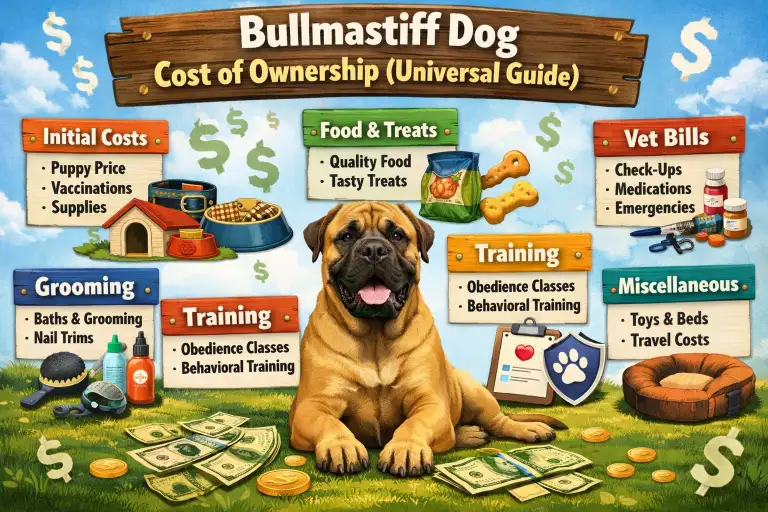
Owning a Bullmastiff is a long-term financial commitment that goes far beyond the initial purchase price. This is a powerful, large guardian breed with high food intake, higher-than-average veterinary exposure, and size-driven expenses that many first-time owners underestimate.
Most people searching for “Bullmastiff cost of ownership” are really asking three questions:
- How much does a Bullmastiff cost in the first year?
- What does it cost per month and per year after that?
- Is this breed realistically affordable long term?
The short answer: Bullmastiffs are not cheap dogs to own, and their costs are closer to other mastiff-type breeds than to average large dogs like Labradors or Boxers.
The biggest cost surprises usually come from:
- Large-breed food consumption
- Veterinary care (especially emergencies and anesthesia-based procedures)
- Insurance premiums or lack of coverage
- Replacing heavy-duty supplies damaged by a strong, growing dog
At a high level, most Bullmastiff owners should expect:
- A very expensive first year, especially with a puppy
- Consistently high monthly costs compared to medium breeds
- Significant lifetime costs, even for relatively healthy dogs
This guide breaks those expenses down clearly so you can see where the money actually goes, what costs are optional vs unavoidable, and whether a Bullmastiff fits your financial reality — not just your lifestyle.
One-Time and First-Year Costs of Owning a Bullmastiff
The first year of Bullmastiff ownership is almost always the most expensive. This is when you absorb one-time setup costs, initial veterinary care, and (if starting with a puppy) the most intensive growth-related expenses.
Purchase or Adoption Costs
Bullmastiffs typically fall on the higher end of large-breed pricing. Well-bred puppies from reputable breeders usually cost significantly more than average due to health testing, size-related breeding risks, and limited litter numbers. Adoption fees are much lower, but availability is inconsistent and older dogs may come with unknown medical needs.
Low-priced puppies are a common financial trap. Cheap upfront pricing often leads to higher long-term costs due to inherited health problems, poor early nutrition, or lack of early veterinary care.
Initial Veterinary Expenses
The first year includes several unavoidable medical costs:
- Core vaccinations and boosters
- Microchipping
- Spay or neuter surgery (more expensive for large breeds)
- Growth monitoring and large-breed-specific guidance
Because Bullmastiffs grow rapidly, early vet care is especially important — and large-dog procedures typically cost more due to medication dosing and anesthesia requirements.
Setup Supplies for a Large, Powerful Breed
Bullmastiffs require oversized, heavy-duty equipment, even as puppies. Many owners underestimate how quickly a Bullmastiff outgrows standard “large dog” gear.
Common first-year purchases include:
- Extra-large crate
- Reinforced bed and bedding
- Heavy food and water bowls
- Strong leash, collar, or harness
- Durable chew toys designed for power chewers
Replacing undersized or destroyed items is a hidden first-year cost for many owners.
Puppy First Year vs Adult First Year
Starting with a puppy is always more expensive than adopting an adult Bullmastiff. Puppies require:
- More veterinary visits
- Training support
- Higher food intake as they grow
- More frequent replacement of supplies
Adult dogs skip many of these costs but may introduce others, such as behavioral training or baseline medical workups.
For most owners, the first year sets the financial tone for Bullmastiff ownership. If the first year already feels like a stretch, the long-term costs of this breed may become overwhelming.
Monthly and Annual Bullmastiff Ownership Expenses
After the first year, most Bullmastiff costs become monthly and yearly bills. These are the expenses you pay again and again for as long as your dog lives. This is where many owners feel the real weight of ownership.
Bullmastiffs are large, heavy dogs. Bigger dogs eat more, need higher medicine doses, and cost more at the vet. Even when nothing goes wrong, the monthly costs stay higher than average.
Below is a clear, skimmable breakdown of what most owners spend.
Monthly Bullmastiff Cost Breakdown
| Expense Category | Average Monthly Cost (USD) | Why It Costs This Much |
|---|---|---|
| Food | $90 – $150 | Large body size, high-quality large-breed food |
| Flea, tick, heartworm prevention | $30 – $50 | Doses cost more for big dogs |
| Grooming & hygiene | $15 – $40 | Nail trims, shedding control, skin care |
| Training & behavior upkeep | $20 – $60 | Refreshers, classes, or private help |
| Miscellaneous supplies | $15 – $30 | Toys, treats, replacements |
Typical monthly total: $170 – $330
This does not include emergencies, insurance, or boarding.
Annual Routine Costs
| Annual Expense | Average Yearly Cost (USD) |
|---|---|
| Routine vet exam & vaccines | $250 – $450 |
| Bloodwork & wellness tests | $100 – $250 |
| License & registration | $10 – $30 |
| Dental cleaning (averaged yearly) | $150 – $400 |
Typical annual routine total: $500 – $1,100
Dental care is often skipped by owners, but it becomes very expensive later if ignored.
Minimum vs Realistic Monthly Budget
| Budget Level | Monthly Estimate |
|---|---|
| Bare minimum (no extras) | ~$170 |
| Realistic average owner | ~$250 |
| High-care / cautious owner | $300+ |
If your budget can only handle the bare minimum, this breed may feel stressful over time.
Key Takeaway From Monthly Costs
Bullmastiff ownership is not about one big bill.
It is about steady, high monthly spending for food, health, and care.
If these numbers already feel uncomfortable, future costs like emergencies or senior care will be even harder.
What Makes Bullmastiffs Expensive: Size, Health, Lifestyle, and Insurance
Bullmastiffs are not expensive for just one reason. Their size, health risks, and daily life needs all push costs higher than most dogs. Even owners who plan well are often surprised later.
This section explains why costs change so much from one Bullmastiff owner to another.
Size Drives Almost Every Cost
| Dog Size | Typical Monthly Cost | Why |
|---|---|---|
| Small dog (under 25 lb) | $80 – $150 | Less food, lower vet doses |
| Medium dog (25–55 lb) | $120 – $220 | Moderate food and care |
| Large dog (55–90 lb) | $180 – $300 | Higher food and vet costs |
| Bullmastiff (100+ lb) | $220 – $350+ | Very high food, large-dose meds |
Many owners expect Bullmastiff costs to be close to other large dogs. In reality, they are closer to giant breed costs.
Health Risks Increase Vet Spending
| Type of Vet Care | Typical Cost Range (USD) |
|---|---|
| Routine visit | $80 – $150 |
| Emergency visit | $800 – $3,000 |
| Surgery (large breed) | $2,000 – $6,000 |
| Ongoing condition (yearly) | $500 – $2,000 |
Even one emergency can cost more than several years of routine care. This is why many owners either buy insurance or keep a large emergency fund.
Lifestyle and Living Situation Matter
| Situation | Cost Impact |
|---|---|
| Apartment living | Higher training and control costs |
| House with yard | Fence upkeep, property damage risk |
| City living | Higher vet, grooming, boarding prices |
| Rural living | Lower routine costs, longer travel for vets |
| Multi-dog home | Food and vet costs multiply fast |
Bullmastiffs are calm indoors, but their size means damage costs more when accidents happen.
Pet Insurance Costs for Bullmastiffs
| Insurance Type | Monthly Cost (USD) | Notes |
|---|---|---|
| Accident-only | $30 – $50 | Covers injuries only |
| Accident + illness | $60 – $120 | Most common choice |
| Low deductible plans | $90 – $150 | Higher monthly cost |
| No insurance | $0 | High risk if emergency happens |
Insurance is usually cheaper if bought when the dog is young and healthy. Waiting often leads to exclusions or higher prices.
Key Takeaway From Cost Drivers
Bullmastiffs are expensive because:
- They are very large
- Vet care costs more when something goes wrong
- Daily life costs scale with size
- Insurance is costly but often needed
These costs are normal for the breed, not mistakes by the owner.
Hidden Costs, Lifetime Cost Estimates, and Budgeting Reality Check
Many Bullmastiff owners plan for food and vet visits, but hidden costs are what break budgets. These are expenses that come later, show up suddenly, or are easy to forget when planning.
This section helps you see the full lifetime cost, not just the monthly bills.
Hidden and Often Forgotten Costs
| Hidden Expense | Typical Cost (USD) | Why It Matters |
|---|---|---|
| Emergency vet care | $800 – $5,000+ | Injuries, bloat, sudden illness |
| Dental treatment | $400 – $1,200 | Large dogs need anesthesia |
| Boarding or pet sitting | $40 – $80 per day | Higher rates for large dogs |
| Travel costs | $200 – $1,000+ | Hotels, transport, care while away |
| Property damage | $100 – $1,500 | Chewed doors, beds, furniture |
| Replacing supplies | $150 – $500 | Crates, beds, harnesses |
Many owners say emergencies and dental care were the biggest surprises.
Bullmastiff Lifetime Cost Estimates
| Life Stage | Estimated Cost (USD) |
|---|---|
| First year (puppy) | $4,000 – $7,500 |
| Adult years (per year) | $2,500 – $4,000 |
| Senior years (per year) | $3,000 – $5,000 |
| Estimated lifetime total | $25,000 – $40,000+ |
Dogs with health problems can cost much more.
Simple Budget Reality Check
Before getting a Bullmastiff, ask yourself these questions:
- Can I handle $250–$350 every month without stress?
- Do I have $3,000–$5,000 saved for emergencies?
- Can I afford higher costs as my dog gets older?
| Budget Level | What It Covers |
|---|---|
| Low budget | Basic care only, high risk |
| Stable budget | Routine care + some savings |
| Strong budget | Insurance + emergency fund |
A strong budget means fewer hard choices later.
Final Reality Check
Bullmastiffs are loyal, calm, and protective dogs. But they are not a low-cost breed.
They are best suited for owners who:
- Plan long term
- Can afford large-dog vet care
- Are ready for surprise expenses
- Want stability, not shortcuts
If the costs feel uncomfortable now, they will feel worse later.
For readers who want a trusted, independent breakdown of general dog care expenses across breeds, the ASPCA provides a helpful overview of typical dog ownership costs and financial responsibilities on its official website.

Ata Ur Rehman is the founder of Pet Age in Human Years Calculator, an educational platform that provides age conversion charts and lifespan guides for dogs, cats, birds, and other companion animals. His work focuses on helping pet owners understand how animal ages translate into human years using commonly accepted age conversion formulas and published lifespan averages.
The website compiles breed and species lifespan data from kennel clubs, breed organizations, and general animal lifespan studies to present simple and easy-to-understand guides for pet owners worldwide.
This website was created to centralize animal age conversion charts into one easy reference platform for pet owners.