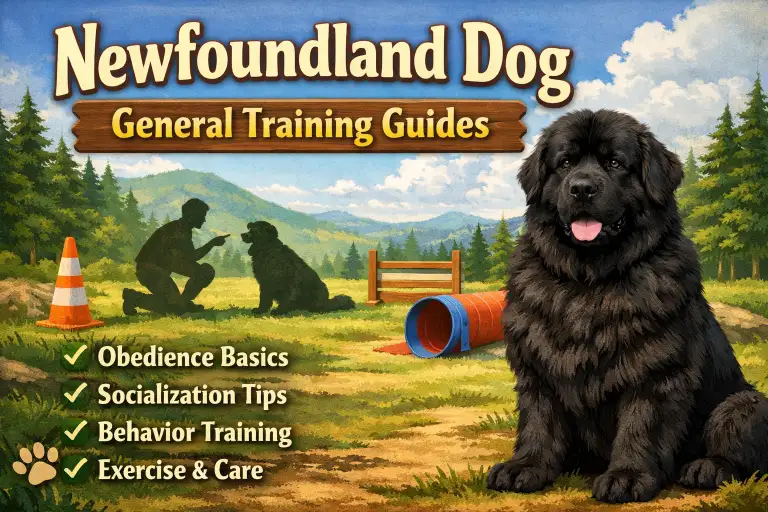
Training a Newfoundland dog is less about control and more about guiding a powerful, sensitive giant into calm, reliable behavior. While Newfoundlands are famously gentle and people-oriented, their sheer size, strength, and slow maturity mean that unstructured or delayed training can quickly become a safety issue rather than a minor inconvenience.
This guide is designed to help you train a Newfoundland dog in a way that is realistic, humane, and effective for a giant breed. It applies whether you’re raising a Newfoundland puppy, working with an adolescent who suddenly seems “selectively deaf,” or training an adult or rescue dog with little formal education. The focus is on everyday obedience, leash manners, household behavior, and public reliability — not advanced sports or specialized working certifications.
Many owners struggle because they treat Newfoundlands like smaller, faster-maturing breeds. This often leads to frustration, inconsistent rules, or methods that unintentionally shut the dog down. Throughout this guide, the emphasis is on clear communication, calm structure, and patience, so training supports both physical safety and emotional well-being.
By the end, you should understand not only what to teach your Newfoundland, but how and when to train for long-term success.
Understanding Newfoundland Dog Behavior and Temperament
Newfoundland dogs are often described as “gentle giants,” but that phrase can be misleading if it’s interpreted as “naturally trained” or “effortless.” Their temperament is shaped by centuries of cooperative working roles, close human bonds, and physically demanding tasks — not by fast reflex obedience or high-drive repetition.
Most Newfoundlands are:
- Deeply people-oriented and emotionally sensitive
- Calm by nature, but physically powerful
- Slow to mature mentally, often well into adulthood
- More responsive to consistency and trust than pressure
This combination explains many common training frustrations. A Newfoundland that ignores a cue is rarely being defiant. More often, the dog is tired, overstimulated, confused by inconsistency, or simply not convinced the behavior is worth repeating in that moment. Because they are not naturally reactive or frantic, missed responses are frequently mistaken for stubbornness.
Sensitivity is a critical factor. Harsh corrections, raised voices, or repetitive drilling often cause Newfoundlands to shut down rather than improve. Instead of becoming “more obedient,” they may slow further, disengage, or avoid training altogether. Calm feedback, clear criteria, and predictable routines work far better with this breed.
Age also matters more than many owners expect. Newfoundland puppies can appear easy simply because they are mellow, but adolescence often brings testing behaviors once the dog gains size and confidence. Adult Newfoundlands may seem settled, yet still lack foundational skills if training was delayed. Understanding where your dog is developmentally helps you set fair expectations and choose appropriate training intensity.
Recognizing these behavioral traits early allows you to train with your Newfoundland’s nature instead of fighting against it — which is the foundation for everything that follows in this guide.
Step-by-Step Newfoundland Dog Training Method
Training a Newfoundland dog works best when it is simple, calm, and consistent. This breed does not learn faster by repeating commands many times or by adding pressure. They learn best when training is clear, short, and rewarding.
Start with a quiet space at home. Remove distractions. Use a calm voice, simple words, and rewards your dog truly likes, such as soft treats or gentle praise. One good response is better than ten forced ones.
Training should always follow the same order:
- Get your dog’s attention
- Ask for one clear behavior
- Reward quickly when they do it right
- End before your dog gets tired
Short, regular sessions are far more effective than long training sessions.
Training Session Guidelines for Newfoundland Dogs
This table helps you understand how long and how often to train, based on your dog’s age.
| Dog Age | Session Length | Sessions Per Day | Best Training Location | What to Focus On |
|---|---|---|---|---|
| Puppy | 3–5 minutes | 2–3 | Indoors, quiet | Name, focus, simple cues |
| Adolescent | 5–10 minutes | 2 | Indoors + yard | Leash manners, impulse control |
| Adult | 10–15 minutes | 1–2 | Home + low-distraction outdoors | Reliability and calm behavior |
If your Newfoundland looks slow, distracted, or lays down during training, it usually means they are tired or overloaded, not being lazy. End the session early and try again later.
Training Progress Timeline for Newfoundland Dogs
Newfoundlands mature slowly, both in body and mind. This table shows what progress normally looks like so you don’t expect results too fast.
| Timeframe | What You May See | What This Means |
|---|---|---|
| First 2–4 weeks | Learning basic cues at home | Foundation is forming |
| 1–3 months | Better focus, early leash control | Skills need repetition |
| 4–6 months | Setbacks during growth or adolescence | Normal, stay consistent |
| 6–12 months | Stronger reliability, calmer behavior | Maturity is improving |
Progress is not a straight line. Some weeks feel easy, others feel frustrating. This is normal for a giant breed. Staying calm and consistent matters more than speed.
Training should always protect your dog’s body. Avoid jumping, hard stops, or long leash pulling during learning. Good training supports joint health, confidence, and long-term safety.
Common Newfoundland Dog Training Problems and Fixes
Many training problems with Newfoundland dogs come from size, slow maturity, and tiredness, not bad behavior. These dogs are gentle, but their strength can turn small problems into big ones if training is unclear or delayed. The goal is to fix issues early using calm and fair methods.
The table below shows common problems, why they happen, and what works best.
| Problem | Why It Happens | What Works Best | What to Avoid |
|---|---|---|---|
| Pulling on the leash | Dog is strong and excited, not trained for loose leash | Short walks, reward calm steps, stop when leash is tight | Yanking the leash, long walks |
| Jumping or leaning | Dog seeks attention and closeness | Teach sit for greeting, reward calm contact | Pushing the dog away, yelling |
| Refusing to move | Tired, overwhelmed, or confused | Short sessions, encouragement, breaks | Dragging the dog, forcing movement |
| Not listening outdoors | Too many new smells and sounds | Practice first indoors, then quiet outdoor areas | Starting training in busy places |
| Slow response to cues | Breed matures slowly and thinks calmly | Give time, reward effort, keep cues clear | Repeating commands many times |
| Training going backward | Growth spurts or adolescence | Stay consistent, lower expectations briefly | Giving up or changing rules |
Many owners think their Newfoundland is “stubborn.” In most cases, the dog is overworked, confused, or physically tired. This breed does not respond well to pressure. Calm structure works better than control.
Another common mistake is over-exercising instead of training. Long walks do not teach good behavior. Short training sessions teach focus, manners, and safety.
If progress feels slow, that does not mean training is failing. Newfoundland dogs improve steadily over time when training stays simple and fair.
When to Seek Professional Training Help
Most Newfoundland dogs can be trained at home with calm and steady practice. Still, some situations need extra help from a professional trainer. Getting help early is not a failure. It is often the safest choice for a large and powerful dog.
You should consider professional help if:
- Your dog shows fear, panic, or shuts down during training
- Growling, snapping, or guarding behavior appears
- Your dog becomes too hard to control because of size and strength
- Training has stopped improving after weeks of steady effort
- You feel unsafe handling your dog on walks or in public
Newfoundlands are not known for aggression, but any serious behavior issue matters more in a giant breed. What feels small in a puppy can become dangerous in an adult dog that weighs over 100 pounds.
A trainer who understands large and gentle breeds can help adjust timing, rewards, and handling. They can also show you safer ways to manage leash control, greetings, and public behavior without force.
The table below helps you decide when home training is no longer enough.
| Warning Sign | Why It Matters | Who Can Help |
|---|---|---|
| Fear or shutdown | Sensitive dogs may stop learning | Certified dog trainer |
| Aggression signs | Safety risk due to size | Behavior specialist |
| No progress after weeks | Training plan may need change | Professional trainer |
| Owner feels unsafe | Risk of injury | Trainer with giant breed experience |
If you choose a trainer, look for someone who:
- Uses calm, reward-based methods
- Has experience with large or giant breeds
- Explains clearly and works with both dog and owner
Good training support builds confidence for you and your dog. Early guidance often prevents long-term problems and keeps your Newfoundland calm, safe, and happy.
For more trusted, science-based guidance on dog training and behavior, you can also refer to the American Kennel Club, which provides general training principles and safety advice that apply well to large and giant dog breeds like the Newfoundland.

Ata Ur Rehman is the founder of Pet Age in Human Years Calculator, an educational platform that provides age conversion charts and lifespan guides for dogs, cats, birds, and other companion animals. His work focuses on helping pet owners understand how animal ages translate into human years using commonly accepted age conversion formulas and published lifespan averages.
The website compiles breed and species lifespan data from kennel clubs, breed organizations, and general animal lifespan studies to present simple and easy-to-understand guides for pet owners worldwide.
This website was created to centralize animal age conversion charts into one easy reference platform for pet owners.