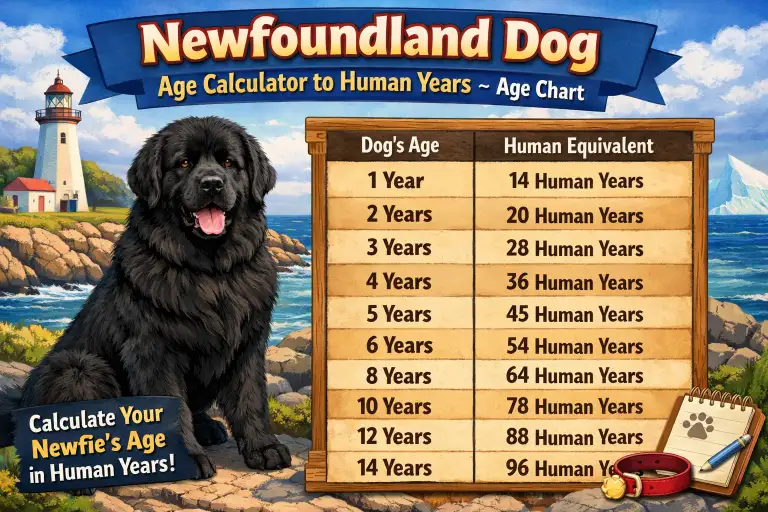
Newfoundland dogs are classified as giant-breed dogs, which means they age very differently from both humans and smaller dog breeds. If you’ve ever wondered “How old is my Newfoundland in human years?”, a generic dog-age calculator will not give you an accurate answer.
A Newfoundland dog age calculator adjusts for giant-breed growth speed, shorter average lifespan, and faster aging after early adulthood. While Newfoundlands mature quickly as puppies, they tend to enter their senior years much earlier than smaller dogs. That’s why breed-specific age conversion is essential.
Below is a quick-reference conversion table designed to give you an immediate, easy-to-scan estimate before diving deeper into the science.
Quick Newfoundland Dog Age Conversion (At a Glance)
| Newfoundland Dog Age | Approximate Human Age | Life Stage |
|---|---|---|
| 0.5 years | ~10 years | Puppy |
| 1 year | ~15 years | Puppy |
| 2 years | ~24 years | Young Adult |
| 3 years | ~32 years | Adult |
| 5 years | ~45 years | Adult |
| 7 years | ~58 years | Senior |
| 9 years | ~68 years | Senior |
| 10+ years | 75+ years | Geriatric |
This table works alongside a Newfoundland-specific age calculator to give owners a realistic picture of where their dog truly falls in human life terms.
Why Newfoundland Dogs Age Differently Than Humans (And Other Breeds)
The idea that one dog year equals seven human years is a myth—especially for giant breeds like the Newfoundland. This outdated rule fails because dogs do not age at a constant rate, and body size plays a major role in how fast aging occurs.
Newfoundlands grow extremely fast during puppyhood, reaching their adult size within the first two years. However, their overall lifespan is shorter than that of small or medium dogs. As a result, aging accelerates earlier in adulthood, which is why a 6- or 7-year-old Newfoundland may already show senior traits.
To understand why breed size matters so much, the comparison below highlights how aging differs across dog size categories.
Dog Aging Comparison by Size Category
| Dog Size Category | Average Lifespan | Early Aging Speed | Typical Senior Age |
|---|---|---|---|
| Small Breeds | 13–16 years | Moderate | 9–11 years |
| Medium Breeds | 11–14 years | Moderate–Fast | 8–9 years |
| Large Breeds | 9–12 years | Fast | 7–8 years |
| Giant Breeds (Newfoundland) | 8–10 years | Very Fast | 6–7 years |
This is why Newfoundland dogs often appear “old” sooner than expected. Their joints, cardiovascular system, and overall metabolism experience more physical stress simply due to size, even when well cared for.
Understanding this difference is critical before relying on any age chart or calculator—and it sets the foundation for the science-based conversion used in this guide.
The Science Behind Newfoundland Dog Aging
Newfoundland dogs do not age in a straight line. Their bodies change very fast when they are young, slow down for a short adult period, and then age faster again as seniors. This pattern is very different from humans, which is why simple math rules do not work for dog ages.
In the first two years of life, a Newfoundland grows from a tiny puppy into a very large adult dog. During this time, many changes happen at once: bones grow, joints form, organs mature, and the brain develops. These early years are equal to many human years, not just a few.
After reaching adulthood, aging slows down for a while. But because Newfoundlands are giant dogs with heavy bodies, their joints, heart, and metabolism work harder every day. This extra strain causes aging to speed up again earlier than it does in smaller dogs. That is why many Newfoundlands are considered seniors by age six or seven.
Scientists now understand dog aging much better than before. Modern research shows that dogs age in a curved pattern, not a straight one. This means early years count more, middle years count less, and senior years become important very quickly. This science is what modern dog age calculators are based on.
The table below shows why old methods fail and why newer science-based models are better, especially for giant breeds like the Newfoundland.
Traditional vs Scientific Dog Age Models
| Age Model | How It Works | Accuracy for Newfoundland Dogs | Main Problem |
|---|---|---|---|
| 7-year rule | Multiplies dog age by 7 | Very low | Ignores size and growth speed |
| Simple linear model | Adds the same number each year | Low | Assumes dogs age evenly |
| Scientific aging model | Uses fast early aging and slower adult aging | High | Needs breed and size data |
The scientific model used in this guide is designed to reflect how Newfoundlands truly grow and age. It explains why a young Newfoundland can be equal to a young adult human, and why an older Newfoundland may already be in senior human age.
Understanding this science helps owners make better choices about care, exercise, food, and vet visits at the right time in their dog’s life.
Newfoundland Dog Age Chart: Dog Years to Human Years
Many owners do not want long explanations. They simply want to see how old their Newfoundland is in human years. This age chart gives a clear answer and is designed only for Newfoundland dogs and other giant breeds, not small or medium dogs.
Remember, these numbers are estimates, not exact ages. Every dog is different, but this chart gives a realistic picture of how fast Newfoundlands age compared to humans.
Newfoundland Dog Age to Human Years Chart
| Newfoundland Dog Age | Human Age Equivalent | Life Stage | What This Usually Means |
|---|---|---|---|
| 0.5 years | ~10 years | Puppy | Rapid growth, learning basics |
| 1 year | ~15 years | Puppy | Large body, still immature |
| 2 years | ~24 years | Young Adult | Full size, still filling out |
| 3 years | ~32 years | Adult | Peak strength and energy |
| 4 years | ~38 years | Adult | Mature, stable behavior |
| 5 years | ~45 years | Adult | Middle-aged adult |
| 6 years | ~52 years | Senior | Slower recovery, early aging |
| 7 years | ~58 years | Senior | Clear senior stage |
| 8 years | ~63 years | Senior | Reduced stamina |
| 9 years | ~68 years | Senior | More rest, joint stiffness |
| 10+ years | 75+ years | Geriatric | High care and comfort needs |
This chart shows why Newfoundlands are often called seniors earlier than smaller dogs. A six- or seven-year-old Newfoundland may already need changes in exercise, diet, and daily routine.
Use this table together with the age calculator and the earlier science section to understand your dog’s real life stage. Knowing this helps owners make better choices before health problems become serious.
Newfoundland Dog Life Stages and Aging Care by Age
Knowing your Newfoundland’s age in human years is helpful, but knowing what to do at each age is even more important. Because Newfoundlands are giant dogs, their bodies feel aging earlier, even if they still act playful.
As puppies, Newfoundlands grow very fast. Their bones and joints are still soft, so too much jumping or hard exercise can cause damage later in life. Gentle play, slow walks, and proper food are very important during this stage.
Adult Newfoundlands may look strong and healthy, but weight gain can happen quickly. Extra weight puts stress on joints and the heart. Regular walks, light swimming, and mental games help keep them fit without hurting their bodies.
Senior Newfoundlands usually slow down between six and eight years old. They may sleep more, move slower, or have trouble standing up. This is normal aging, but it means care needs to change. Softer beds, shorter walks, and more vet checkups can greatly improve comfort and quality of life.
The table below shows the main life stages and what owners should focus on at each age.
Newfoundland Dog Life Stages and Care Priorities
| Life Stage | Age Range | Common Changes | Owner Care Focus |
|---|---|---|---|
| Puppy | 0–2 years | Fast growth, clumsy movement | Joint protection, training, proper diet |
| Adult | 3–5 years | Peak strength, steady energy | Weight control, regular exercise |
| Mature Adult | 5–6 years | Slower recovery | Joint support, routine vet checks |
| Senior | 6–8 years | Stiff joints, lower energy | Gentle exercise, comfort care |
| Geriatric | 9+ years | Mobility issues, more rest | Pain management, quality of life |
Watching your dog closely is key. Small changes, seen early, can make a big difference. If your Newfoundland shows sudden pain, big behavior changes, or trouble walking, it is best to talk to your vet right away.
For more breed-specific information on Newfoundland dogs, including general care and history, you can also visit the American Kennel Club Newfoundland breed profile, which provides an official overview of this giant breed and its characteristics.

Ata Ur Rehman is the founder of Pet Age in Human Years Calculator, an educational platform that provides age conversion charts and lifespan guides for dogs, cats, birds, and other companion animals. His work focuses on helping pet owners understand how animal ages translate into human years using commonly accepted age conversion formulas and published lifespan averages.
The website compiles breed and species lifespan data from kennel clubs, breed organizations, and general animal lifespan studies to present simple and easy-to-understand guides for pet owners worldwide.
This website was created to centralize animal age conversion charts into one easy reference platform for pet owners.