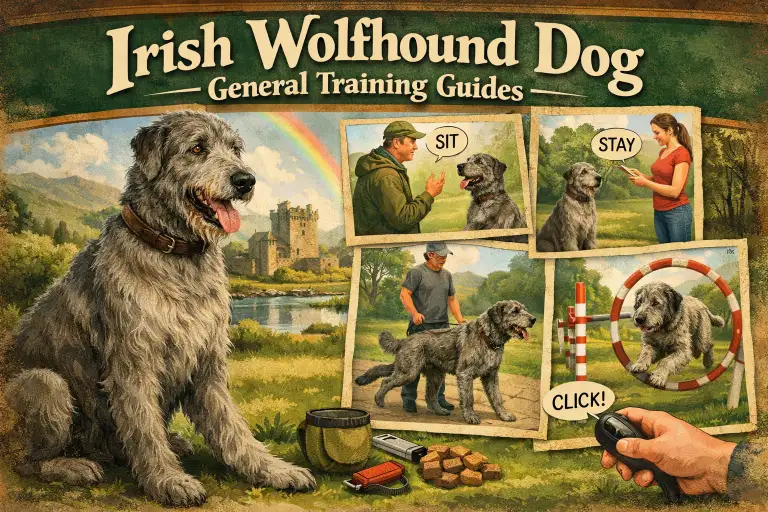
Training an Irish Wolfhound is not about teaching flashy tricks or enforcing rigid obedience—it’s about building calm, reliable manners in one of the largest dog breeds in the world. What this breed becomes as an adult is heavily shaped by what (and how) you teach early on. A well-trained Irish Wolfhound is gentle, steady, and easy to live with; a poorly trained one can be unintentionally dangerous simply because of size and strength.
This guide is designed for real Irish Wolfhound owners, whether you’re raising a puppy, navigating adolescence, or working with an adult rescue. It focuses on general, everyday training: leash manners, calm behavior, handling tolerance, and responsiveness in normal life situations. These foundations matter far more for this breed than advanced commands or competitive training.
Irish Wolfhounds are often described as “gentle giants,” but that gentleness does not replace the need for structure. Their slow maturity, sensitive nature, and independent streak mean that common one-size-fits-all dog training advice often falls short. Training must be thoughtful, patient, and adapted to a dog that grows rapidly in body but slowly in mind.
The goal of this guide is simple and realistic: help you raise or live with an Irish Wolfhound who is safe to handle, emotionally stable, and a pleasure to share daily life with—not a perfectly obedient robot, but a well-mannered companion you can trust.
Why Irish Wolfhound Training Is Different
Training an Irish Wolfhound is not the same as training a medium or small dog. Their huge size, slow growth, and gentle but sensitive nature change how training must be done.
An adult Irish Wolfhound can weigh as much as a full-grown human. If this dog pulls on the leash, jumps on guests, or ignores recall, the risk is not just bad behavior—it is real physical danger, even if the dog is friendly. This is why training is not optional for this breed. It is a safety need.
Irish Wolfhounds also grow in a unique way. Their bodies grow very fast, but their minds grow slowly. Many owners expect adult behavior too early and get frustrated. This leads to rushed training, harsh corrections, or giving up completely. None of these work well for this breed.
They are also emotionally sensitive dogs. Loud voices, rough handling, or punishment-based methods often cause shutdown, fear, or avoidance. Instead of learning faster, the dog may stop responding at all. Calm guidance and patience always work better.
Good training protects:
- The dog’s joints and body during growth
- The people living with the dog
- Visitors, children, and other pets
- The dog’s long-term confidence and emotional health
Below is a quick table showing what helps and what hurts training in Irish Wolfhounds.
Irish Wolfhound Training Dos and Don’ts
| Do This | Why It Helps | Don’t Do This | Why It Causes Problems |
|---|---|---|---|
| Use calm, gentle handling | Builds trust and confidence | Use harsh corrections | Causes fear or shutdown |
| Keep sessions short | Matches slow mental maturity | Overtrain in one session | Leads to stress and refusal |
| Start training early | Prevents size-related issues | Wait until fully grown | Bad habits become dangerous |
| Focus on manners first | Real-life safety comes first | Chase perfect obedience | Unrealistic for this breed |
| Be patient and consistent | Creates steady progress | Rush results | Damages learning and trust |
Understanding Irish Wolfhound Behavior and Learning Style
Irish Wolfhounds are calm, kind, and thoughtful dogs. They are not loud, fast, or highly reactive like many working breeds. This is important to understand before you start training.
Many Irish Wolfhounds do not respond instantly. This does not mean they are stubborn or not smart. Most of the time, they are thinking, or they simply do not see a reason to rush. Pushing them too hard often makes training worse, not better.
This breed is also very emotion-based. They learn best when they feel safe, relaxed, and respected. If training feels stressful, scary, or confusing, they may shut down, walk away, or ignore commands completely.
Key behavior traits that affect training:
- Calm and gentle by nature
- Slow to mature mentally
- Sensitive to tone of voice and body language
- Independent but not rebellious
- Low interest in repetition
Irish Wolfhounds do best with:
- Short, calm training sessions
- Clear rewards given at the right time
- Praise and quiet encouragement
- Simple goals instead of perfect behavior
Below is a table showing which rewards work best for this breed and when to use them.
Rewards That Work Best for Irish Wolfhounds
| Reward Type | When to Use It | Why It Works |
|---|---|---|
| Soft treats | Teaching new skills | Keeps focus without excitement |
| Calm praise | Everyday good behavior | Builds confidence and trust |
| Gentle petting | After success | Matches their calm nature |
| Breaks or rest | During long sessions | Prevents stress and overload |
| Real-life rewards | Leash walking, greetings | Feels meaningful to the dog |
Understanding how your Irish Wolfhound thinks will save you time and stress. When training matches their learning style, progress becomes steady and calm instead of frustrating.
Step-by-Step Irish Wolfhound Training Approach
Training an Irish Wolfhound works best when you follow clear steps for each life stage. Puppies, adolescents, and adults all need slightly different methods, but the principles stay the same: calm, short, and consistent sessions with rewards.
Training by Life Stage
Puppies grow quickly but their bones and joints are fragile. Training should focus on basic manners like sitting, coming when called, and gentle leash walking. Adolescents are bigger and stronger, so sessions need safety measures and patience. Adults often need reminders and reinforcement, especially if they missed early training.
Keep sessions short: 5–15 minutes for puppies, 10–20 minutes for adolescents, and 15–25 minutes for adults. Always end on a positive note so the dog looks forward to the next session.
Below is a table showing what to focus on at each stage.
Irish Wolfhound Training Priorities by Life Stage
| Life Stage | Focus Areas | Session Length | Notes |
|---|---|---|---|
| Puppy (8–16 weeks) | Sit, come, leash manners, handling tolerance | 5–15 mins | Short, positive sessions; lots of praise |
| Puppy (4–6 months) | Basic commands, calm greetings | 10 mins | Slowly introduce mild distractions |
| Adolescent (6–18 months) | Obedience, recall under distractions | 10–20 mins | Safe environment; maintain consistency |
| Adult (18+ months) | Reinforce manners, advanced recall | 15–25 mins | Use real-life situations; maintain calm |
Tips for Each Session
- Reward immediately when the dog performs correctly
- Repeat only 2–3 times per command to prevent boredom
- Train in low-distraction areas first, then gradually add distractions
- Always stay calm; large dogs react to energy
- End with praise or a small treat so the dog enjoys learning
Safety Tips
- Support joints during puppy play and leash exercises
- Avoid forcing positions or harsh corrections
- Never use extended periods of confinement as punishment
Following this step-by-step approach ensures that your Irish Wolfhound learns steadily without stress or injury. Training should be seen as daily life practice, not just formal sessions.
Common Training Problems and When to Get Help
Even with careful training, Irish Wolfhounds can show some common behavior challenges. Knowing what to expect and how to fix problems helps keep both you and your dog safe.
Typical Problems and Solutions
- Leash pulling: Large size and strength make this dangerous. Fix by teaching loose-leash walking with short sessions and rewards.
- Slow response or ignoring commands: Often due to breed independence. Fix with high-value rewards and patient repetition.
- Overexcitement with people or other dogs: Can knock over children or smaller pets. Fix with calm greetings and consistent practice.
- Fear or shutdown: Loud noises or harsh handling can make sensitive dogs withdraw. Fix by using gentle desensitization and positive reinforcement.
- Selective listening: The dog may respond in quiet areas but ignore commands with distractions. Fix by gradually increasing distractions in training.
Below is a table showing common problems, likely causes, and practical fixes.
Common Training Problems and Fixes
| Problem | Likely Cause | Practical Fix | When to Seek Help |
|---|---|---|---|
| Pulling on leash | Strength + excitement | Loose-leash training, treats for attention | If dog injures self or others |
| Ignoring commands | Slow mental maturity | High-value treats, short sessions | Persistent non-response in adult |
| Overexcited greetings | Lack of impulse control | Calm greetings, pause and reward | If injures children or small pets |
| Fear/shutdown | Rough handling or loud environment | Gradual desensitization, gentle praise | Persistent anxiety or aggression |
| Selective listening | Distractions overwhelm | Gradually increase distractions | If safety commands fail repeatedly |
When to Call a Professional
Sometimes a problem needs a trainer or behaviorist, especially with a giant breed like an Irish Wolfhound. Seek help if:
- The dog shows aggression toward people or pets
- Fear or anxiety interferes with daily life
- Size + behavior poses a safety risk
- You are stuck despite consistent training
Below is a table showing when and what kind of professional help is recommended.
When to Seek Professional Help
| Behavior Sign | Why It’s Serious | Type of Professional Needed |
|---|---|---|
| Aggression | Can cause injury | Certified dog trainer or behaviorist |
| Severe fear or shutdown | Mental health and safety risk | Veterinary behaviorist or trainer |
| Uncontrollable pulling or jumping | Safety risk due to size | Trainer with giant breed experience |
| Non-response to safety commands | Owner or public safety risk | Positive reinforcement trainer |
“For more expert advice on Irish Wolfhound health and care, visit the American Kennel Club’s breed page: AKC Irish Wolfhound.”

Ata Ur Rehman is the founder of Pet Age in Human Years Calculator, an educational platform that provides age conversion charts and lifespan guides for dogs, cats, birds, and other companion animals. His work focuses on helping pet owners understand how animal ages translate into human years using commonly accepted age conversion formulas and published lifespan averages.
The website compiles breed and species lifespan data from kennel clubs, breed organizations, and general animal lifespan studies to present simple and easy-to-understand guides for pet owners worldwide.
This website was created to centralize animal age conversion charts into one easy reference platform for pet owners.