Leonbergers do not age the same way humans do. They grow very fast when young and become “old” sooner than many other dogs. This happens because Leonbergers are a giant breed, and big dogs age faster on the inside than small dogs.
A Leonberger puppy grows into a huge adult body in a short time. This fast growth puts stress on bones, joints, the heart, and other organs. Because of this, their bodies wear out earlier, even if they still look strong and active.
Humans age slowly and evenly over many years. Leonbergers age quickly at first, then slow down, and later age faster again as seniors. That is why we cannot match one dog year to one human year in a straight line.
Leonberger aging overview table
| Life phase | Leonberger age range | What is happening in the body |
|---|---|---|
| Puppy | 0–1 year | Very fast growth, bones and joints still forming |
| Young adult | 1–3 years | Full size reached, body still maturing |
| Adult | 3–6 years | Peak strength, aging starts quietly inside |
| Senior | 6–8 years | Slower movement, higher health risks |
| Geriatric | 8+ years | Clear aging signs, needs special care |
This table shows why a Leonberger at 6 or 7 years old is already considered a senior, even though many smaller dogs are not.
Why the “1 Dog Year = 7 Human Years” Rule Is Wrong for Leonbergers
Many people think that one dog year equals seven human years. This is not true, especially for Leonbergers. Giant breeds grow fast when they are puppies, and their bodies age differently than smaller dogs. Using the simple 7-year rule gives wrong results and can make owners misunderstand their dog’s health needs.
Leonbergers age quickly in the first two years. A 1-year-old Leonberger is already like a teenager in human years, while a 2-year-old is more like a young adult. After adulthood, their aging slows down for a while, but as seniors, they age faster again. This is why we need special formulas and charts for giant breeds.
The early fast growth, combined with a shorter lifespan compared to small dogs, makes the 7-year rule completely inaccurate for Leonbergers. To understand their true age in human years, it is better to use a size-specific age chart or a calculator made for giant breeds.
Dog size and aging comparison table
| Dog size | Average lifespan | Early growth | Senior age onset |
|---|---|---|---|
| Small | 12–16 years | Slow | 9–10 years |
| Medium | 10–13 years | Moderate | 7–8 years |
| Large | 8–12 years | Fast | 6–7 years |
| Giant (Leonberger) | 7–9 years | Very fast | 6 years |
This table shows why giant breeds like Leonbergers reach senior age earlier than smaller dogs and why the 7-year rule does not work.
Leonberger Dog Age Calculator and Human Age Chart
This is the part most owners are looking for. A Leonberger’s age in human years is not a simple 7-to-1 rule. Giant breeds like Leonbergers age faster early on, then slow down, and later age faster again as seniors. Using a size-specific chart gives a more accurate idea of your dog’s age in human years.
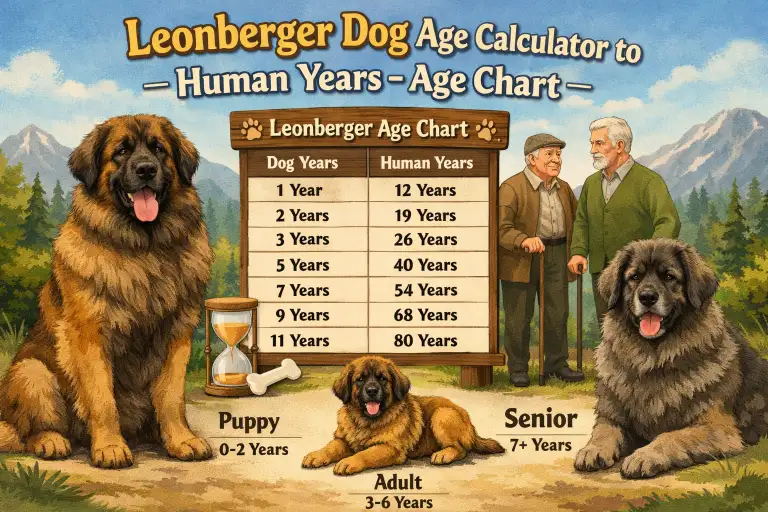
Here is a Leonberger age chart showing approximate human age equivalents for each dog year:
Leonberger dog age to human age chart
| Leonberger Age (years) | Human Age Equivalent | Life Stage |
|---|---|---|
| 0.5 | 6 | Puppy |
| 1 | 15 | Puppy/Young Adult |
| 2 | 24 | Young Adult |
| 3 | 32 | Adult |
| 4 | 40 | Adult |
| 5 | 48 | Adult |
| 6 | 56 | Senior |
| 7 | 64 | Senior |
| 8 | 72 | Senior |
| 9 | 80 | Geriatric |
You can see that a 1-year-old Leonberger is already like a teenager in human years, and by 6 years old, your dog is a senior. This chart helps you plan nutrition, exercise, and health checks based on your Leonberger’s real age.
Real examples
| Leonberger Age | Human Equivalent | Notes |
|---|---|---|
| 1 year | 15 years | Still growing, needs puppy-friendly diet |
| 5 years | 48 years | Adult, peak strength, watch weight and joints |
| 8 years | 72 years | Senior, slower movement, more vet care needed |
These examples make it easier to visualize your dog’s age in real life.
Leonberger Life Stages and What Aging Looks Like in Real Life
Leonbergers go through different life stages, and knowing what to expect at each stage helps owners take better care of their dogs. Giant breeds like Leonbergers grow fast and show signs of aging earlier than smaller dogs.
Puppy and adolescent stage (0–2 years)
During this stage, Leonbergers grow very quickly. Their bones and joints are still developing, so gentle exercise is important. Puppies are playful and energetic, but they need proper nutrition for healthy growth.
Adult stage (3–6 years)
Adult Leonbergers are strong and active. Their growth is complete, and they are at peak strength. They still need regular exercise and a balanced diet to maintain health and prevent weight gain.
Senior and geriatric stage (6+ years)
By 6 years, Leonbergers are considered seniors. Signs of aging may include slower movement, stiffer joints, changes in behavior, and more sleep. Geriatric dogs over 8 years need special care, including joint support, gentle exercise, and regular vet checkups.
Life stage summary table
| Life Stage | Age Range | Key Characteristics | Owner Tips |
|---|---|---|---|
| Puppy | 0–2 years | Rapid growth, playful, developing bones | Gentle exercise, high-quality puppy food |
| Adult | 3–6 years | Peak strength, stable energy | Maintain healthy weight, regular exercise |
| Senior | 6–8 years | Slower movement, early aging signs | Joint support, monitor health, routine vet visits |
| Geriatric | 8+ years | Clear aging signs, less active | Gentle walks, comfortable bedding, special nutrition |
This table helps owners see at a glance what their Leonberger is experiencing at each age and what care is needed.
How to Help a Leonberger Live a Longer, Healthier Life
Taking care of a Leonberger properly can help them live a longer and happier life. Because they are a giant breed, they need special attention to their diet, exercise, and health.
Nutrition and weight management
Leonbergers can gain weight easily, which puts extra stress on their joints and heart. Feed them a high-quality diet designed for large breeds. Adjust the amount as they age, and avoid giving too many treats.
Exercise and joint protection
Daily exercise keeps your Leonberger healthy, but avoid over-exercising young puppies or senior dogs. Activities like gentle walks and swimming are ideal. Providing joint supplements can help prevent stiffness as they age.
Vet care and preventive checks
Regular vet visits are very important. Large breeds can have heart, joint, and cancer risks. Schedule screenings and vaccinations on time and watch for early signs of health issues.
Lifestyle and neutering
Neutering or spaying at the right age can affect longevity. A safe and stable home environment with stress-free routines also supports healthy aging.
Age-based care summary table
| Leonberger Age | Health Focus | Care Tips |
|---|---|---|
| 0–2 years | Growth and development | Proper diet, controlled exercise, vaccinations |
| 3–6 years | Adult health maintenance | Balanced diet, regular walks, joint support |
| 6–8 years | Early senior care | Gentle exercise, monitor joints, vet screenings |
| 8+ years | Geriatric care | Comfortable bedding, limited high-impact activity, senior diet |
Following these guidelines will help your Leonberger stay active, happy, and healthy through all stages of life.
“For more detailed guidance on giant-breed dog health and preventive care, you can visit the American Kennel Club’s health resources page: AKC Health & Nutrition.”

Ata Ur Rehman is the founder of Pet Age in Human Years Calculator, an educational platform that provides age conversion charts and lifespan guides for dogs, cats, birds, and other companion animals. His work focuses on helping pet owners understand how animal ages translate into human years using commonly accepted age conversion formulas and published lifespan averages.
The website compiles breed and species lifespan data from kennel clubs, breed organizations, and general animal lifespan studies to present simple and easy-to-understand guides for pet owners worldwide.
This website was created to centralize animal age conversion charts into one easy reference platform for pet owners.