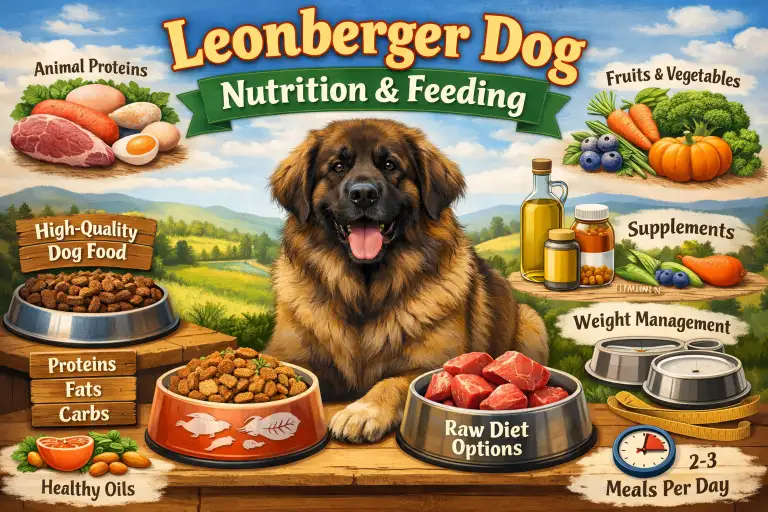
Leonbergers are not just “big dogs that eat more.” As a true giant breed, their size, growth pattern, and long-term health risks make nutrition one of the most important factors in how well they develop and how comfortably they age. Feeding mistakes that a medium or even large dog might tolerate can lead to serious, lifelong problems in a Leonberger.
This guide is designed to help you understand why Leonberger nutrition is different, so every feeding decision you make later actually makes sense.
Leonbergers grow slowly, carry immense body weight, and place heavy stress on their joints, heart, and digestive system. Puppies can reach impressive sizes quickly, but their bones and joints mature much more slowly than their appearance suggests. Feeding for rapid growth or “big puppy appetite” is one of the most common reasons Leonbergers develop orthopedic issues such as hip and elbow dysplasia or early joint degeneration.
Adult Leonbergers, often weighing 100–170 pounds (45–77 kg), require enough calories to maintain muscle and energy without drifting into obesity. Even modest excess weight in a giant breed dramatically increases strain on joints and the cardiovascular system. What looks like “a little extra padding” in a fluffy Leonberger can translate into years of reduced mobility later in life.
Digestive health is another key concern. Leonbergers are more prone than many breeds to gas, loose stools, and food sensitivities. Their large, deep chest also puts them at higher risk of gastric dilatation–volvulus (bloat), making feeding timing, portion size, and meal structure just as important as food quality.
Proper nutrition directly influences:
- Controlled, healthy growth in puppies
- Joint strength and mobility throughout adulthood
- Coat density, skin health, and shedding patterns
- Energy levels and working ability
- Lifespan and quality of life in senior years
Well-formulated diets that meet established standards such as those set by AAFCO help ensure essential nutrients are present, but Leonbergers still require breed-aware feeding decisions on top of those minimums. Life stage, activity level, body condition, and individual tolerance all matter.
What to Feed a Leonberger: Nutritional Needs and Best Food Choices
Feeding a Leonberger starts with understanding what nutrients their big body actually needs. This breed does best on balanced, steady nutrition—not extreme diets or trends. The goal is to support strong muscles, healthy joints, good digestion, and a thick coat without pushing fast growth or excess weight.
The basics Leonbergers need every day
- Protein to maintain large muscles and support repair
- Fat for energy, skin, and coat health (but not too much)
- Carbohydrates and fiber for digestion and steady energy
- Vitamins and minerals for bones, joints, heart, and immune system
Leonbergers do not need super-high protein or very rich foods. In puppies, too much energy or the wrong mineral balance can cause bones to grow too fast, which increases joint problems later. In adults, overly rich foods often lead to weight gain and digestive upset.
Calcium and minerals matter more in this breed
Giant-breed puppies like Leonbergers are very sensitive to calcium and phosphorus levels. Too much calcium is just as harmful as too little. This is why foods labeled for giant-breed growth or properly balanced all-life-stages foods that follow standards like AAFCO or FEDIAF are important.
Avoid adding calcium supplements unless a veterinarian specifically tells you to. Extra supplements can quietly cause long-term damage.
Choosing the right type of food
Most Leonbergers do well on:
- High-quality giant-breed kibble
- Fresh or gently cooked diets that are fully balanced
- Mixed feeding (kibble plus fresh toppers) when calories are controlled
Raw or homemade diets can work only if they are carefully formulated. Guesswork diets often miss key nutrients for a dog this size.
How to read the dog food label (quick guide)
- Look for a complete and balanced statement
- Check the life stage listed (puppy vs adult)
- Avoid foods with vague claims but no nutritional backing
- Ignore marketing words like “ancestral” or “wolf-style” unless the nutrition makes sense
Leonberger nutritional needs at a glance
| Nutrient | Why It Matters for Leonbergers | General Guideline |
|---|---|---|
| Protein | Maintains large muscle mass | Moderate, not extreme |
| Fat | Energy and coat health | Controlled to avoid weight gain |
| Calcium | Bone and joint development | Carefully balanced |
| Fiber | Digestion and stool quality | Moderate, not excessive |
| Omega-3s | Joints, skin, inflammation | Helpful, especially in adults |
This table is a starting point, not a prescription. Individual dogs may need adjustments based on age, activity, and health.
How Much Should a Leonberger Eat? Portion Sizes, Calories, and Feeding Frequency
One of the biggest questions for Leonberger owners is how much food to give. Because these dogs are very big, it’s easy to overfeed or underfeed if you rely only on general feeding charts. The best approach is to look at your dog’s weight, activity, and body condition, not just scoop size.
Daily calorie needs
Leonbergers burn more calories than smaller dogs, but not as fast as you might think. Adult Leonbergers need enough calories to stay strong without gaining extra fat. Puppies need controlled calories to grow steadily, avoiding joint problems.
Feeding frequency by age
- Puppies (up to 6 months): 3–4 small meals per day
- Older puppies (6–12 months): 2–3 meals per day
- Adults: 2 meals per day
- Seniors: 1–2 smaller meals per day, depending on appetite and digestion
Portion sizes and adjustments
Instead of only measuring cups, use Body Condition Score (BCS):
- Ribs should be just visible with light touch
- Waist visible from above
- Abdomen tucked up slightly
Check your Leonberger weekly. Weight creeping up or belly rounding means adjust portions down. If ribs are hard to feel or dog is very thin, increase slightly.
Energy and activity level matters
- Low activity / family companion: fewer calories, watch treats
- Active / working dogs: need more calories and protein for energy
- Seasonal changes: more calories in winter if dog is very active outdoors
Leonberger daily feeding guide (calorie ranges)
| Weight (lbs) | Low Activity (cal/day) | Moderate Activity (cal/day) | High Activity (cal/day) |
|---|---|---|---|
| 90–110 | 1800–2000 | 2000–2300 | 2300–2600 |
| 111–130 | 2000–2300 | 2300–2600 | 2600–2900 |
| 131–150 | 2300–2600 | 2600–2900 | 2900–3200 |
| 151–170 | 2600–2900 | 2900–3200 | 3200–3500 |
Feeding portions by life stage (cups per meal, rough estimate)
| Life Stage | Meals per Day | Portion per Meal (cups) |
|---|---|---|
| Puppy 2–4 months | 4 | 1–1.5 |
| Puppy 4–6 months | 3 | 1.5–2 |
| Puppy 6–12 months | 2–3 | 2–3 |
| Adult | 2 | 4–6 |
| Senior | 1–2 | 3–5 |
These numbers are starting points. Always adjust for your dog’s BCS, appetite, and activity level. Remember, treats count too!
Feeding Leonberger Puppies, Adults, and Seniors Correctly
Leonbergers have very different needs at each stage of life. Feeding the right way helps them grow safely, stay healthy as adults, and maintain comfort in their senior years.
Puppies (8 weeks to 12 months)
Leonberger puppies grow fast, but their bones and joints develop slowly. Too many calories, too much protein, or extra calcium can cause joint problems.
Key tips for puppies:
- Feed giant-breed puppy formulas only.
- Divide food into 3–4 small meals for young puppies.
- Monitor weight and body condition weekly.
- Avoid human snacks or table scraps that add extra calories.
Adults (1–6 years)
Adult Leonbergers need a diet that keeps them fit without gaining fat. Portion size and calorie control are more important than fancy ingredients.
Key tips for adults:
- Feed 2 meals per day.
- Choose balanced adult formulas suitable for giant breeds.
- Adjust calories for activity level (active vs family companion).
- Include foods with joint-support nutrients like omega-3s.
Seniors (7 years and older)
Senior Leonbergers often slow down. Their metabolism drops and joints may need extra support.
Key tips for seniors:
- Feed smaller meals 1–2 times per day.
- Choose foods with lower calories but high-quality protein.
- Include joint and heart support nutrients.
- Monitor weight and body condition closely.
Leonberger feeding overview by life stage
| Life Stage | Meal Frequency | Food Type | Key Focus |
|---|---|---|---|
| Puppy (8–12 weeks) | 4 | Giant-breed puppy formula | Controlled growth, balanced calcium |
| Puppy (3–6 months) | 3 | Puppy formula | Steady growth, muscle development |
| Puppy (6–12 months) | 2–3 | Puppy/transition formula | Joint protection, energy control |
| Adult (1–6 years) | 2 | Adult giant-breed formula | Weight control, joint health |
| Senior (7+ years) | 1–2 | Senior formula | Reduced calories, joint and heart support |
This table gives a quick, practical view of what to feed and how often at each stage.
Common Leonberger Feeding Problems, Special Diets, and Owner FAQs
Even with the best intentions, Leonberger owners often face feeding challenges. This explains common problems, safe food choices, special diets, and when to get professional help.
Common feeding problems
- Weight gain: Leonbergers can gain fat quickly if portions, treats, or rich foods aren’t monitored.
- Loose stool or gas: Often caused by food changes, sensitive stomachs, or too much rich food.
- Picky eating: Some Leonbergers refuse meals if they are bored, stressed, or used to table scraps.
- Rapid puppy growth: Overfeeding puppies can harm bones and joints.
Special diet considerations
- Allergies or sensitive stomachs: Use limited ingredient or sensitive formulas under vet guidance.
- Weight management: Low-calorie formulas, portion control, and exercise are key.
- High-energy vs low-activity dogs: Adjust calories and nutrient density based on activity.
- Raw or homemade diets: Only safe if properly balanced; otherwise, risk missing key nutrients.
Safe vs unsafe human foods
Leonbergers are powerful dogs, but some human foods can be toxic: chocolate, grapes, onions, garlic, alcohol, and certain nuts. Safe options in moderation include cooked lean meats, plain rice, carrots, pumpkin, and blueberries.
Treats
Even though Leonbergers are big, treats add calories quickly. Treats should make up less than 10% of daily calories. Look for low-calorie, joint-friendly options.
When to call a vet or nutritionist
- Sudden weight gain or loss
- Chronic diarrhea, vomiting, or gas
- Signs of bloat (distended stomach, restlessness, drooling)
- Feeding homemade or raw diets and unsure about nutrient balance
Common Feeding Problems and Fixes
| Problem | Likely Cause | Feeding Fix | Vet Needed? |
|---|---|---|---|
| Weight gain | Overfeeding, treats, low activity | Reduce portions, track calories | Only if sudden or extreme |
| Loose stool | Food change, rich food, sensitive gut | Slow transition, bland diet | If chronic |
| Picky eating | Boredom, stress, table scraps | Consistent meals, limit extras | If appetite loss persists |
| Rapid growth (puppy) | Too many calories, high calcium | Feed giant-breed puppy formula | Yes, if joint swelling |
Safe vs Unsafe Human Foods for Leonbergers
| Food | Safe/Toxic | Notes |
|---|---|---|
| Chocolate | Toxic | Causes vomiting, heart issues |
| Grapes/Raisins | Toxic | Kidney failure risk |
| Onions/Garlic | Toxic | Blood and digestive issues |
| Cooked lean meat | Safe | Good protein source |
| Carrots, pumpkin | Safe | Fiber and vitamins |
| Blueberries | Safe | Antioxidants in moderation |
This table helps owners quickly check what’s safe and avoid common mistakes.
For more expert guidance on dog nutrition and feeding, you can visit the American Kennel Club’s comprehensive dog nutrition guide here.

Ata Ur Rehman is the founder of Pet Age in Human Years Calculator, an educational platform that provides age conversion charts and lifespan guides for dogs, cats, birds, and other companion animals. His work focuses on helping pet owners understand how animal ages translate into human years using commonly accepted age conversion formulas and published lifespan averages.
The website compiles breed and species lifespan data from kennel clubs, breed organizations, and general animal lifespan studies to present simple and easy-to-understand guides for pet owners worldwide.
This website was created to centralize animal age conversion charts into one easy reference platform for pet owners.