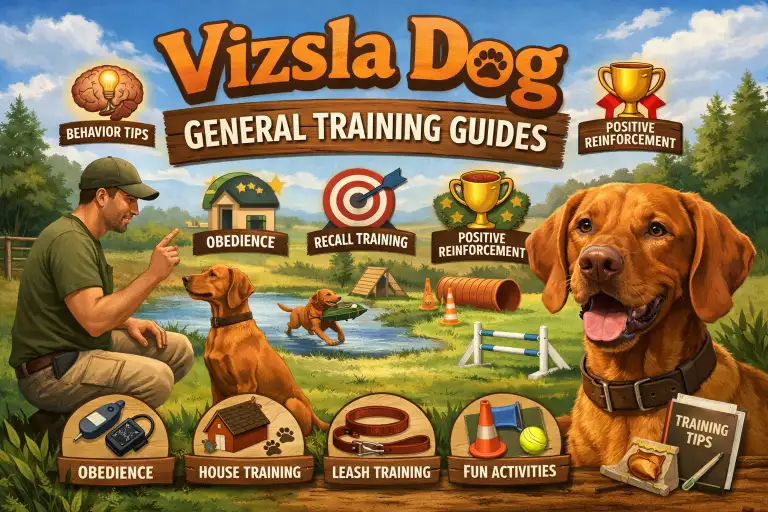
Vizsla dog training is not about teaching more commands—it’s about teaching the right behaviors in a way that fits this breed’s unique temperament. Vizslas are intelligent, deeply people-oriented, and highly sensitive dogs. When trained correctly, they are responsive, eager to please, and a joy to live with. When trained poorly or inconsistently, they can quickly develop anxiety, frustration, and difficult behaviors that overwhelm owners.
This guide is designed for Vizsla owners who want clear, practical, and humane training guidance—whether you’re raising a Vizsla puppy, working with an adolescent going through a challenging phase, or helping an adult Vizsla learn better habits. It focuses on everyday, real-life training: living in a busy home, managing high energy, preventing separation-related issues, and building reliable obedience without harsh methods.
Unlike generic dog training advice, Vizslas require an approach that balances structure with emotional safety. They do not respond well to intimidation, repeated corrections, or inconsistent rules. Instead, they thrive when training is predictable, rewarding, and mentally engaging. Understanding this from the start prevents many of the most common Vizsla training problems owners struggle with later.
By the end of this guide, you’ll understand how Vizslas learn, how to structure training sessions effectively, and how to avoid mistakes that unintentionally create anxiety or behavioral setbacks. The goal is not perfection, but a calm, cooperative Vizsla who can succeed both at home and in the real world.
Understanding Vizsla Temperament and Trainability
Vizslas are often described as loving, smart, and full of energy. All of that is true—but those traits also explain why training can feel easy one day and frustrating the next. Understanding how a Vizsla thinks and feels is the first step to successful training.
Vizslas are very sensitive dogs. They notice tone of voice, body language, and changes in routine more than many other breeds. Because of this, harsh words, yelling, or punishment can shut them down or make them anxious. On the other hand, calm guidance and rewards help them learn quickly and confidently.
They are also known as “Velcro dogs.” Most Vizslas want to stay close to their people at all times. This strong attachment is great for bonding, but it can lead to problems like separation anxiety if independence is not taught early.
Another key trait is energy. Vizslas were bred to work and move for long periods. If their mental and physical needs are not met, training becomes much harder. A tired and bored Vizsla may jump, chew, ignore commands, or seem “stubborn,” even though they are simply under-stimulated.
The table below shows common Vizsla traits and how they affect training in everyday life.
| Vizsla trait | What you may notice at home | What it means for training |
|---|---|---|
| High sensitivity | Dog shuts down with yelling or harsh tone | Training must be calm and reward-based |
| Strong attachment | Follows you everywhere | Independence skills must be taught early |
| High energy | Restless, jumping, pacing | Needs daily mental and physical outlets |
| High intelligence | Learns fast, gets bored easily | Short, varied training sessions work best |
Vizsla trainability is generally high, but only when training matches their emotional needs. They learn best through positive reinforcement, clear routines, and consistent rules. When training feels safe and rewarding, Vizslas want to participate and succeed.
Age also plays a role. Puppies are curious and eager but have short attention spans. Adolescents often test limits and seem to “forget” training. Adult Vizslas usually learn quickly once expectations are clear. These changes are normal and not a sign of failure.
Understanding these traits helps you avoid common mistakes, such as pushing too hard, training for too long, or expecting calm behavior without meeting the dog’s needs first.
Step-by-Step Vizsla Training Method
Training a Vizsla works best when it is simple, short, and done every day. Long or intense sessions often lead to frustration for both the dog and the owner. Vizslas learn faster when training feels like a game, not a test.
Start by training when your Vizsla is calm—not overly excited or exhausted. A short walk or light play before training can help your dog focus better. Use clear words, a calm voice, and rewards your dog truly enjoys, such as small treats, praise, or play.
Training should be broken into small sessions spread throughout the day. This keeps your Vizsla interested and prevents burnout.
The table below shows a simple daily training structure based on age.
| Training element | Puppies | Adolescents | Adults |
|---|---|---|---|
| Session length | 3–5 minutes | 5–10 minutes | 10–15 minutes |
| Sessions per day | 3–5 | 2–4 | 1–3 |
| Main focus | Engagement and basics | Impulse control | Reliability and calm behavior |
| Exercise balance | Light play | Structured outlets | Daily maintenance |
Always begin with basic focus skills. Teaching your Vizsla to respond to their name, make eye contact, and stay engaged with you creates a strong base for all other training. Without focus, commands like recall or loose leash walking will fail in real-life situations.
Next, work on safety and daily-life skills. These include coming when called, walking calmly on a leash, and settling quietly in the house. These behaviors matter more than tricks and should be practiced often.
The table below shows the best order to teach core skills.
| Training priority | Skill | Why it matters |
|---|---|---|
| Foundation | Name response and focus | Helps control excitement |
| Core | Recall | Keeps your dog safe |
| Core | Loose leash walking | Makes daily walks easier |
| Advanced | Calm settling | Prevents anxiety and overexcitement |
Use rewards right after your Vizsla does the correct behavior. Timing matters. If the reward comes too late, your dog may not understand what they did right. Keep rewards small and exciting, and slowly reduce treats as behaviors become more reliable.
Training should happen in different places. Start inside the home, then move to the yard, quiet streets, and later busier areas. Vizslas often perform well indoors but struggle with distractions outside. This is normal and requires patience.
If your Vizsla seems distracted, stubborn, or overly excited, it usually means the training step is too hard or the environment is too busy. Go back one step, make it easier, and build up again.
When to Seek Professional Help for Vizsla Training
Most Vizsla training problems improve with clear steps, daily practice, and patience. However, some situations need extra help. Knowing when to ask for a professional can protect your dog’s mental health and prevent problems from getting worse.
If you are training every day and following the steps correctly, you should see small improvements within a few weeks. Progress does not mean perfection, but you should notice better focus, calmer behavior, or faster responses. If nothing improves, it may be time to get support.
Some behaviors should never be ignored. Fear, panic, or aggressive reactions are signs that your Vizsla is overwhelmed or stressed. These issues are not fixed by trying harder or being stricter. In fact, pushing too much can make them worse.
The table below shows what is normal during training and what is a warning sign.
| Time period | Normal behavior | Red flag |
|---|---|---|
| First 2–4 weeks | Inconsistent responses | No progress at all |
| 4–8 weeks | Some improvement, some setbacks | Growing anxiety or fear |
| Any time | Short regressions | Aggression, panic, or shutdown |
You should also seek help if your Vizsla shows strong separation anxiety, intense fear of people or sounds, or sudden behavior changes with no clear reason. These issues often need a trained eye to identify the cause and create a safe plan.
When choosing help, look for a trainer who uses calm, reward-based methods and understands sensitive, high-energy breeds. Avoid trainers who rely on fear, pain, or punishment. For serious fear or aggression, a veterinary behavior professional may be needed to rule out medical causes and guide treatment.
Getting help early does not mean you failed. It means you are doing what is best for your Vizsla.
For more science-backed guidance on humane, effective dog training, you can review the position statements from the American Veterinary Society of Animal Behavior, which support reward-based training methods for all dog breeds

Ata Ur Rehman is the founder of Pet Age in Human Years Calculator, an educational platform that provides age conversion charts and lifespan guides for dogs, cats, birds, and other companion animals. His work focuses on helping pet owners understand how animal ages translate into human years using commonly accepted age conversion formulas and published lifespan averages.
The website compiles breed and species lifespan data from kennel clubs, breed organizations, and general animal lifespan studies to present simple and easy-to-understand guides for pet owners worldwide.
This website was created to centralize animal age conversion charts into one easy reference platform for pet owners.