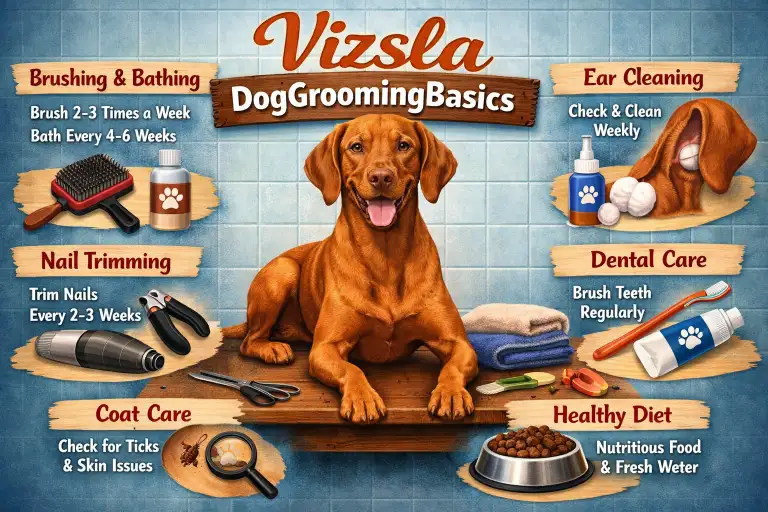
At first glance, Vizslas seem like one of the easiest dogs to groom. Their short, sleek coat doesn’t tangle, doesn’t need trimming, and dries quickly after a bath. Because of that, many owners assume grooming is optional or purely cosmetic. In real-world grooming practice, that assumption leads to some of the most common skin, shedding, and comfort problems seen in this breed.
Vizsla grooming is less about haircuts and more about skin health, shedding control, and overall comfort. Their single-layer coat offers very little protection between the environment and the skin, which means oils, allergens, dirt, and dead hair build up faster than most owners realize. Without regular grooming, these factors can contribute to itchiness, excessive shedding, dull coat appearance, and even skin irritation.
Proper grooming also supports the Vizsla’s lifestyle. This is an active, athletic breed that runs hard, sweats through the skin, and spends a lot of time outdoors. Dirt, pollen, and bacteria don’t get trapped in long fur — they sit directly on the skin. Grooming helps remove those irritants before they cause problems.
Another overlooked benefit is early problem detection. Regular brushing, bathing, and hands-on care make it much easier to notice changes like dryness, redness, hot spots, nail overgrowth, ear odor, or unusual shedding patterns. In grooming settings, many skin and ear issues are caught early simply because someone is routinely checking the dog from nose to tail.
Finally, grooming has a behavioral and bonding benefit. Vizslas are sensitive, people-oriented dogs. Short, positive grooming sessions build tolerance to handling, reduce stress around nail trims and baths, and help prevent grooming-related anxiety later in life.
Vizsla Coat Type, Shedding, and Grooming Frequency
Vizslas have a short, smooth, single-layer coat. This means they do not have an undercoat like Labradors or German Shepherds. Because of this, their grooming needs are simpler, but not zero.
Many owners ask, “Do Vizslas shed?”
Yes — Vizslas do shed, just in a different way. They shed lightly all year, with a bit more shedding during seasonal changes like spring and fall. The hairs are short and stiff, so they often stick to clothes, furniture, and blankets instead of forming big piles on the floor.
Because the coat is so close to the skin, grooming is more about removing loose hair, spreading natural oils, and keeping the skin clean. If grooming is skipped for long periods, dead hair and oil stay on the skin. This can lead to itchiness, dull coat color, and stronger dog odor.
Vizslas also have sensitive skin compared to many thicker-coated breeds. Over-bathing or using harsh products can dry the skin out quickly, while under-grooming can allow dirt and allergens to build up. Finding the right balance is key.
Below is a simple grooming frequency guide to help Vizsla owners know what to do and how often.
Vizsla Grooming Frequency Guide
| Grooming Task | How Often | Helpful Notes |
|---|---|---|
| Brushing | 1–2 times per week | Helps reduce shedding and keeps coat shiny |
| Bathing | Every 4–8 weeks | More often only if very dirty or smelly |
| Nail trimming | Every 2–4 weeks | Active dogs may wear nails down naturally |
| Ear cleaning | Every 2–4 weeks | Check weekly for redness or odor |
| Teeth brushing | 2–3 times per week | Daily is best if the dog allows it |
| Skin check | Weekly | Look for redness, flakes, or bumps |
For very active Vizslas, dogs with allergies, or dogs that spend a lot of time outdoors, grooming may need to happen slightly more often. For calmer indoor dogs, the lower end of these ranges is usually enough.
The good news is that Vizslas do not need haircuts, shaving, or special trimming. With a simple routine and the right timing, grooming stays quick and stress-free for both the dog and the owner.
How to Groom a Vizsla at Home: Brushing, Bathing, and Coat Care
Grooming a Vizsla at home is simple and does not take much time. Because their coat is short and smooth, you do not need clippers, trimming scissors, or special styling tools. The goal is to keep the skin clean, the coat shiny, and loose hair under control.
Start with brushing. Brushing removes loose hair and spreads natural oils over the coat. This helps the coat look shiny and feel smooth. For most Vizslas, brushing once or twice a week is enough. During brushing, use gentle strokes and pay attention to areas like the chest, neck, and sides where loose hair often collects.
Bathing should not be too frequent. Vizslas have sensitive skin, and too many baths can dry it out. Most Vizslas only need a bath every 4 to 8 weeks. If your dog gets muddy or smells strong, an extra bath is fine, but it should not become a weekly habit. Always use a dog shampoo made for sensitive skin. Human shampoo can harm a dog’s skin.
When bathing, use lukewarm water. Wet the coat fully, apply a small amount of shampoo, and gently massage it into the coat and skin. Rinse very well. Leftover shampoo can cause itching. After the bath, dry your Vizsla with a towel. Many Vizslas also enjoy a short air-dry, but avoid cold weather drafts.
Below is a simple tool guide showing what you actually need for home grooming.
Essential Grooming Tools for Vizslas
| Tool | What It Is Used For | How Often to Use | Important Tips |
|---|---|---|---|
| Rubber brush or grooming mitt | Removes loose hair and dirt | 1–2 times per week | Be gentle, do not press hard |
| Soft bristle brush | Adds shine and smooths coat | Weekly | Great after brushing |
| Dog shampoo (gentle) | Cleans skin and coat | Every 4–8 weeks | Avoid strong scents |
| Towels | Drying after bath | After each bath | Pat dry, do not rub hard |
| Nail clippers or grinder | Nail trimming | Every 2–4 weeks | Trim small amounts only |
During grooming, always watch your dog’s body language. If your Vizsla becomes nervous or restless, take short breaks. Calm, positive grooming sessions help your dog stay relaxed and cooperative over time.
Vizsla Nail Trimming, Ear Cleaning, Dental Care, and Skin Health
This part of grooming is just as important as brushing and bathing. Many Vizsla health problems start with long nails, dirty ears, poor dental care, or irritated skin. The good news is that these tasks are simple once you know what to look for.
Nail trimming should be done every 2 to 4 weeks. Vizslas are active dogs, and some wear their nails down naturally, but most still need trimming. Long nails can cause pain, change how the dog walks, and even lead to joint problems. Trim small amounts at a time. If you hear nails clicking on the floor, they are too long.
Ear cleaning is important because Vizslas have floppy ears. This shape can trap moisture and dirt. Check the ears once a week. Clean them every 2 to 4 weeks or when you notice wax buildup. A healthy ear should look light pink and smell clean. Never push cotton swabs deep into the ear.
Dental care is often ignored, but it matters. Plaque and tartar can build up fast, even in young dogs. Brushing your Vizsla’s teeth two to three times a week helps prevent bad breath, gum disease, and tooth loss. Use only dog-safe toothpaste.
Skin checks should be part of every grooming session. Vizslas have thin coats and sensitive skin, so problems show up quickly. Early signs are easier to fix than long-term issues.
The table below helps you spot common grooming-related problems early.
| Issue | What Owners May Notice | Possible Grooming Cause | What to Do |
|---|---|---|---|
| Long nails | Clicking sound on floors | Nails not trimmed often enough | Trim nails or see a groomer |
| Ear infection | Redness, bad smell, head shaking | Moisture or dirty ears | Clean ears, see vet if it continues |
| Bad breath | Strong mouth odor | Plaque buildup | Brush teeth, ask vet if severe |
| Dry or itchy skin | Scratching, flakes | Over-bathing or harsh shampoo | Reduce baths, use gentle shampoo |
| Hot spots | Red, sore patches | Moist skin left dirty | Clean area, contact vet |
Keeping up with these small grooming tasks can prevent pain and expensive vet visits later. Most problems are easier to manage when caught early.
Vizsla Grooming Mistakes, Special Situations, and Professional Care
Even though Vizslas are easy to groom, mistakes still happen. Most problems come from doing too much, not too little. Knowing what to avoid is just as important as knowing what to do.
One common mistake is bathing too often. Because Vizslas have sensitive skin, frequent baths can remove natural oils and cause dryness or itching. Another mistake is using strong-smelling or human shampoos, which can irritate the skin. Shaving a Vizsla is also a mistake. Their coat helps protect the skin, even though it is short.
Grooming needs can change with age. Vizsla puppies should have short, gentle grooming sessions to help them get used to handling. Keep it calm and positive. Adult Vizslas usually follow a steady routine. Senior Vizslas may need extra care, shorter sessions, and more frequent nail trims because they move less.
Seasonal changes matter too. In spring and fall, Vizslas often shed a bit more. Brushing a little more during these times helps control loose hair and keeps the skin healthy.
Most Vizslas do not need regular professional grooming. Home grooming is enough for many dogs. However, a professional groomer can help with nail trims, deep cleaning, or if your dog becomes nervous during grooming. A vet visit is needed if you see signs of infection, open sores, or skin problems that do not improve.
The table below gives a quick summary of what can be done at home and when extra help is useful.
| Grooming Task | At Home or Professional | How Often | Safety Tip |
|---|---|---|---|
| Brushing | At home | Weekly | Use gentle pressure |
| Bathing | At home | Every 4–8 weeks | Rinse shampoo fully |
| Nail trimming | Home or professional | Every 2–4 weeks | Trim small amounts |
| Ear cleaning | At home | Every 2–4 weeks | Never push deep |
| Skin problems | Vet | As needed | Do not ignore redness |
With a simple routine and the right care, Vizsla grooming stays easy and stress-free. Regular grooming keeps your dog clean, comfortable, and healthy throughout life.
For more breed-specific background and care information, you can also review the Vizsla breed profile from the American Kennel Club: https://www.akc.org/dog-breeds/vizsla/

Ata Ur Rehman is the founder of Pet Age in Human Years Calculator, an educational platform that provides age conversion charts and lifespan guides for dogs, cats, birds, and other companion animals. His work focuses on helping pet owners understand how animal ages translate into human years using commonly accepted age conversion formulas and published lifespan averages.
The website compiles breed and species lifespan data from kennel clubs, breed organizations, and general animal lifespan studies to present simple and easy-to-understand guides for pet owners worldwide.
This website was created to centralize animal age conversion charts into one easy reference platform for pet owners.