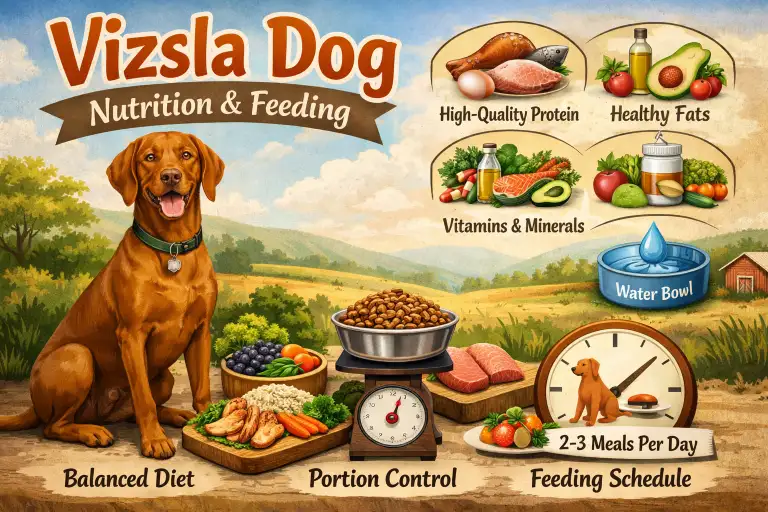
Vizslas are not average dogs when it comes to nutrition. Bred as versatile hunting companions, they are lean, muscular, and intensely active — both physically and mentally. Their diet plays a direct role in how well they perform, how they age, and how healthy they remain over the long term.
This guide is designed to help you make confident, evidence-based feeding decisions for your Vizsla, whether you’re raising a puppy, managing a highly active adult, or adjusting nutrition for a senior dog.
A well-balanced Vizsla diet directly affects:
- Sustained energy and endurance for daily exercise, training, and field work
- Lean muscle maintenance and recovery
- Digestive health and stool quality (a common concern in this breed)
- Skin and coat condition, including shedding and dryness
- Joint health and long-term mobility
- Immune function and overall disease resistance
Because Vizslas have fast metabolisms and relatively low body fat, they are more sensitive than many breeds to underfeeding, poor-quality calories, and nutritionally imbalanced diets. At the same time, overfeeding energy-dense foods can quietly lead to weight gain once activity levels drop — especially in neutered or aging dogs.
Unlike generic dog feeding advice, Vizsla nutrition must account for:
- High daily activity or working demands
- Lean body structure that shows weight changes quickly
- A tendency toward food sensitivity in some individuals
- Strong food motivation that can lead to overfeeding with treats
The goal of proper nutrition is not simply to keep your Vizsla “full,” but to fuel their lifestyle while maintaining an ideal body condition. That means choosing the right nutrients, feeding appropriate portions, and adjusting the diet as your dog’s age, workload, and health needs change.
Vizsla Nutrition Requirements: Protein, Fats, Carbs, and Key Nutrients
Vizslas need the right balance of nutrients to stay strong, active, and healthy. Because they are lean and energetic dogs, low-quality food or poor balance can affect them quickly. This section explains what should be in a Vizsla’s bowl and why it matters, using simple terms and clear examples.
Protein is the most important nutrient for Vizslas. It helps build and keep lean muscle, supports recovery after exercise, and keeps the immune system strong. Vizslas that run, train, hunt, or play hard every day need more protein than dogs that are mostly inactive.
Fats are the main fuel source for Vizslas. Healthy fats give long-lasting energy, support brain function, and keep the skin and coat healthy. Too little fat can cause low energy and dry skin, while too much fat can lead to weight gain if activity drops.
Carbohydrates are not essential, but they can be helpful. Good carbs provide quick energy and fiber for digestion. Poor-quality carbs can cause gas, loose stool, or energy crashes in sensitive Vizslas.
Macronutrient Needs for Vizslas (By Activity Level)
| Activity Level | Protein (Dry Matter) | Fat (Dry Matter) | Carb & Fiber Role |
|---|---|---|---|
| Low activity (older or calm adult) | 22–25% | 10–14% | Light energy, digestion support |
| Moderate activity (daily walks, play) | 24–28% | 12–16% | Steady energy and gut health |
| High activity (running, hunting, sports) | 26–32% | 15–20% | Fuel for endurance and recovery |
Micronutrients are needed in small amounts, but they are just as important. These include vitamins and minerals that support bones, joints, nerves, skin, and the immune system. A complete and balanced dog food should already contain these in safe amounts, so supplements are usually not needed unless a vet recommends them.
Key Vitamins and Minerals Important for Vizslas
| Nutrient | Why It Matters for Vizslas |
|---|---|
| Calcium & Phosphorus | Strong bones and joints, especially in puppies |
| Omega-3 fatty acids | Joint support, skin health, reduced inflammation |
| Zinc | Healthy skin, coat, and immune system |
| Vitamin E | Muscle protection and immune support |
| B vitamins | Energy use and nervous system health |
When choosing food, focus on quality ingredients and clear nutrition information, not marketing words. A good Vizsla diet supports steady energy, firm stool, a shiny coat, and visible muscle without excess fat.
How Much to Feed a Vizsla: Calories, Portions, and Feeding Schedule
Knowing how much to feed a Vizsla is just as important as choosing the right food. Vizslas burn energy fast, but they can still gain weight if portions are too large or activity drops. Feeding the right amount helps keep them lean, strong, and healthy.
The best way to think about feeding is calories first, then portions. Every Vizsla needs a certain number of calories each day based on body weight and activity level. More exercise means more calories. Less movement means fewer calories.
Daily Calorie Needs for Vizslas (By Weight and Activity)
| Vizsla Weight | Low Activity | Moderate Activity | High Activity |
|---|---|---|---|
| 40 lbs (18 kg) | 900–1,000 kcal | 1,100–1,250 kcal | 1,400–1,600 kcal |
| 50 lbs (23 kg) | 1,000–1,150 kcal | 1,250–1,400 kcal | 1,600–1,800 kcal |
| 60 lbs (27 kg) | 1,100–1,250 kcal | 1,400–1,600 kcal | 1,800–2,000 kcal |
These numbers are daily totals, not per meal. Treats, training rewards, and chews should be included in the daily calorie count.
Portion size depends on the food’s calorie density. Two different dog foods can have very different calories per cup. Always check the label and adjust portions slowly over 7–10 days.
Feeding schedule also matters. Vizslas do best with routine meals rather than free feeding.
Vizsla Feeding Schedule by Age
| Age Group | Meals Per Day | Notes |
|---|---|---|
| Puppy (2–6 months) | 3–4 meals | Supports growth and stable energy |
| Puppy (6–12 months) | 2–3 meals | Gradual move toward adult feeding |
| Adult Vizsla | 2 meals | Helps control hunger and digestion |
| Senior Vizsla | 2 smaller meals | Easier digestion, steady energy |
Body condition is the best long-term guide. You should be able to feel your Vizsla’s ribs easily, see a waist from above, and notice a tummy tuck from the side. If ribs are hard to feel, reduce food slightly. If ribs are sharp or visible, increase food slowly.
Portion Adjustment Using Body Condition
| Body Condition | What You See | Feeding Action |
|---|---|---|
| Underweight | Ribs very visible, low muscle | Increase food by 10–15% |
| Ideal | Ribs easy to feel, clear waist | Keep current portions |
| Overweight | No waist, ribs hard to feel | Reduce food by 10% |
Fresh water should always be available. Active Vizslas need more water, especially in warm weather or after long exercise.
Best Food for Vizslas: Kibble, Raw, Fresh, Homemade, and Treats
There is no single “perfect” food for every Vizsla. The best food is one that fits your dog’s activity level, digestion, budget, and your daily routine. Vizslas do best on food that gives steady energy, supports lean muscle, and is easy to digest.
Most Vizsla owners choose between dry kibble, fresh food, raw diets, canned food, or homemade meals. Each option has good and bad points. What matters most is that the food is complete, balanced, and right for your dog.
Dog Food Type Comparison for Vizslas
| Food Type | Benefits for Vizslas | Possible Downsides |
|---|---|---|
| Dry kibble | Easy to store, affordable, balanced | Some brands use low-quality fillers |
| Fresh food | High moisture, very tasty, easy to digest | More costly, needs refrigeration |
| Raw diet | High protein, simple ingredients | Risk of bacteria if not handled right |
| Canned food | Soft texture, good for picky eaters | Higher cost, less calorie-dense |
| Homemade meals | Full control of ingredients | Risk of missing nutrients without vet help |
When choosing food, always check the label. Look for real meat as the first ingredient and a statement saying the food is “complete and balanced.” Avoid foods with unclear meat sources or heavy marketing claims without facts.
Vizslas can enjoy some human foods, but many foods that are safe for people are dangerous for dogs. It’s important to know the difference.
Safe vs Unsafe Human Foods for Vizslas
| Safe in Small Amounts | Unsafe or Toxic |
|---|---|
| Plain cooked chicken | Chocolate |
| Cooked eggs | Grapes and raisins |
| Plain rice or oats | Onions and garlic |
| Carrots and green beans | Xylitol (fake sugar) |
| Plain yogurt | Alcohol |
Treats are helpful for training, especially for Vizslas, who love to work for food. Treats should never make up more than about 10% of daily calories. On heavy training or hunting days, you may need to reduce meal size to balance extra treats.
Choose treats that are small, soft, and easy to chew. Avoid giving large amounts of table scraps, which can upset digestion and add hidden calories.
Vizsla Feeding by Age, Lifestyle, and Health
Vizslas change a lot as they grow and age, and their food needs change too. Puppies, adults, and seniors all need different feeding plans. Health issues, activity level, and behavior can also affect how and what you should feed.
Vizsla puppies grow fast and need enough food to build muscle and strong bones, but not so much that they grow too quickly. Overfeeding puppies can stress their joints. Meals should be spread out during the day to keep energy steady.
Adult Vizslas need food that matches their lifestyle. A Vizsla that runs, hunts, or trains daily needs more calories and fat than one that mostly goes on walks. If activity drops, food should be reduced to avoid weight gain.
Senior Vizslas often move less and burn fewer calories. They may need slightly less food, but protein should stay high to help protect muscle. Some seniors also do better with softer food or smaller meals.
Feeding Focus by Vizsla Life Stage
| Life Stage | Main Feeding Goal | What to Focus On |
|---|---|---|
| Puppy | Healthy growth | Controlled calories, balanced minerals |
| Adult | Lean muscle and energy | High-quality protein, steady fat |
| Senior | Muscle support and comfort | Easy digestion, joint support |
Some Vizslas have feeding challenges. These are common and usually fixable with small changes.
Common Feeding Problems and Simple Diet Adjustments
| Problem | What You May Notice | Helpful Feeding Change |
|---|---|---|
| Picky eater | Skips meals, eats slowly | Fixed meal times, no free feeding |
| Sensitive stomach | Soft stool, gas | Simple ingredients, slow food changes |
| Always hungry | Begging, food searching | Check portions, add fiber |
| Weight loss | Visible ribs, low energy | Increase calories slowly |
| Weight gain | No waist, low stamina | Reduce portions, cut extra treats |
When changing food, always do it slowly over 7–10 days. Sudden changes often cause loose stool or refusal to eat.
You should talk to a veterinarian if your Vizsla:
- Loses or gains weight without a clear reason
- Has ongoing diarrhea or vomiting
- Stops eating for more than a day
- Needs a homemade or medical diet
For official nutrition standards used by pet food manufacturers and veterinarians, you can review the AAFCO Dog Food Nutrient Profiles, which explain minimum and maximum nutrient requirements for dogs at different life stages: https://www.aafco.org/consumers/understanding-pet-food/dog-and-cat-food-nutrient-profiles/

Ata Ur Rehman is the founder of Pet Age in Human Years Calculator, an educational platform that provides age conversion charts and lifespan guides for dogs, cats, birds, and other companion animals. His work focuses on helping pet owners understand how animal ages translate into human years using commonly accepted age conversion formulas and published lifespan averages.
The website compiles breed and species lifespan data from kennel clubs, breed organizations, and general animal lifespan studies to present simple and easy-to-understand guides for pet owners worldwide.
This website was created to centralize animal age conversion charts into one easy reference platform for pet owners.