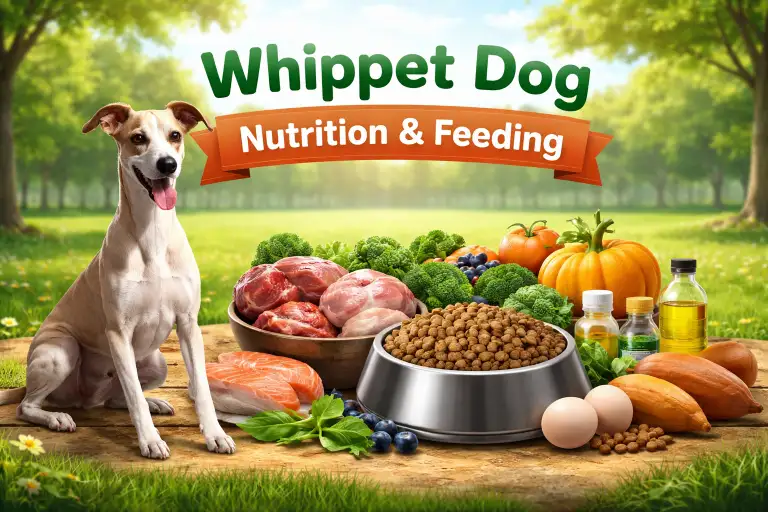
Whippets are not “small Greyhounds” when it comes to nutrition — and feeding them like a generic medium-sized dog is one of the most common mistakes owners make. Their unique body structure, metabolism, and energy patterns mean that Whippets need a more thoughtful, precision-based feeding approach to stay healthy, lean, and comfortable.
Whippets are sighthounds with a naturally lean, low–body-fat physique, fine bone structure, and a high proportion of fast-twitch muscle. This gives them speed and agility, but it also means they have less nutritional margin for error. Even small feeding mistakes can lead to visible rib loss, muscle wasting, digestive upset, or—on the opposite end—unhealthy fat gain that stresses joints and the heart.
Another key factor is metabolism. Many Whippets burn calories efficiently but do not eat large volumes of food well. Overfeeding in an attempt to “fatten them up” often results in soft stools or picky eating, while underfeeding can quietly lead to low energy, poor coat quality, and loss of muscle tone. Owners are often surprised to learn that a Whippet can look thin but still be perfectly healthy—or look fine while slowly losing condition.
Nutrition also plays a major role in common Whippet concerns such as:
- Sensitive digestion and food intolerance
- Maintaining muscle mass without excess weight
- Energy crashes in active or racing Whippets
- Age-related weight and appetite changes in seniors
Because Whippets are naturally slim, they are frequently misjudged as underfed when they are actually at an ideal body condition. This makes breed-specific nutritional knowledge especially important. Feeding should be guided by body condition, activity level, and stool quality—not by generic feeding charts alone.
What Do Whippets Eat? Understanding Their Nutritional Needs
Whippets need a balanced diet, not an extreme one. Their food must support lean muscle, steady energy, and easy digestion. The goal is not to make a Whippet look “bulky,” but to keep them fit, light, and strong.
A good Whippet diet focuses on quality nutrients, not just calories.
Protein, fats, and carbohydrates for Whippets=
Protein is the most important part of a Whippet’s diet. It helps maintain muscle and keeps the body strong. Most healthy adult Whippets do best with moderate to high protein, while puppies need slightly more to support growth.
Fats give Whippets energy and help keep the skin and coat healthy. Too little fat can cause low energy and dull fur. Too much fat can upset the stomach or cause weight gain, especially in low-activity dogs.
Carbohydrates are not bad for Whippets. They provide quick energy and fiber for digestion. The key is choosing foods with easy-to-digest carbs, not heavy fillers.
Ideal nutrient ranges for Whippets
| Nutrient | General Range for Whippets | Why It Matters |
|---|---|---|
| Protein | 22–30% (dry matter) | Builds and maintains lean muscle |
| Fat | 10–18% (dry matter) | Energy, skin, and coat health |
| Carbohydrates | Varies by food | Energy and digestion support |
| Omega-3 fats | Present, not excessive | Joint, skin, and inflammation support |
These are general ranges. Active Whippets may need more calories, while calm or senior Whippets often need less.
Vitamins and minerals Whippets need
Whippets need the same essential vitamins and minerals as other dogs, but balance is important. Calcium and phosphorus support bones. Zinc and biotin help skin and coat. B vitamins support energy use. Most complete dog foods already provide these in the right amounts.
Adding supplements without a clear reason can do more harm than good. Too much calcium, vitamin D, or certain minerals can cause health problems over time.
Do Whippets need supplements?
Most Whippets do not need supplements if they eat a complete and balanced dog food. Supplements may help in some cases, such as:
- Older Whippets with joint stiffness
- Dogs eating homemade diets
- Dogs with diagnosed deficiencies
Always check with a veterinarian before adding supplements, especially for growing puppies.
How to read a dog food label for Whippets
| Label Item | What It Means | What to Look For |
|---|---|---|
| First ingredient | Main ingredient by weight | Named meat like chicken, turkey, or fish |
| Guaranteed analysis | Protein, fat, fiber levels | Protein and fat in healthy ranges |
| “Complete and balanced” | Meets nutrition standards | AAFCO or FEDIAF statement |
| Marketing terms | Words like “premium” or “natural” | These do not equal quality |
If a food meets recognized nutrition standards and suits your Whippet’s body condition, it is usually a safe choice.
How Much Should a Whippet Eat Per Day?
Whippets do not need large meals, but they do need the right amount of food. Feeding too little can cause weight loss and low energy. Feeding too much can upset the stomach or cause fat gain, which is unhealthy for this lean breed.
The best feeding amount depends on weight, age, and activity level. This is why one feeding rule does not fit every Whippet.
Daily calorie needs for Whippets
| Whippet Weight | Low Activity | Moderate Activity | High Activity |
|---|---|---|---|
| 20 lb (9 kg) | 500–550 kcal | 600–650 kcal | 700+ kcal |
| 25 lb (11 kg) | 550–600 kcal | 650–700 kcal | 750+ kcal |
| 30 lb (14 kg) | 650–700 kcal | 750–800 kcal | 850+ kcal |
| 35 lb (16 kg) | 700–750 kcal | 800–850 kcal | 900+ kcal |
Active Whippets, racing dogs, or dogs that run daily may need more calories. Calm or older Whippets often need fewer.
Feeding amounts by life stage
| Life Stage | Meals Per Day | Feeding Notes |
|---|---|---|
| Puppy | 3–4 meals | Higher calories for growth |
| Adult | 2 meals | Stable portions work best |
| Senior | 1–2 meals | Lower calories, easy digestion |
Puppies should never be fed once a day. Adults usually do best with two meals to avoid hunger and stomach upset.
Using body condition instead of guessing
| Body Look | What It Means | What To Do |
|---|---|---|
| Ribs very visible, low muscle | Underfed | Increase food slowly |
| Ribs felt, waist visible | Ideal | Keep feeding the same |
| No waist, ribs hard to feel | Overfed | Reduce portions slightly |
Do not judge your Whippet by looks alone. Always check body feel, energy, and stool quality.
How often should you feed a Whippet?
Most adult Whippets should eat twice a day, once in the morning and once in the evening. This helps keep energy steady and reduces hunger-related behavior.
Some Whippets prefer eating later in the day. This is normal as long as weight and health are stable.
Best Dog Food for Whippets: Kibble, Raw, Fresh, and Homemade Diets
There is no single “perfect” food for every Whippet. The best choice depends on your dog’s health, age, activity level, and how well they digest food. What matters most is that the diet is balanced, safe, and easy to digest.
Below is a simple comparison of common dog food types used for Whippets.
| Food Type | Benefits for Whippets | Possible Downsides | Best For |
|---|---|---|---|
| Dry kibble | Easy to store, affordable, balanced | Some brands use low-quality fillers | Most healthy Whippets |
| Wet food | High moisture, tasty | Can be high in fat, more expensive | Picky eaters |
| Fresh food | Gentle on digestion, high-quality | Higher cost, needs storage | Sensitive stomachs |
| Raw diet | High protein, small portions | Safety risks if not balanced | Experienced owners only |
| Homemade food | Full control of ingredients | Easy to unbalance nutrients | Vet-guided diets only |
Kibble works well for many Whippets, especially when it is made with real meat and meets nutrition standards. Fresh or wet foods can help picky eaters or dogs with digestion issues. Raw and homemade diets require careful planning and veterinary guidance.
Grain-free food and Whippets
Grain-free food is not required for most Whippets. Some dogs do well on it, but many digest grains like rice or oats without problems. Grain-free diets should only be used if a vet confirms a real need.
Treats and human foods for Whippets
| Safe Human Foods (Small Amounts) | Foods to Avoid | Toxic Foods |
|---|---|---|
| Plain chicken | Spicy foods | Chocolate |
| Cooked rice | Fried foods | Grapes |
| Carrots | Salty snacks | Onions |
| Apples (no seeds) | Fatty meats | Xylitol |
Always give new foods slowly and in small amounts.
Common Whippet Feeding Problems, Special Diets, and FAQs
Many Whippet feeding problems are not serious, but they can worry owners. The good news is that most issues can be fixed with small changes to food type, portion size, or feeding routine.
Common feeding problems and simple fixes
| Problem | Common Reason | What Usually Helps |
|---|---|---|
| Whippet won’t eat | Stress, boredom, too many treats | Stick to meal times, reduce treats |
| Soft stool or diarrhea | Sudden food change, rich food | Switch foods slowly, lower fat |
| Always seems hungry | Portions too small, high activity | Increase food slightly, check weight |
| Losing weight | Underfeeding or poor digestion | Add calories slowly, vet check |
| Gaining fat | Too many calories or treats | Reduce portions, measure food |
Most Whippets do best with routine. Feeding at the same time every day helps appetite and digestion.
Special diet needs in Whippets
| Situation | Diet Focus |
|---|---|
| Sensitive stomach | Simple ingredients, easy digestion |
| Food allergies | Limited ingredients, vet-guided |
| Underweight | Higher calories, good protein |
| Overweight | Lower calories, measured meals |
| Very active dogs | More calories, balanced fat |
Never guess with serious diet changes. If weight changes happen fast, a vet visit is important.
Frequently asked questions
| Question | Short Answer |
|---|---|
| Is my Whippet too thin? | Feeling ribs is normal for this breed |
| Can Whippets eat once a day? | Twice a day is usually better |
| Do Whippets need supplements? | Not if food is balanced |
| Are picky Whippets normal? | Yes, many are sensitive eaters |
| Should I switch foods often? | No, only when needed |
When to see a veterinarian
You should talk to a vet if your Whippet:
- Loses weight quickly
- Has long-term diarrhea or vomiting
- Refuses food for more than two days
- Has skin, coat, or energy problems
A vet or dog nutrition expert can help adjust the diet safely.
For more details on how balanced dog foods are defined, you can review the official nutrition standards published by the Association of American Feed Control Officials (AAFCO).

Ata Ur Rehman is the founder of Pet Age in Human Years Calculator, an educational platform that provides age conversion charts and lifespan guides for dogs, cats, birds, and other companion animals. His work focuses on helping pet owners understand how animal ages translate into human years using commonly accepted age conversion formulas and published lifespan averages.
The website compiles breed and species lifespan data from kennel clubs, breed organizations, and general animal lifespan studies to present simple and easy-to-understand guides for pet owners worldwide.
This website was created to centralize animal age conversion charts into one easy reference platform for pet owners.