Bombay Cat Cost of Ownership and Lifetime Expenses
When you first bring a Bombay cat home, there are several one-time and first-year costs you should plan for. These are the expenses you pay before your cat settles into a normal routine. Being prepared helps you avoid surprises and ensures your cat gets everything it needs from day one.
Recommended Dog Care Products
Based on your dog’s age, these products may help with comfort, health, grooming, and daily care.

Purina Pro Plan Veterinary Supplements
Daily probiotics for dogs to support digestive and gut health.
View on Amazon ↗
Earth Rated Poop Bags for Dogs
Leak-proof, extra thick waste bag refill rolls with lavender scent.
View on Amazon ↗
Greenies Pill Pockets for Dogs
Large dog treats for capsule medication, peanut butter flavor.
View on Amazon ↗
HONEY CARE All-Absorb Dog Wrap
Small male dog wraps, 50 count, useful for daily care support.
View on Amazon ↗
Seresto Flea & Tick Collar
Flea and tick treatment and prevention for dogs over 18 lbs.
View on Amazon ↗
Milk-Bone MaroSnacks
Small dog treats with real bone marrow in a 40 oz canister.
View on Amazon ↗
Vital Essentials Dog Treats
Freeze dried beef liver dog treats, grain free and single ingredient.
View on Amazon ↗
Stain & Odor Eliminator
Enzyme cleaner for pet stains, carpet messes, and strong odors.
View on Amazon ↗
Pur Luv Chicken Jerky Treats
Dog treats made with real chicken breast, high protein and chew-friendly.
View on Amazon ↗
Milk-Bone Flavor Snacks
Mini crunchy dog biscuits in a 36 oz canister for small rewards.
View on Amazon ↗As an Amazon Associate, we may earn from qualifying purchases.
| Expense Category | Estimated Cost Range | Notes |
|---|---|---|
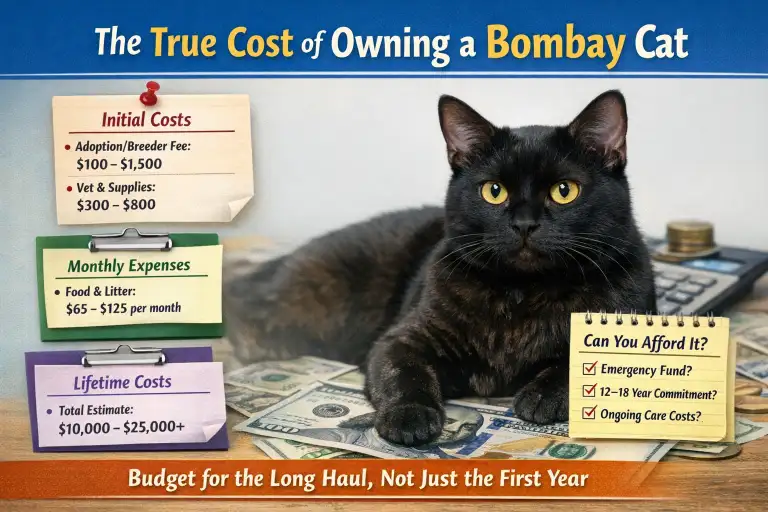
| Adoption or Breeder Fee | $100 – $1,500 | Adoption is cheaper; breeder cats are higher quality but cost more. |
| Initial Vet Exam & Vaccines | $100 – $300 | Includes first checkup, core vaccines, and deworming. |
| Spay/Neuter | $100 – $300 | Highly recommended to prevent health and behavioral issues. |
| Microchipping | $25 – $50 | One-time safety investment in case your cat gets lost. |
| Litter Boxes & Scoops | $30 – $100 | Usually 1 box per cat plus a spare. |
| Food & Water Bowls | $20 – $50 | Non-slip bowls are ideal. |
| Scratching Posts & Toys | $50 – $200 | Keeps your cat active and prevents furniture damage. |
| Carrier | $30 – $100 | Needed for vet visits and travel. |
| First-Year Food Supply | $200 – $400 | High-quality dry and wet food for an indoor Bombay. |
| First-Year Litter | $150 – $300 | Depends on litter type and usage. |
Total first-year costs can range from around $800 on the low end to over $3,000 for higher-end or breeder cats. Keep in mind, many owners forget enrichment items and emergency vet reserves, so it’s smart to budget a little extra.
Monthly & Annual Bombay Cat Expenses (Realistic Ranges)
After the first year, most costs become ongoing. Understanding monthly and annual averages helps you see what ownership really costs in day-to-day life. These costs are necessary to keep your Bombay healthy, active, and happy.
| Expense | Monthly Cost | Annual Cost | Notes |
|---|---|---|---|
| Food | $20 – $35 | $240 – $420 | Includes dry and wet food; high-quality food is best for health. |
| Litter | $15 – $25 | $180 – $300 | Scoop daily, replace litter weekly; indoor cats use more litter. |
| Routine Vet Visits | $15 – $25 | $180 – $300 | Average monthly cost spread from annual checkups and vaccines. |
| Parasite Prevention | $5 – $15 | $60 – $180 | Flea, tick, and worm prevention even for indoor cats. |
| Toys & Enrichment | $5 – $15 | $60 – $180 | Replace worn-out toys; keep your cat mentally stimulated. |
| Miscellaneous Supplies | $5 – $10 | $60 – $120 | Grooming items, collars, or small replacements. |
Most owners can expect $65–$125 per month for normal maintenance, or roughly $780–$1,500 per year. Costs can be higher if your cat develops medical needs or if you provide more enrichment for indoor life.
Lifetime Cost of Owning a Bombay Cat (12–18 Year Reality)
Bombay cats are generally healthy and live 12–18 years, which makes understanding lifetime cost important. Planning ahead helps you avoid financial surprises as your cat ages.
| Cost Type | Low Estimate | Average Estimate | High Estimate | Notes |
|---|---|---|---|---|
| One-Time & First-Year | $800 | $1,500 | $3,000 | Includes adoption, vet care, and initial supplies. |
| Annual Maintenance | $780 | $1,140 | $1,500 | Food, litter, preventive vet care, and supplies. |
| Lifetime Total | $10,000 | $15,000 | $25,000+ | Based on 12–18 year lifespan; high estimates include emergencies or extra enrichment. |
Life stage costs can vary:
| Life Stage | Typical Costs Per Year | Notes |
|---|---|---|
| Kitten (0–1 year) | $1,000 – $3,000 | Higher due to initial supplies and vaccinations. |
| Adult (1–10 years) | $780 – $1,500 | Standard food, litter, and routine vet visits. |
| Senior (10+ years) | $1,200 – $2,000 | Increased vet care, possible special diet or medications. |
Understanding lifetime costs lets you plan budget reserves for emergencies or aging-related expenses. Even indoor cats like Bombays can develop unexpected health issues, so a financial cushion is recommended.
Can You Afford a Bombay Cat? Practical Cost Considerations
Before committing to a Bombay cat, it’s important to compare your budget against potential costs. Even though Bombays are short-haired and relatively low-maintenance, the long-term commitment is significant. Use this checklist to decide if ownership fits your finances:
| Consideration | Yes / No | Notes |
|---|---|---|
| Can I cover $800–$3,000 in first-year costs? | Adoption, vet, supplies, and food. | |
| Can I afford $65–$125 per month consistently? | Regular food, litter, and vet prevention. | |
| Do I have a financial cushion for emergencies ($500+)? | Unexpected vet bills or accidents. | |
| Can I commit to 12–18 years of care? | Long-term responsibility includes aging costs. | |
| Am I ready for enrichment and social needs? | Indoor cats need toys, attention, and scratching posts. |
If you answer “no” to multiple items, it may be wise to wait or plan further before adopting. Being honest upfront prevents stress for both you and your cat.
For additional guidance on safe and responsible cat care, readers can visit International Cat Care, a trusted global authority on feline health and welfare.
Recommended Dog Care Products
Based on your dog’s age, these products may help with comfort, health, grooming, and daily care.
Purina Pro Plan Veterinary Supplements
Daily probiotics for dogs to support digestive and gut health.
View on Amazon ↗
Earth Rated Poop Bags for Dogs
Leak-proof, extra thick waste bag refill rolls with lavender scent.
View on Amazon ↗
Greenies Pill Pockets for Dogs
Large dog treats for capsule medication, peanut butter flavor.
View on Amazon ↗
HONEY CARE All-Absorb Dog Wrap
Small male dog wraps, 50 count, useful for daily care support.
View on Amazon ↗
Seresto Flea & Tick Collar
Flea and tick treatment and prevention for dogs over 18 lbs.
View on Amazon ↗
Milk-Bone MaroSnacks
Small dog treats with real bone marrow in a 40 oz canister.
View on Amazon ↗
Vital Essentials Dog Treats
Freeze dried beef liver dog treats, grain free and single ingredient.
View on Amazon ↗
Stain & Odor Eliminator
Enzyme cleaner for pet stains, carpet messes, and strong odors.
View on Amazon ↗
Pur Luv Chicken Jerky Treats
Dog treats made with real chicken breast, high protein and chew-friendly.
View on Amazon ↗
Milk-Bone Flavor Snacks
Mini crunchy dog biscuits in a 36 oz canister for small rewards.
View on Amazon ↗As an Amazon Associate, we may earn from qualifying purchases.

Ata Ur Rehman is the founder of Pet Age in Human Years Calculator, an educational platform that provides age conversion charts and lifespan guides for dogs, cats, birds, and other companion animals. His work focuses on helping pet owners understand how animal ages translate into human years using commonly accepted age conversion formulas and published lifespan averages.
The website compiles breed and species lifespan data from kennel clubs, breed organizations, and general animal lifespan studies to present simple and easy-to-understand guides for pet owners worldwide.
This website was created to centralize animal age conversion charts into one easy reference platform for pet owners.