Bombay Cat Health Issues and Average Lifespan Guide
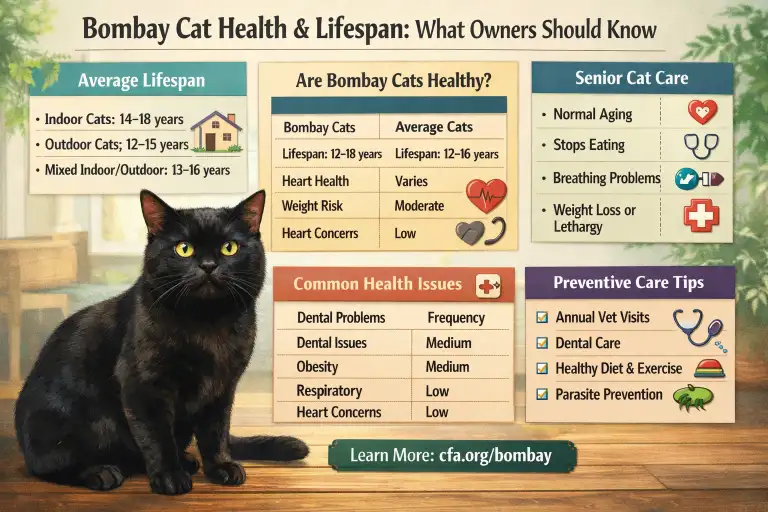
Bombay cats usually live 12 to 18 years, with many reaching their late teens. Indoor Bombay cats often live longer than outdoor cats because they are safer from accidents, fights, and diseases. Lifespan can vary depending on genetics, care, and lifestyle, so these numbers are only averages.
Recommended Dog Care Products
Based on your dog’s age, these products may help with comfort, health, grooming, and daily care.

Purina Pro Plan Veterinary Supplements
Daily probiotics for dogs to support digestive and gut health.
View on Amazon ↗
Earth Rated Poop Bags for Dogs
Leak-proof, extra thick waste bag refill rolls with lavender scent.
View on Amazon ↗
Greenies Pill Pockets for Dogs
Large dog treats for capsule medication, peanut butter flavor.
View on Amazon ↗
HONEY CARE All-Absorb Dog Wrap
Small male dog wraps, 50 count, useful for daily care support.
View on Amazon ↗
Seresto Flea & Tick Collar
Flea and tick treatment and prevention for dogs over 18 lbs.
View on Amazon ↗
Milk-Bone MaroSnacks
Small dog treats with real bone marrow in a 40 oz canister.
View on Amazon ↗
Vital Essentials Dog Treats
Freeze dried beef liver dog treats, grain free and single ingredient.
View on Amazon ↗
Stain & Odor Eliminator
Enzyme cleaner for pet stains, carpet messes, and strong odors.
View on Amazon ↗
Pur Luv Chicken Jerky Treats
Dog treats made with real chicken breast, high protein and chew-friendly.
View on Amazon ↗
Milk-Bone Flavor Snacks
Mini crunchy dog biscuits in a 36 oz canister for small rewards.
View on Amazon ↗As an Amazon Associate, we may earn from qualifying purchases.
Keeping your Bombay cat healthy with good food, regular vet visits, and a calm environment can help them live a long and happy life. Many Bombay cats stay playful and social well into adulthood, showing gradual signs of aging rather than sudden changes.
Average Bombay Cat Lifespan
| Living Situation | Typical Lifespan | Notes |
|---|---|---|
| Indoor | 14–18 years | Safer environment, easier monitoring |
| Outdoor | 12–15 years | Higher exposure to risks like traffic and infections |
| Mixed (Indoor + Outdoor) | 13–16 years | Moderate exposure, depends on supervision |
Are Bombay Cats Generally Healthy?
Bombay cats are considered healthy overall, but like all cats, they have some tendencies toward certain issues. Most Bombay cats enjoy strong health when they are raised in a clean, low-stress environment and receive regular checkups.
They tend to have good heart health, strong muscles, and shiny coats. Weight should be monitored because they can gain weight if overfed or not active enough. Regular dental care is also important, as dental problems are common in many breeds.
Bombay Cats vs Average Domestic Cats (Health Comparison)
| Health Aspect | Bombay Cat | Average Domestic Cat |
|---|---|---|
| Lifespan | 12–18 years | 12–16 years |
| Heart Health | Generally strong | Varies by breed |
| Coat & Skin | Smooth, shiny | Varies |
| Weight Risk | Medium | Medium |
| Dental Health | Needs regular care | Needs regular care |
Common Bombay Cat Health Issues (Overview Only)
Even healthy Bombay cats can experience some common issues. These do not mean every cat will have them, but knowing what to watch for helps owners notice changes early.
Some high-level health concerns include:
- Dental problems – tartar buildup or gum issues
- Weight gain / obesity – especially in indoor cats with little exercise
- Respiratory sensitivity – they may sneeze more easily
- Heart considerations – some cats may develop mild heart changes as they age
- Skin and coat conditions – dry skin or minor hair shedding
Common Health Issues in Bombay Cats
| Health Issue | How Common | Notes |
|---|---|---|
| Dental problems | Medium | Regular brushing and checkups help |
| Obesity / Weight gain | Medium | Monitor food and encourage play |
| Respiratory sensitivity | Low | Usually mild, can be seasonal |
| Heart changes | Low | More common in older cats |
| Skin / coat changes | Low | Usually cosmetic, monitor for excessive scratching |
How Preventive Care Affects Bombay Cat Longevity
Preventive care helps catch small problems before they become serious. Even a healthy Bombay cat benefits from regular checkups, vaccinations, and simple daily observations.
Recommended Dog Care Products
Based on your dog’s age, these products may help with comfort, health, grooming, and daily care.
Purina Pro Plan Veterinary Supplements
Daily probiotics for dogs to support digestive and gut health.
View on Amazon ↗
Earth Rated Poop Bags for Dogs
Leak-proof, extra thick waste bag refill rolls with lavender scent.
View on Amazon ↗
Greenies Pill Pockets for Dogs
Large dog treats for capsule medication, peanut butter flavor.
View on Amazon ↗
HONEY CARE All-Absorb Dog Wrap
Small male dog wraps, 50 count, useful for daily care support.
View on Amazon ↗
Seresto Flea & Tick Collar
Flea and tick treatment and prevention for dogs over 18 lbs.
View on Amazon ↗
Milk-Bone MaroSnacks
Small dog treats with real bone marrow in a 40 oz canister.
View on Amazon ↗
Vital Essentials Dog Treats
Freeze dried beef liver dog treats, grain free and single ingredient.
View on Amazon ↗
Stain & Odor Eliminator
Enzyme cleaner for pet stains, carpet messes, and strong odors.
View on Amazon ↗
Pur Luv Chicken Jerky Treats
Dog treats made with real chicken breast, high protein and chew-friendly.
View on Amazon ↗
Milk-Bone Flavor Snacks
Mini crunchy dog biscuits in a 36 oz canister for small rewards.
View on Amazon ↗As an Amazon Associate, we may earn from qualifying purchases.
Key preventive actions:
- Vet wellness exams – at least once a year
- Dental care – brushing or professional cleaning
- Weight management – measure food and encourage exercise
- Parasite control – fleas, ticks, and worms
- Environmental enrichment – toys, scratching posts, and safe play
Preventive Care Checklist for Bombay Cats
| Care Area | Why It Matters | Frequency |
|---|---|---|
| Vet checkups | Early detection of issues | Yearly |
| Dental care | Prevents gum disease | Weekly brushing / annual cleaning |
| Weight monitoring | Avoid obesity-related problems | Monthly |
| Parasite control | Prevents infections | Monthly or per vet advice |
| Enrichment & exercise | Keeps cat active & healthy | Daily |
Aging, Quality of Life, and When to See a Vet
As Bombay cats age, they may show gentle changes in energy, appetite, or mobility. These changes are normal but some signs require a vet. Watching for these changes can improve your cat’s quality of life.
Typical aging signs include:
- Less jumping or playing
- Slower movements
- Changes in appetite or weight
- Slight vision or hearing changes
Call a vet if you notice:
- Sudden weight loss or gain
- Difficulty breathing or persistent coughing
- Frequent vomiting or diarrhea
- Severe lethargy or pain
Aging Changes vs When to See a Vet
| Change | Normal Aging | Vet Attention Needed |
|---|---|---|
| Activity level | Slightly less playful | Very lethargic or weak |
| Appetite | Mild decrease | Loss of appetite or vomiting |
| Weight | Minor changes | Rapid gain/loss |
| Mobility | Slower movements | Trouble walking or jumping |
| Senses | Slight vision/hearing loss | Complete loss or sudden changes |
For official guidance and breed-specific health standards, readers can review the Bombay cat profile from the Cat Fanciers’ Association (CFA), a trusted authority on recognized cat breeds.

Ata Ur Rehman is the founder of Pet Age in Human Years Calculator, an educational platform that provides age conversion charts and lifespan guides for dogs, cats, birds, and other companion animals. His work focuses on helping pet owners understand how animal ages translate into human years using commonly accepted age conversion formulas and published lifespan averages.
The website compiles breed and species lifespan data from kennel clubs, breed organizations, and general animal lifespan studies to present simple and easy-to-understand guides for pet owners worldwide.
This website was created to centralize animal age conversion charts into one easy reference platform for pet owners.
Recommended Dog Care Products
Based on your dog’s age, these products may help with comfort, health, grooming, and daily care.
Purina Pro Plan Veterinary Supplements
Daily probiotics for dogs to support digestive and gut health.
View on Amazon ↗
Earth Rated Poop Bags for Dogs
Leak-proof, extra thick waste bag refill rolls with lavender scent.
View on Amazon ↗
Greenies Pill Pockets for Dogs
Large dog treats for capsule medication, peanut butter flavor.
View on Amazon ↗
HONEY CARE All-Absorb Dog Wrap
Small male dog wraps, 50 count, useful for daily care support.
View on Amazon ↗
Seresto Flea & Tick Collar
Flea and tick treatment and prevention for dogs over 18 lbs.
View on Amazon ↗
Milk-Bone MaroSnacks
Small dog treats with real bone marrow in a 40 oz canister.
View on Amazon ↗
Vital Essentials Dog Treats
Freeze dried beef liver dog treats, grain free and single ingredient.
View on Amazon ↗
Stain & Odor Eliminator
Enzyme cleaner for pet stains, carpet messes, and strong odors.
View on Amazon ↗
Pur Luv Chicken Jerky Treats
Dog treats made with real chicken breast, high protein and chew-friendly.
View on Amazon ↗
Milk-Bone Flavor Snacks
Mini crunchy dog biscuits in a 36 oz canister for small rewards.
View on Amazon ↗As an Amazon Associate, we may earn from qualifying purchases.