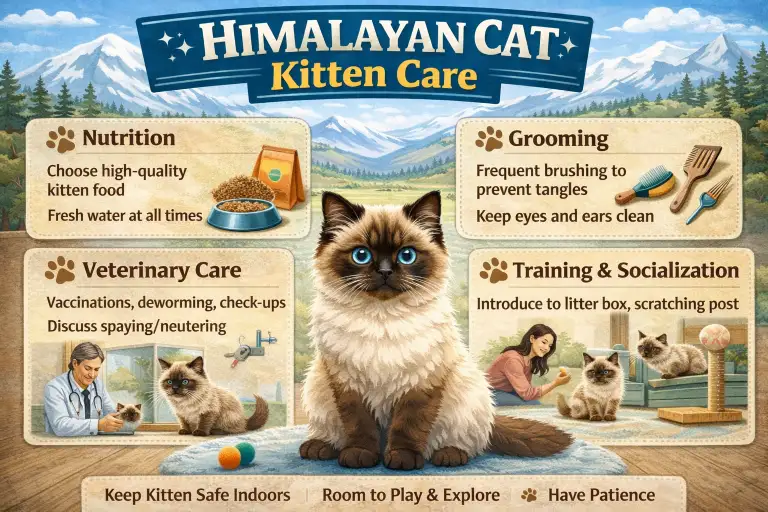
Bringing home a Himalayan kitten is an exciting experience. These kittens are known for their beautiful long fur, striking blue eyes, and gentle personality. Himalayans are usually calm and affectionate, making them great companions for families or first-time cat owners. While they are playful, they often enjoy quiet moments cuddled in a soft bed or near their favorite human.
Recommended Dog Care Products
Based on your dog’s age, these products may help with comfort, health, grooming, and daily care.

Purina Pro Plan Veterinary Supplements
Daily probiotics for dogs to support digestive and gut health.
View on Amazon ↗
Earth Rated Poop Bags for Dogs
Leak-proof, extra thick waste bag refill rolls with lavender scent.
View on Amazon ↗
Greenies Pill Pockets for Dogs
Large dog treats for capsule medication, peanut butter flavor.
View on Amazon ↗
HONEY CARE All-Absorb Dog Wrap
Small male dog wraps, 50 count, useful for daily care support.
View on Amazon ↗
Seresto Flea & Tick Collar
Flea and tick treatment and prevention for dogs over 18 lbs.
View on Amazon ↗
Milk-Bone MaroSnacks
Small dog treats with real bone marrow in a 40 oz canister.
View on Amazon ↗
Vital Essentials Dog Treats
Freeze dried beef liver dog treats, grain free and single ingredient.
View on Amazon ↗
Stain & Odor Eliminator
Enzyme cleaner for pet stains, carpet messes, and strong odors.
View on Amazon ↗
Pur Luv Chicken Jerky Treats
Dog treats made with real chicken breast, high protein and chew-friendly.
View on Amazon ↗
Milk-Bone Flavor Snacks
Mini crunchy dog biscuits in a 36 oz canister for small rewards.
View on Amazon ↗As an Amazon Associate, we may earn from qualifying purchases.
Himalayan kittens need gentle handling and early socialization. They may be shy at first, especially around new people or loud environments. Spending time holding them, speaking softly, and allowing them to explore at their own pace will help them feel safe and loved. They also enjoy interactive play, such as chasing soft toys or small balls, which supports both their physical and mental development.
These kittens have unique grooming needs due to their long hair. Mats and tangles can develop if brushing is skipped, and their eyes may need gentle cleaning to prevent staining. Regular grooming sessions are also a great way to bond with your kitten and teach them to tolerate care from an early age.
Himalayans are generally healthy but may have a few breed-specific considerations, such as sensitivity to heat or cold. Providing a safe indoor environment and monitoring their activity will help keep them comfortable. Understanding your Himalayan kitten’s personality, needs, and daily care requirements is the first step to building a happy, lifelong relationship.
Feeding & Nutrition for Himalayan Kittens
Proper nutrition is very important for your Himalayan kitten’s growth and health. Kittens have small stomachs and high energy needs, so they should eat small, frequent meals. During the first 8 weeks, kittens usually rely on their mother’s milk or a quality kitten formula. After that, soft wet food can be introduced, gradually mixing with dry kitten food as they grow.
A balanced diet helps prevent obesity, supports a strong immune system, and keeps their coat shiny and healthy. Himalayan kittens are prone to hairballs due to their long hair, so including wet food and a few hairball-friendly treats can help reduce this problem. Fresh water should always be available, and bowls should be cleaned daily.
Here is a simple feeding guide table for skimmable reference:
| Age | Food Type | Meals per Day | Notes |
|---|---|---|---|
| 0–8 weeks | Mother’s milk or kitten formula | Every 2–3 hours | Warm milk, do not overfeed |
| 8–12 weeks | Wet kitten food + small dry food portions | 4–5 | Gradually reduce formula |
| 3–6 months | Wet and dry kitten food | 3–4 | Monitor weight and appetite |
| 6+ months | Wet and dry kitten food | 2–3 | Introduce treats in moderation |
It is important to avoid feeding adult cat food, cow’s milk, or human snacks, as these can upset a kitten’s digestive system. Watch for any changes in appetite or stools, as this can indicate that their diet needs adjusting or a vet visit may be necessary.
Grooming & Hygiene Essentials
Himalayan kittens require daily brushing to prevent tangles and mats in their long fur. Using a soft-bristle brush or a wide-toothed comb works best. Start grooming gently from a young age so your kitten becomes comfortable with the process. Short grooming sessions multiple times a day are better than long sessions that may stress them.
Their eyes are prone to tear staining. Wipe their eyes gently with a damp cotton ball once or twice a day to keep the fur clean and avoid discomfort. Nail trimming is also important, but it should be done carefully with a proper kitten nail trimmer. Avoid cutting too close to the quick, which can hurt the kitten.
Recommended Dog Care Products
Based on your dog’s age, these products may help with comfort, health, grooming, and daily care.
Purina Pro Plan Veterinary Supplements
Daily probiotics for dogs to support digestive and gut health.
View on Amazon ↗
Earth Rated Poop Bags for Dogs
Leak-proof, extra thick waste bag refill rolls with lavender scent.
View on Amazon ↗
Greenies Pill Pockets for Dogs
Large dog treats for capsule medication, peanut butter flavor.
View on Amazon ↗
HONEY CARE All-Absorb Dog Wrap
Small male dog wraps, 50 count, useful for daily care support.
View on Amazon ↗
Seresto Flea & Tick Collar
Flea and tick treatment and prevention for dogs over 18 lbs.
View on Amazon ↗
Milk-Bone MaroSnacks
Small dog treats with real bone marrow in a 40 oz canister.
View on Amazon ↗
Vital Essentials Dog Treats
Freeze dried beef liver dog treats, grain free and single ingredient.
View on Amazon ↗
Stain & Odor Eliminator
Enzyme cleaner for pet stains, carpet messes, and strong odors.
View on Amazon ↗
Pur Luv Chicken Jerky Treats
Dog treats made with real chicken breast, high protein and chew-friendly.
View on Amazon ↗
Milk-Bone Flavor Snacks
Mini crunchy dog biscuits in a 36 oz canister for small rewards.
View on Amazon ↗As an Amazon Associate, we may earn from qualifying purchases.
Bathing is usually not necessary unless the kitten gets dirty. If you do bathe them, use warm water and a mild kitten-safe shampoo. Always dry them gently and make sure they are warm afterward. Grooming is not only about hygiene but also about bonding and teaching your kitten to tolerate handling for life.
Here is a grooming routine table to help you keep track:
| Task | Frequency | Notes |
|---|---|---|
| Brushing | Daily | Focus on back, sides, and underarms |
| Eye cleaning | 1–2 times/day | Use damp cotton ball, gentle touch |
| Nail trimming | Every 2–3 weeks | Trim only sharp tips |
| Bathing | As needed | Use kitten-safe shampoo |
Training, Socialization & Daily Routines
Teaching your Himalayan kitten basic routines early helps them grow into a confident adult cat. Start with litter box training by placing them in the box after meals and naps. Keep the litter box clean and in a quiet, accessible spot. Most kittens learn quickly if you are consistent and patient.
Playtime is essential for physical and mental development. Use interactive toys like feather wands, balls, or puzzle feeders. Avoid using your hands as toys to prevent biting habits. A predictable daily routine helps your kitten feel secure, including regular play sessions, feeding times, and quiet rest periods.
Socialization should include gentle handling, exposure to different people, and safe introductions to other pets. This teaches them to be comfortable with new experiences and reduces fear or aggression later in life. Remember, patience and positive reinforcement work better than punishment.
Safety, Health Basics & First Vet Visits
Himalayan kittens need a safe indoor environment to thrive. Keep small objects, cords, toxic plants, and chemicals out of reach. Ensure windows and balconies are secure. Himalayan kittens are curious, so a hazard-free space prevents accidents.
Schedule regular vet visits for general check-ups, vaccinations, and growth monitoring. While this guide does not provide medical instructions, early vet visits help detect any issues early and establish a preventive care routine. Observe your kitten daily for normal behavior, appetite, and litter habits. Changes may indicate a need for professional advice.
Indoor play and enrichment prevent boredom and help your kitten develop confidence. Safe scratching posts, tunnels, and climbing areas allow them to exercise naturally. Monitor interactions with other pets carefully and always supervise initial meetings.
For more guidance on Himalayan cats and their care, you can visit PetMD’s Himalayan Cat Guide.

Ata Ur Rehman is the founder of Pet Age in Human Years Calculator, an educational platform that provides age conversion charts and lifespan guides for dogs, cats, birds, and other companion animals. His work focuses on helping pet owners understand how animal ages translate into human years using commonly accepted age conversion formulas and published lifespan averages.
Recommended Dog Care Products
Based on your dog’s age, these products may help with comfort, health, grooming, and daily care.
Purina Pro Plan Veterinary Supplements
Daily probiotics for dogs to support digestive and gut health.
View on Amazon ↗
Earth Rated Poop Bags for Dogs
Leak-proof, extra thick waste bag refill rolls with lavender scent.
View on Amazon ↗
Greenies Pill Pockets for Dogs
Large dog treats for capsule medication, peanut butter flavor.
View on Amazon ↗
HONEY CARE All-Absorb Dog Wrap
Small male dog wraps, 50 count, useful for daily care support.
View on Amazon ↗
Seresto Flea & Tick Collar
Flea and tick treatment and prevention for dogs over 18 lbs.
View on Amazon ↗
Milk-Bone MaroSnacks
Small dog treats with real bone marrow in a 40 oz canister.
View on Amazon ↗
Vital Essentials Dog Treats
Freeze dried beef liver dog treats, grain free and single ingredient.
View on Amazon ↗
Stain & Odor Eliminator
Enzyme cleaner for pet stains, carpet messes, and strong odors.
View on Amazon ↗
Pur Luv Chicken Jerky Treats
Dog treats made with real chicken breast, high protein and chew-friendly.
View on Amazon ↗
Milk-Bone Flavor Snacks
Mini crunchy dog biscuits in a 36 oz canister for small rewards.
View on Amazon ↗As an Amazon Associate, we may earn from qualifying purchases.
The website compiles breed and species lifespan data from kennel clubs, breed organizations, and general animal lifespan studies to present simple and easy-to-understand guides for pet owners worldwide.
This website was created to centralize animal age conversion charts into one easy reference platform for pet owners.