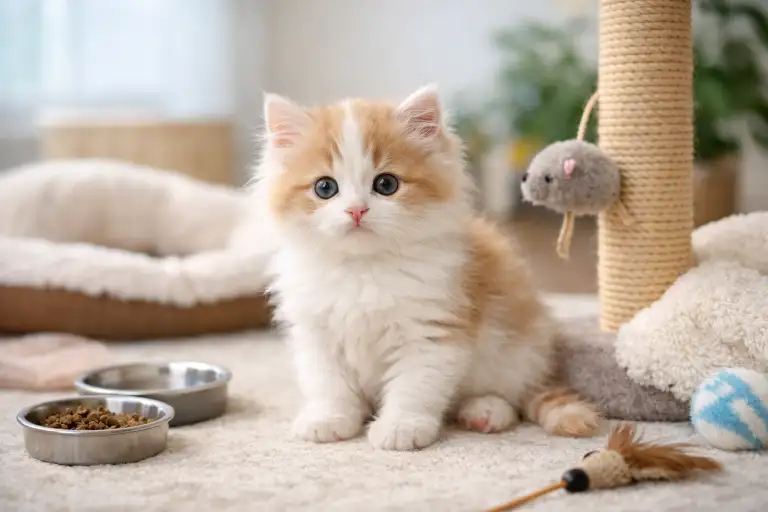
Before your Cherubim kitten ever sets a paw inside your home, a little preparation goes a long way. Kittens don’t need a large space at first — they need a safe, predictable environment where they can rest, eat, play, and learn without feeling overwhelmed.
Recommended Dog Care Products
Based on your dog’s age, these products may help with comfort, health, grooming, and daily care.

Purina Pro Plan Veterinary Supplements
Daily probiotics for dogs to support digestive and gut health.
View on Amazon ↗
Earth Rated Poop Bags for Dogs
Leak-proof, extra thick waste bag refill rolls with lavender scent.
View on Amazon ↗
Greenies Pill Pockets for Dogs
Large dog treats for capsule medication, peanut butter flavor.
View on Amazon ↗
HONEY CARE All-Absorb Dog Wrap
Small male dog wraps, 50 count, useful for daily care support.
View on Amazon ↗
Seresto Flea & Tick Collar
Flea and tick treatment and prevention for dogs over 18 lbs.
View on Amazon ↗
Milk-Bone MaroSnacks
Small dog treats with real bone marrow in a 40 oz canister.
View on Amazon ↗
Vital Essentials Dog Treats
Freeze dried beef liver dog treats, grain free and single ingredient.
View on Amazon ↗
Stain & Odor Eliminator
Enzyme cleaner for pet stains, carpet messes, and strong odors.
View on Amazon ↗
Pur Luv Chicken Jerky Treats
Dog treats made with real chicken breast, high protein and chew-friendly.
View on Amazon ↗
Milk-Bone Flavor Snacks
Mini crunchy dog biscuits in a 36 oz canister for small rewards.
View on Amazon ↗As an Amazon Associate, we may earn from qualifying purchases.
Many new owners assume they should give a kitten free run of the house immediately. In reality, starting small helps your kitten feel secure and makes daily care much easier for you.
Start with a simple, quiet setup
Choose a calm room where your kitten can settle in during the first few days. This space should include food, water, a litter box, a sleeping area, and a few toys. Keeping everything close together helps your kitten learn where things are and reduces stress during the adjustment period.
Noise, constant handling, and too much space too soon can make a young kitten anxious. A cozy setup builds confidence.
Kitten-proof before curiosity kicks in
Kittens explore with their mouths and paws. Things that seem harmless to us — dangling cords, small objects, open windows — can quickly become problems. A quick safety check now prevents accidents later.
Pay special attention to:
- Loose cords and chargers
- Small objects that can be swallowed
- Open windows, balconies, or gaps
- Household plants (many are unsafe for cats)
Create calm, predictable zones
Your kitten doesn’t need luxury — just consistency. Feeding in the same spot, placing the litter box in a quiet corner, and offering a warm sleeping area all help your kitten relax and learn routines faster.
New Kitten Home Setup Checklist
| Area | What Your Kitten Needs | Why It Matters |
|---|---|---|
| Sleeping area | Soft bed or blanket in a quiet spot | Helps your kitten feel safe and rest properly |
| Feeding area | Shallow food bowl and fresh water | Encourages regular eating and hydration |
| Litter box | Low-sided box with gentle litter | Makes litter training easier from day one |
| Play space | A few safe toys | Supports healthy development and energy release |
| Safety check | Cords secured, hazards removed | Prevents accidents and injuries |
Indoor-only care from the beginning
Young kittens are safest indoors. Keeping your Cherubim kitten inside protects them from traffic, predators, parasites, and getting lost. Indoor living also makes routines, feeding, and health monitoring much easier — especially for first-time owners.
If your home feels calm, safe, and predictable, your kitten will usually settle in faster than you expect. You don’t need perfection — just thoughtful preparation and patience.
Feeding, Litter Training & Daily Care Basics
Caring for a Cherubim kitten each day is mostly about simple routines. When food, litter, and daily care stay consistent, kittens feel safe and learn faster. You don’t need to do anything complicated — just focus on steady habits.
Recommended Dog Care Products
Based on your dog’s age, these products may help with comfort, health, grooming, and daily care.
Purina Pro Plan Veterinary Supplements
Daily probiotics for dogs to support digestive and gut health.
View on Amazon ↗
Earth Rated Poop Bags for Dogs
Leak-proof, extra thick waste bag refill rolls with lavender scent.
View on Amazon ↗
Greenies Pill Pockets for Dogs
Large dog treats for capsule medication, peanut butter flavor.
View on Amazon ↗
HONEY CARE All-Absorb Dog Wrap
Small male dog wraps, 50 count, useful for daily care support.
View on Amazon ↗
Seresto Flea & Tick Collar
Flea and tick treatment and prevention for dogs over 18 lbs.
View on Amazon ↗
Milk-Bone MaroSnacks
Small dog treats with real bone marrow in a 40 oz canister.
View on Amazon ↗
Vital Essentials Dog Treats
Freeze dried beef liver dog treats, grain free and single ingredient.
View on Amazon ↗
Stain & Odor Eliminator
Enzyme cleaner for pet stains, carpet messes, and strong odors.
View on Amazon ↗
Pur Luv Chicken Jerky Treats
Dog treats made with real chicken breast, high protein and chew-friendly.
View on Amazon ↗
Milk-Bone Flavor Snacks
Mini crunchy dog biscuits in a 36 oz canister for small rewards.
View on Amazon ↗As an Amazon Associate, we may earn from qualifying purchases.
Feeding your Cherubim kitten
Kittens grow quickly, so they need to eat more often than adult cats. Most young kittens eat several small meals spread throughout the day. This is normal and helps keep their energy steady.
Try to feed your kitten at the same times each day. A routine helps with digestion and reduces begging or fussiness. Always keep fresh water available, even if your kitten eats mostly wet food.
If your kitten doesn’t finish every meal, don’t panic. Appetite can change slightly day to day, especially during the first week in a new home.
Litter training made simple
Most kittens naturally understand how to use a litter box. On the first day home, gently place your kitten in the litter box so they know where it is.
Keep the litter box:
- In a quiet place
- Easy to reach
- Away from food and water
Accidents may happen at first. This does not mean your kitten is being “bad.” Calmly clean the area and continue guiding them to the litter box. Punishment will only confuse and scare them.
Daily care you shouldn’t skip
Daily care is about small check-ins, not constant handling. Spend a little time each day watching how your kitten eats, plays, and rests. This helps you notice patterns and feel more confident as an owner.
Things to do every day:
- Refresh food and water
- Scoop the litter box
- Offer gentle play time
- Spend quiet bonding time
Kitten feeding and care by age
| Kitten Age | Feeding Frequency | Litter Habits | Your Main Focus |
|---|---|---|---|
| 8–12 weeks | 3–4 meals daily | Learning consistency | Routine and comfort |
| 3–4 months | 3 meals daily | More reliable use | Gentle guidance |
| 5–6 months | 2–3 meals daily | Fully trained | Healthy habits |
If your kitten seems playful, curious, and relaxed after meals, you’re on the right track. Most care problems at this stage come from doing too much, not too little.
Sleep, Play, Behavior & Development Stages
Kittens grow fast, and their behavior can change from week to week. One day they may sleep for hours, and the next day they may run around the house with lots of energy. This is all a normal part of kitten growth.
Recommended Dog Care Products
Based on your dog’s age, these products may help with comfort, health, grooming, and daily care.
Purina Pro Plan Veterinary Supplements
Daily probiotics for dogs to support digestive and gut health.
View on Amazon ↗
Earth Rated Poop Bags for Dogs
Leak-proof, extra thick waste bag refill rolls with lavender scent.
View on Amazon ↗
Greenies Pill Pockets for Dogs
Large dog treats for capsule medication, peanut butter flavor.
View on Amazon ↗
HONEY CARE All-Absorb Dog Wrap
Small male dog wraps, 50 count, useful for daily care support.
View on Amazon ↗
Seresto Flea & Tick Collar
Flea and tick treatment and prevention for dogs over 18 lbs.
View on Amazon ↗
Milk-Bone MaroSnacks
Small dog treats with real bone marrow in a 40 oz canister.
View on Amazon ↗
Vital Essentials Dog Treats
Freeze dried beef liver dog treats, grain free and single ingredient.
View on Amazon ↗
Stain & Odor Eliminator
Enzyme cleaner for pet stains, carpet messes, and strong odors.
View on Amazon ↗
Pur Luv Chicken Jerky Treats
Dog treats made with real chicken breast, high protein and chew-friendly.
View on Amazon ↗
Milk-Bone Flavor Snacks
Mini crunchy dog biscuits in a 36 oz canister for small rewards.
View on Amazon ↗As an Amazon Associate, we may earn from qualifying purchases.
Understanding these changes helps you worry less and enjoy your time with your Cherubim kitten.
How much kittens sleep
Kittens sleep a lot. Many sleep 16 to 20 hours a day. Sleep helps their bodies grow and their brains develop.
Your kitten may:
- Sleep deeply after eating
- Wake up full of energy
- Take many short naps
This sleep pattern is normal. A sleeping kitten is usually a healthy kitten.
Play time and energy bursts
Play is how kittens learn. They practice hunting, jumping, and social skills through play. Short play sessions several times a day are better than one long session.
Good play habits:
- Use safe toys, not hands or feet
- Let your kitten chase and pounce
- End play before your kitten gets too rough
Play biting and scratching are common. This does not mean your kitten is aggressive. It means they are learning how to control their body.
Behavior changes as your kitten grows
As your kitten gets older, you may notice:
- More confidence
- Strong curiosity
- Testing small boundaries
This is normal development. Calm guidance and routine help your kitten learn faster.
Normal kitten behavior by age
| Age Range | Sleep | Play | Behavior You May See |
|---|---|---|---|
| 8–12 weeks | Very high | Short bursts | Clingy, curious |
| 3–4 months | High | More active | Exploring, testing |
| 5–6 months | Moderate | Strong energy | More independent |
If your kitten eats well, plays, and rests often, you are likely doing things right. Kittens don’t need strict rules — they need patience and understanding.
Recommended Dog Care Products
Based on your dog’s age, these products may help with comfort, health, grooming, and daily care.
Purina Pro Plan Veterinary Supplements
Daily probiotics for dogs to support digestive and gut health.
View on Amazon ↗
Earth Rated Poop Bags for Dogs
Leak-proof, extra thick waste bag refill rolls with lavender scent.
View on Amazon ↗
Greenies Pill Pockets for Dogs
Large dog treats for capsule medication, peanut butter flavor.
View on Amazon ↗
HONEY CARE All-Absorb Dog Wrap
Small male dog wraps, 50 count, useful for daily care support.
View on Amazon ↗
Seresto Flea & Tick Collar
Flea and tick treatment and prevention for dogs over 18 lbs.
View on Amazon ↗
Milk-Bone MaroSnacks
Small dog treats with real bone marrow in a 40 oz canister.
View on Amazon ↗
Vital Essentials Dog Treats
Freeze dried beef liver dog treats, grain free and single ingredient.
View on Amazon ↗
Stain & Odor Eliminator
Enzyme cleaner for pet stains, carpet messes, and strong odors.
View on Amazon ↗
Pur Luv Chicken Jerky Treats
Dog treats made with real chicken breast, high protein and chew-friendly.
View on Amazon ↗
Milk-Bone Flavor Snacks
Mini crunchy dog biscuits in a 36 oz canister for small rewards.
View on Amazon ↗As an Amazon Associate, we may earn from qualifying purchases.
Health Awareness, Bonding & Common New Owner Mistakes
This stage of kitten care is about watching, bonding, and staying calm. You do not need to be an expert. You just need to pay attention to your Cherubim kitten’s normal habits and build trust over time.
What a healthy kitten usually looks like
A healthy kitten is not perfect — they are playful, sleepy, messy, and curious.
Most healthy kittens:
- Eat with interest
- Play every day
- Sleep often
- Have bright eyes and a clean nose
- Show curiosity about their surroundings
Small changes can happen during growth or after moving to a new home. That is normal.
First vet visits and basic awareness
Most new kittens visit a vet soon after coming home. These early visits help check growth and overall health. You do not need to prepare your kitten in any special way — just keep them calm and secure during travel.
At home, simple daily watching is enough. Notice how your kitten eats, sleeps, and plays. This helps you feel confident and notice patterns over time.
Bonding and building trust
Bonding happens slowly and naturally. Some kittens are cuddly right away, while others need more time.
Easy ways to build trust:
- Sit quietly near your kitten
- Let your kitten come to you
- Use a soft voice
- Keep daily routines steady
Forced holding or too much handling can slow bonding. Gentle time together works best.
Normal vs don’t panic
| Situation | Usually Normal | When to Pay Attention |
|---|---|---|
| Sleeping a lot | Kittens need lots of rest | Not waking to eat or play |
| Play biting | Learning play skills | Biting that causes injury |
| Eating less one day | Appetite can vary | Skipping many meals |
| Hiding at first | Adjusting to new home | Hiding all the time |
This table is here to remind you: many things that feel scary at first are normal.
Common new owner mistakes
Many first-time kitten owners worry they are doing something wrong. Most mistakes come from trying too hard.
Common mistakes include:
- Expecting adult cat behavior too soon
- Giving too much space too quickly
- Changing routines often
- Worrying about every small change
Kittens grow best with patience, not perfection.
For more general, non-medical guidance on caring for young cats, you can also explore the ASPCA’s trusted kitten and cat care resources here.https://www.aspca.org/pet-care/cat-care

Ata Ur Rehman is the founder of Pet Age in Human Years Calculator, an educational platform that provides age conversion charts and lifespan guides for dogs, cats, birds, and other companion animals. His work focuses on helping pet owners understand how animal ages translate into human years using commonly accepted age conversion formulas and published lifespan averages.
The website compiles breed and species lifespan data from kennel clubs, breed organizations, and general animal lifespan studies to present simple and easy-to-understand guides for pet owners worldwide.
This website was created to centralize animal age conversion charts into one easy reference platform for pet owners.