Afghan Hound Age Calculator to Human Years – Complete Age Chart
Dogs age differently than humans, and Afghan Hounds are no exception. Their early years go by much faster than later ones, which is why the old rule of “1 dog year equals 7 human years” doesn’t really work. Afghan Hounds have unique growth patterns and lifespans, and understanding these can help owners provide better care throughout each life stage.
Why dog years aren’t “7 human years”
The idea that every dog year equals seven human years is too simple. Dogs grow and mature more quickly in the first few years of life, and the pace slows as they get older. For Afghan Hounds, their rapid puppy development means that a 1-year-old Afghan Hound is already roughly equivalent to a 15-year-old human in physical and mental maturity. After that, each year is more gradual, but breed size and genetics still play a role in aging.
Overview of Afghan Hound life stages (puppy, adult, senior)
Afghan Hounds go through three main life stages:
| Life Stage | Age Range (Dog Years) | Approx. Human Age | Key Signs & Behavior |
|---|---|---|---|
| Puppy | 0–1 | 0–15 | Rapid growth, high energy, learning basic skills |
| Adolescent / Adult | 1–7 | 15–44 | Full size reached, active, strong personality |
| Senior | 7+ | 45+ | Slower movement, graying muzzle, potential health changes |
Why size and breed matter for lifespan
Dog size strongly influences lifespan. Smaller breeds usually live longer, while larger breeds age faster. Afghan Hounds are considered a large breed, so they often show signs of aging earlier than smaller dogs. Genetics, lifestyle, and nutrition also affect how fast your Afghan Hound ages, which is why using breed-specific charts and calculators gives a more accurate picture than a generic formula.
The Science Behind Afghan Hound Aging
Afghan Hounds, like all dogs, age in a way that is different from humans. Their bodies and minds develop quickly at first, then slow down as they grow older. Understanding how they age can help you take better care of your dog at every stage.
Growth curve and life phases
Afghan Hounds grow very fast in their first year. By the time they are one year old, they are almost fully grown. After that, they reach adulthood and maintain high energy for several years. As they become seniors, their bodies slow down, and they may need more rest and gentler exercise.
| Life Phase | Dog Age | Key Changes |
|---|---|---|
| Puppy | 0–1 year | Rapid growth, high energy, learning skills |
| Adult | 1–7 years | Full size, strong muscles, active behavior |
| Senior | 7+ years | Slower movement, graying fur, possible health issues |
H3: Size-based aging differences
The size of a dog affects how fast it ages. Afghan Hounds are a large breed, so they usually age faster than small dogs. A 7-year-old Afghan Hound may already show signs of being a senior, while a smaller dog like a Chihuahua might still be considered adult at the same age.
Epigenetic aging and the 2019 methylation study
Recent science shows that dogs’ biological age can be measured more accurately through epigenetics. A 2019 study found that dogs age faster in the first years of life, and then their aging slows down, following a logarithmic curve. This means that using simple “dog years = 7 human years” does not reflect real aging. Breed, size, and genetics all play a role.
| Dog Age (Years) | Approx. Human Age (Afghan Hound) | Notes |
|---|---|---|
| 1 | 15 | End of puppy phase, almost full size |
| 2 | 24 | Young adult, very active |
| 5 | 38 | Mature adult, energy may stay high |
| 7 | 45 | Senior signs may begin |
| 10 | 56 | Middle senior, slower movement, health monitoring needed |
| 12 | 64 | Late senior, may need extra care |
How Afghan Hound-to-Human Year Conversion Works
Many dog owners want to know how old their Afghan Hound is in human years. Using the simple “1 dog year = 7 human years” rule is not accurate. Afghan Hounds age faster in the first few years and slower as they get older. A better method is to use breed-specific charts or formulas that consider their size and growth patterns.
H3: The formula used in this guide
This guide uses a logarithmic model based on scientific research. It calculates human-equivalent age by considering the rapid early growth and slower aging in later years. The first year of a dog’s life counts more, while later years add fewer human years.
Why the “7-year rule” is incorrect
- Afghan Hounds are a large breed, so they mature faster than small dogs.
- The 7-year rule does not reflect rapid puppy development.
- Using a formula or breed-specific chart gives a more accurate picture.
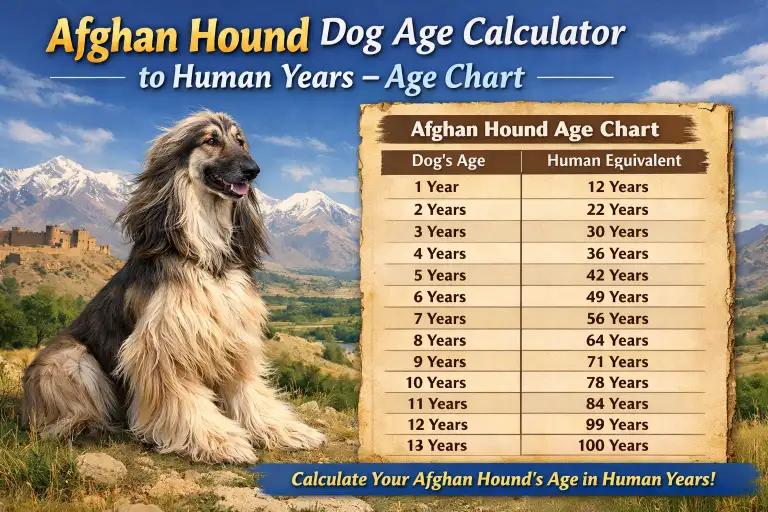
Afghan Hound age to human age charts
| Dog Age (Years) | Human Age (Approx.) | Life Stage |
|---|---|---|
| 0.5 | 7 | Puppy |
| 1 | 15 | Puppy/Young Adult |
| 2 | 24 | Adult |
| 3 | 30 | Adult |
| 5 | 38 | Adult |
| 7 | 45 | Senior start |
| 10 | 56 | Senior |
| 12 | 64 | Senior |
Real examples
| Afghan Hound Age | Human Age Equivalent | Notes |
|---|---|---|
| 1 year | 15 years | Just finished puppy stage |
| 5 years | 38 years | Mature adult, still active |
| 7 years | 45 years | Starting senior signs |
| 10 years | 56 years | Senior, slower activity |
| 12 years | 64 years | Late senior, special care recommended |
. Afghan Hound Life Stages: From Puppy to Senior
Understanding each life stage of your Afghan Hound helps you provide the right care, training, and attention. Their needs and behavior change as they grow from puppy to adult to senior.
Puppy stages and key developmental milestones
Afghan Hound puppies grow very fast. During the first year, they develop physically and mentally at a rapid pace. Training, socialization, and proper nutrition are crucial at this stage.
| Puppy Age | Weight / Size | Key Development | Behavior / Training Tips |
|---|---|---|---|
| 0–2 months | Very small | Learning to walk, nurse, play | Focus on gentle socialization |
| 2–4 months | Rapid growth | Teeth coming in, learning bite inhibition | Basic commands, crate training |
| 4–6 months | Medium | Coordination improving, first vet vaccines | Start leash training, social exposure |
| 6–12 months | Almost full size | Strong muscles, higher energy | Consistent obedience training, mental stimulation |
Adult Afghan Hound life stage
After the first year, Afghan Hounds enter adulthood. They have full size and strength and remain very active. Energy levels are high, but training and routines should continue to keep them well-behaved and mentally stimulated.
| Adult Age | Human Age Equivalent | Notes |
|---|---|---|
| 1–3 years | 15–30 years | High energy, very playful |
| 4–7 years | 31–44 years | Mature adult, steady energy, needs exercise and mental challenges |
Senior Afghan Hound changes
Senior Afghan Hounds show slower movement and may develop joint or health issues. Their coat may gray, and behavior can change. Regular vet checkups, gentle exercise, and proper diet help maintain health.
| Senior Age | Human Age Equivalent | Common Changes | Care Tips |
|---|---|---|---|
| 7–10 years | 45–56 years | Slower activity, graying muzzle | Adjust exercise, monitor weight |
| 10–12 years | 56–64 years | Possible joint stiffness, decreased energy | Joint supplements, senior diet, regular vet visits |
| 12+ years | 65+ years | Higher risk of age-related illnesses | Extra monitoring, comfortable resting places, gentle activities |
Key signs of aging Afghan Hounds to monitor
- Slower walking or reluctance to climb stairs
- Changes in appetite or weight
- Graying around the muzzle or eyes
- Stiff joints or limping
- Changes in sleep patterns or mood
Helping Your Afghan Hound Age Healthily
Taking care of your Afghan Hound as it grows older is important to ensure a long, healthy, and happy life. Good nutrition, exercise, and regular vet visits can make a big difference at every life stage.
Nutrition and weight management
Proper diet is essential. Afghan Hounds are active dogs but can gain weight if overfed. Puppies need nutrient-rich food for growth, adults need balanced meals, and seniors may need lower-calorie diets to avoid obesity.
| Life Stage | Recommended Food | Notes |
|---|---|---|
| Puppy | High-protein puppy food | Supports growth, energy, and bone development |
| Adult | Balanced adult dog food | Maintains weight and muscle mass |
| Senior | Senior dog food (lower calories) | Supports joint health and slower metabolism |
Exercise and mental enrichment
Afghan Hounds are naturally active and enjoy running and playing. Exercise helps maintain healthy weight, joints, and mental stimulation.
| Life Stage | Exercise | Mental Stimulation |
|---|---|---|
| Puppy | Short play sessions | Basic training games |
| Adult | Daily walks, runs | Puzzle toys, obedience training |
| Senior | Gentle walks | Low-impact activities, scent games |
Vet visits, screenings, and preventive care
Regular vet checkups help catch health issues early. Vaccinations, parasite control, and dental care are essential throughout life. Seniors may need more frequent health screenings for joints, heart, and organs.
| Life Stage | Vet Check Frequency | Key Checks |
|---|---|---|
| Puppy | Every 3–4 weeks until 16 weeks | Vaccines, growth monitoring, deworming |
| Adult | Every 6–12 months | General health, dental, weight, bloodwork |
| Senior | Every 6 months | Joint health, organ function, behavior changes |
Neutering/spaying, lifestyle factors, and longevity
Spaying or neutering can influence lifespan and health risks. Active lifestyles, healthy diets, and avoiding obesity also contribute to longer life. Afghan Hounds benefit from consistent routines and safe environments.
H3: At-home care tips for senior Afghan Hounds
- Provide comfortable resting places and soft bedding
- Adjust exercise to prevent joint strain
- Monitor appetite, weight, and behavior changes
- Maintain dental hygiene and grooming
- Use ramps or stairs to reduce jumping
For more detailed information on Afghan Hound health, lifespan, and breed-specific care, you can visit the American Kennel Club (AKC) Afghan Hound breed page: https://www.akc.org/dog-breeds/afghan-hound